


Related Tags
You are watching a new layer-1 protocol surge after a major network upgrade, trying to figure out whether its underlying mechanics justify derivative trades or long-term holds. Celestia takes a unique architectural approach by breaking traditional blockchain design apart.
Instead of handling transaction processing, settlement, and storage all in one place, it acts purely as a data availability layer. Understanding this modular framework is essential if you plan to trade its native token, TIA, while managing structural supply dilution and market volatility.
Think of a traditional blockchain as one worker doing every job — approving transactions, storing data, and running the software — all at once. Celestia splits that job up: it focuses only on making sure transaction data is available and verifiable, while other networks handle the rest. That split is what people mean by 'modular' blockchain design.
What Is Celestia (TIA) and How Does Modular Blockchain Work?
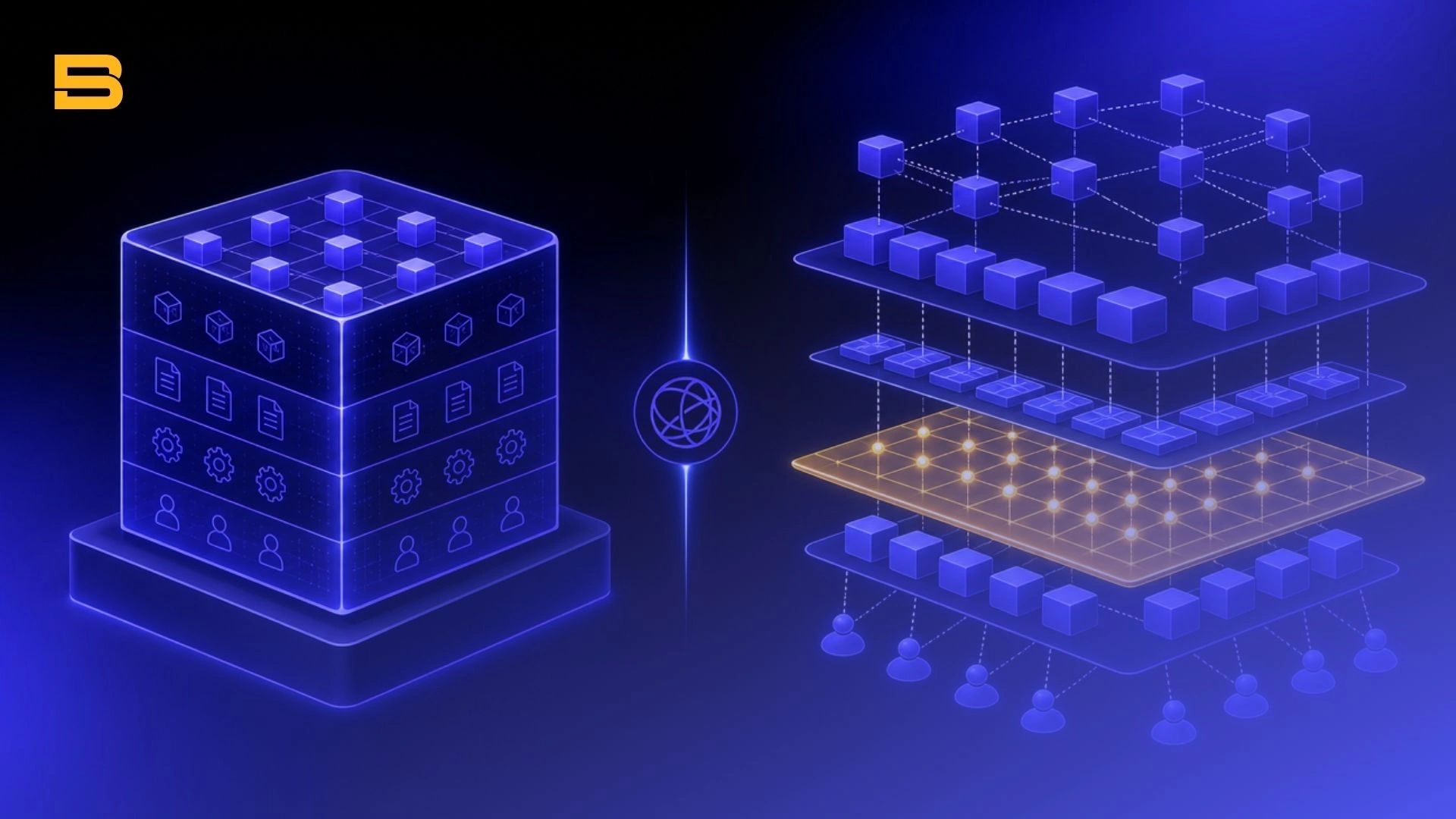
Celestia is a modular data availability network that decouples transaction execution from consensus, allowing independent blockchains to scale efficiently.
Traditional monolithic networks—such as early Ethereum architecture—handle consensus, settlement, execution, and data availability on a single layer. This creates a bottleneck: every validator must download, execute, and store every transaction, constraining network throughput and raising transaction fees.
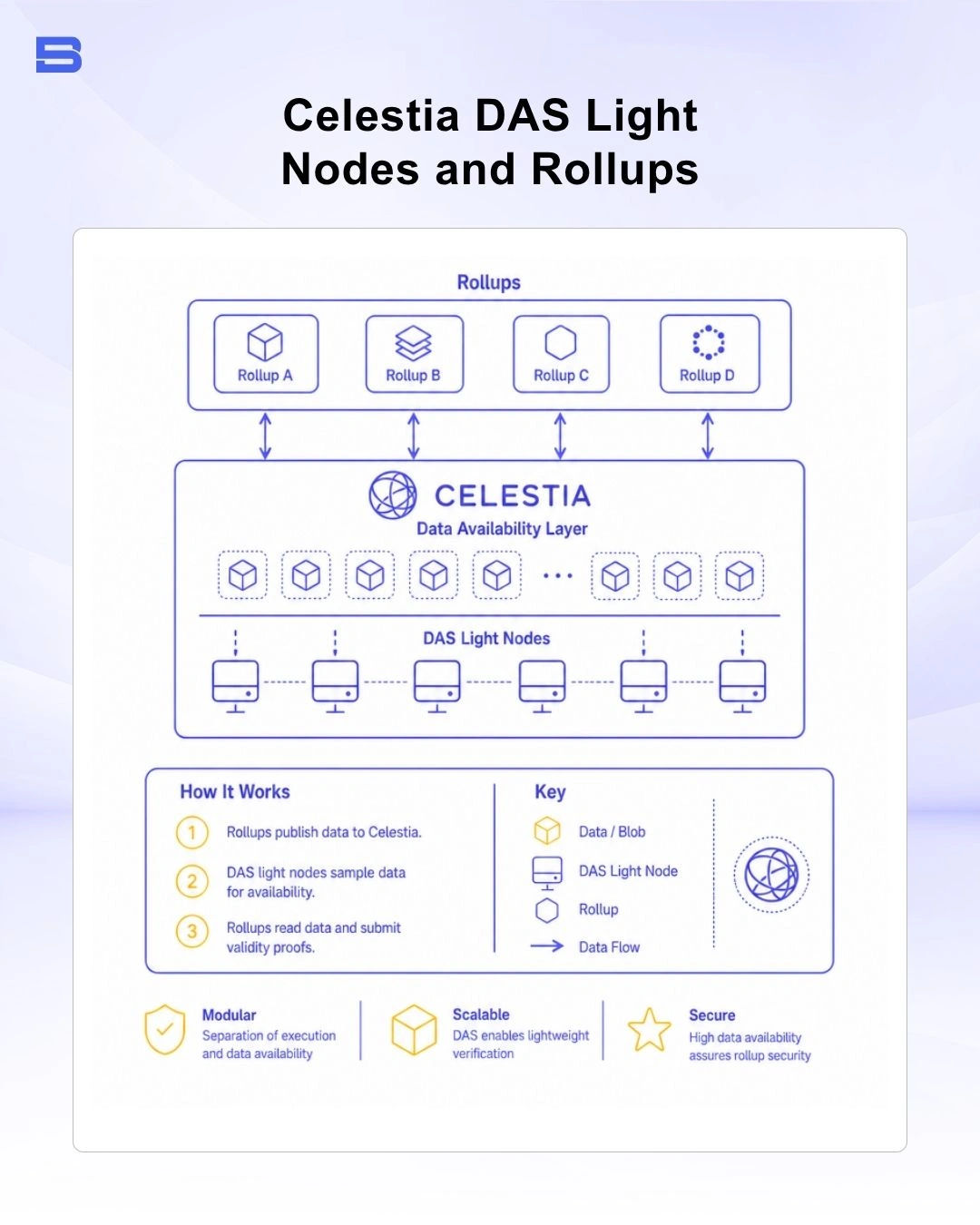
Celestia changes this paradigm by functioning primarily as a data availability and consensus layer. It does not execute application logic or process application state transactions. Instead, it orders transaction data and uses data availability sampling to verify that the underlying data has been published and is available for retrieval by applications and users.
To ensure network participants can verify data without downloading entire blocks, Celestia uses two core technical mechanisms:
- Data Availability Sampling (DAS): Light nodes randomly sample small chunks of block data to statistically prove that the full block is published.
- 2D Reed-Solomon Erasure Coding: Block data is expanded so that even if significant portions are missing, light nodes can reconstruct the complete block.
The Infrastructure Behind Celestia: Cosmos SDK and Tendermint Core
Celestia is built using the Cosmos Software Development Kit (SDK) framework and powered by CometBFT (a fork of Tendermint Core) consensus. This infrastructure enables fast block times—around 6 seconds following the Ginger upgrade—and deterministic finality.
Through the Inter-Blockchain Communication (IBC) protocol, Celestia seamlessly relays data verification proofs across external rollups, appchains, and sovereign networks. Developers can deploy customized execution environments such as Ethereum Virtual Machine (EVM) compatible or Solana Virtual Machine (SVM) compatible rollups while offloading the heavy burden of data storage to Celestia.
For traders, protocol updates (like the Fibre and Matcha network upgrades) directly alter block capacity and transaction throughput. Higher rollup activity increases demand for blobspace—the storage slots where rollup data is posted—which directly influences on-chain transaction activity and native gas burn rates.
TIA Utility and Staking Dynamics
The native token, TIA, serves three primary functions within the ecosystem:
- Blobspace Payment: Developers pay TIA fees to submit data blobs to the Celestia network.
- Network Security: Stakers lock TIA with validators to secure the proof-of-stake consensus mechanism.
- Governance: Token holders vote on network parameters and community pool spending proposals.
TIA staking rewards provide an ongoing yield for network validators and delegators. However, staking yields lock up liquid TIA, directly impacting the circulating supply available on spot exchanges during high-volatility events.
TIA Tokenomics and Supply Dynamics
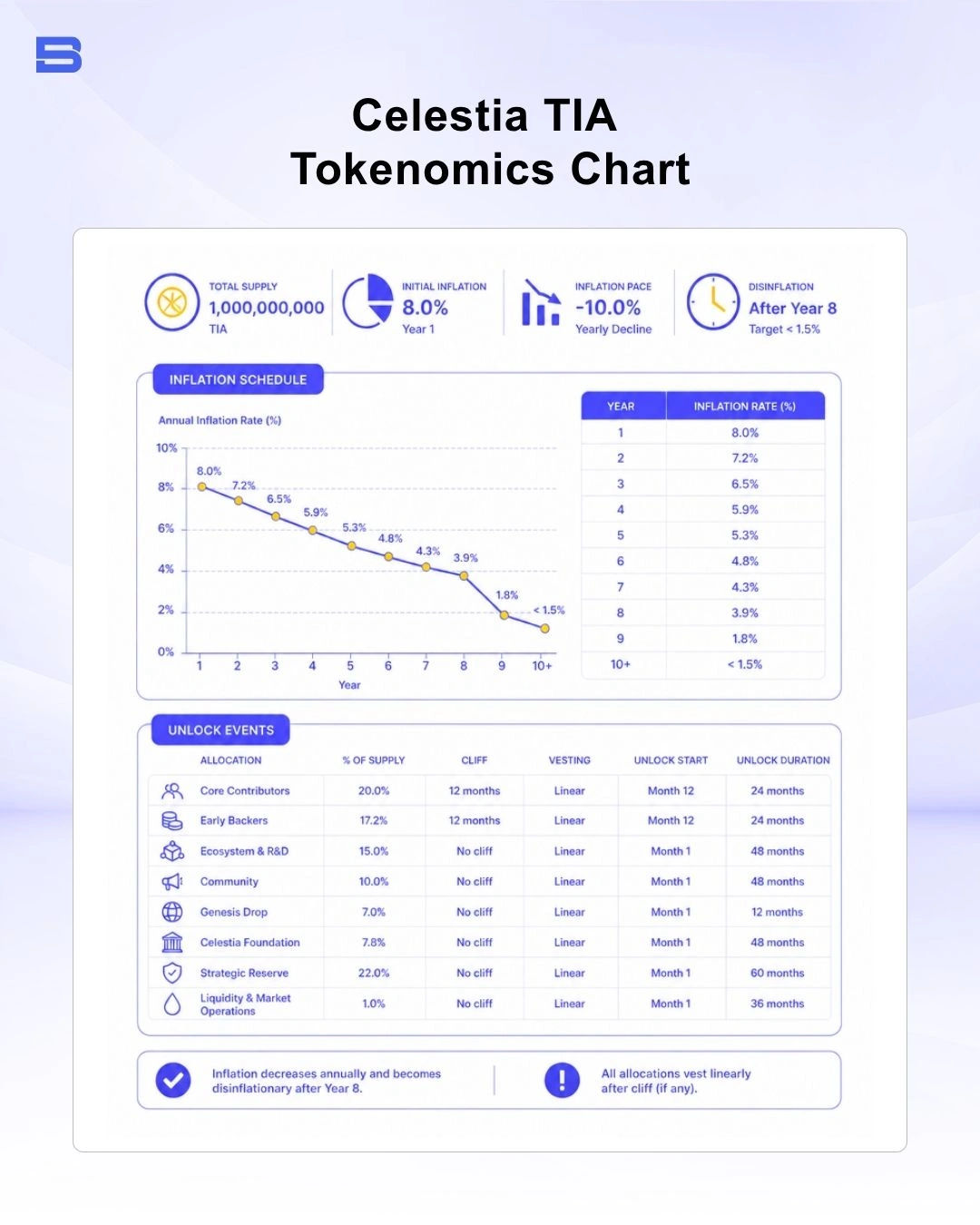
Evaluating TIA tokenomics requires looking closely at initial distributions and structural supply inflation. Unlike Bitcoin's fixed hard cap, TIA features an initial dynamic inflation schedule designed to incentivize early stakers and secure consensus.
A core trading risk stems from scheduled investor and contributor token unlocks. Large cliff unlocks release millions of previously locked TIA tokens into circulation, increasing supply overhead and creating potential selling pressure on spot markets.
Key Risks and Volatility Management When Trading TIA
Trading high-beta infrastructure tokens requires balancing growth potential against severe downside risks. As noted in risk warnings from European authorities like the European Securities and Markets Authority (ESMA), crypto-asset derivatives present extreme volatility and potential for significant capital loss.
When evaluating TIA, balance its tech adoption against structural headwinds:
- Upside Potential: Growing rollup adoption increases demand for TIA blobspace fees, expanding network revenue and utility.
- Downside Risk: Uncapped supply inflation paired with ongoing cliff unlocks constantly dilutes existing token holdings.
Short-term spot volatility can be extreme during speculative market cycles, similar to high-beta assets like Pepe coin or broader market shifts seen when comparing Gold vs Bitcoin. Perpetual futures traders face additional liquidation hazards from unexpected funding rate spikes. Always ensure your risk management strategy includes strict position sizing and defined stop-loss orders.
Comparing TIA Against Modular Peers: Celestia vs. Injective
Celestia sits alongside several infrastructure protocols built on or connected to the Cosmos crypto ecosystem. Understanding how TIA differs from sector-focused layer-1 networks like Injective, Stellar crypto, or Tron clarifies where its market value originates.
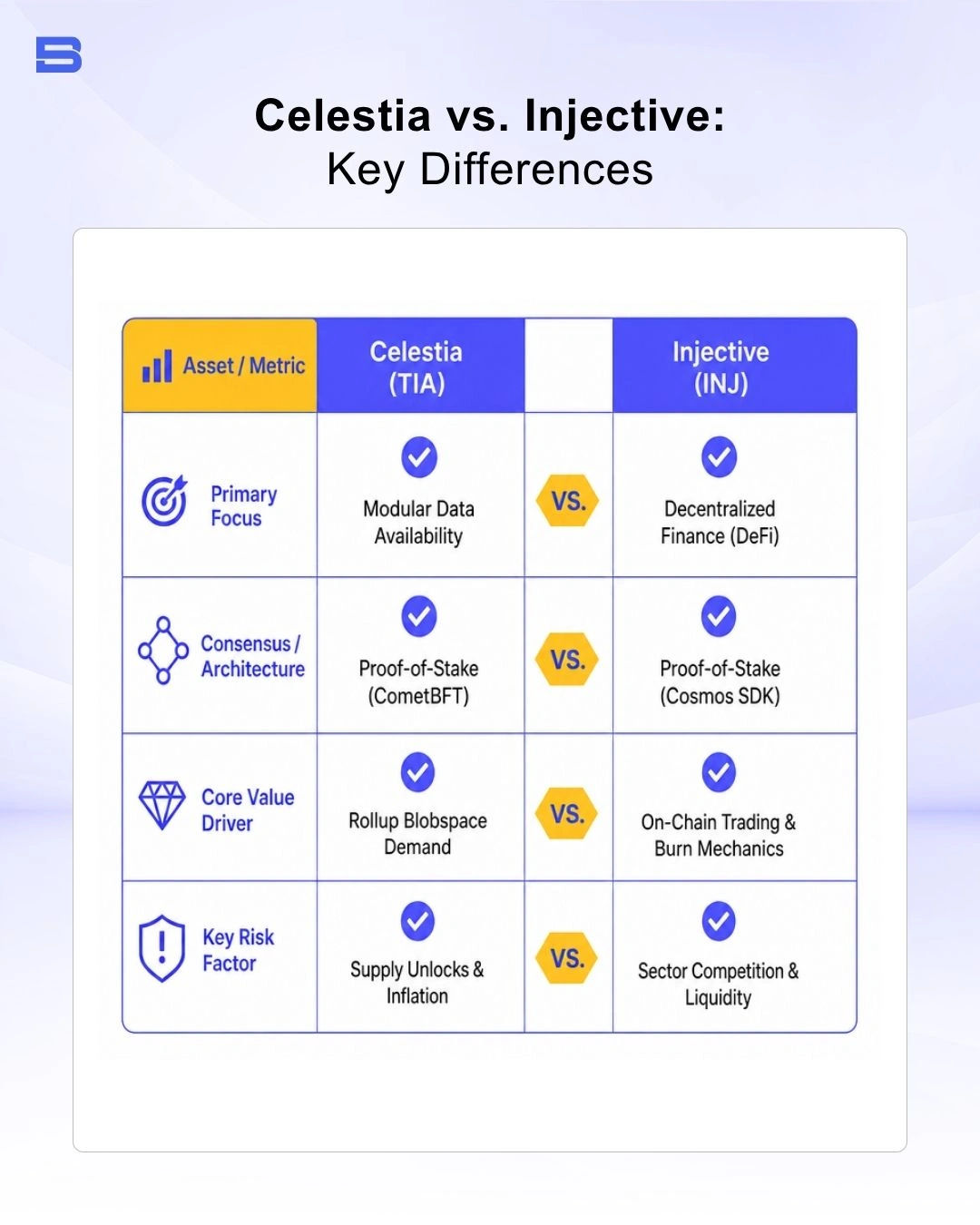
While Injective targets financial primitives like order books and derivatives directly on-chain, Celestia remains execution-agnostic, supplying raw data availability to external execution layers.
How to Trade Celestia (TIA): A Step-by-Step Execution Guide
Executing TIA trades effectively requires choosing a platform that matches your regulatory comfort and risk tolerance. Per regulations set by bodies like the Commodity Futures Trading Commission (CFTC), leveraged derivatives demand strict risk controls due to margin requirements.
- Select a Trading Platform: Choose a regulated platform that offers spot or perpetual futures contracts for TIA.
- Determine Contract Type: Choose spot purchases for long-term spot holding or perpetual contracts for short-term directional strategies.
- Calculate Position Size: Establish your position parameters based on account equity, not on maximum available leverage. Similar to standard workflows for how to trade Bitcoin, never commit your entire account to a single trade.
- Set Risk Management Rules: Define entry, stop-loss, and take-profit orders before entering the market.
Worked Trading Scenario
Assume you have a margin account balance of $1,000 and plan to trade TIA perpetual contracts during a technical breakout:
- Entry Capital (Margin): $1,000
- Leverage Applied: 3x (Total Position Size: $3,000)
- Entry Price: $10.00 (Position size = 300 TIA)
- Stop-Loss Order: $9.50 (a 5% price drop against entry)
If the market drops 5% to $9.50, your position loses $150 ($0.50 × 300 TIA). Thanks to 3x leverage, that 5% move against your position equals a 15% loss of your total allocated margin ($150 / $1,000). Leverage magnifies your gains when the trade moves in your favor, but it accelerates capital destruction just as quickly when the market moves against you.
Conclusion
Celestia provides essential modular infrastructure for scaling decentralized applications by decoupling data availability from execution. While its technical architecture presents compelling advantages for rollup developers, retail traders must remain mindful of structural token inflation, investor unlock schedules, and derivative leverage risks. Always balance tech adoption metrics against realistic downside risks before allocating capital.
- What Can You Trade? A Guide to Forex, Stocks, and More
- CFD Trading for Beginners
- What is CFD Trading and How Does It Work?
- Forex vs. Stocks: Which Market Suits You Best?
- How to Diversify a Portfolio Across Asset Classes
- How Dividend Stocks Work: Yields, Risks, and Strategies
- Silver Trading Explained: A Guide for Retail Investors
- Precious Metals Trading: A Complete Guide for Beginners
- Natural Gas Trading: A Guide to the Market
- Structured Warrants Malaysia: How They Work and Risks
- What Is the KLCI Index and How to Trade It
- Gold Investment in Malaysia: A Complete Guide for Beginners
- What Is Kijang Emas and How to Invest in It
- Value Investing Explained: How to Find Undervalued Stocks
- How to Trade Bitcoin Safely: A Complete Market Guide
- Growth Investing Explained: Strategies, Metrics, and Risks
- What Is Digital Gold Malaysia and How to Invest
- Crypto Trading Strategies for Beginners
- Gold vs Bitcoin: Key Differences, Risks, and Strategies
- Sukuk: A Guide for Beginners to Islamic Bonds
- What Is FCPO (Crude Palm Oil Futures) and How to Trade It
- How to Identify and Invest in Shariah-Compliant Stocks
- Timber Investment: Is It Worth It?
- Gold ETF Malaysia: A Guide for Beginners
- What Are Malaysian Government Securities (MGS)?
- Corporate Bonds Malaysia: A Guide for Beginners
- China A-Shares Trading Guide for Malaysian Investors
- What Is a Silver ETF and How to Invest in It?
- How to Trade XRP: A Practical Guide for Retail Investors
- How to Trade Solana (SOL): A Guide for Beginners
- What Are Gold Futures and How Do They Work?
- Money Market Fund in Malaysia: A Guide for Beginners
- Property Investment Malaysia: Direct Real Estate or M-REITs?
- What Is Binance Coin and How Does It Work?
- Green Sukuk: A Guide for Beginners to Islamic ESG Investing
- What Is Shiba Inu (SHIB) and How to Trade It
- What Is USDT? A Complete Guide to Tether for Beginners
- What Is Dogecoin and How to Trade It Safely for Beginners
- Cardano: A Guide for Beginners to Trade This Cryptocurrency
- Polkadot: A Guide to Trading This Cryptocurrency
- Tron: A Guide for Beginners to Trading This Cryptocurrency
- What Is Litecoin (LTC)? A Guide to Trading Digital Silver
- What Is Chainlink (LINK) and How to Trade It
- How to Trade Pepe Coin: Spot, Leverage, and Risk Management
- Near Protocol: A Guide to Trading This Cryptocurrency
- Trading Polygon Crypto: A Practical Guide for Beginners
- Trade Toncoin: Understanding the TON Ecosystem and Risks
- Cosmos Crypto: Ecosystem Architecture, Tokenomics, and Risks
- Stellar Crypto: A Guide to Trading This Cryptocurrency
- Avalanche Crypto Explained: A Practical Guide for Traders
- What Is Worldcoin? How to Trade WLD and Manage Risk
- Aptos: A Guide for Beginners to Trading This Cryptocurrency
- Sui Crypto Explained: Tokenomics and Trading Guide
- Celestia: A Guide to Trading This Cryptocurrency
- Decentraland: A Guide to Trading This Cryptocurrency
- What Is Arbitrum? How to Trade the Leading Layer 2 Network
- Sei Crypto: A Guide to Trading This Cryptocurrency
- What Is Injective Protocol and How to Trade INJ Safely
Disclaimer: The content on this page is intended for educational and informational purposes only. It does not constitute financial, investment, tax, or legal advice, and should not be interpreted as a recommendation to buy, sell, or hold any financial instrument or asset. Trading and investing involve significant risk, including the possible loss of your entire capital. Products such as forex, CFDs, and cryptocurrencies carry additional risks due to leverage, high volatility, and limited regulatory protection in some jurisdictions. Past performance of any financial instrument does not guarantee future results. Any market views, forecasts, or opinions expressed are those of the author at the time of writing and may not reflect current market conditions. Platform features, fees, and regulatory status are subject to change — always verify information directly with the relevant provider or regulator before making any financial decision. BrokerSpecs may receive compensation from third parties featured on this site. Always conduct your own due diligence and consider seeking advice from a licensed financial professional before investing.