


Related Tags
Entering a live trade on a decentralized exchange can feel like second nature once you get the hang of execution speeds and wallet approvals. Behind the scenes, however, smart contracts face a fundamental limitation: they are entirely blind to the outside world. A blockchain cannot natively pull live currency exchange rates, stock prices, weather data, or real-world sports results without compromising its security.
This technical barrier is where Chainlink enters the picture. By acting as a secure bridge connecting real-world data to blockchain smart contracts, Chainlink provides the essential data infrastructure powering modern decentralized finance (DeFi) and institutional real-world asset (RWA) tokenization.
What Is Chainlink and What Problem Does It Solve?
Blockchains are designed to be isolated, highly secure networks. While this isolation prevents unauthorized tampering, it creates a structural challenge known as the "Oracle Problem".
The Oracle Problem and How Chainlink Solves It
A smart contract executing a financial agreement—such as a decentralized lending protocol liquidating an undercollateralized loan—requires accurate, real-time market prices. If the smart contract relies on a single, centralized data feed (an "oracle"), a malicious actor could hack or manipulate that single point of failure to trigger false liquidations.
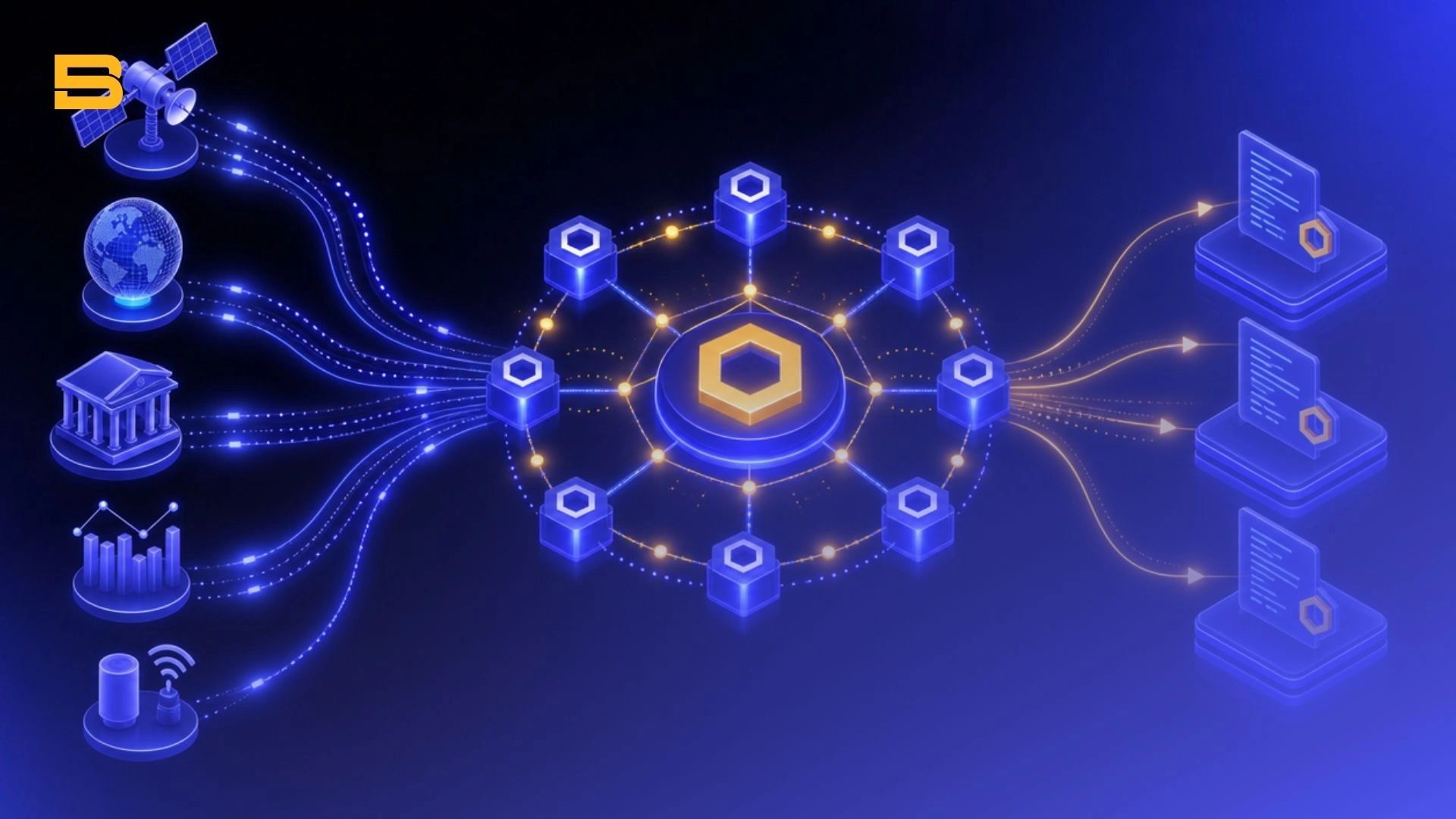
Chainlink solves this by operating a Decentralized Oracle Network (DON). Multiple independent node operators fetch data from premium off-chain APIs, validate the inputs, and aggregate them into a single reliable data point before broadcasting it on-chain. By decentralizing both the data sources and the node operators, Chainlink ensures that smart contracts receive accurate information without single points of failure.
If you are new to how digital assets are physically bought and sold on underlying spot markets, reviewing spot trading mechanics provides helpful baseline context.
Technical Infrastructure & Innovations
As decentralized applications have grown, Chainlink's technical scope has expanded far beyond simple price feeds.
Cross-Chain Interoperability Protocol (CCIP)
The crypto ecosystem contains hundreds of isolated blockchains. Chainlink developed the Cross-Chain Interoperability Protocol (CCIP) to serve as a universal communication standard across different blockchain networks. CCIP allows smart contracts to securely send data and transfer tokens across disparate chains.
Alongside CCIP, the Chainlink Runtime Environment (CRE) offers modular frameworks that allow traditional financial institutions to interface with public networks. Global banking networks and institutional venues utilize this architecture to bring tokenized real-world assets (RWAs)—such as treasury bonds and tokenized equities—onto public chains cleanly and securely.
Tokenomics and Utility of LINK
The native digital asset of the network is the LINK token. LINK is an ERC-20 token — the standard technical format most Ethereum-based tokens follow — with added ERC-677 functionality, which lets it trigger contract actions automatically when transferred.
Tokenomics and Staking Mechanics
LINK derives its utility from three core mechanisms:
- Network Service Fees: Smart contract developers pay Chainlink node operators in LINK to retrieve off-chain data feeds or perform specialized compute tasks.
- Node Operator Collateral: Node operators must lock up (stake) LINK as collateral to participate in oracle networks. If a node provides inaccurate or dishonest data, its staked LINK can be penalized ("slashed").
- Community Staking: Community members can stake their LINK tokens alongside node operators to help back oracle security, earning a percentage of network rewards in return.
Regulatory oversight around tokenized assets continues to evolve globally. For official regulatory guidance regarding digital assets, visit the US Securities and Exchange Commission (SEC).
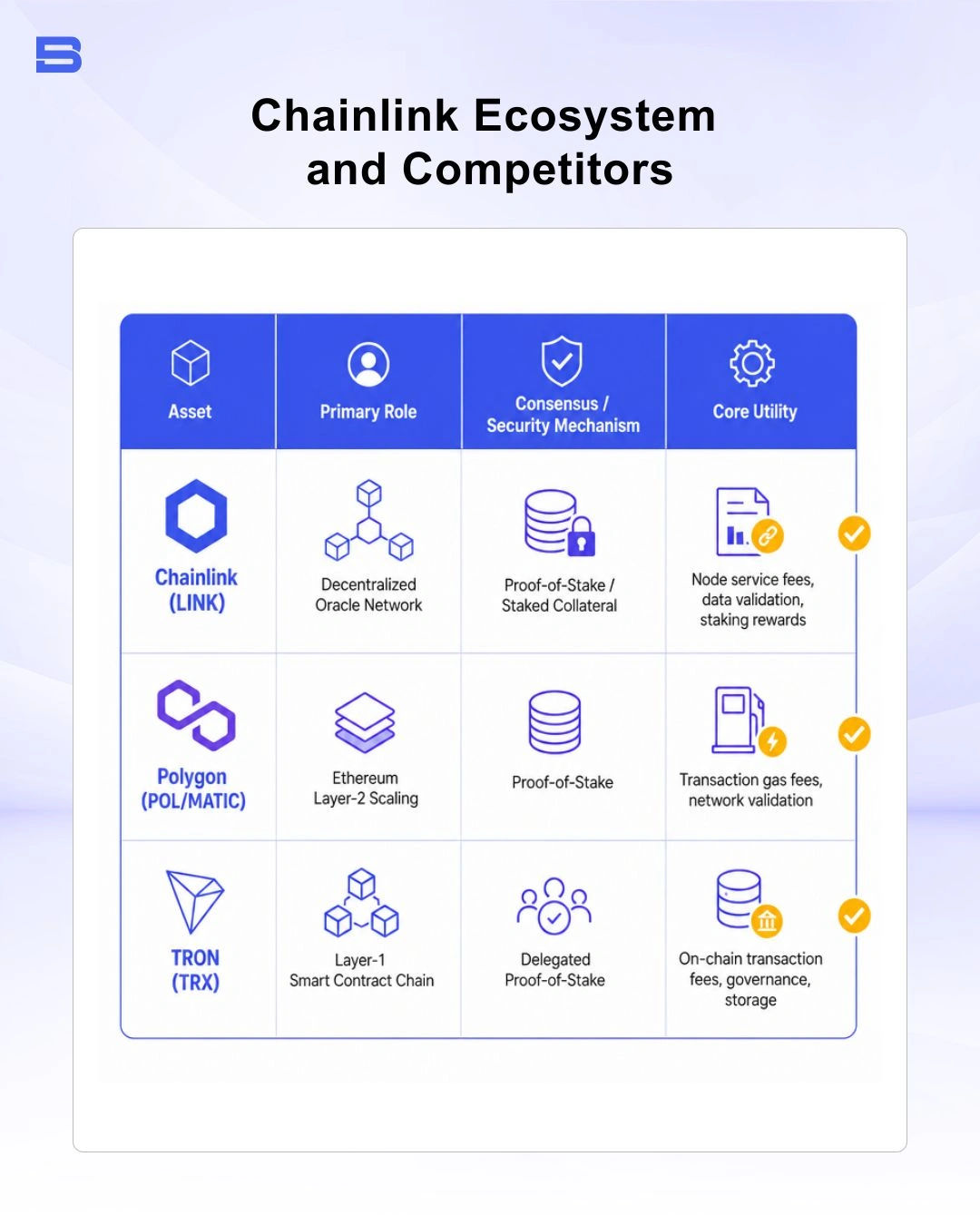
Chainlink Ecosystem and Cross-Chain Competitors
The network operates as cross-chain middleware, providing data services across almost all major smart contract platforms, including Polygon, Arbitrum, Solana, and Cardano.
Traders need to distinguish between oracle infrastructure providers like Chainlink and distinct layer-1 or layer-2 blockchain assets like Polygon crypto or Tron.
How to Trade Chainlink (LINK): A Beginner's Guide
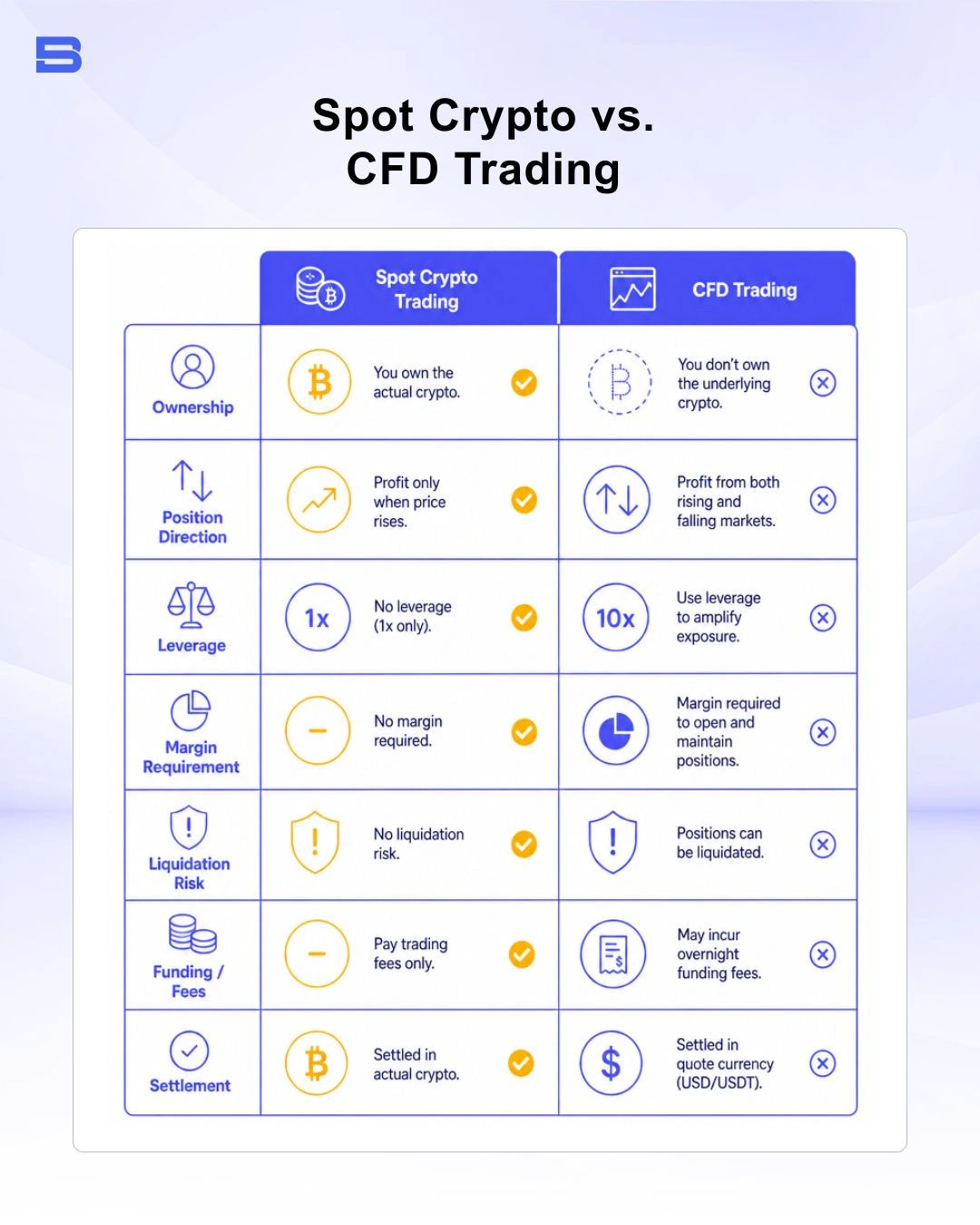
Depending on your investment goals and risk appetite, there are two primary ways to gain market exposure to LINK.
Spot Trading vs. CFD Trading
- Spot Crypto Trading: You buy actual LINK tokens through a cryptocurrency exchange. You own the underlying digital asset, which you can withdraw to a private wallet or stake. Spot trading carries no leverage risk, but you face full exposure to token price swings.
- Crypto CFD Trading: Derivatives such as Contracts for Difference (CFD) offered by regulated online brokers allow you to speculate on LINK's price movements without taking physical delivery of the token. CFD trading allows both long (buying) and short (selling) positions, as well as leverage.
Leverage amplifies your returns when you are right, but it accelerates capital destruction just as quickly when the market moves against you—a 5% market drop on a 10:1 leveraged CFD position can wipe out 50% of your invested margin. To learn more about navigating major assets, explore our guides on how to trade Bitcoin and how to trade Ethereum.
Key Risks When Trading LINK
- High Market Volatility: Crypto markets experience rapid price fluctuations. A sudden shift in broader market sentiment can cause double-digit percentage drops in LINK’s price within hours.
- Leverage Hazards: Trading LINK CFDs with high leverage without a strict stop-loss order increases the probability of receiving a margin call. Understanding margin trading mechanics is essential before using leverage.
- Smart Contract and Protocol Risk: While Chainlink has a strong security track record, decentralized protocols inherently carry risks related to software vulnerabilities or unexpected network updates.
Conclusion
Chainlink plays an essential role as backbone infrastructure for decentralized applications and institutional asset tokenization. By solving the Oracle Problem, it connects off-chain real-world data to on-chain smart contracts securely. Whether you choose to trade LINK through spot exchanges or via CFDs, maintaining disciplined position sizing and utilizing appropriate stop-loss orders remains vital to long-term market success.
- What Can You Trade? A Guide to Forex, Stocks, and More
- CFD Trading for Beginners
- What is CFD Trading and How Does It Work?
- Forex vs. Stocks: Which Market Suits You Best?
- How to Diversify a Portfolio Across Asset Classes
- How Dividend Stocks Work: Yields, Risks, and Strategies
- Silver Trading Explained: A Guide for Retail Investors
- Precious Metals Trading: A Complete Guide for Beginners
- Natural Gas Trading: A Guide to the Market
- Structured Warrants Malaysia: How They Work and Risks
- What Is the KLCI Index and How to Trade It
- Gold Investment in Malaysia: A Complete Guide for Beginners
- What Is Kijang Emas and How to Invest in It
- Value Investing Explained: How to Find Undervalued Stocks
- How to Trade Bitcoin Safely: A Complete Market Guide
- Growth Investing Explained: Strategies, Metrics, and Risks
- What Is Digital Gold Malaysia and How to Invest
- Crypto Trading Strategies for Beginners
- Gold vs Bitcoin: Key Differences, Risks, and Strategies
- Sukuk: A Guide for Beginners to Islamic Bonds
- What Is FCPO (Crude Palm Oil Futures) and How to Trade It
- How to Identify and Invest in Shariah-Compliant Stocks
- Timber Investment: Is It Worth It?
- Gold ETF Malaysia: A Guide for Beginners
- What Are Malaysian Government Securities (MGS)?
- Corporate Bonds Malaysia: A Guide for Beginners
- China A-Shares Trading Guide for Malaysian Investors
- What Is a Silver ETF and How to Invest in It?
- How to Trade XRP: A Practical Guide for Retail Investors
- How to Trade Solana (SOL): A Guide for Beginners
- What Are Gold Futures and How Do They Work?
- Money Market Fund in Malaysia: A Guide for Beginners
- Property Investment Malaysia: Direct Real Estate or M-REITs?
- What Is Binance Coin and How Does It Work?
- Green Sukuk: A Guide for Beginners to Islamic ESG Investing
- What Is Shiba Inu (SHIB) and How to Trade It
- What Is USDT? A Complete Guide to Tether for Beginners
- What Is Dogecoin and How to Trade It Safely for Beginners
- Cardano: A Guide for Beginners to Trade This Cryptocurrency
- Polkadot: A Guide to Trading This Cryptocurrency
- Tron: A Guide for Beginners to Trading This Cryptocurrency
- What Is Litecoin (LTC)? A Guide to Trading Digital Silver
- What Is Chainlink (LINK) and How to Trade It
- How to Trade Pepe Coin: Spot, Leverage, and Risk Management
- Near Protocol: A Guide to Trading This Cryptocurrency
- Trading Polygon Crypto: A Practical Guide for Beginners
- Trade Toncoin: Understanding the TON Ecosystem and Risks
- Cosmos Crypto: Ecosystem Architecture, Tokenomics, and Risks
- Stellar Crypto: A Guide to Trading This Cryptocurrency
- Avalanche Crypto Explained: A Practical Guide for Traders
- What Is Worldcoin? How to Trade WLD and Manage Risk
- Aptos: A Guide for Beginners to Trading This Cryptocurrency
- Sui Crypto Explained: Tokenomics and Trading Guide
- Celestia: A Guide to Trading This Cryptocurrency
- Decentraland: A Guide to Trading This Cryptocurrency
- What Is Arbitrum? How to Trade the Leading Layer 2 Network
- Sei Crypto: A Guide to Trading This Cryptocurrency
- What Is Injective Protocol and How to Trade INJ Safely
Disclaimer: The content on this page is intended for educational and informational purposes only. It does not constitute financial, investment, tax, or legal advice, and should not be interpreted as a recommendation to buy, sell, or hold any financial instrument or asset. Trading and investing involve significant risk, including the possible loss of your entire capital. Products such as forex, CFDs, and cryptocurrencies carry additional risks due to leverage, high volatility, and limited regulatory protection in some jurisdictions. Past performance of any financial instrument does not guarantee future results. Any market views, forecasts, or opinions expressed are those of the author at the time of writing and may not reflect current market conditions. Platform features, fees, and regulatory status are subject to change — always verify information directly with the relevant provider or regulator before making any financial decision. BrokerSpecs may receive compensation from third parties featured on this site. Always conduct your own due diligence and consider seeking advice from a licensed financial professional before investing.