


Related Tags
Imagine wanting to add silver to your investment portfolio, but realizing you have nowhere safe to store heavy metal bars or bags of coins. The thought of paying for a home security safe or paying annual fees for a bank deposit box can quickly derail your investment plans.
This is where exchange-traded funds enter the picture. Investing in precious metals no longer requires holding physical bullion in your living room, opening up accessible, liquid routes for retail investors worldwide.
What Is a Silver ETF and How Does It Work?
A silver ETF (Exchange-Traded Fund) is a pooled investment security traded on stock exchanges that allows investors to gain price exposure to silver without directly holding physical metal bullion.
When you buy shares of a silver ETF through a brokerage account, you are purchasing claims on a fund that tracks the market value of silver. To understand the underlying vehicle better, it helps to review what is ETF mechanisms in broader equity markets. Depending on the fund’s structure, the ETF manager achieves this exposure by storing physical bullion in secure vaults, holding stock in silver mining enterprises, or utilizing derivative contracts.
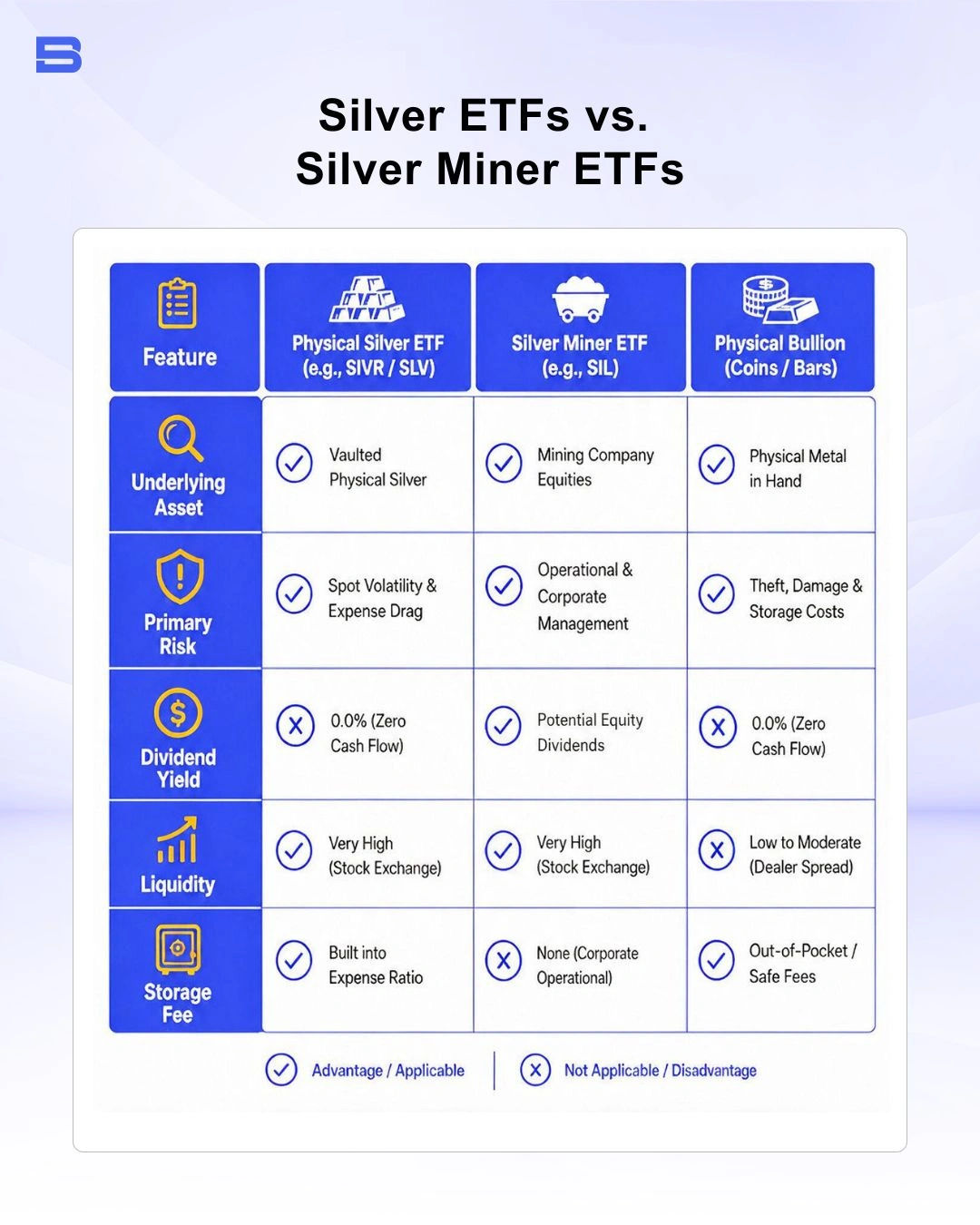
Physical Silver ETFs (Bullion-Backed)
Physical silver ETFs hold actual silver bars stored in institutional vaults managed by trusted custodians (such as JPMorgan Chase or HSBC). When you buy shares of a physical silver ETF—such as the iShares Silver Trust (SLV), the abrdn Physical Silver Shares ETF (SIVR), or the Sprott Physical Silver Trust (PSLV)—your investment is backed by real metal.
These funds aim to track the spot price of silver as closely as possible. Vaulted inventory is regularly audited by independent third parties to verify allocated backing. However, management and vaulting fees (the fund's expense ratio) are deducted directly from the fund's net asset value (NAV) over time.
Silver Miner ETFs (Equity-Based)
Rather than holding physical bullion, a silver miner ETF invests in a basket of publicly traded companies that mine, explore, and process silver. Examples include the Global X Silver Miners ETF (SIL) and the ETFMG Prime Junior Silver Miners ETF (SILJ).
Mining equities offer operational leverage: when silver market prices rise, a mining company's profit margins can expand at a significantly faster rate than the price of the underlying metal itself. Conversely, if silver prices slump or operational costs spike (e.g., labor disputes or equipment failures), mining stocks can drop sharply even if silver spot prices remain steady.
Leveraged and Inverse Silver ETFs (Advanced / High Risk)
Leveraged silver ETFs (such as ProShares Ultra Silver, AGQ) use financial derivatives to return two or three times the daily price movement of silver. Inverse ETFs (such as ProShares Short Silver, ZSL) aim to profit when silver prices fall.
While appealing to short-term day traders, these leveraged and short products are explicitly unsuitable for long-term investors. Because they rebalance on a daily basis, multi-day volatility decay can severely erode your capital over time, even if the spot price of silver ultimately moves in your predicted direction.
Is a Silver ETF a Good Investment? Key Benefits and Risks
Deciding whether a silver ETF aligns with your financial goals requires evaluating both its growth drivers and inherent structural drawbacks.
Silver occupies a unique middle ground in global markets: it is both a precious safe-haven asset and an essential industrial commodity. Growing industrial utilization—particularly in solar panels, electric vehicles, and high-end electronics—provides long-term structural demand. Furthermore, trading an ETF eliminates physical transportation, assay fees (the cost of verifying a bar or coin's purity), and home burglary risks while offering high intraday liquidity on standard stock exchanges.
However, downside risks must be actively managed. Silver spot prices are historically far more volatile than gold. Unlike dividend-paying equities or yield-bearing bonds, physical silver yields zero ongoing cash flow. Management expense ratios steadily consume share value over time, and tax authorities in many jurisdictions treat physically backed silver ETFs as "collectibles," which can trigger higher capital gains tax rates than standard corporate equities.
Silver ETFs vs. Direct Silver Trading: Key Differences
Investors seeking silver market exposure often choose between exchange-traded funds and direct trading derivatives like futures contracts or Contracts for Difference (CFDs). To explore broader active trading concepts, review our guide on silver trading strategies or compare energy markets with how to trade oil.
Direct derivatives trading through leveraged instruments offers 24-hour execution access and high leverage limits, but exposes traders to overnight holding costs (swaps/financing fees) and severe margin call risks. By contrast, unleveraged physical silver ETFs traded on stock exchanges carry no leverage liquidation risks, making them far better suited for medium-to-long-term buy-and-hold investors. Direct futures markets operate under strict oversight from regulatory bodies like the Commodity Futures Trading Commission (CFTC), whereas ETFs operate under equity exchange guidelines.
Key Factors to Consider Before Buying a Silver ETF
Before allocating capital to a silver ETF, carefully evaluate these three core parameters:
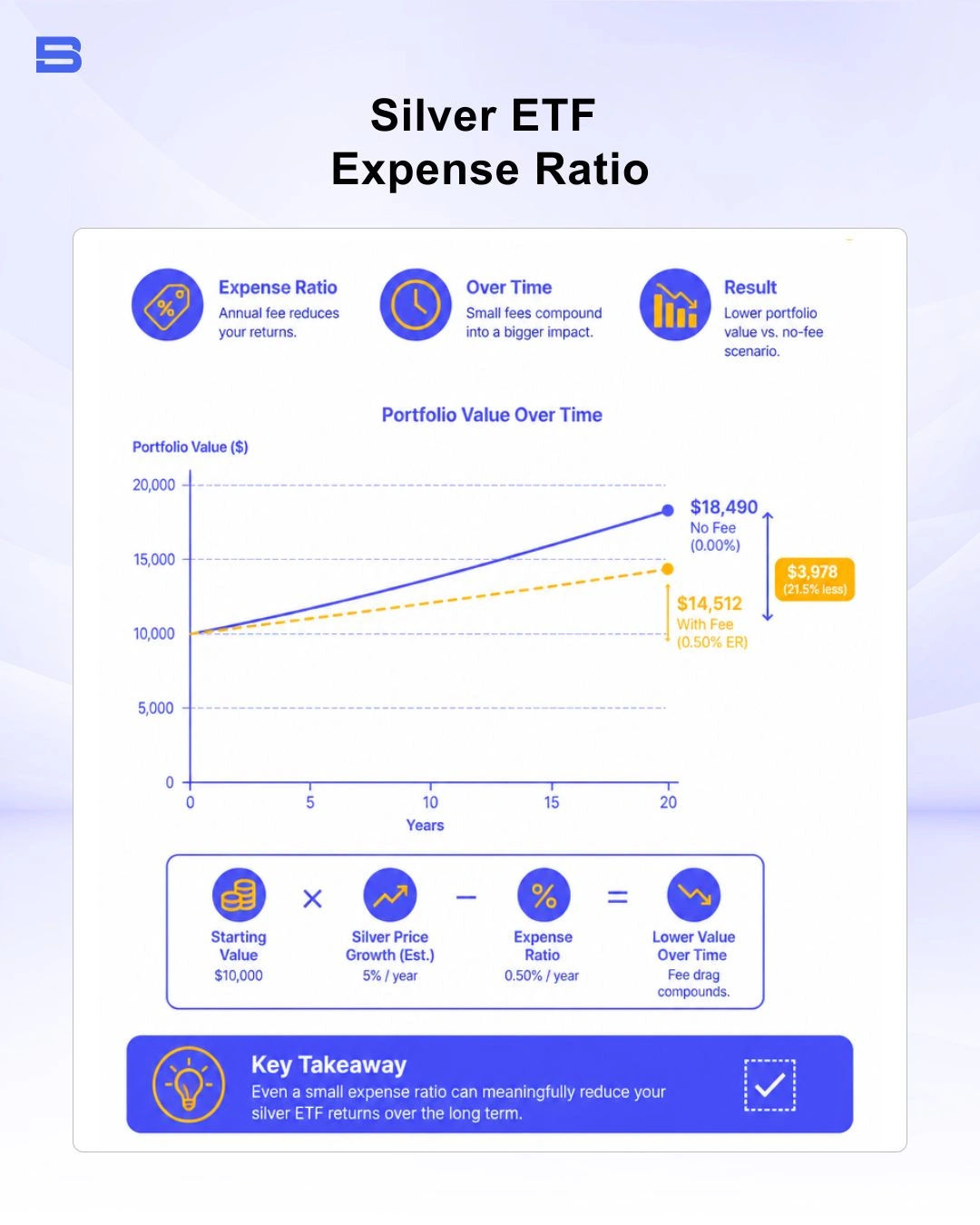
- Expense Ratios: Fund management fees can gradually reduce net returns over long holding periods. For example, the iShares Silver Trust (SLV) currently charges a 0.50% annual sponsor fee, according to the fund's official fact sheet on iShares.com. In comparison, the abrdn Physical Silver Shares ETF (SIVR) has a net expense ratio of 0.30% under its current fee waiver. On a $10,000 investment, the 0.20 percentage-point difference represents approximately $20 in fees in the first year, assuming the investment value remains unchanged. Over 10 years, the simple cumulative difference would be approximately $200, although the actual impact will vary with the investment's value and compounding. Investors should also check the latest fund documents because fee waivers may expire or change.
- Tracking Error and Liquidity: Assess the fund's average daily trading volume and bid-ask spread. High-volume funds feature tight spreads, ensuring minimal slippage when entering or exiting a position. Additionally, check whether the ETF trades at a frequent premium or discount to its Net Asset Value (NAV).
- Vaulting Transparency and Custody: Verify where the custodian stores the physical bullion (e.g., London, Zurich, or New York) and check the frequency of independent auditing reports detailing allocated bar lists.
How to Buy Silver ETFs
Getting started with silver ETFs involves four straightforward steps:
- Select a Brokerage Platform: Open an account with an international or regional broker that grants access to primary exchanges such as the New York Stock Exchange (NYSE) or Nasdaq (for global/Southeast Asian investors, ensure your platform supports US equity trading).
- Analyze Fund Specifications: Compare funds based on total Assets Under Management (AUM), daily liquidity, expense ratios, and backing mechanisms.
- Determine Position Size: Limit single-commodity exposure within your total investment portfolio according to your personal risk management parameters.
- Place Your Trade Order: Execute a Limit Order (to specify your entry price precisely) or a Market Order (for immediate execution) during normal stock market operating hours.
Silver ETFs in a Broader Precious Metals Portfolio
A disciplined multi-asset strategy rarely relies on a single commodity. Silver plays a dual role: serving as a speculative asset during market rallies and an industrial component during economic expansions.
When structuring a resilient commodities allocation, investors frequently pair silver with gold funds to balance overall portfolio volatility. You can learn more about asset structures by reviewing precious metals trading tactics or exploring regional options like gold ETF Malaysia. Financial planners generally recommend capping total precious metals allocation at 5% to 10% of an overall balanced investment portfolio.
The Bottom Line
Silver ETFs offer an efficient, highly liquid, and transparent avenue to gain exposure to silver without the burden of storing physical metal. By carefully evaluating expense ratios, understanding the distinction between bullion funds and mining equities, and keeping position sizes within sensible risk limits, you can effectively integrate silver into your long-term portfolio strategy.
- What Can You Trade? A Guide to Forex, Stocks, and More
- CFD Trading for Beginners
- What is CFD Trading and How Does It Work?
- Forex vs. Stocks: Which Market Suits You Best?
- How to Diversify a Portfolio Across Asset Classes
- How Dividend Stocks Work: Yields, Risks, and Strategies
- Silver Trading Explained: A Guide for Retail Investors
- Precious Metals Trading: A Complete Guide for Beginners
- Natural Gas Trading: A Guide to the Market
- Structured Warrants Malaysia: How They Work and Risks
- What Is the KLCI Index and How to Trade It
- Gold Investment in Malaysia: A Complete Guide for Beginners
- What Is Kijang Emas and How to Invest in It
- Value Investing Explained: How to Find Undervalued Stocks
- How to Trade Bitcoin Safely: A Complete Market Guide
- Growth Investing Explained: Strategies, Metrics, and Risks
- What Is Digital Gold Malaysia and How to Invest
- Crypto Trading Strategies for Beginners
- Gold vs Bitcoin: Key Differences, Risks, and Strategies
- Sukuk: A Guide for Beginners to Islamic Bonds
- What Is FCPO (Crude Palm Oil Futures) and How to Trade It
- How to Identify and Invest in Shariah-Compliant Stocks
- Timber Investment: Is It Worth It?
- Gold ETF Malaysia: A Guide for Beginners
- What Are Malaysian Government Securities (MGS)?
- Corporate Bonds Malaysia: A Guide for Beginners
- China A-Shares Trading Guide for Malaysian Investors
- What Is a Silver ETF and How to Invest in It?
- How to Trade XRP: A Practical Guide for Retail Investors
- How to Trade Solana (SOL): A Guide for Beginners
- What Are Gold Futures and How Do They Work?
- Money Market Fund in Malaysia: A Guide for Beginners
- Property Investment Malaysia: Direct Real Estate or M-REITs?
- What Is Binance Coin and How Does It Work?
- Green Sukuk: A Guide for Beginners to Islamic ESG Investing
- What Is Shiba Inu (SHIB) and How to Trade It
- What Is USDT? A Complete Guide to Tether for Beginners
- What Is Dogecoin and How to Trade It Safely for Beginners
- Cardano: A Guide for Beginners to Trade This Cryptocurrency
- Polkadot: A Guide to Trading This Cryptocurrency
- Tron: A Guide for Beginners to Trading This Cryptocurrency
- What Is Litecoin (LTC)? A Guide to Trading Digital Silver
- What Is Chainlink (LINK) and How to Trade It
- How to Trade Pepe Coin: Spot, Leverage, and Risk Management
- Near Protocol: A Guide to Trading This Cryptocurrency
- Trading Polygon Crypto: A Practical Guide for Beginners
- Trade Toncoin: Understanding the TON Ecosystem and Risks
- Cosmos Crypto: Ecosystem Architecture, Tokenomics, and Risks
- Stellar Crypto: A Guide to Trading This Cryptocurrency
- Avalanche Crypto Explained: A Practical Guide for Traders
- What Is Worldcoin? How to Trade WLD and Manage Risk
- Aptos: A Guide for Beginners to Trading This Cryptocurrency
- Sui Crypto Explained: Tokenomics and Trading Guide
- Celestia: A Guide to Trading This Cryptocurrency
- Decentraland: A Guide to Trading This Cryptocurrency
- What Is Arbitrum? How to Trade the Leading Layer 2 Network
- Sei Crypto: A Guide to Trading This Cryptocurrency
- What Is Injective Protocol and How to Trade INJ Safely
Disclaimer: The content on this page is intended for educational and informational purposes only. It does not constitute financial, investment, tax, or legal advice, and should not be interpreted as a recommendation to buy, sell, or hold any financial instrument or asset. Trading and investing involve significant risk, including the possible loss of your entire capital. Products such as forex, CFDs, and cryptocurrencies carry additional risks due to leverage, high volatility, and limited regulatory protection in some jurisdictions. Past performance of any financial instrument does not guarantee future results. Any market views, forecasts, or opinions expressed are those of the author at the time of writing and may not reflect current market conditions. Platform features, fees, and regulatory status are subject to change — always verify information directly with the relevant provider or regulator before making any financial decision. BrokerSpecs may receive compensation from third parties featured on this site. Always conduct your own due diligence and consider seeking advice from a licensed financial professional before investing.