


Related Tags
Entering a trade on a fast-moving altcoin can feel like walking a tightrope between rapid execution and relentless market volatility. Avalanche crypto has positioned itself as a major Layer-1 smart contract platform designed to solve the blockchain trilemma of speed, security, and scalability. For retail traders, understanding AVAX goes beyond developer jargon—it requires evaluating network mechanics, fee structures, and market dynamics to decide how and when to gain exposure.
What Is Avalanche Crypto and How Does It Work?
Avalanche crypto is an open-source, proof-of-stake (PoS) blockchain platform designed for decentralized applications (dApps) and custom blockchain networks. Founded by Ava Labs, the platform aims to deliver transaction finality in under one second while maintaining high throughput and low execution costs.
The Architecture Behind Avalanche Crypto: Tri-Chain Structure and Subnets
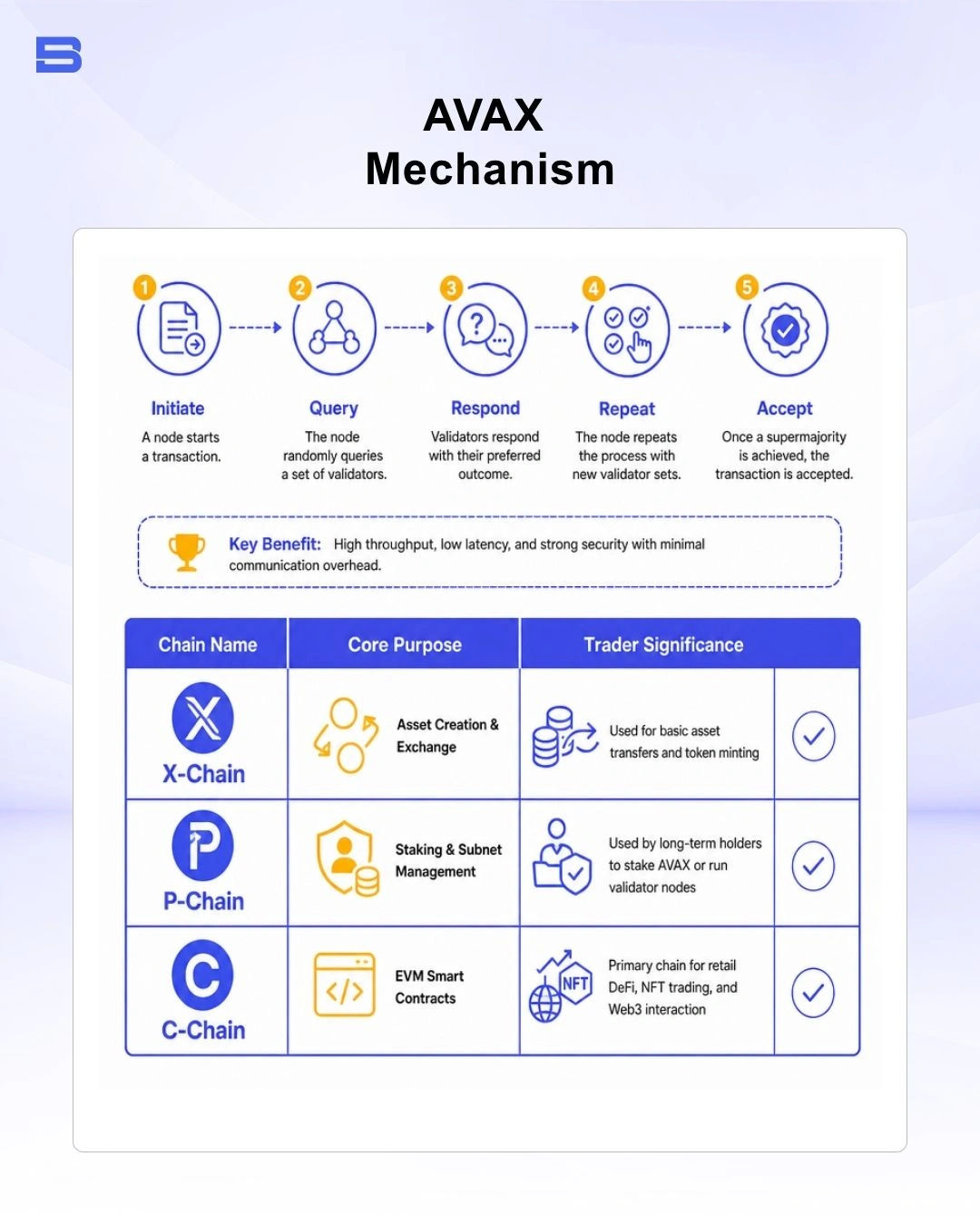
Unlike single-chain networks like Bitcoin or traditional Ethereum execution layers, Avalanche crypto operates using a multi-chain framework divided into three distinct built-in blockchains, all validated by the primary network:
- Exchange Chain (X-Chain): Dedicated strictly to creating, managing, and trading digital assets, including the native AVAX token.
- Platform Chain (P-Chain): Manages network validators, tracks active subnets, and coordinates the creation of new custom blockchains.
- Contract Chain (C-Chain): An instance of the Ethereum Virtual Machine (EVM) that allows developers to deploy Ethereum-compatible smart contracts seamlessly.
Beyond its core chains, Avalanche crypto introduces Subnets (Sub-networks). A Subnet is a sovereign group of validators working together to achieve consensus on a set of custom blockchains. Unlike Layer-2 scaling solutions that rely on rollups to periodically commit data back to a main chain, Subnets operate with dedicated, isolated state environments, allowing institutions and enterprise applications to build customized public or private networks without competing for mainnet block space.
Avalanche Consensus Mechanism
The network uses the Avalanche crypto consensus mechanism, a novel framework distinct from Nakamoto consensus (used in Bitcoin) and traditional Classical consensus protocols. Nodes achieve consensus through repeated random subsampling: a validator polls a small, random sample of neighboring nodes to check their decision on a transaction and updates its state accordingly.
This process repeats rapidly until the entire network reaches overwhelming consensus, enabling sub-second settlement times and handling thousands of transactions per second (TPS) under optimal network conditions.
AVAX Tokenomics and Real-World Utility
The native cryptocurrency of the Avalanche crypto ecosystem is AVAX. It serves three fundamental functions across the network: paying transaction gas fees, securing the network through staking, and acting as a basic unit of account between subnets.
- Capped Supply Limit: AVAX has a hard-capped maximum supply of 720 million tokens, with 360 million AVAX minted at genesis. The remaining potential supply is gradually minted as staking rewards, with the issuance rate decreasing as the network approaches its maximum supply.
- Transaction Fee Burning: All transaction fees across all three chains are permanently burned (removed from circulation). This dynamic serves as a deflationary offset to the issuance of new staking rewards, reducing the circulating supply as network activity rises.
- Staking Dynamics: AVAX holders can participate as validators by staking at least 2,000 AVAX or delegate at least 25 AVAX to an existing validator. Mainnet staking periods range from two weeks to one year, during which staked AVAX is temporarily untransferable, reducing the amount of immediately liquid supply.
When evaluating crypto assets against traditional store-of-value assets like gold vs. Bitcoin, traders often assess token supply mechanics; AVAX's burning mechanism introduces a demand-driven supply constraint directly linked to network usage.
Comparing Avalanche Crypto to Key Competitor Blockchains
To evaluate AVAX as an asset, traders must compare its performance metrics, transaction stability, and interoperability against major Layer-1 and Layer-2 competitors.
Avalanche Crypto vs. Ethereum and Solana
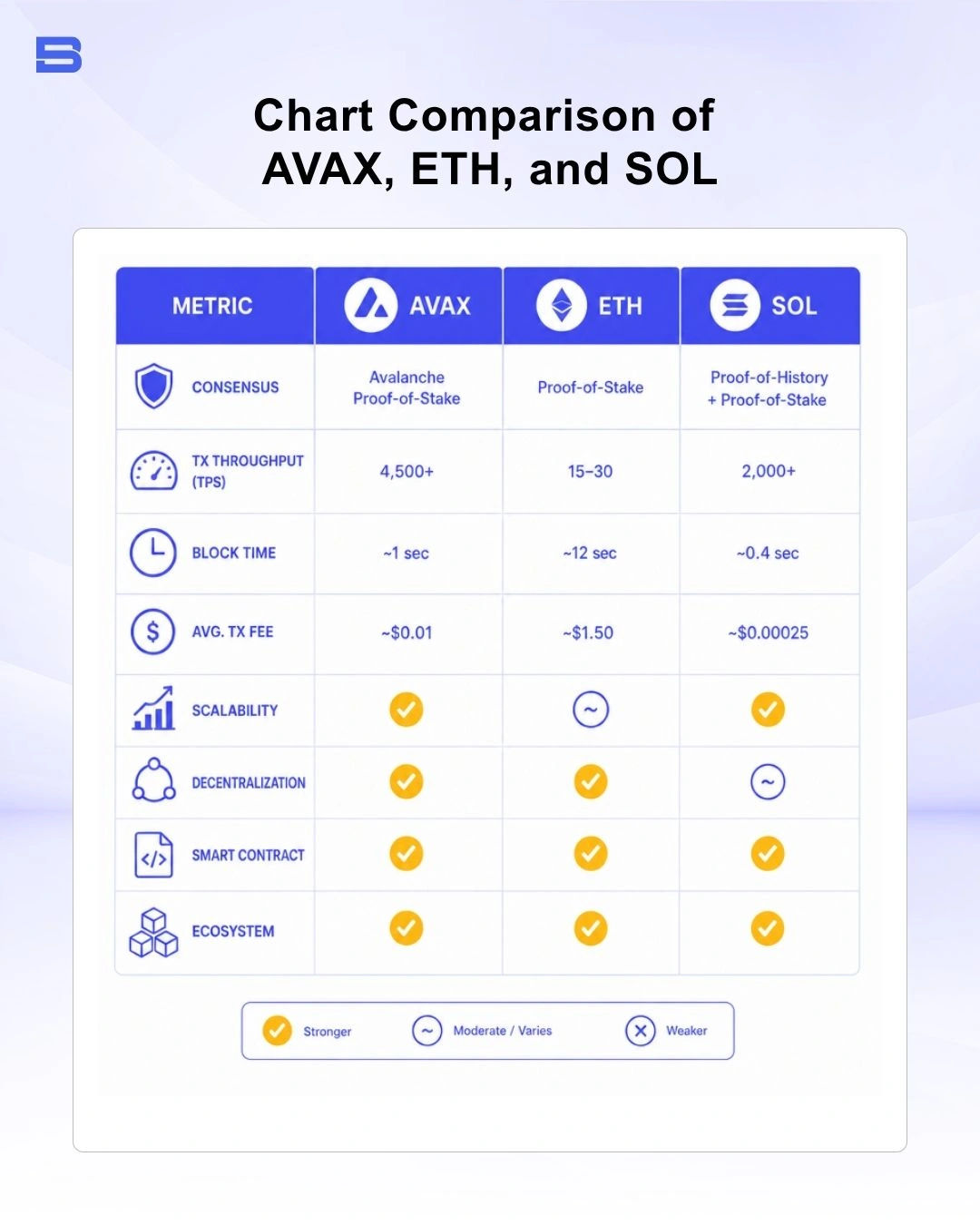
When evaluating execution environments, Avalanche sits between Ethereum's high security/low throughput model and Solana's high-speed single-chain model:
- Execution Velocity: According to Avalanche's official network documentation, Ethereum's base layer processes roughly 15 TPS under typical capacity estimates, while Avalanche has demonstrated throughput of more than 4,500 TPS in independent benchmark testing—figures traders can verify in real time via a network explorer such as Avascan. Avalanche L1s (formerly Subnets) can operate independently, allowing the ecosystem to scale transaction processing across multiple networks.
- EVM Compatibility: Unlike Solana, which uses a Rust-based execution model, Avalanche's C-Chain is fully EVM-compatible. This allows traders to use familiar tools like MetaMask and dApp interfaces originally built for Ethereum.
- Fee Structure: Ethereum base-layer gas fees can fluctuate dramatically during periods of high network congestion. Avalanche maintains a dynamic but predictable fee structure, though C-Chain fees can still rise during intense DeFi volatility. If you are learning how to trade Ethereum, you will find Avalanche's C-Chain user experience virtually identical, albeit with faster settlement.
Avalanche vs. Polygon, Near Protocol, and Cosmos
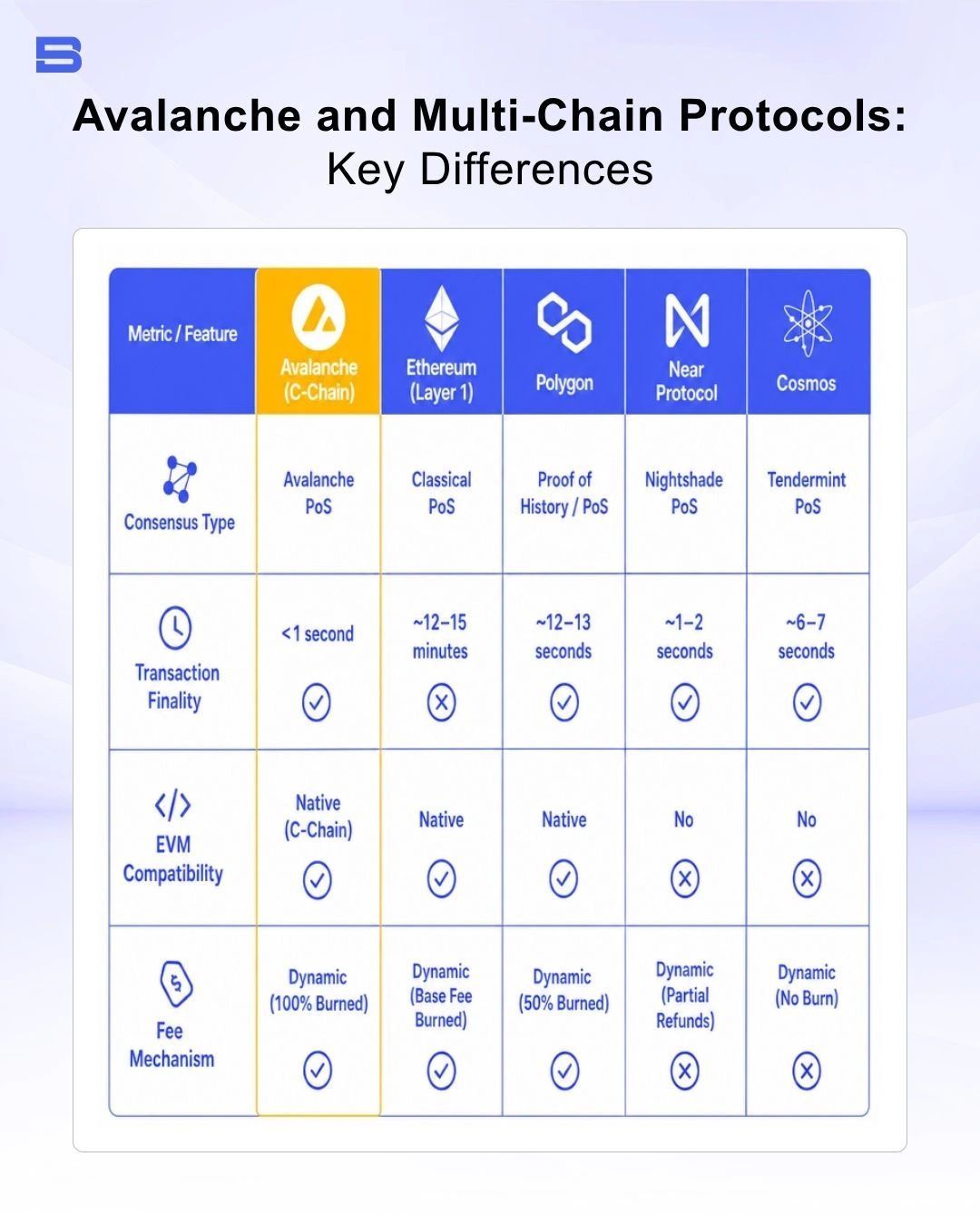
Avalanche competes directly with multi-chain infrastructure protocols like Polygon crypto, Near Protocol, and Cosmos crypto. While Cosmos uses Inter-Blockchain Communication (IBC) to connect independent chains, Avalanche relies on its shared validator pool and native Avalanche Warp Messaging (AWM) to enable cross-subnet communication.
Meanwhile, projects like XRP and Toncoin focus heavily on payment networks, whereas Avalanche focuses primarily on customizable smart contract execution environments.
How to Trade AVAX: Spot, CFDs, and Derivatives
Traders can access AVAX through various execution venues and product types depending on their capital, risk tolerance, and trading strategy.
- Spot Trading: Buying actual AVAX tokens on centralized or decentralized exchanges gives you direct ownership. Spot positions allow you to transfer tokens off exchanges into non-custodial wallets for staking or Web3 participation without facing leverage or overnight financing costs.
- Contracts for Difference (CFD): Offered by online brokers regulated by Tier-1 authorities such as the Monetary Authority of Singapore (MAS), CFDs allow you to speculate on price movements without holding the underlying digital asset. CFD trading supports both long and short positions and provides financial leverage, though leverage multiplies both potential profits and capital losses.
- Futures and Options: Perpetual futures contracts traded on centralized derivative exchanges allow active market participants to hedge spot portfolios or deploy tactical strategies using leverage.
When managing leverage across crypto markets, derivative trading mechanics share similarities with how to trade Bitcoin—requiring precise margin tracking to avoid automatic liquidation during sudden price swings.
Key Risks and Vulnerabilities Every AVAX Trader Should Know
Every cryptocurrency investment carries downside risks, and AVAX is no exception. Market participants must weigh potential gains against operational and market-wide vulnerabilities.
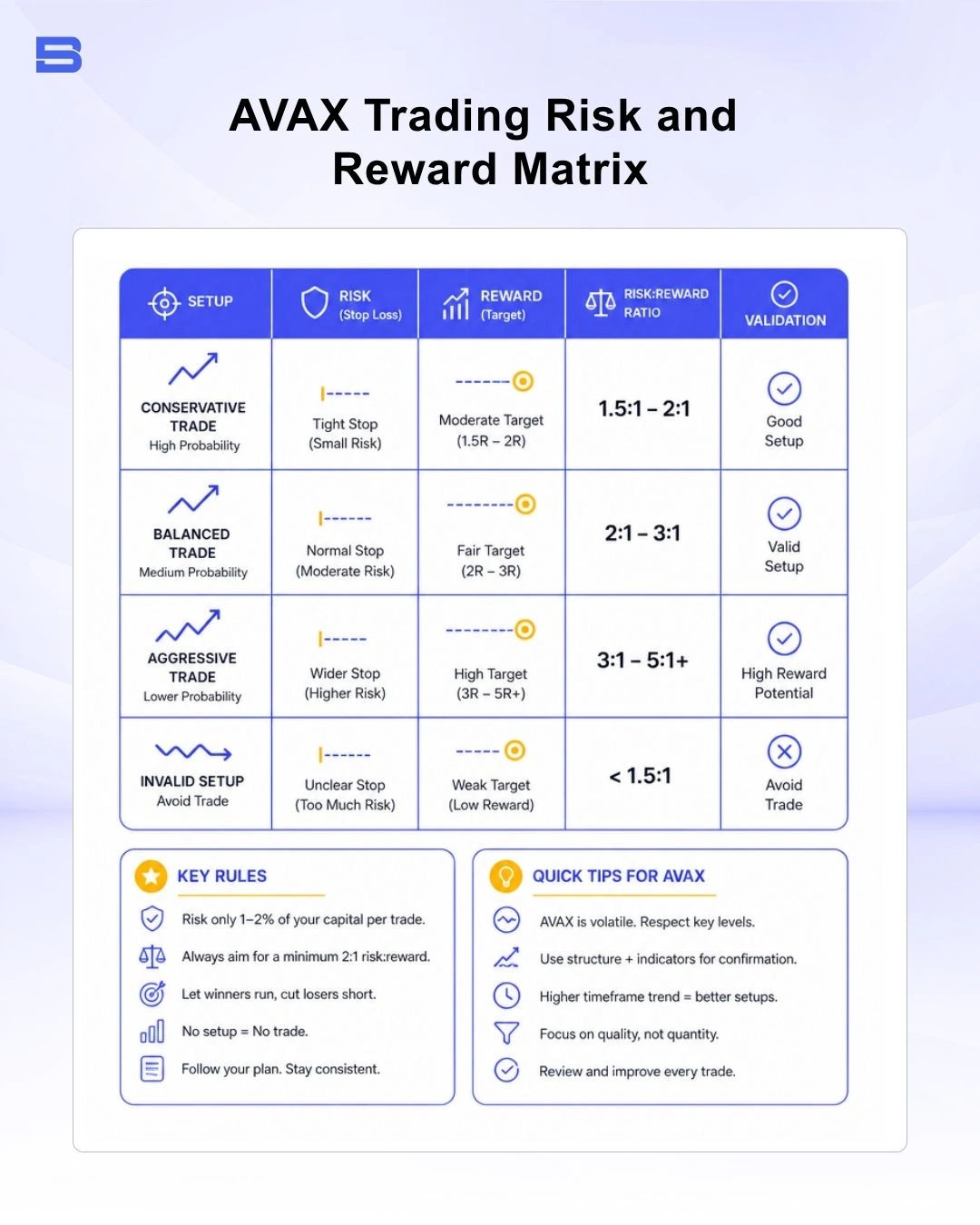
- High Price Volatility: Like most altcoins, AVAX exhibits a higher beta compared to Bitcoin—meaning its price tends to swing more sharply in both directions relative to the broader crypto market. Price movements are heavily influenced by broader crypto sentiment, regulatory developments from bodies like the US Securities and Exchange Commission (SEC), and global macroeconomic conditions.
- Subnet Validator Centralization Risks: While the primary network features thousands of validators, individual Subnets require separate validator sets. Smaller subnets with few active validators may face higher centralization or collusion risks compared to the main chains.
- Smart Contract Vulnerabilities: Trading within decentralized finance (DeFi) protocols on the C-Chain exposes capital to smart contract exploits, flash loan attacks, and liquidity pool risks.
- Competitive Pressures: Layer-1 competition is intense. Alternative chains and Ethereum Layer-2 rollups actively compete for developer mindshare, liquidity, and active user addresses.
Final Thoughts on Trading AVAX
Avalanche crypto has established a robust technological foundation through its tri-chain architecture, rapid consensus, and customizable Subnet infrastructure. For traders, AVAX offers exposure to a high-throughput Layer-1 ecosystem with clear deflationary fee mechanics.
However, trading AVAX requires careful capital protection to navigate inherent market volatility, smart contract risks, and evolving regulatory landscapes. Position sizing, strict stop-loss strategies, and choosing the right trading venue remain essential for managing downside risk.
- What Can You Trade? A Guide to Forex, Stocks, and More
- CFD Trading for Beginners
- What is CFD Trading and How Does It Work?
- Forex vs. Stocks: Which Market Suits You Best?
- How to Diversify a Portfolio Across Asset Classes
- How Dividend Stocks Work: Yields, Risks, and Strategies
- Silver Trading Explained: A Guide for Retail Investors
- Precious Metals Trading: A Complete Guide for Beginners
- Natural Gas Trading: A Guide to the Market
- Structured Warrants Malaysia: How They Work and Risks
- What Is the KLCI Index and How to Trade It
- Gold Investment in Malaysia: A Complete Guide for Beginners
- What Is Kijang Emas and How to Invest in It
- Value Investing Explained: How to Find Undervalued Stocks
- How to Trade Bitcoin Safely: A Complete Market Guide
- Growth Investing Explained: Strategies, Metrics, and Risks
- What Is Digital Gold Malaysia and How to Invest
- Crypto Trading Strategies for Beginners
- Gold vs Bitcoin: Key Differences, Risks, and Strategies
- Sukuk: A Guide for Beginners to Islamic Bonds
- What Is FCPO (Crude Palm Oil Futures) and How to Trade It
- How to Identify and Invest in Shariah-Compliant Stocks
- Timber Investment: Is It Worth It?
- Gold ETF Malaysia: A Guide for Beginners
- What Are Malaysian Government Securities (MGS)?
- Corporate Bonds Malaysia: A Guide for Beginners
- China A-Shares Trading Guide for Malaysian Investors
- What Is a Silver ETF and How to Invest in It?
- How to Trade XRP: A Practical Guide for Retail Investors
- How to Trade Solana (SOL): A Guide for Beginners
- What Are Gold Futures and How Do They Work?
- Money Market Fund in Malaysia: A Guide for Beginners
- Property Investment Malaysia: Direct Real Estate or M-REITs?
- What Is Binance Coin and How Does It Work?
- Green Sukuk: A Guide for Beginners to Islamic ESG Investing
- What Is Shiba Inu (SHIB) and How to Trade It
- What Is USDT? A Complete Guide to Tether for Beginners
- What Is Dogecoin and How to Trade It Safely for Beginners
- Cardano: A Guide for Beginners to Trade This Cryptocurrency
- Polkadot: A Guide to Trading This Cryptocurrency
- Tron: A Guide for Beginners to Trading This Cryptocurrency
- What Is Litecoin (LTC)? A Guide to Trading Digital Silver
- What Is Chainlink (LINK) and How to Trade It
- How to Trade Pepe Coin: Spot, Leverage, and Risk Management
- Near Protocol: A Guide to Trading This Cryptocurrency
- Trading Polygon Crypto: A Practical Guide for Beginners
- Trade Toncoin: Understanding the TON Ecosystem and Risks
- Cosmos Crypto: Ecosystem Architecture, Tokenomics, and Risks
- Stellar Crypto: A Guide to Trading This Cryptocurrency
- Avalanche Crypto Explained: A Practical Guide for Traders
- What Is Worldcoin? How to Trade WLD and Manage Risk
- Aptos: A Guide for Beginners to Trading This Cryptocurrency
- Sui Crypto Explained: Tokenomics and Trading Guide
- Celestia: A Guide to Trading This Cryptocurrency
- Decentraland: A Guide to Trading This Cryptocurrency
- What Is Arbitrum? How to Trade the Leading Layer 2 Network
- Sei Crypto: A Guide to Trading This Cryptocurrency
- What Is Injective Protocol and How to Trade INJ Safely
Disclaimer: The content on this page is intended for educational and informational purposes only. It does not constitute financial, investment, tax, or legal advice, and should not be interpreted as a recommendation to buy, sell, or hold any financial instrument or asset. Trading and investing involve significant risk, including the possible loss of your entire capital. Products such as forex, CFDs, and cryptocurrencies carry additional risks due to leverage, high volatility, and limited regulatory protection in some jurisdictions. Past performance of any financial instrument does not guarantee future results. Any market views, forecasts, or opinions expressed are those of the author at the time of writing and may not reflect current market conditions. Platform features, fees, and regulatory status are subject to change — always verify information directly with the relevant provider or regulator before making any financial decision. BrokerSpecs may receive compensation from third parties featured on this site. Always conduct your own due diligence and consider seeking advice from a licensed financial professional before investing.