


Related Tags
You can buy and trade Ethereum in Malaysia in one of two ways: purchasing spot ETH on an SC-registered exchange, or speculating on price via CFDs with an offshore broker.
Standing in line at a Kuala Lumpur coffee shop, you might hear fellow investors debating whether to hold digital assets alongside traditional stocks and unit trusts. While Bitcoin often dominates headlines, Ethereum has established itself as the foundational platform for smart contracts and decentralized finance.
Navigating the market for Ethereum in Malaysia requires understanding local financial regulations and selecting the right access method for your trading goals. Whether you want direct ownership of Ether (ETH) or prefer speculating on short-term price movements, having a structured plan helps protect your capital.
Understanding Ethereum Malaysia: Spot Digital Asset Exchanges (DAXs) vs. CFDs
Malaysian traders generally access Ethereum through two distinct financial vehicles: spot digital asset exchanges or derivative contracts. Each path serves a different strategy and carries unique structural considerations.
Spot Trading on an SC Registered DAX in Malaysia
Spot trading involves purchasing actual ETH tokens that are delivered directly to your exchange wallet or private cold storage. In Malaysia, spot crypto exchanges operate as Recognized Market Operators under the oversight of the Securities Commission Malaysia (SC).
Trading on an SC registered DAX in Malaysia allows you to deposit Ringgit (MYR) seamlessly via local bank transfer. Because you hold the underlying asset, you retain full rights to transfer tokens to external hardware wallets or participate in network staking.
Active Trading via Ethereum CFD in Malaysia
Trading an Ethereum CFD (Contract for Difference) allows you to speculate on ETH price volatility without taking physical delivery of the token. Offshore CFD brokers enable traders to open both long (buy) and short (sell) positions using margin leverage.
Derivatives offer flexibility during market downturns, but leverage significantly increases your overall portfolio exposure. It is crucial to remember that margin trading magnifies both potential gains and potential losses on every position.
How to Buy Ethereum in Malaysia Step-by-Step
Acquiring spot Ether through local regulated channels involves a straightforward onboarding process designed to protect consumer funds. Following these steps ensures your capital moves through verified banking corridors.
- Complete Identity Verification (e-KYC): Register on a licensed local exchange and submit your MyKad alongside a selfie to satisfy statutory anti-money laundering requirements.
- Deposit Malaysian Ringgit: Link your local bank account and transfer MYR into your exchange account using FPX online banking.
- Execute Your Purchase: Place a market or limit order to exchange Ringgit for ETH at your desired entry price.
- Secure Your Tokens: Transfer your assets from the exchange to a non-custodial hardware wallet for long-term storage.
When purchasing RM1,000 worth of ETH on a local DAX charging a standard 0.5% transaction fee, RM5 is deducted for execution, leaving RM995 allocated directly to your spot Ether balance.
Building an Effective Crypto Trading Strategy for Ethereum
Navigating digital asset markets requires matching your execution style to your personal risk tolerance and available time. Spreading your entry points helps mitigate the impact of sudden price swings.
Dollar-Cost Averaging (DCA) suits passive investors who allocate a fixed Ringgit amount at regular intervals, reducing sensitivity to short-term market timing. Conversely, swing traders utilize technical indicators like support levels and moving averages to capture price trends over days or weeks.
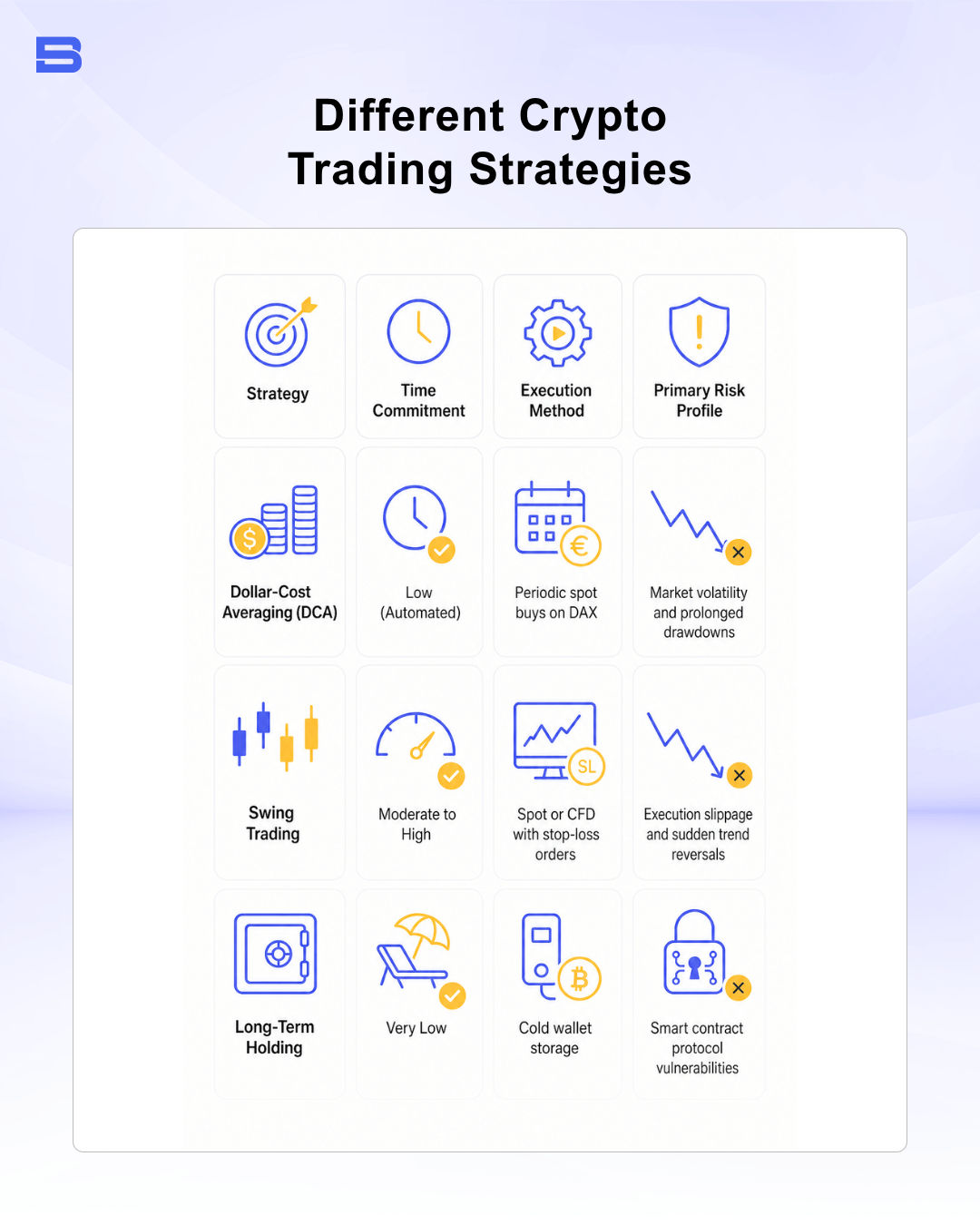 Developing a disciplined strategy also involves establishing strict capital allocation boundaries before opening any order. Never risk more than 1% to 2% of your total liquid capital on a single short-term trade.
Is Ethereum a Good Investment for Malaysian Investors?
Evaluating whether Ethereum fits your portfolio depends on your investment horizon and capacity to absorb price drawdowns. ETH derives utility from smart contracts, non-fungible tokens, and decentralized protocols running on its blockchain.
Proponents highlight network staking rewards and steady protocol upgrades as long-term growth drivers. However, digital assets experience severe cyclical volatility, and regulatory shifts across global jurisdictions can rapidly impact market liquidity.
Shariah Compliance and Regulatory Status
The Securities Commission Malaysia Shariah Advisory Council (SAC) resolved that digital assets traded on registered exchanges are permissible (harus) for Muslim investors. Ether meets the criteria of mal (property that can be owned) and mutaqawwim (something with real, usable value), provided trading avoids speculative gambling dynamics.
Muslim investors should ensure their chosen trading activities comply with local Shariah principles and avoid interest-bearing margin products.
Comparing Ethereum vs. How to Trade Bitcoin
While both assets dominate the cryptocurrency landscape, they serve fundamentally different functions within a diversified portfolio. Bitcoin operates primarily as a decentralized store of value, making trading Bitcoin similar to digital commodity speculation.
Ethereum functions as a decentralized computing platform, meaning its value is closely tied to network activity and application adoption. Investors often weigh both assets alongside traditional hedges when evaluating market dynamics.
Diversifying Beyond ETH into XRP and Other Layer-1s
A prudent investment plan avoids over-concentrating capital into a single asset class or smart contract platform. Many market participants distribute their digital exposure across alternative Layer-1 protocols to balance risk.
Exploring networks like XRP or Cardano provides exposure to different consensus mechanisms and enterprise use cases. Maintaining strict position sizing across all altcoin holdings helps insulate your overall portfolio from single-asset downturns.
Most regulated exchanges also let you buy fractional ETH, which makes it easier for beginners to start small while testing their trading plans.
Trading Ethereum in Malaysia
Ethereum offers Malaysian investors exposure to smart contract technology, but managing market volatility requires clear rules and regulated execution channels. Whether you choose spot accumulation on an SC-registered exchange or short-term CFD speculation, maintaining strict risk controls is essential for long-term capital preservation.
- What Can You Trade? A Guide to Forex, Stocks, and More
- CFD Trading for Beginners
- What is CFD Trading and How Does It Work?
- Forex vs. Stocks: Which Market Suits You Best?
- How to Diversify a Portfolio Across Asset Classes
- How Dividend Stocks Work: Yields, Risks, and Strategies
- Silver Trading Explained: A Guide for Retail Investors
- Precious Metals Trading: A Complete Guide for Beginners
- Natural Gas Trading: A Guide to the Market
- Structured Warrants Malaysia: How They Work and Risks
- What Is the KLCI Index and How to Trade It
- Gold Investment in Malaysia: A Complete Guide for Beginners
- What Is Kijang Emas and How to Invest in It
- Value Investing Explained: How to Find Undervalued Stocks
- How to Trade Bitcoin Safely: A Complete Market Guide
- Growth Investing Explained: Strategies, Metrics, and Risks
- What Is Digital Gold Malaysia and How to Invest
- Crypto Trading Strategies for Beginners
- Gold vs Bitcoin: Key Differences, Risks, and Strategies
- Sukuk: A Guide for Beginners to Islamic Bonds
- What Is FCPO (Crude Palm Oil Futures) and How to Trade It
- How to Identify and Invest in Shariah-Compliant Stocks
- Timber Investment: Is It Worth It?
- Gold ETF Malaysia: A Guide for Beginners
- What Are Malaysian Government Securities (MGS)?
- Corporate Bonds Malaysia: A Guide for Beginners
- China A-Shares Trading Guide for Malaysian Investors
- What Is a Silver ETF and How to Invest in It?
- How to Trade XRP: A Practical Guide for Retail Investors
- How to Trade Solana (SOL): A Guide for Beginners
- What Are Gold Futures and How Do They Work?
- Money Market Fund in Malaysia: A Guide for Beginners
- Property Investment Malaysia: Direct Real Estate or M-REITs?
- What Is Binance Coin and How Does It Work?
- Green Sukuk: A Guide for Beginners to Islamic ESG Investing
- What Is Shiba Inu (SHIB) and How to Trade It
- What Is USDT? A Complete Guide to Tether for Beginners
- What Is Dogecoin and How to Trade It Safely for Beginners
- Cardano: A Guide for Beginners to Trade This Cryptocurrency
- Polkadot: A Guide to Trading This Cryptocurrency
- Tron: A Guide for Beginners to Trading This Cryptocurrency
- What Is Litecoin (LTC)? A Guide to Trading Digital Silver
- What Is Chainlink (LINK) and How to Trade It
- How to Trade Pepe Coin: Spot, Leverage, and Risk Management
- Near Protocol: A Guide to Trading This Cryptocurrency
- Trading Polygon Crypto: A Practical Guide for Beginners
- Trade Toncoin: Understanding the TON Ecosystem and Risks
- Cosmos Crypto: Ecosystem Architecture, Tokenomics, and Risks
- Stellar Crypto: A Guide to Trading This Cryptocurrency
- Avalanche Crypto Explained: A Practical Guide for Traders
- What Is Worldcoin? How to Trade WLD and Manage Risk
- Aptos: A Guide for Beginners to Trading This Cryptocurrency
- Sui Crypto Explained: Tokenomics and Trading Guide
- Celestia: A Guide to Trading This Cryptocurrency
- Decentraland: A Guide to Trading This Cryptocurrency
- What Is Arbitrum? How to Trade the Leading Layer 2 Network
- Sei Crypto: A Guide to Trading This Cryptocurrency
- What Is Injective Protocol and How to Trade INJ Safely
Disclaimer: The content on this page is intended for educational and informational purposes only. It does not constitute financial, investment, tax, or legal advice, and should not be interpreted as a recommendation to buy, sell, or hold any financial instrument or asset. Trading and investing involve significant risk, including the possible loss of your entire capital. Products such as forex, CFDs, and cryptocurrencies carry additional risks due to leverage, high volatility, and limited regulatory protection in some jurisdictions. Past performance of any financial instrument does not guarantee future results. Any market views, forecasts, or opinions expressed are those of the author at the time of writing and may not reflect current market conditions. Platform features, fees, and regulatory status are subject to change — always verify information directly with the relevant provider or regulator before making any financial decision. BrokerSpecs may receive compensation from third parties featured on this site. Always conduct your own due diligence and consider seeking advice from a licensed financial professional before investing.