



Related Tags
Imagine wanting a fixed return on your ringgit capital, directly backed by the nation's full faith and credit, completely shielded from stock market volatility. Malaysian Government Securities (MGS) serve as the foundation of Malaysia’s fixed-income ecosystem. While institutional auction mechanics can make them seem complex, understanding MGS is surprisingly straightforward once you break down their yields, safety profile, and retail access points.
What Are Malaysian Government Securities (MGS)?
Malaysian Government Securities (MGS) are long-term, fixed-rate debt instruments issued by the Government of Malaysia to fund national development projects and public infrastructure. When you or an institution purchase an MGS, you are effectively lending money directly to the federal government in exchange for regular income and the scheduled return of your principal at maturity.
Bank Negara Malaysia (BNM), operating as the fiscal agent for the government, issues MGS on a regular schedule throughout the year. These securities pay fixed semi-annual coupon payments to bondholders until maturity, at which point the full face value (principal) is returned.
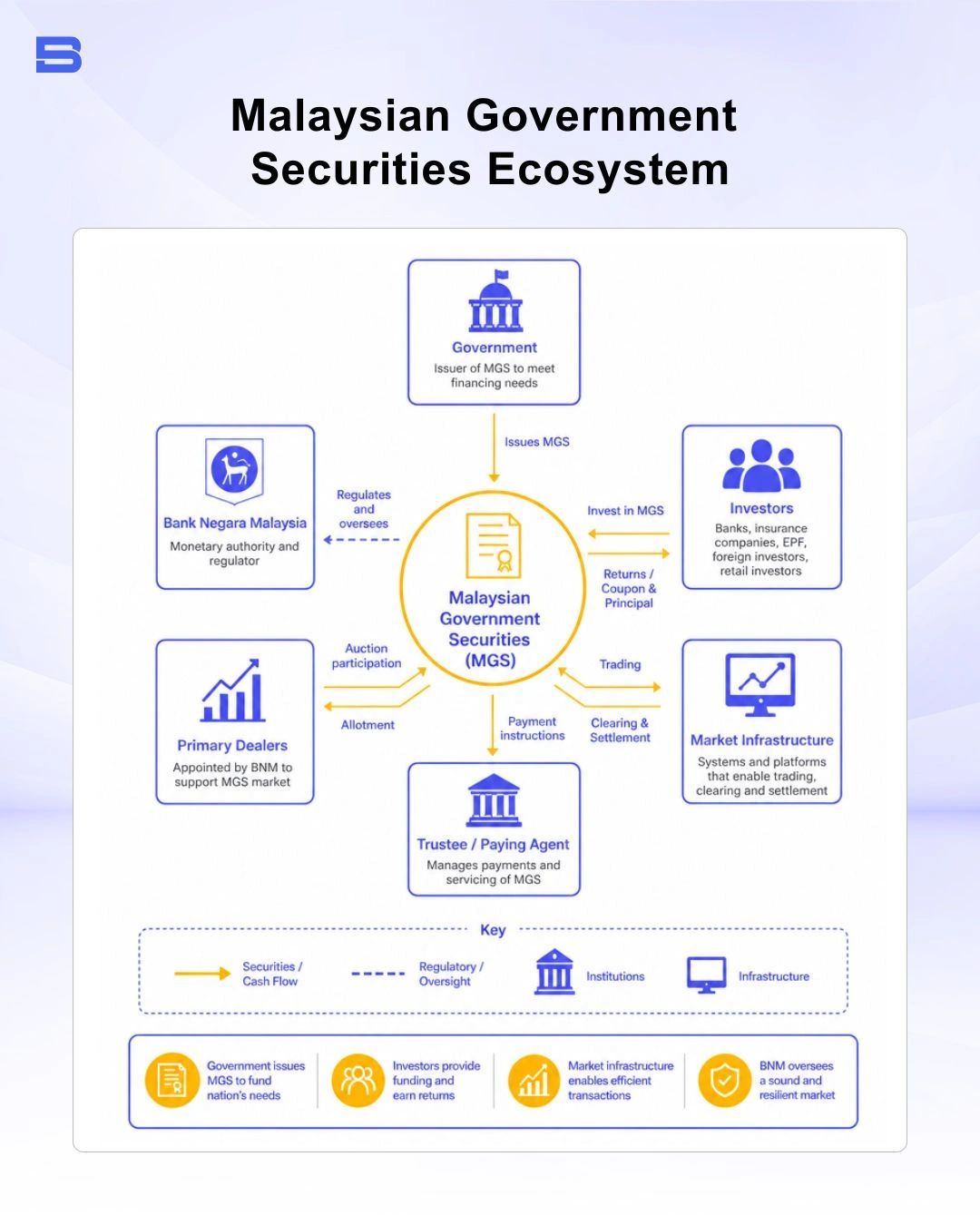
MGS are primarily issued through competitive primary auctions to a network of appointed Principal Dealers, comprising major commercial and investment banks in Malaysia. These institutions trade them in the multi-billion ringgit over-the-counter (OTC) secondary market.
MGS vs. MGII: Conventional Securities vs. Islamic Government Securities
While standard MGS are conventional fixed-income instruments, the Malaysian government also issues an equivalent Islamic sovereign paper called Malaysian Government Investment Issues (MGII). Understanding the difference between conventional bonds and sukuk is essential if you maintain a Shariah-compliant investment portfolio.
MGII instruments are structured under Islamic financial principles—most commonly utilizing the Murabahah (cost-plus sale) asset-backed structure. Instead of paying interest, MGII pays periodic profit distributions to investors.
Despite their structural differences, MGS and MGII carry identical credit risk profiles because both represent direct sovereign debt obligations of the Malaysian government. They trade alongside each other in secondary markets with near-identical yield curves. For investors seeking sustainable options, the government also issues Environmental, Social, and Governance (ESG) aligned sovereign paper known as green sukuk under similar frameworks.
How MGS Yields Work and Key Benchmarks
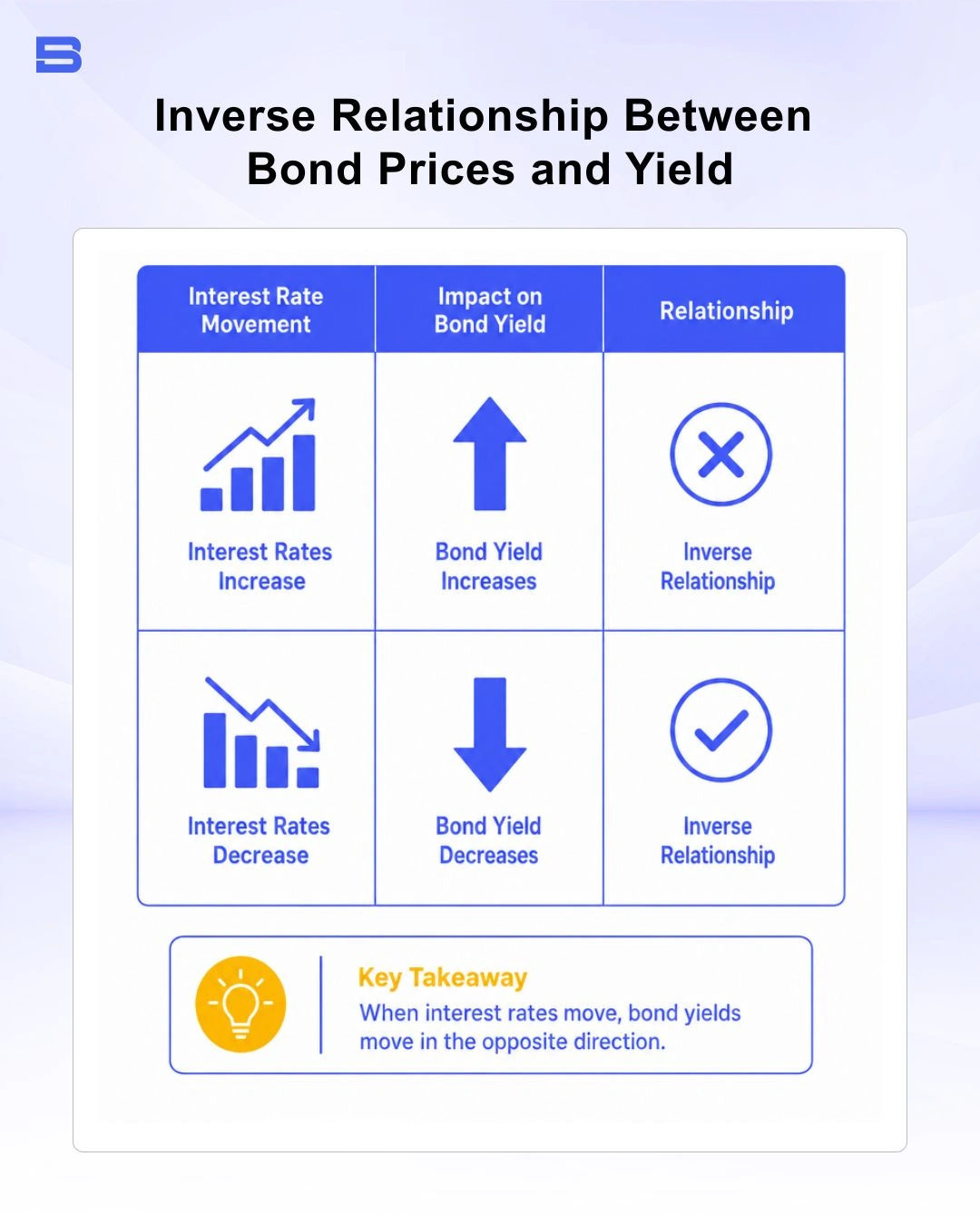
Understanding Malaysian Government Securities (MGS) requires knowing the inverse relationship between bond prices and market yields. When market interest rates rise, the prices of existing fixed-rate bonds generally fall because their fixed coupon payments become less attractive relative to newly issued bonds offering higher yields. Conversely, when market interest rates decline, existing fixed-rate bond prices generally rise. Bursa Malaysia’s MGS futures framework also demonstrates this price-yield relationship by converting MGS prices into yields for settlement purposes.
The 10-year MGS yield is an important reference point for Malaysia’s long-term government borrowing costs and fixed-income market conditions. Bursa Malaysia identifies 10-year MGS as the underlying instrument for its 10-Year MGS Futures contract and gives benchmark MGS a significant weighting in determining the contract’s final yield.
Because government securities generally provide a reference point for the broader fixed-income market, MGS yields can also help investors assess the pricing and risk premiums of corporate bonds in Malaysia, as well as broader interest-rate expectations and market sentiment. However, corporate bond yields also depend on factors such as the issuer’s credit quality, maturity, liquidity, and market demand. Bursa Malaysia notes that bond pricing can vary according to factors including credit rating and tenure.
A Simple Worked Example
- Suppose you acquire an MGS with a face value of RM100 carrying a 4.0% annual coupon (paying RM4.00 per year).
- If Bank Negara Malaysia (BNM) lowers policy interest rates, new bonds might only offer a 3.5% coupon rate.
- Investors seeking your higher-paying 4.0% coupon will bid up your bond's secondary market price above RM100 (say, to RM103).
- Conversely, if benchmark rates rise to 4.5%, your bond's price will drop below RM100 on the secondary market to align its total yield with newer market issuances.
Risk Profile: Is MGS a Safe Investment?
When assessing fixed-income safety, MGS represents the safest asset class available in Ringgit Malaysia (MYR) terms. Because it is backed directly by the federal government, sovereign default risk in local currency is virtually non-existent.
However, "safe from default" does not mean entirely risk-free. If you hold MGS instruments, two key risks require careful management:
- Interest Rate Risk (Capital Loss Risk): While holding an MGS to maturity is structured to return your full principal at face value, this outcome still depends on the government's continued ability to meet its obligations, and selling MGS on the secondary market before maturity can result in capital loss if benchmark market yields rise.
- Inflation Risk: If annual inflation exceeds your fixed coupon yield, the real purchasing power of your investment income erodes over time.
While sovereign capital default risk is virtually non-existent for ringgit holdings, holding long-duration MGS paper subjects you to secondary market volatility if you need to liquidate before the bond matures.
Comparing MGS with Corporate Bonds and Sukuk
To evaluate where MGS sits in a balanced fixed-income strategy, compare its sovereign safety profile directly against corporate debt options.
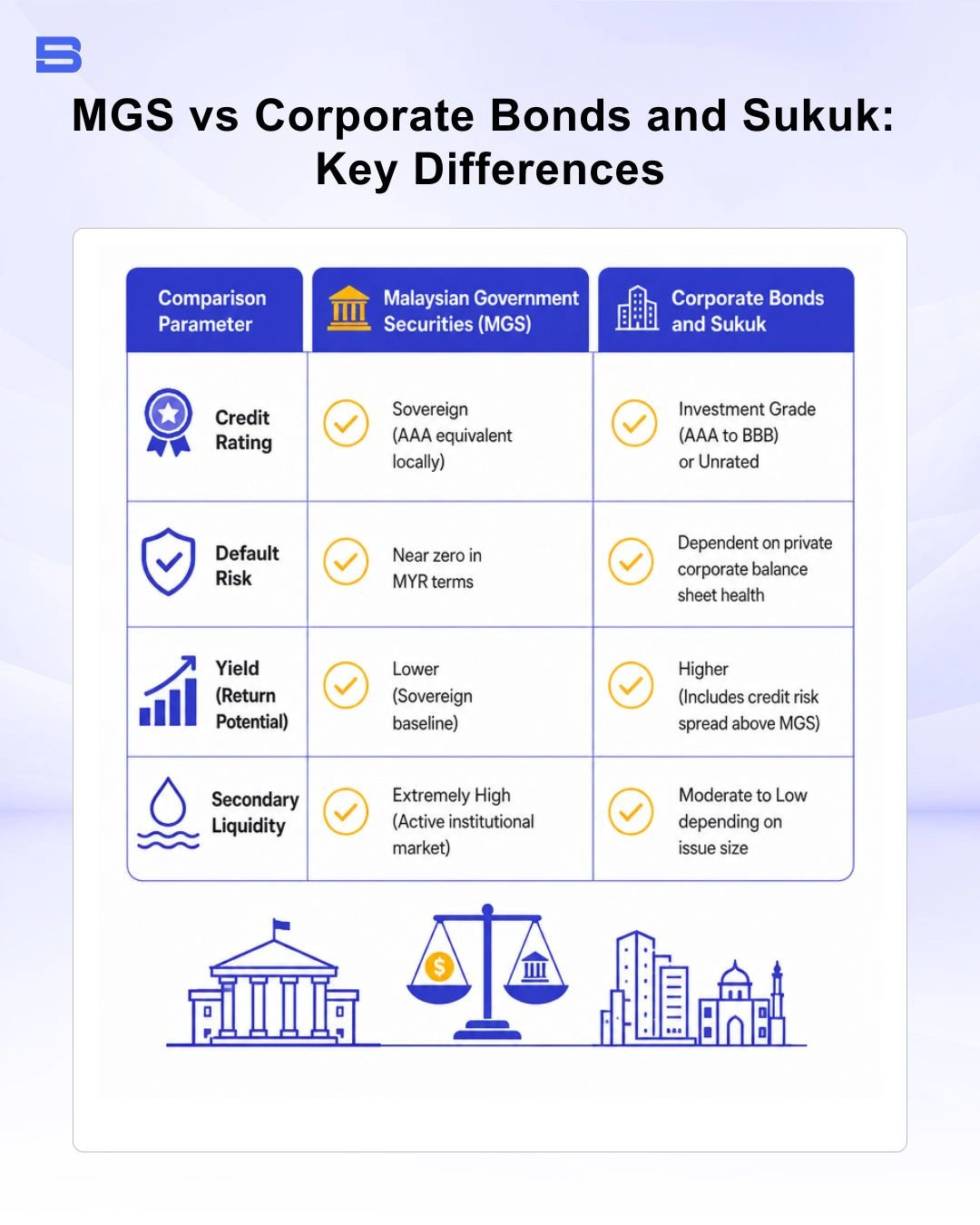
Because private corporations carry commercial operational risks, corporate bonds in Malaysia must offer a higher yield spread over MGS to compensate investors for taking on private credit risk.
How Retail Investors Can Access MGS in Malaysia
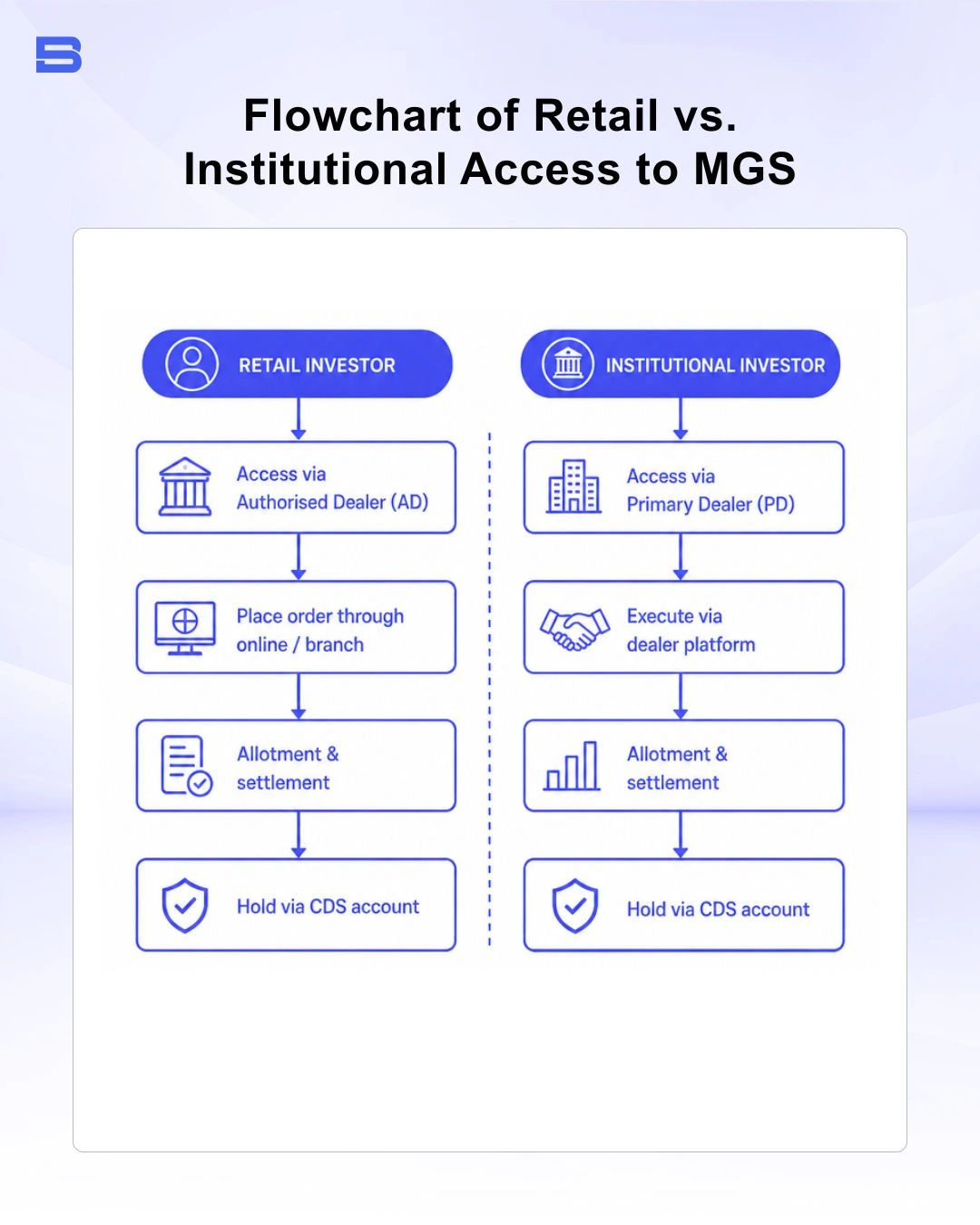
Direct primary market MGS auctions require substantial institutional capital. According to Bank Negara Malaysia’s Principal Dealer framework, Malaysia’s MGS wholesale market is primarily served by appointed Principal Dealers and other institutional market participants, with the framework designed to support large-volume transactions and liquidity in the government securities market.
Individual investors may access MGS through intermediaries, subject to the applicable trading and denomination requirements. Fortunately, individual retail investors can access MGS returns through several accessible indirect channels.
Bond Unit Trust Funds
Retail investors can purchase shares in Malaysian fixed-income or bond unit trust funds managed by licensed asset management companies. These funds pool capital to purchase MGS and corporate bonds, allowing you to participate with initial investments starting from as low as a few hundred ringgit, depending on the fund provider. Evaluating a unit trust in Malaysia gives you immediate fixed-income diversification.
EPF i-Invest
Malaysian employees can utilize eligible savings from their Employees Provident Fund (EPF) Account 1 via the EPF i-Invest platform to invest in approved fixed-income unit trust funds that hold high allocations of MGS and MGII paper.
Exchange-Traded Funds (ETFs)
Fixed-income and bond ETFs listed on Bursa Malaysia provide another liquid vehicle. Buying bond ETF shares through a brokerage account grants exposure to underlying sovereign bond indices without requiring institutional capital.
For investors building a low-risk portfolio, combining indirect MGS exposure with sovereign-backed retail options such as Amanah Saham Nasional Berhad (ASNB) investments or an Amanah Saham Bumiputera (ASB) account may help diversify a fixed-income allocation.
However, suitability depends on your individual financial goals, investment horizon, and risk tolerance. ASB accounts are subject to Bumiputera-status eligibility restrictions, so investors should confirm their eligibility before investing.
Conclusion
Malaysian Government Securities (MGS) remain a foundational benchmark for ringgit-denominated investments. While direct primary market bonds remain an institutional realm, retail investors can easily incorporate sovereign bond stability into their portfolios through unit trusts, ETFs, and EPF i-Invest.
Incorporating MGS exposure can provide relatively predictable income through its fixed coupon payments and may help reduce portfolio volatility when combined with riskier assets such as equities. Because MGS are securities issued by the Malaysian government, they may also offer greater capital stability than equities, although their market prices can still fluctuate with changes in interest rates and other market conditions.
- What Can You Trade? A Guide to Forex, Stocks, and More
- CFD Trading for Beginners
- What is CFD Trading and How Does It Work?
- Forex vs. Stocks: Which Market Suits You Best?
- How to Diversify a Portfolio Across Asset Classes
- How Dividend Stocks Work: Yields, Risks, and Strategies
- Silver Trading Explained: A Guide for Retail Investors
- Precious Metals Trading: A Complete Guide for Beginners
- Natural Gas Trading: A Guide to the Market
- Structured Warrants Malaysia: How They Work and Risks
- What Is the KLCI Index and How to Trade It
- Gold Investment in Malaysia: A Complete Guide for Beginners
- What Is Kijang Emas and How to Invest in It
- Value Investing Explained: How to Find Undervalued Stocks
- How to Trade Bitcoin Safely: A Complete Market Guide
- Growth Investing Explained: Strategies, Metrics, and Risks
- What Is Digital Gold Malaysia and How to Invest
- Crypto Trading Strategies for Beginners
- Gold vs Bitcoin: Key Differences, Risks, and Strategies
- Sukuk: A Guide for Beginners to Islamic Bonds
- What Is FCPO (Crude Palm Oil Futures) and How to Trade It
- How to Identify and Invest in Shariah-Compliant Stocks
- Timber Investment: Is It Worth It?
- Gold ETF Malaysia: A Guide for Beginners
- What Are Malaysian Government Securities (MGS)?
- Corporate Bonds Malaysia: A Guide for Beginners
- China A-Shares Trading Guide for Malaysian Investors
- What Is a Silver ETF and How to Invest in It?
- How to Trade XRP: A Practical Guide for Retail Investors
- How to Trade Solana (SOL): A Guide for Beginners
- What Are Gold Futures and How Do They Work?
- Money Market Fund in Malaysia: A Guide for Beginners
- Property Investment Malaysia: Direct Real Estate or M-REITs?
- What Is Binance Coin and How Does It Work?
- Green Sukuk: A Guide for Beginners to Islamic ESG Investing
- What Is Shiba Inu (SHIB) and How to Trade It
- What Is USDT? A Complete Guide to Tether for Beginners
- What Is Dogecoin and How to Trade It Safely for Beginners
- Cardano: A Guide for Beginners to Trade This Cryptocurrency
- Polkadot: A Guide to Trading This Cryptocurrency
- Tron: A Guide for Beginners to Trading This Cryptocurrency
- What Is Litecoin (LTC)? A Guide to Trading Digital Silver
- What Is Chainlink (LINK) and How to Trade It
- How to Trade Pepe Coin: Spot, Leverage, and Risk Management
- Near Protocol: A Guide to Trading This Cryptocurrency
- Trading Polygon Crypto: A Practical Guide for Beginners
- Trade Toncoin: Understanding the TON Ecosystem and Risks
- Cosmos Crypto: Ecosystem Architecture, Tokenomics, and Risks
- Stellar Crypto: A Guide to Trading This Cryptocurrency
- Avalanche Crypto Explained: A Practical Guide for Traders
- What Is Worldcoin? How to Trade WLD and Manage Risk
- Aptos: A Guide for Beginners to Trading This Cryptocurrency
- Sui Crypto Explained: Tokenomics and Trading Guide
- Celestia: A Guide to Trading This Cryptocurrency
- Decentraland: A Guide to Trading This Cryptocurrency
- What Is Arbitrum? How to Trade the Leading Layer 2 Network
- Sei Crypto: A Guide to Trading This Cryptocurrency
- What Is Injective Protocol and How to Trade INJ Safely
Disclaimer: The content on this page is intended for educational and informational purposes only. It does not constitute financial, investment, tax, or legal advice, and should not be interpreted as a recommendation to buy, sell, or hold any financial instrument or asset. Trading and investing involve significant risk, including the possible loss of your entire capital. Products such as forex, CFDs, and cryptocurrencies carry additional risks due to leverage, high volatility, and limited regulatory protection in some jurisdictions. Past performance of any financial instrument does not guarantee future results. Any market views, forecasts, or opinions expressed are those of the author at the time of writing and may not reflect current market conditions. Platform features, fees, and regulatory status are subject to change — always verify information directly with the relevant provider or regulator before making any financial decision. BrokerSpecs may receive compensation from third parties featured on this site. Always conduct your own due diligence and consider seeking advice from a licensed financial professional before investing.