


Related Tags
Entering gold investment Malaysia for the first time can feel overwhelming when balancing physical storage security against high minimum buy-in prices. You might want pure gold in your portfolio to protect purchasing power, but storing physical bullion bars or gold coins at home brings unnecessary theft risks and costly safety deposit box fees.
Digital gold has emerged in Malaysia as a low-friction entry point, allowing you to build real gold holdings straight from your smartphone without handling physical metals yourself.
What Is Digital Gold and How Does It Work in Malaysia?
Digital gold is an electronic form of gold investment that allows investors to buy, sell, and hold gold in fractional amounts. For Bursa Gold Dinar (BGD), each unit of digital gold Malaysia is held and backed by an equivalent amount of 999.9-fineness (24K) physical gold, which is securely stored in an insured vault in Malaysia.
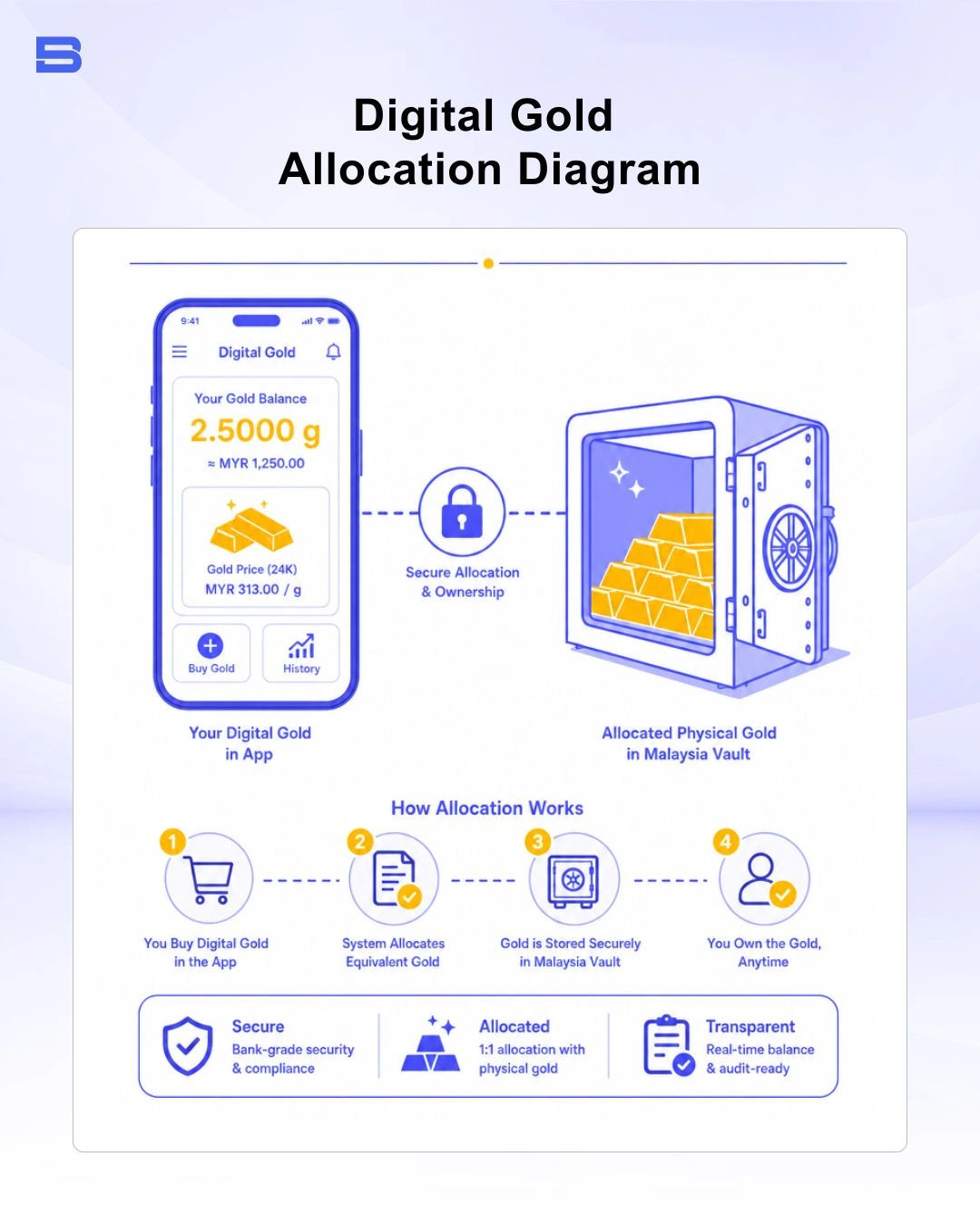
When you purchase RM10 worth of digital gold Malaysia on a platform, the provider allocates the exact equivalent weight in grams to your account based on real-time gold prices. The physical bullion itself sits safely in accredited third-party vaults, such as Brink’s or Malca-Amit, fully insured against loss or theft.
This model solves two major obstacles for retail investors: accessibility and storage. Rather than saving up thousands of Ringgit to buy a full 10-gram physical bar, you can accumulate fractional holdings over time starting from small pocket change.
How to Invest in Gold in Malaysia: Choosing Your Platform
Malaysian investors have access to several regulated avenues for investing in digital gold, including familiar eWallets, official exchange platforms, and traditional commercial banks.
Fintech and eWallet Options: TNG e-Mas
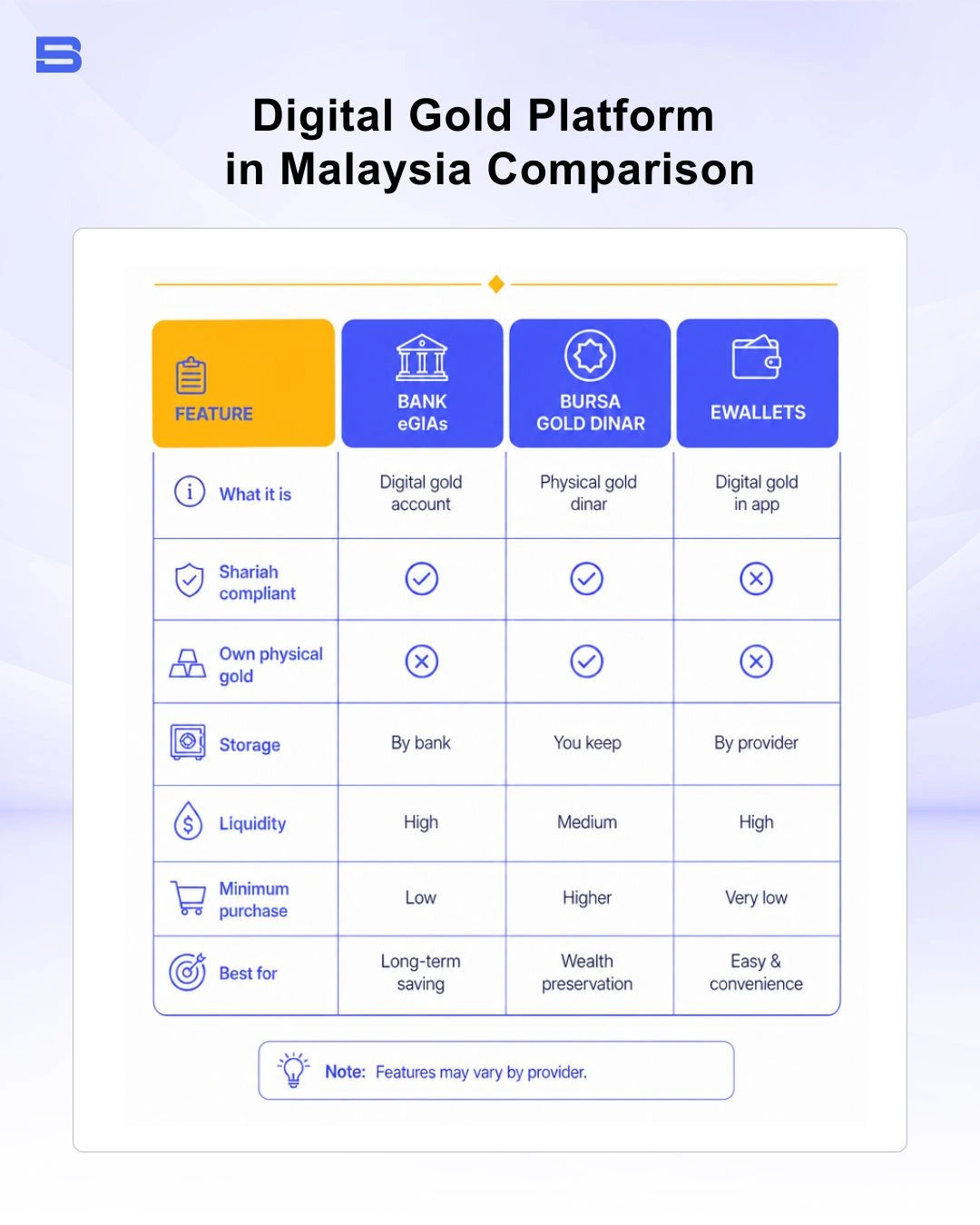
Fintech solutions like TNG e-Mas (embedded within the Touch 'n Go eWallet) offer the lowest friction for beginners. You can start buying digital gold Malaysia with as little as RM10. Transactions execute instantly using your existing eWallet balance, making micro-investing effortless. However, fintech apps typically focus solely on cash settlement, so you cannot redeem your digital holdings for physical gold bars.
Exchange Platforms: Bursa Gold Dinar
Bursa Gold Dinar is an official digital gold platform launched by Bursa Malaysia Berhad. It allows retail investors to buy, sell, and transfer 999.9 fine gold starting from RM10 via a mobile app. A standout feature of Bursa Gold Dinar is physical gold redemption: you can convert your accumulated digital units into physical gold dinar coins (such as a 4.25-gram coin) and have them delivered or collected at designated hubs.
Bank Options: Bank eGIAs (Maybank, CIMB, Public Bank, BSN)
Traditional financial institutions offer electronic Gold Investment Accounts (eGIAs), including Maybank, CIMB, Public Bank, and Bank Simpanan Nasional (BSN). Managed directly through online banking portals, eGIAs track daily gold prices and usually require a 1-gram initial purchase minimum. While highly secure, bank accounts track your ownership via digital ledger passbooks and rarely allow physical metal withdrawal.
Buy-Sell Spreads and Fees: The Hidden Costs
While digital gold Malaysia removes vault storage fees for retail buyers, you must understand the cost structure before committing your money. The main cost you incur is the buy-sell spread—the price difference between what you pay to buy gold from the platform (ask price) and what the platform pays you when you sell it back (bid price).
In Malaysia, digital gold buy-sell spreads vary by provider, product, and transaction size. Published rates from Malaysian providers such as Maybank (as of August 2026) show spreads of around 4%–6% in some cases, although the spread can change with market conditions.
Worked Example: If you purchase RM1,000 worth of digital gold on a platform with a 4% buy-sell spread, the gold would initially be worth approximately RM960 if sold immediately. The gold price would then need to rise by about 4.17% for your investment to reach break-even, assuming no additional fees or charges.
Beyond the spread, pay attention to potential transaction fees, account conversion charges, and physical minting fees if you choose to redeem physical coins or bars.
Shariah Compliance in Malaysian Digital Gold Platforms
For Muslim investors, gold is classified as a Ribawi item in Islamic jurisprudence, requiring specific transaction rules:
- Transactions must be spot settlements (immediate transfer of ownership).
- The digital units must be backed 100% by allocated, physical gold in a vault.
- Deferment of exchange or interest-bearing structures is strictly prohibited.
Leading Malaysian platforms ensure Shariah compliance through vetted contracts. Platforms like MIGA-i or Bursa Gold Dinar utilize structures such as Wakalah (agency contract, where the platform acts as your agent to buy physical gold) or Bai Musawammah (direct sale). Before opening an account, check that the platform holds an official certification from an accredited Shariah advisory firm registered with the Securities Commission Malaysia (SC).
Is Digital Gold Safe in Malaysia? Regulation and Vault Security
Digital gold safety depends on two factors: regulatory oversight and physical vault custody.
Platforms operated by licensed commercial banks fall under the supervision of Bank Negara Malaysia (BNM), while exchange-backed platforms operate under Bursa Malaysia Berhad and the Securities Commission Malaysia (SC). Established platforms undergo regular independent audits to verify that the total weight of physical gold in the vault matches or exceeds the total digital units issued to customers.
However, operational risk remains. Holding digital gold means relying on the platform's infrastructure and financial health. If an unverified or unregulated platform fails or mismanages its physical reserves, recovering your money can be difficult. Always ensure your chosen platform operates under Malaysian regulatory frameworks and clearly discloses its vault custodian and insurance coverage.
Digital Gold vs Physical Alternatives (Kijang Emas)
When deciding how to allocate your capital, it helps to compare digital gold against traditional physical alternatives available in Malaysia, such as Bank Negara Malaysia's official bullion coin, the Kijang Emas, or retail jewelry.
The Kijang Emas provides direct physical possession of 999.9 fine gold, eliminating platform operational risk. However, buying a Kijang Emas coin requires visiting selected Maybank branches in person, paying higher minting premiums, and making a significant upfront purchase (a 1-ounce coin costs thousands of Ringgit). Jewelry from retail shops typically carries noticeably higher workmanship markups, making it less efficient for pure investment accumulation.
Digital gold offers superior liquidity and convenience, allowing you to buy fractional amounts instantly whenever gold market prices dip.
Digital Gold vs Paper Gold (Gold ETFs and Futures)
Digital gold is often confused with paper gold instruments listed on financial exchanges, such as Bursa Malaysia Gold Exchange-Traded Funds (ETFs) (e.g., TradePlus Shariah Gold ETF) or Gold Futures contracts (FGLD).
If you already trade stocks on Bursa Malaysia, buying a gold ETF in Malaysia offers tight spreads and stock exchange integration. However, ETFs charge an annual Management Expense Ratio (MER) deducted from the fund's asset value over time. On the other hand, gold futures (FGLD) are leveraged derivative contracts used primarily by active traders for short-term speculation or hedging, rather than long-term accumulation.
Digital gold sits comfortably between physical ownership and exchange derivatives, giving you a straightforward way to accumulate real metal weight without needing a stockbroking Central Depository System (CDS) account or managing derivative contract rollover dates. Expanding into precious metals trading through digital gold allows you to build a liquid safe-haven reserve that balances broader portfolio risk.
Conclusion
Digital gold Malaysia has made precious metals investing more accessible by offering fractional ownership from as little as RM10 while providing the convenience of secure vault storage. By comparing buy-sell spreads, checking Shariah compliance, and selecting platforms regulated by Malaysian authorities, investors can build a gold allocation conveniently while potentially managing exposure to inflation and currency volatility.
- What Can You Trade? A Guide to Forex, Stocks, and More
- CFD Trading for Beginners
- What is CFD Trading and How Does It Work?
- Forex vs. Stocks: Which Market Suits You Best?
- How to Diversify a Portfolio Across Asset Classes
- How Dividend Stocks Work: Yields, Risks, and Strategies
- Silver Trading Explained: A Guide for Retail Investors
- Precious Metals Trading: A Complete Guide for Beginners
- Natural Gas Trading: A Guide to the Market
- Structured Warrants Malaysia: How They Work and Risks
- What Is the KLCI Index and How to Trade It
- Gold Investment in Malaysia: A Complete Guide for Beginners
- What Is Kijang Emas and How to Invest in It
- Value Investing Explained: How to Find Undervalued Stocks
- How to Trade Bitcoin Safely: A Complete Market Guide
- Growth Investing Explained: Strategies, Metrics, and Risks
- What Is Digital Gold Malaysia and How to Invest
- Crypto Trading Strategies for Beginners
- Gold vs Bitcoin: Key Differences, Risks, and Strategies
- Sukuk: A Guide for Beginners to Islamic Bonds
- What Is FCPO (Crude Palm Oil Futures) and How to Trade It
- How to Identify and Invest in Shariah-Compliant Stocks
- Timber Investment: Is It Worth It?
- Gold ETF Malaysia: A Guide for Beginners
- What Are Malaysian Government Securities (MGS)?
- Corporate Bonds Malaysia: A Guide for Beginners
- China A-Shares Trading Guide for Malaysian Investors
- What Is a Silver ETF and How to Invest in It?
- How to Trade XRP: A Practical Guide for Retail Investors
- How to Trade Solana (SOL): A Guide for Beginners
- What Are Gold Futures and How Do They Work?
- Money Market Fund in Malaysia: A Guide for Beginners
- Property Investment Malaysia: Direct Real Estate or M-REITs?
- What Is Binance Coin and How Does It Work?
- Green Sukuk: A Guide for Beginners to Islamic ESG Investing
- What Is Shiba Inu (SHIB) and How to Trade It
- What Is USDT? A Complete Guide to Tether for Beginners
- What Is Dogecoin and How to Trade It Safely for Beginners
- Cardano: A Guide for Beginners to Trade This Cryptocurrency
- Polkadot: A Guide to Trading This Cryptocurrency
- Tron: A Guide for Beginners to Trading This Cryptocurrency
- What Is Litecoin (LTC)? A Guide to Trading Digital Silver
- What Is Chainlink (LINK) and How to Trade It
- How to Trade Pepe Coin: Spot, Leverage, and Risk Management
- Near Protocol: A Guide to Trading This Cryptocurrency
- Trading Polygon Crypto: A Practical Guide for Beginners
- Trade Toncoin: Understanding the TON Ecosystem and Risks
- Cosmos Crypto: Ecosystem Architecture, Tokenomics, and Risks
- Stellar Crypto: A Guide to Trading This Cryptocurrency
- Avalanche Crypto Explained: A Practical Guide for Traders
- What Is Worldcoin? How to Trade WLD and Manage Risk
- Aptos: A Guide for Beginners to Trading This Cryptocurrency
- Sui Crypto Explained: Tokenomics and Trading Guide
- Celestia: A Guide to Trading This Cryptocurrency
- Decentraland: A Guide to Trading This Cryptocurrency
- What Is Arbitrum? How to Trade the Leading Layer 2 Network
- Sei Crypto: A Guide to Trading This Cryptocurrency
- What Is Injective Protocol and How to Trade INJ Safely
Disclaimer: The content on this page is intended for educational and informational purposes only. It does not constitute financial, investment, tax, or legal advice, and should not be interpreted as a recommendation to buy, sell, or hold any financial instrument or asset. Trading and investing involve significant risk, including the possible loss of your entire capital. Products such as forex, CFDs, and cryptocurrencies carry additional risks due to leverage, high volatility, and limited regulatory protection in some jurisdictions. Past performance of any financial instrument does not guarantee future results. Any market views, forecasts, or opinions expressed are those of the author at the time of writing and may not reflect current market conditions. Platform features, fees, and regulatory status are subject to change — always verify information directly with the relevant provider or regulator before making any financial decision. BrokerSpecs may receive compensation from third parties featured on this site. Always conduct your own due diligence and consider seeking advice from a licensed financial professional before investing.