


Related Tags
Entering the world of meme coins often feels like stepping onto a financial roller coaster. When Pepe Coin launched in early 2023, it rapidly grew into one of the most widely discussed digital assets in the market. Inspired by the famous internet frog meme created by Matt Furie, the token captivated retail traders by delivering explosive price swings. However, trading an asset driven purely by social media sentiment requires a clear strategy rather than reliance on internet hype.
Navigating this asset safely means understanding its underlying structure, choosing the right trading mechanism, and managing risk strictly. Whether you plan to buy the physical token on a spot exchange or trade its price fluctuations using leverage, establishing firm boundaries before entering a position is essential to protecting your capital.
What Is Pepe Coin and How Does It Work?
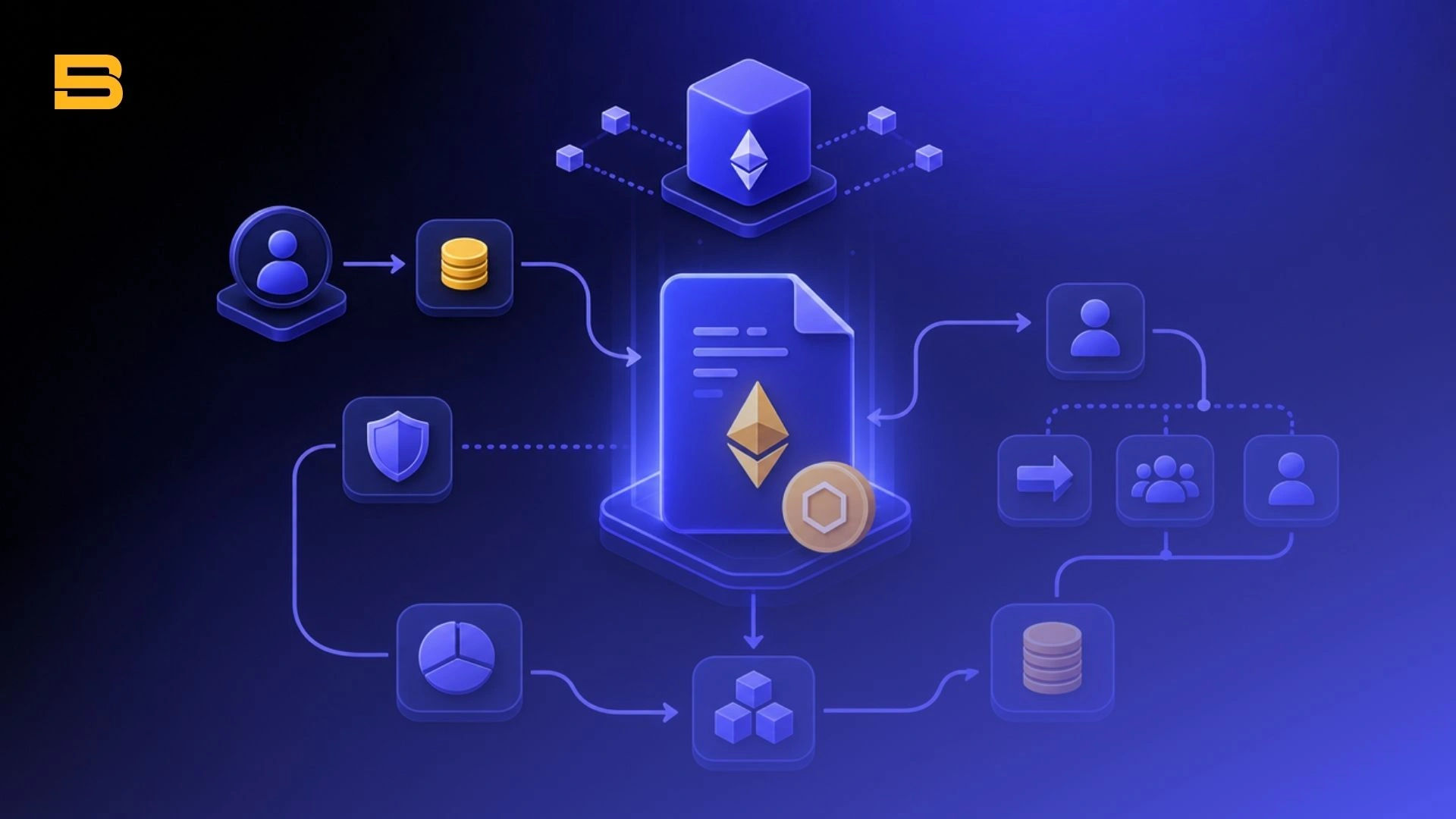
Pepe Coin (PEPE) is a decentralized cryptocurrency built as an ERC-20 token on the Ethereum blockchain. Unlike traditional financial instruments or utility-focused digital assets like Ethereum, PEPE was introduced with explicit disclosures of having no intrinsic value, no formal team roadmap, and no expectations of financial return. It operates as a pure meme coin, meaning its valuation is driven almost entirely by community sentiment, viral social media trends, and market liquidity.
The protocol operates under a zero-tax policy, meaning users do not pay additional transaction taxes to the developers when buying or selling the token beyond standard Ethereum network gas fees. The core mechanism relies on decentralized liquidity pools (shared token reserves that let trades execute without a traditional buyer/seller match) on platforms like Uniswap alongside order-book execution on centralized cryptocurrency exchanges.
Technical Specs and Contract Security
Understanding token mechanics is critical for technical safety before executing a trade. PEPE launched with a fixed total supply of 420.69 trillion tokens, according to the US Securities and Exchange Commission (SEC).
- Circulating Supply: ~420.69 trillion PEPE (fixed supply, no inflationary mint function).
- Liquidity Management: The project's initial liquidity pool tokens were permanently burned (sent to a dead address) at launch, and the smart contract ownership was renounced.
- Smart Contract Functionality: Because the Pepe coin contract address ownership has been renounced, the creator cannot alter the core code, mint new supply, or modify token transaction rules.
- Centralized Exchange (CEX) Allocation: A small percentage of the total supply was set aside in a multi-signature wallet for centralized exchange listings and liquidity provision.
Comparing PEPE to Dogecoin and Shiba Inu
When evaluating meme assets, comparing structural differences helps traders contextualize risk and liquidity profiles across alternative networks like Cardano or Cosmos.
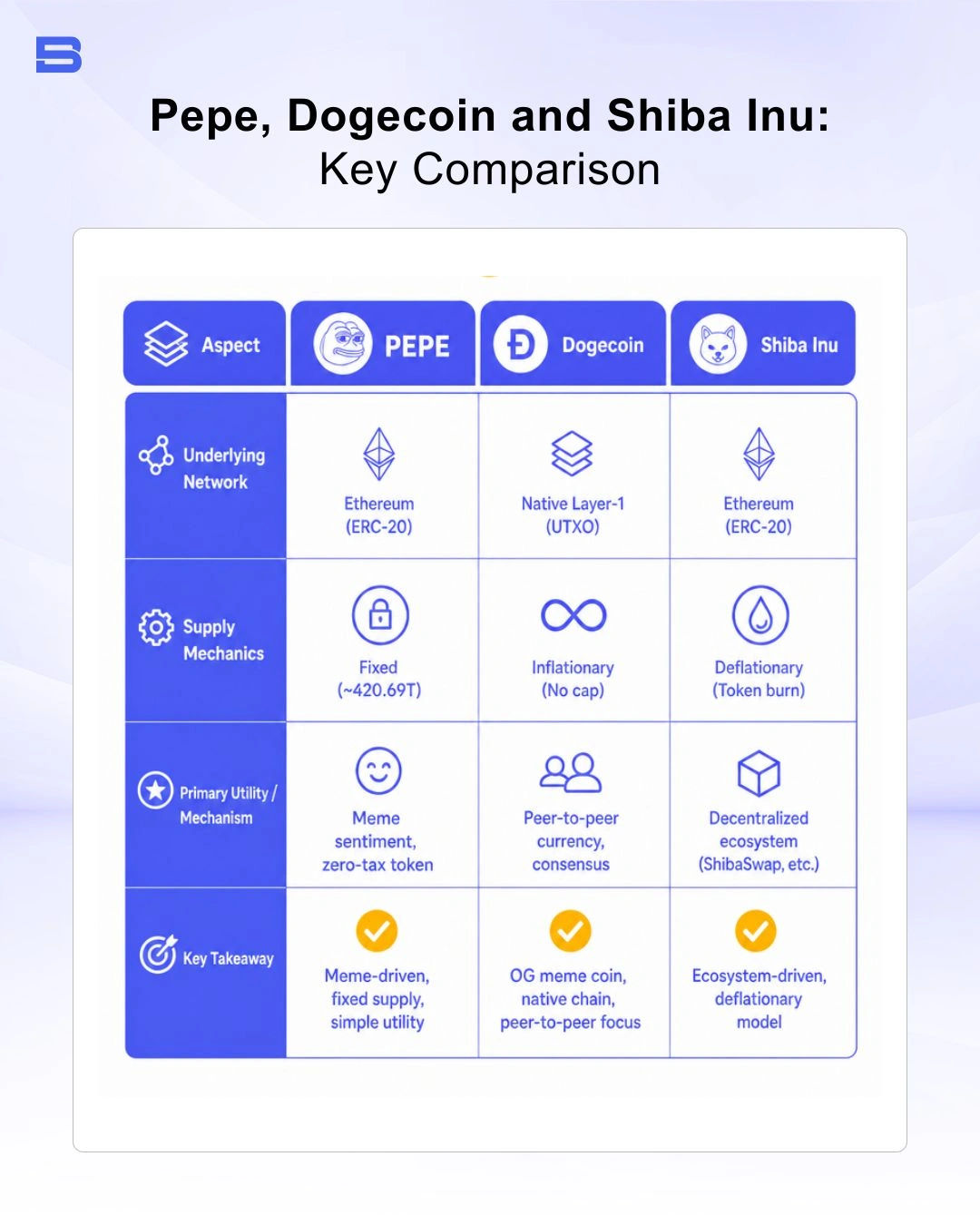
While Dogecoin relies on its own proof-of-work blockchain network and Shiba Inu has attempted to build out a broader ecosystem of decentralized applications, Pepe Coin remains focused strictly on pure meme speculation. This structural simplicity means its market movements are highly sensitive to overall market risk appetite.
How to Trade Pepe Coin: Spot vs. Derivatives
Traders looking into how to trade Pepe Coin generally choose between spot purchases and derivative contracts. Each approach carries distinct execution rules, balance limits, and counterparty risks comparable to broader strategies seen in How to Trade Bitcoin.
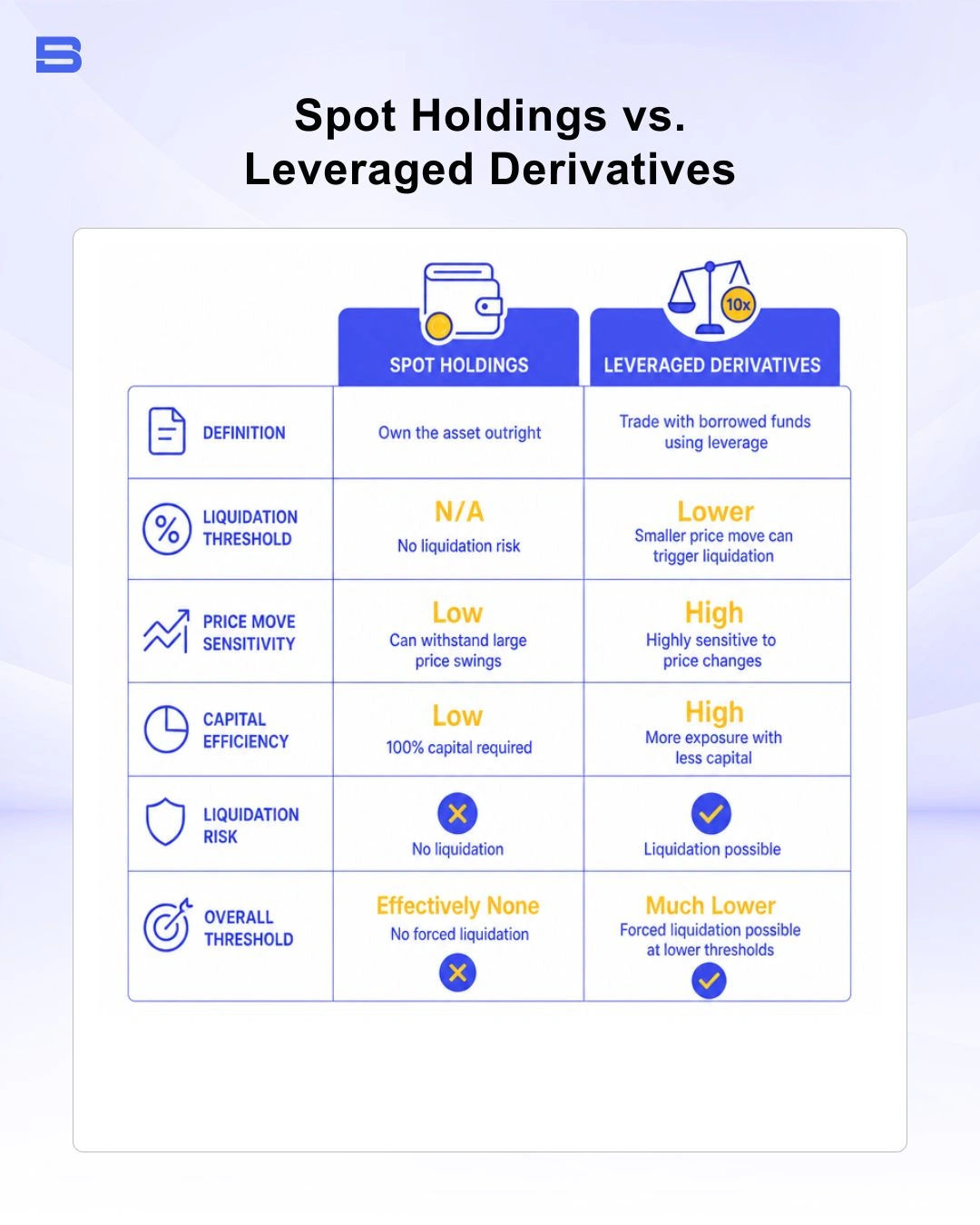
- Spot Trading: Buying physical Pepe coins via a centralized or decentralized exchange. You take direct ownership of the asset, store it in your crypto wallet, and carry zero risk of forced margin liquidation if prices decline.
- Perpetual Futures & Contracts for Difference (CFD): Trading derivative contracts that track the price of PEPE. This permits both long (buying) and short (selling) positions with margin leverage, but introduces daily funding rates and absolute liquidation risks.
Worked Example: Spot Execution vs. 10x Leveraged Position
To understand why leverage requires caution, consider a scenario where you allocate RM5,000 to trade PEPE, comparing direct ownership against a margin contract during a standard 10% price retracement.
- Scenario A (Spot Position): You buy RM5,000 worth of physical PEPE tokens. If the price drops by 10%, your position value falls to RM4,500. You experience an unrealized paper loss of RM500, but retain 100% of your token balance and can hold through market cycles indefinitely.
- Scenario B (10x Margin Position): You open an RM50,000 leveraged position using RM5,000 as initial margin balance (10x leverage). If the market moves against you by 10%, the RM5,000 market drop fully consumes your initial margin balance. The exchange automatically triggers a forced liquidation, closing your trade and wiping out your entire RM5,000 balance instantly.
Risk Management and Pepe Coin Trading Strategies
Implementing a structured Pepe Coin trading strategy is essential due to the rapid, sometimes double-digit price swings PEPE has historically shown within hours, based on CoinGecko price data. When comparing alternative allocations such as Gold vs Bitcoin, meme tokens demand significantly stricter capital preservation controls.
- Strict Position Sizing: Limit total speculative meme coin exposure to 1%–2% of your overall trading portfolio to prevent severe drawdown on your net worth.
- Automated Stop-Loss Orders: Always define a strict exit point before opening derivative positions. In fast-moving markets, manual execution often lags behind violent price drops.
- Take-Profit Staging: Scale out of profitable positions by taking partial profits systematically as prices rise, securing realized gains rather than holding for uncertain tops.
Pre-Trade Execution Checklist
- Verify Contract Address: Confirm the official ERC-20 contract details via reputable crypto market aggregators to prevent interaction with counterfeit tokens.
- Set Risk Budget: Calculate maximum allowable loss in dollar terms before entering the order ticket.
- Review Exchange Liquidity: Ensure the order book depth on your trading venue supports your position size without excessive slippage.
- Confirm Wallet Security: Ensure off-exchange holdings are protected using hardware wallets or secure non-custodial storage.
Contract Security and Liquidity Risks
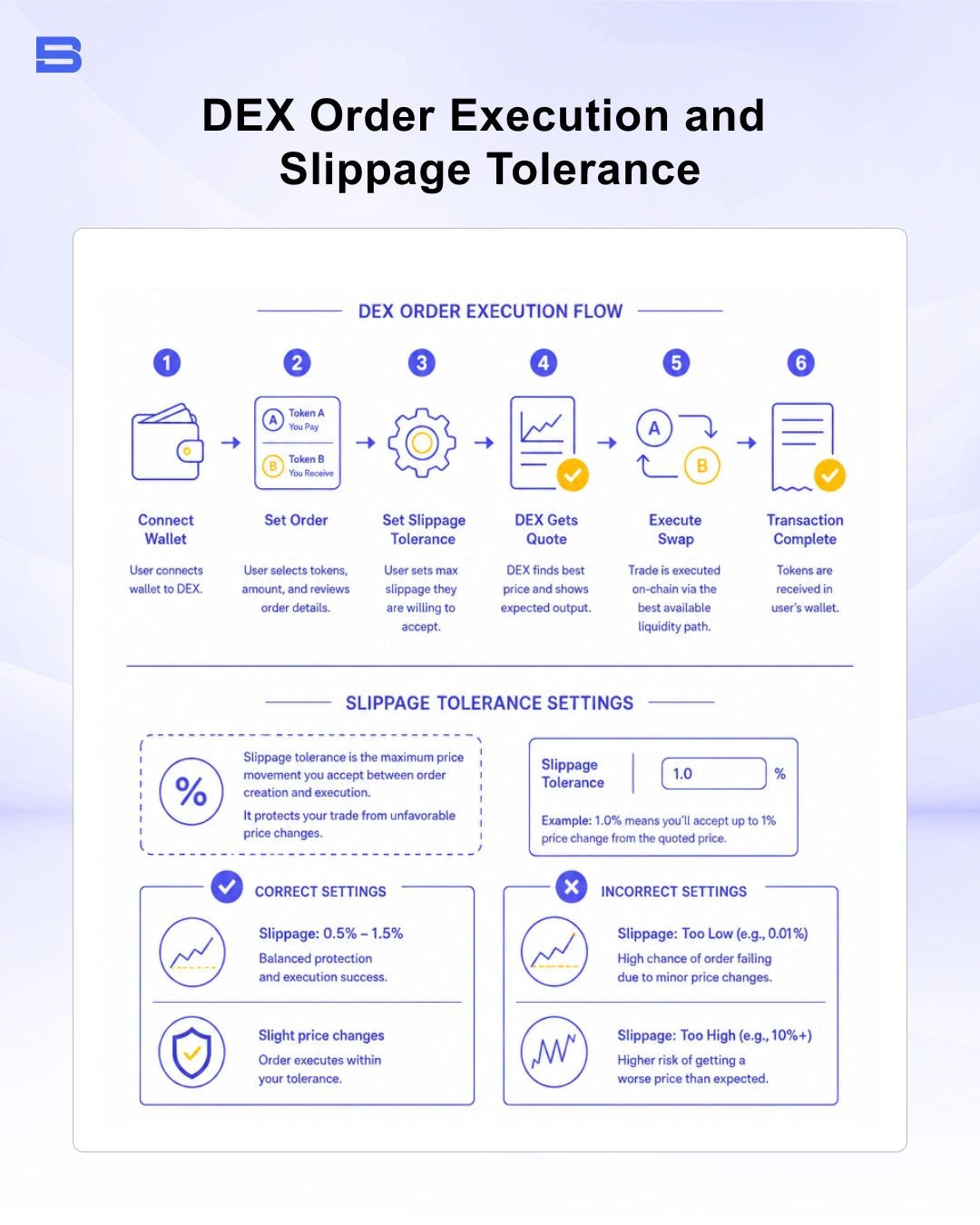
When trading on decentralized exchanges (DEXs), set your slippage tolerance carefully. Setting slippage — the gap between the price you expect and the price you actually get — too high (above 3%-5%) can expose your trade to automated front-running (bots that jump ahead of your order) and sandwich attacks (bots trading right before and after yours to profit off the price move).
Furthermore, ensure you trade on platforms operating under recognized oversight or established operational track records. Regulators like the Securities Commission Malaysia (SC) regularly publish investor alerts warning traders against unverified, offshore platforms operating without proper regulatory registration. Similarly, disclosures from the US Securities and Exchange Commission (SEC) consistently highlight that speculative digital assets carry severe volatility and market manipulation risks.
Final Thoughts on Trading Pepe Coin
Trading Pepe Coin offers an engaging window into market psychology and viral liquidity dynamics. However, treating meme tokens as short-term speculative instruments rather than long-term foundational holdings is critical to survival in crypto markets.
By maintaining strict position sizing, relying on spot execution over high leverage, and enforcing stop-loss discipline, you can engage volatile markets while protecting your broader portfolio from catastrophic downside risk.
- What Can You Trade? A Guide to Forex, Stocks, and More
- CFD Trading for Beginners
- What is CFD Trading and How Does It Work?
- Forex vs. Stocks: Which Market Suits You Best?
- How to Diversify a Portfolio Across Asset Classes
- How Dividend Stocks Work: Yields, Risks, and Strategies
- Silver Trading Explained: A Guide for Retail Investors
- Precious Metals Trading: A Complete Guide for Beginners
- Natural Gas Trading: A Guide to the Market
- Structured Warrants Malaysia: How They Work and Risks
- What Is the KLCI Index and How to Trade It
- Gold Investment in Malaysia: A Complete Guide for Beginners
- What Is Kijang Emas and How to Invest in It
- Value Investing Explained: How to Find Undervalued Stocks
- How to Trade Bitcoin Safely: A Complete Market Guide
- Growth Investing Explained: Strategies, Metrics, and Risks
- What Is Digital Gold Malaysia and How to Invest
- Crypto Trading Strategies for Beginners
- Gold vs Bitcoin: Key Differences, Risks, and Strategies
- Sukuk: A Guide for Beginners to Islamic Bonds
- What Is FCPO (Crude Palm Oil Futures) and How to Trade It
- How to Identify and Invest in Shariah-Compliant Stocks
- Timber Investment: Is It Worth It?
- Gold ETF Malaysia: A Guide for Beginners
- What Are Malaysian Government Securities (MGS)?
- Corporate Bonds Malaysia: A Guide for Beginners
- China A-Shares Trading Guide for Malaysian Investors
- What Is a Silver ETF and How to Invest in It?
- How to Trade XRP: A Practical Guide for Retail Investors
- How to Trade Solana (SOL): A Guide for Beginners
- What Are Gold Futures and How Do They Work?
- Money Market Fund in Malaysia: A Guide for Beginners
- Property Investment Malaysia: Direct Real Estate or M-REITs?
- What Is Binance Coin and How Does It Work?
- Green Sukuk: A Guide for Beginners to Islamic ESG Investing
- What Is Shiba Inu (SHIB) and How to Trade It
- What Is USDT? A Complete Guide to Tether for Beginners
- What Is Dogecoin and How to Trade It Safely for Beginners
- Cardano: A Guide for Beginners to Trade This Cryptocurrency
- Polkadot: A Guide to Trading This Cryptocurrency
- Tron: A Guide for Beginners to Trading This Cryptocurrency
- What Is Litecoin (LTC)? A Guide to Trading Digital Silver
- What Is Chainlink (LINK) and How to Trade It
- How to Trade Pepe Coin: Spot, Leverage, and Risk Management
- Near Protocol: A Guide to Trading This Cryptocurrency
- Trading Polygon Crypto: A Practical Guide for Beginners
- Trade Toncoin: Understanding the TON Ecosystem and Risks
- Cosmos Crypto: Ecosystem Architecture, Tokenomics, and Risks
- Stellar Crypto: A Guide to Trading This Cryptocurrency
- Avalanche Crypto Explained: A Practical Guide for Traders
- What Is Worldcoin? How to Trade WLD and Manage Risk
- Aptos: A Guide for Beginners to Trading This Cryptocurrency
- Sui Crypto Explained: Tokenomics and Trading Guide
- Celestia: A Guide to Trading This Cryptocurrency
- Decentraland: A Guide to Trading This Cryptocurrency
- What Is Arbitrum? How to Trade the Leading Layer 2 Network
- Sei Crypto: A Guide to Trading This Cryptocurrency
- What Is Injective Protocol and How to Trade INJ Safely
Disclaimer: The content on this page is intended for educational and informational purposes only. It does not constitute financial, investment, tax, or legal advice, and should not be interpreted as a recommendation to buy, sell, or hold any financial instrument or asset. Trading and investing involve significant risk, including the possible loss of your entire capital. Products such as forex, CFDs, and cryptocurrencies carry additional risks due to leverage, high volatility, and limited regulatory protection in some jurisdictions. Past performance of any financial instrument does not guarantee future results. Any market views, forecasts, or opinions expressed are those of the author at the time of writing and may not reflect current market conditions. Platform features, fees, and regulatory status are subject to change — always verify information directly with the relevant provider or regulator before making any financial decision. BrokerSpecs may receive compensation from third parties featured on this site. Always conduct your own due diligence and consider seeking advice from a licensed financial professional before investing.