


Related Tags
You are scrolling through your trading app during a crypto market surge, watching altcoins post double-digit moves in hours. Among the top-traded tokens, a familiar logo appears: Shiba Inu (SHIB). What began as a viral meme token has expanded into a complex decentralized ecosystem with its own Layer-2 network and decentralized finance (DeFi) tools.
Before placing a trade, you need to understand how SHIB works, what drives its tokenomics, and how to manage the significant risks that come with trading volatile crypto assets.
What Is Shiba Inu (SHIB) and How Does It Work?
Shiba Inu (SHIB) is an ERC-20 token launched anonymously in August 2020 by an individual or group using the pseudonym “Ryoshi.” Unlike Bitcoin, which operates on its own independent blockchain, SHIB was issued on the Ethereum blockchain as an ERC-20 token.
This means SHIB relies on Ethereum's underlying network infrastructure and consensus mechanism for transactions conducted on Ethereum, while benefiting from compatibility with Ethereum-based smart contracts, decentralized exchanges (DEXs), and compatible Web3 wallets.
When you transfer SHIB, your transaction is processed by Ethereum validators. However, operating natively on Ethereum also means SHIB transactions are subject to network congestion and variable gas fees, which led the project's developers to build dedicated scaling solutions.
The Shiba Inu Ecosystem: Shibarium, ShibaSwap, and BONE
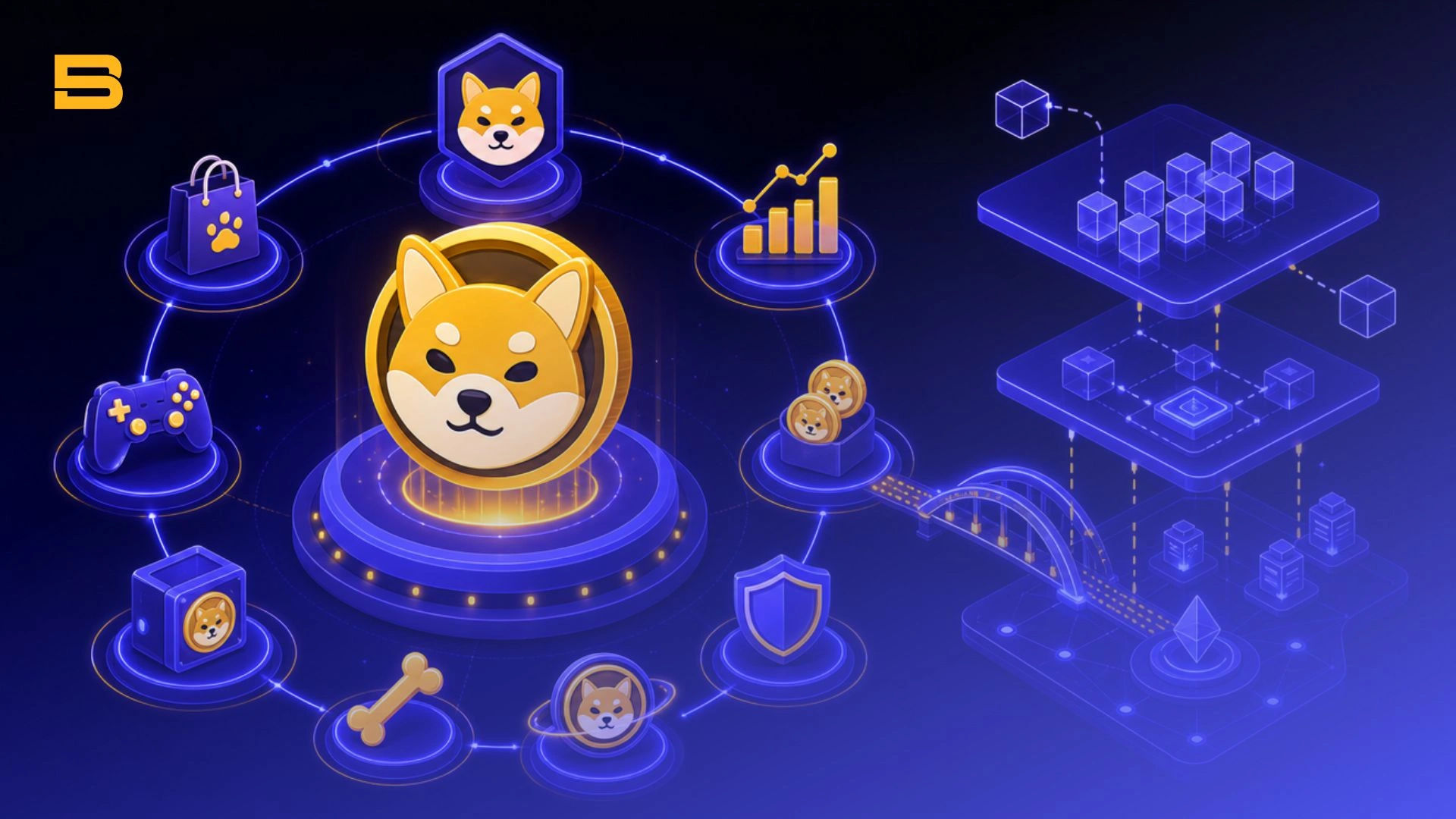
To expand beyond its origins as a meme coin, the project developed an integrated ecosystem comprising multiple utility tokens and decentralized infrastructure:
- Shibarium: A Layer-2 scaling network built on Ethereum designed to process transactions off the main chain. Shibarium significantly reduces gas fees and increases transaction speed, making decentralized applications (dApps) and microtransactions more practical for users.
- ShibaSwap: The ecosystem's native decentralized exchange (DEX), allowing users to swap tokens, stake assets ("Bury"), and provide liquidity ("Dig") to earn rewards.
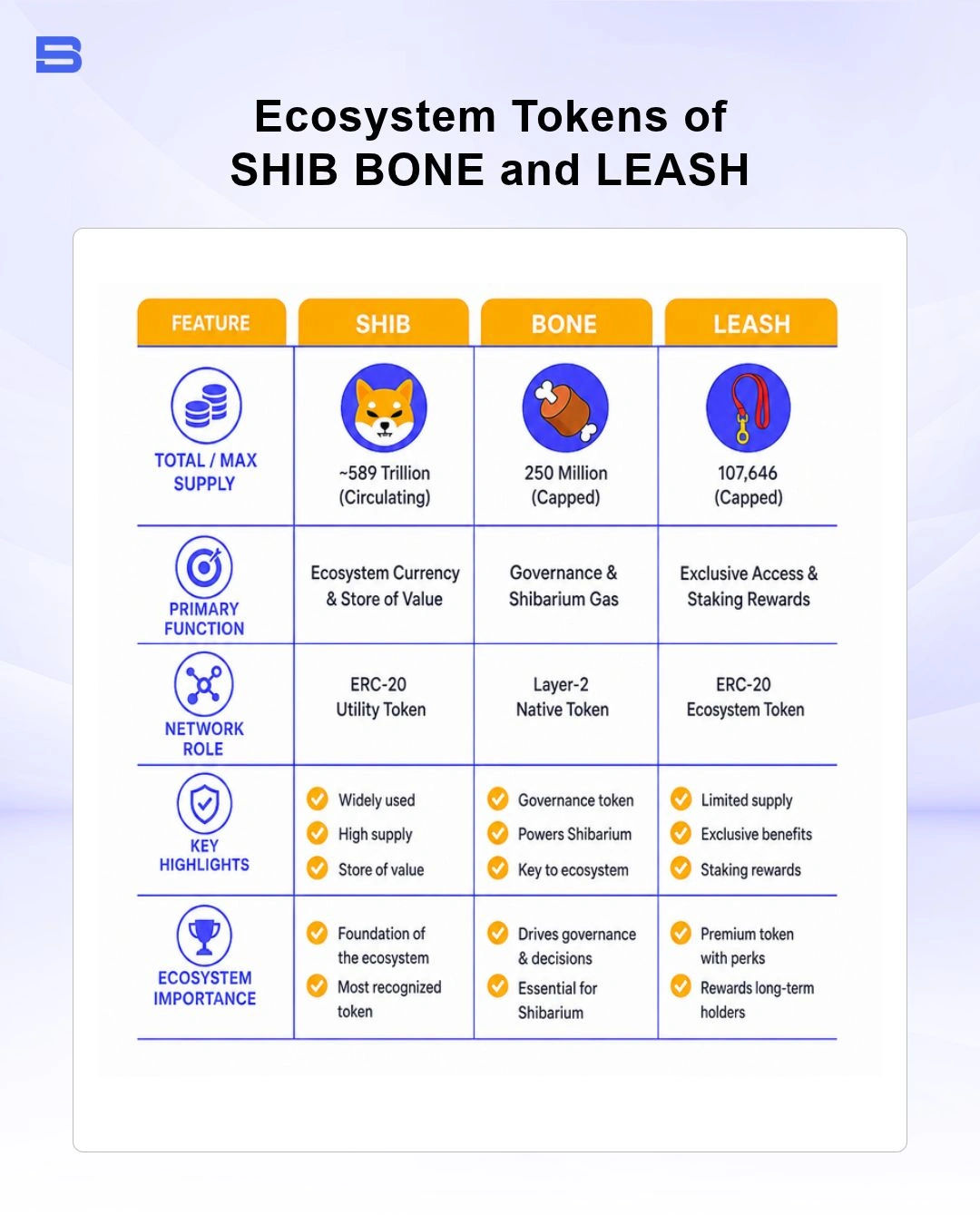
- BONE: BONE (per official Shibarium protocol documentation): a utility and governance token with a capped supply of 250 million. BONE functions as the primary gas fee token for transactions on the Shibarium Layer-2 network and allows holders to vote on ecosystem proposals through the Doggy DAO (Decentralized Autonomous Organization).
- LEASH: A limited-supply token (107,646 tokens) designed to offer exclusive rewards and access to ecosystem perks, such as early access to land sales in the Shiba Inu metaverse.
Market Metrics and Tokenomics
Understanding SHIB requires examining its unusual supply dynamics. Shiba Inu launched with an initial supply of 1 quadrillion tokens, with half of that supply—approximately 500 trillion SHIB—sent to Ethereum co-founder Vitalik Buterin. The Wall Street Journal reported in May 2021 that the token had a total supply of one quadrillion and that its creators had sent half of the supply to Buterin.
According to on-chain transaction data verifiable via Etherscan, Buterin transferred approximately 50.7 trillion SHIB to the India COVID-Crypto Relief Fund and subsequently burned approximately 410 trillion SHIB.
Despite this historic burn event, according to circulating-supply data from CoinGecko (as of August 2026), SHIB retains a circulating supply of roughly 589 trillion tokens. This immense supply directly influences token pricing: even with a multi-billion-dollar market capitalization, individual tokens trade at fractions of a cent.
Understanding SHIB Supply and Burn Mechanisms
Token burning refers to permanently removing tokens from circulation by sending them to an unrecoverable "dead" wallet address. The Shiba Inu community uses both automated and manual burn mechanisms:
- Shibarium Fee Burns: A portion of transaction fees paid on the Shibarium Layer-2 network is automatically converted into SHIB and burned, reducing supply as network usage grows.
- Community & Merchant Burns: Independent project initiatives, decentralized applications, and community-led events direct fractions of revenue toward burning SHIB tokens.
While token burns reduce overall circulating supply over time, the current burn rate represents a tiny fraction of the 589 trillion tokens in existence. Trillions of tokens must be burned to make a structural dent in the circulating supply.
Shiba Inu vs Dogecoin: Key Differences
While SHIB was originally branded as a "Dogecoin killer," the two assets feature fundamentally different technical architecture and tokenomics:
- Blockchain Architecture: Dogecoin operates on its own native proof-of-work blockchain (a fork of Luckycoin/Litecoin) designed primarily for simple peer-to-peer payments. SHIB has no standalone blockchain; it is an ERC-20 token leveraging Ethereum smart contracts.
- Smart Contract Functionality: Dogecoin does not natively support decentralized applications, automated market makers, or complex DeFi protocols. SHIB integrates natively with Ethereum DeFi platforms, staking protocols, and Layer-2 scaling solutions like Shibarium.
- Supply Model: According to the Dogecoin protocol documentation, Dogecoin features an inflationary supply model, adding 5 billion DOGE to circulation every year with no maximum cap. SHIB launched with a fixed supply that is deflationary in intent due to ongoing token burn mechanisms.
Is Shiba Inu a Good Investment? Risks and Potential Rewards
Evaluating SHIB requires balancing its expanding Layer-2 ecosystem against severe market volatility.
Potential Upside
- Ecosystem Evolution: The transition toward utility—driven by Shibarium adoption, Layer-2 dApps, and ShibaSwap DEX volume—provides fundamental utility beyond simple retail speculative sentiment.
- High Liquidity: SHIB ranks among the top cryptocurrencies by market capitalization, trading on major global crypto exchanges with deep order book liquidity.
Downside Risks
- Extreme Price Volatility: SHIB experiences rapid price swings driven by social media trends, broader market sentiment, and macroeconomic shifts.
- Supply Saturation: With 589 trillion tokens circulating, substantial price gains require vast inflows of capital or unprecedented burn volume.
- Regulatory & Security Risks: Digital assets face evolving global regulatory oversight. Furthermore, trading crypto instruments involves counterparty risk, wallet security risks, and potential smart contract vulnerabilities.
Consider a scenario where you allocate capital to a volatile asset: if a position moves against you by 20% in a single trading session during a market pullback, a $1,000 position drops to $800 instantly. Volatility works both ways, making capital allocation and position sizing critical. For comparison on how digital assets behave relative to traditional assets, read our guide on gold vs Bitcoin.
According to market liquidity guidelines from the Bank for International Settlements (BIS), retail investors must assess counterparty and liquidity risk before allocating capital to high-volatility digital assets.
How to Trade Shiba Inu: Spot Trading vs. Derivatives
Traders access SHIB through two primary avenues, each carrying distinct mechanics and risk profiles:
1. Spot Trading
Spot trading involves buying and taking actual ownership of the underlying SHIB tokens. You transfer fiat currency or stablecoins to a centralized crypto exchange or decentralized platform, execute the purchase, and store the tokens in an exchange account or private Web3 wallet.
- Pros: No leverage risk; you can transfer tokens into Web3 wallets or stake them within the Shibarium ecosystem.
- Cons: Requires managing wallet security and private keys; capital is restricted to long positions (profiting only when prices rise).
2. Derivative Trading (CFDs & Futures)
Derivatives allow you to speculate on SHIB price movements without owning the underlying token. Crypto Contracts for Difference (CFDs) or perpetual futures enable traders to open long (buy) or short (sell) positions using leverage.
- Pros: Ability to profit from falling markets; option to utilize leverage to trade with smaller initial margin requirements.
- Cons: High risk of rapid losses. Leverage amplifies gains when correct, but accelerates capital destruction just as quickly when the market moves against you. A 5x leveraged position requires only a 20% market drop against your entry to cause a total liquidation of your allocated margin.
When selecting a trading broker or digital asset exchange, ensure the platform operates under local regulatory oversight, such as the Securities Commission Malaysia (SC) for Malaysian residents. To understand how major cryptocurrencies are traded across platforms, explore our complete guide on how to trade Bitcoin.
The Bottom Line
Shiba Inu has expanded beyond its meme-coin origins, developing a broader Web3 ecosystem that includes Shibarium, a Layer-2 network, and ShibaSwap, a decentralized exchange.
However, SHIB remains highly speculative, with price movements influenced heavily by market sentiment. Like other cryptocurrencies such as XRP, traders should carefully manage position sizes, account for volatility, and ensure their trading strategy aligns with their risk tolerance.
- What Can You Trade? A Guide to Forex, Stocks, and More
- CFD Trading for Beginners
- What is CFD Trading and How Does It Work?
- Forex vs. Stocks: Which Market Suits You Best?
- How to Diversify a Portfolio Across Asset Classes
- How Dividend Stocks Work: Yields, Risks, and Strategies
- Silver Trading Explained: A Guide for Retail Investors
- Precious Metals Trading: A Complete Guide for Beginners
- Natural Gas Trading: A Guide to the Market
- Structured Warrants Malaysia: How They Work and Risks
- What Is the KLCI Index and How to Trade It
- Gold Investment in Malaysia: A Complete Guide for Beginners
- What Is Kijang Emas and How to Invest in It
- Value Investing Explained: How to Find Undervalued Stocks
- How to Trade Bitcoin Safely: A Complete Market Guide
- Growth Investing Explained: Strategies, Metrics, and Risks
- What Is Digital Gold Malaysia and How to Invest
- Crypto Trading Strategies for Beginners
- Gold vs Bitcoin: Key Differences, Risks, and Strategies
- Sukuk: A Guide for Beginners to Islamic Bonds
- What Is FCPO (Crude Palm Oil Futures) and How to Trade It
- How to Identify and Invest in Shariah-Compliant Stocks
- Timber Investment: Is It Worth It?
- Gold ETF Malaysia: A Guide for Beginners
- What Are Malaysian Government Securities (MGS)?
- Corporate Bonds Malaysia: A Guide for Beginners
- China A-Shares Trading Guide for Malaysian Investors
- What Is a Silver ETF and How to Invest in It?
- How to Trade XRP: A Practical Guide for Retail Investors
- How to Trade Solana (SOL): A Guide for Beginners
- What Are Gold Futures and How Do They Work?
- Money Market Fund in Malaysia: A Guide for Beginners
- Property Investment Malaysia: Direct Real Estate or M-REITs?
- What Is Binance Coin and How Does It Work?
- Green Sukuk: A Guide for Beginners to Islamic ESG Investing
- What Is Shiba Inu (SHIB) and How to Trade It
- What Is USDT? A Complete Guide to Tether for Beginners
- What Is Dogecoin and How to Trade It Safely for Beginners
- Cardano: A Guide for Beginners to Trade This Cryptocurrency
- Polkadot: A Guide to Trading This Cryptocurrency
- Tron: A Guide for Beginners to Trading This Cryptocurrency
- What Is Litecoin (LTC)? A Guide to Trading Digital Silver
- What Is Chainlink (LINK) and How to Trade It
- How to Trade Pepe Coin: Spot, Leverage, and Risk Management
- Near Protocol: A Guide to Trading This Cryptocurrency
- Trading Polygon Crypto: A Practical Guide for Beginners
- Trade Toncoin: Understanding the TON Ecosystem and Risks
- Cosmos Crypto: Ecosystem Architecture, Tokenomics, and Risks
- Stellar Crypto: A Guide to Trading This Cryptocurrency
- Avalanche Crypto Explained: A Practical Guide for Traders
- What Is Worldcoin? How to Trade WLD and Manage Risk
- Aptos: A Guide for Beginners to Trading This Cryptocurrency
- Sui Crypto Explained: Tokenomics and Trading Guide
- Celestia: A Guide to Trading This Cryptocurrency
- Decentraland: A Guide to Trading This Cryptocurrency
- What Is Arbitrum? How to Trade the Leading Layer 2 Network
- Sei Crypto: A Guide to Trading This Cryptocurrency
- What Is Injective Protocol and How to Trade INJ Safely
Disclaimer: The content on this page is intended for educational and informational purposes only. It does not constitute financial, investment, tax, or legal advice, and should not be interpreted as a recommendation to buy, sell, or hold any financial instrument or asset. Trading and investing involve significant risk, including the possible loss of your entire capital. Products such as forex, CFDs, and cryptocurrencies carry additional risks due to leverage, high volatility, and limited regulatory protection in some jurisdictions. Past performance of any financial instrument does not guarantee future results. Any market views, forecasts, or opinions expressed are those of the author at the time of writing and may not reflect current market conditions. Platform features, fees, and regulatory status are subject to change — always verify information directly with the relevant provider or regulator before making any financial decision. BrokerSpecs may receive compensation from third parties featured on this site. Always conduct your own due diligence and consider seeking advice from a licensed financial professional before investing.