


Related Tags
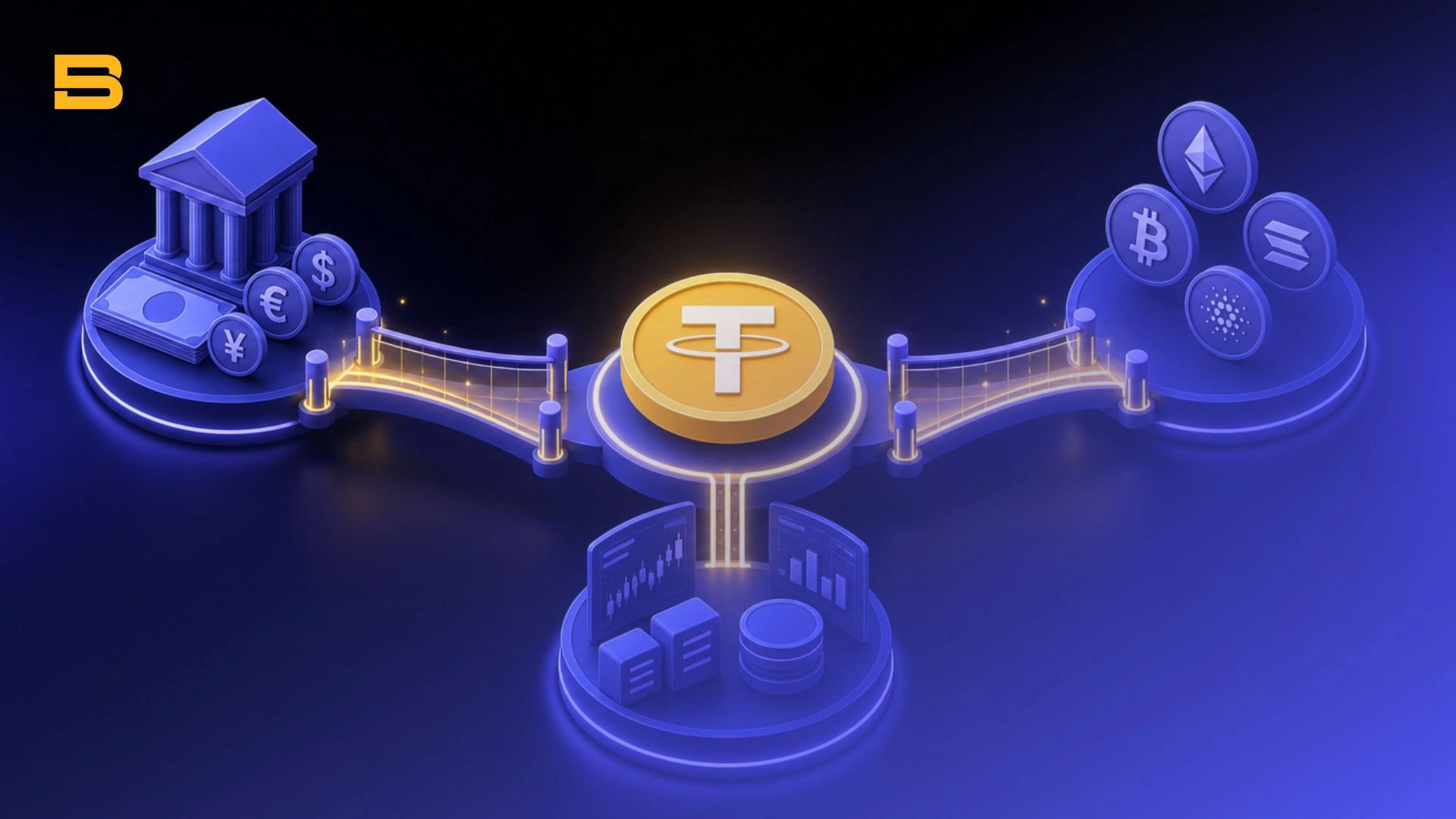
Picture this: you are holding a volatile altcoin that just spiked, and you want to lock in profits without the hassle of transferring funds back to a bank. You can simply trade your position into a stable asset that holds a steady value while keeping your capital ready for the next market move. This operational liquidity tool is USDT, widely known as Tether, which acts as the primary quote currency across almost every major crypto exchange.
What Is USDT (Tether) and How Does It Work?
What is USDT exactly? USDT is a reserve-backed digital stablecoin issued by Tether Limited that tracks a 1:1 price peg with the US Dollar.
Unlike decentralized cryptocurrencies such as Bitcoin, Tether is a centralized issuer of USDT. Tether states that each Tether token in circulation is backed by reserves equal in value to the token's stated value. These reserves consist of cash, cash equivalents, and other assets, with US Treasury bills representing a major component of Tether's reported reserves.
Tether's reserve composition has changed over time and has historically included assets such as commercial paper, but commercial paper should not be presented as a typical current reserve asset without specifying the relevant reporting period.
This centralized backing mechanism gives traders a reliable way to exchange their tokens for fiat currency when they decide to exit the crypto ecosystem.
How Tether Maintains Its $1 Peg
Tether relies heavily on market arbitrage to keep its price anchored to the dollar. When the price deviates slightly from $1, institutional traders step in to exploit the difference for profit. This constant buying and selling pressure forces the token back to parity.
Let us look at a practical example. Imagine the USDT price dips to $0.98 due to sudden market panic. Arbitrageurs will immediately buy these discounted tokens on the open market and redeem them directly with Tether Limited for $1.00 each, pocketing a 2-cent profit per USDT while simultaneously reducing circulating supply to restore the peg.
What Is USDT Used For in Crypto Trading?
USDT provides the foundational liquidity required for modern cryptocurrency markets. Most exchanges pair digital assets directly against Tether instead of local fiat currencies like the Ringgit Malaysia (MYR) or the Euro (EUR). If you want to explore how to trade Bitcoin or speculative assets like Dogecoin, you will almost always need to hold Tether first.
Traders also use this USDT as a safe harbor during periods of high volatility. When the market drops, converting your portfolio into a dollar-pegged asset allows you to offload risk without triggering the slow withdrawal processes of traditional banks. This USDT liquidity is also why it remains an important tool in many crypto trading strategies.
Professional traders constantly rely on this digital token to calculate their profit and loss statements accurately. Pricing a crypto portfolio purely in volatile assets can make performance tracking incredibly confusing for a beginner. Using a dollar-pegged base currency provides a stable unit of account that simplifies portfolio management and performance analysis.
However, you must understand the difference between trading the actual asset and trading a price derivative. Using spot trading involves holding the token in a wallet, while derivative contracts simply track its price without giving you ownership. Trading derivatives often involves leverage, which amplifies your potential returns when the market moves in your favor, but simultaneously accelerates capital destruction just as quickly when prices turn against your position.
USDT vs USDC: Key Differences for Traders
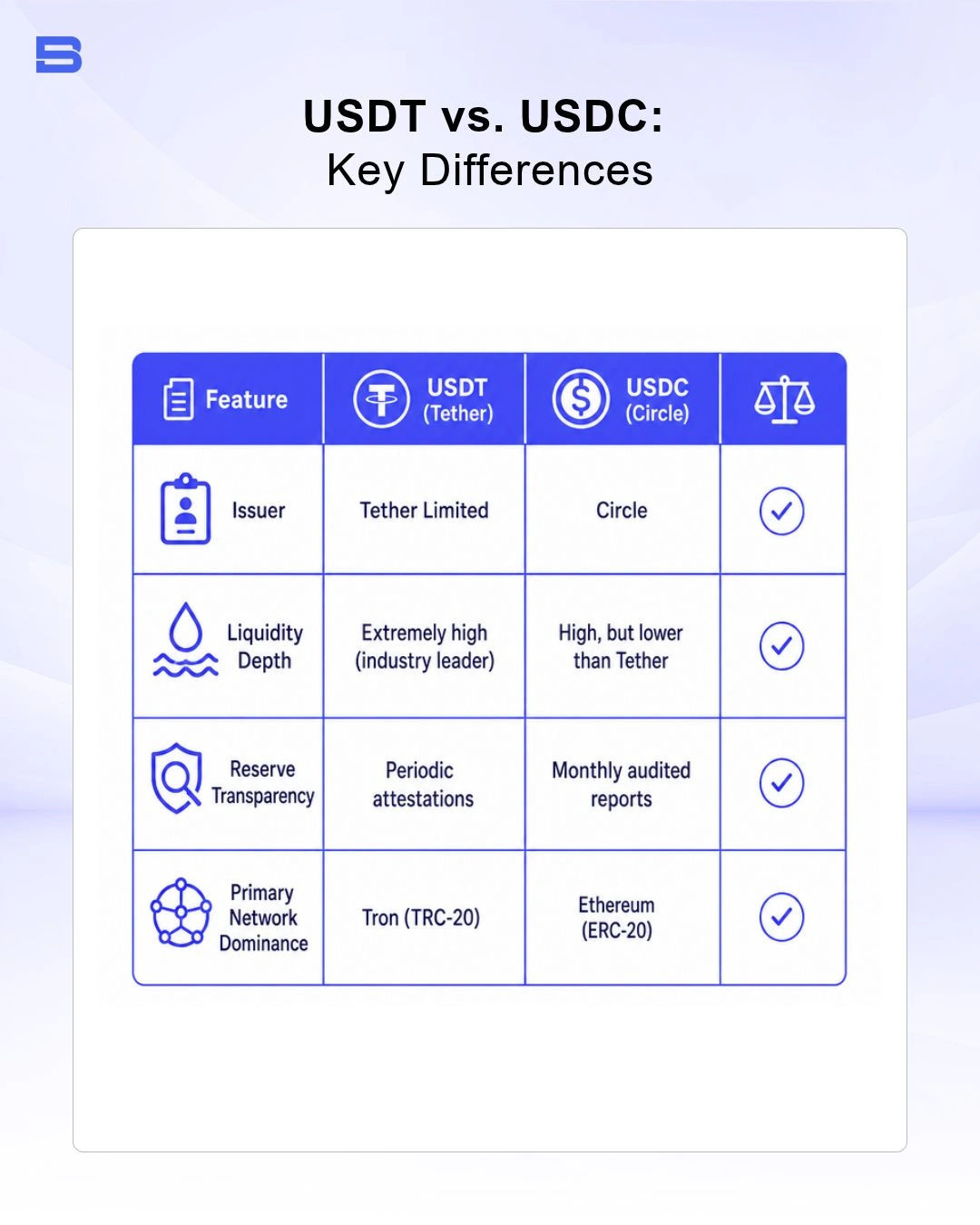
While Tether (USDT) dominates market volume, USD Coin (USDC) issued by Circle has emerged as a strong alternative. Both tokens aim for a 1:1 dollar peg, but they differ significantly in reserve transparency and primary use cases. Tether historically favors deep liquidity for active traders, whereas USDC leans heavily into regulatory compliance and transparent monthly audits.
Traders often choose between the two based on their exchange platform and specific liquidity needs. Tether is accepted across most offshore exchanges and functions as the default quote currency on many of them. USDC is highly preferred by institutions and decentralized finance protocols that prioritize strict regulatory oversight.
Once you've decided which stablecoin fits your trading style, the next question is how to keep it safe.
How to Store and Transfer USDT Safely
Securing your digital assets requires choosing the right storage method for your specific trading timeline. Centralized exchange wallets offer convenience for daily use for active daily trading but expose you to the platform's counterparty risk. Self-custody wallets give you total control over your private keys, and we recommend self-custody wallets for storing large amounts of wealth over long periods.
If you opt for self-custody, you must decide between hot wallets and cold wallets. Hot wallets are connected to the internet and are ideal for frequent transfers. Cold wallets are physical hardware devices kept entirely offline, providing strong security against digital hacking attempts.
Setting up these storage solutions requires careful attention to security protocols to prevent unauthorized access. You should always enable two-factor authentication and store your seed phrases offline in a secure physical location. Relying on digital screenshots or cloud storage to protect your recovery phrases exposes your funds to unnecessary hacking risks.
TRC-20 vs. ERC-20: Network Differences Explained
Choosing the right wallet is only half the equation — you also need to send USDT on the correct network.
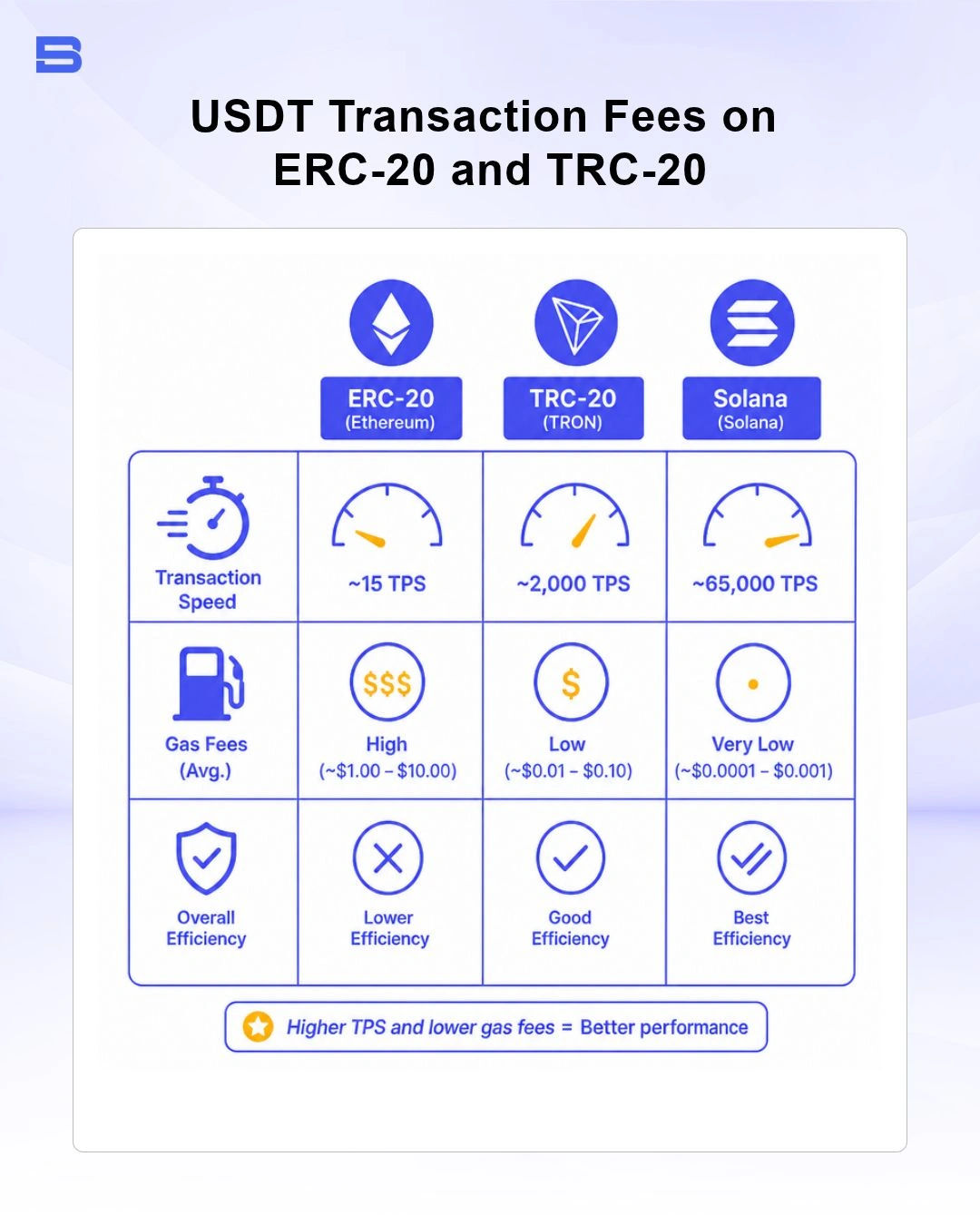
Because Tether is a multi-chain token, it operates simultaneously across several completely different blockchain networks. The most common versions are ERC-20 on the Ethereum network and TRC-20 on the Tron network. You might also encounter it on alternative Layer-1 networks if you explore Ethereum Malaysia alternatives like Sei crypto.
The TRC-20 network is highly popular among retail traders because it offers transaction fees near zero and settles within seconds. The ERC-20 network is generally slower and charges much higher gas fees (the transaction cost paid to the network), but it remains widely used for institutional transfers because of its longer track record on Ethereum.
Always verify your network selection before sending funds. If you attempt to send TRC-20 tokens to an ERC-20 receiving address, the blockchain will process the transaction, but the mismatched protocol will result in permanent and irreversible asset loss.
Key Risks of Using Tether (USDT)
Every financial instrument carries specific vulnerabilities, and USDT is no exception. The primary threat is counterparty risk — the risk that Tether Limited itself fails to honor its obligations. If the company mismanages its reserve assets or faces severe regulatory enforcement, USDT could lose its peg and collapse in value.
Regulatory scrutiny remains an important consideration for USDT issuers globally. Regulators and international standard-setting bodies are developing frameworks covering market integrity, investor protection, reserve-asset transparency, redemption rights, risk management, and anti-money laundering and counter-terrorist financing (AML/CFT) requirements.
International Organization of Securities Commissions (IOSCO) recommendations specifically highlight the need for appropriate disclosure and safeguards around USDT reserve assets, while the Financial Stability Board (FSB) recommends comprehensive supervision and AML/CFT risk management for global stablecoin arrangements.
Regulatory enforcement or financial problems affecting a major stablecoin issuer could impair redemptions, restrict access to reserve assets, or create significant liquidity and market-disruption risks across crypto-asset markets.
Market sentiment can also trigger temporary de-pegging events during periods of extreme industry stress. When traders panic and rush to redeem their tokens simultaneously, the overwhelming sell pressure on secondary exchanges can push the USDT price below one dollar temporarily.
You must always prepare for this volatility by sizing your positions appropriately and never allocating your entire net worth into a single digital asset.
You should also recognize that holding a digital stablecoin is completely different from holding a traditional asset like gold vs Bitcoin. Stablecoins generate no yield on their own and provide no hedge against fiat inflation. They are designed as a temporary operational bridge for active trading execution rather than a secure long-term store of value.
USDT: The Bottom Line for Traders
USDT remains a key operational tool that powers the modern digital asset economy. It provides the reliable liquidity active traders need to navigate volatile markets efficiently. However, you must always double-check your network protocols during transfers and practice strict risk management regarding where you store your funds.
- What Can You Trade? A Guide to Forex, Stocks, and More
- CFD Trading for Beginners
- What is CFD Trading and How Does It Work?
- Forex vs. Stocks: Which Market Suits You Best?
- How to Diversify a Portfolio Across Asset Classes
- How Dividend Stocks Work: Yields, Risks, and Strategies
- Silver Trading Explained: A Guide for Retail Investors
- Precious Metals Trading: A Complete Guide for Beginners
- Natural Gas Trading: A Guide to the Market
- Structured Warrants Malaysia: How They Work and Risks
- What Is the KLCI Index and How to Trade It
- Gold Investment in Malaysia: A Complete Guide for Beginners
- What Is Kijang Emas and How to Invest in It
- Value Investing Explained: How to Find Undervalued Stocks
- How to Trade Bitcoin Safely: A Complete Market Guide
- Growth Investing Explained: Strategies, Metrics, and Risks
- What Is Digital Gold Malaysia and How to Invest
- Crypto Trading Strategies for Beginners
- Gold vs Bitcoin: Key Differences, Risks, and Strategies
- Sukuk: A Guide for Beginners to Islamic Bonds
- What Is FCPO (Crude Palm Oil Futures) and How to Trade It
- How to Identify and Invest in Shariah-Compliant Stocks
- Timber Investment: Is It Worth It?
- Gold ETF Malaysia: A Guide for Beginners
- What Are Malaysian Government Securities (MGS)?
- Corporate Bonds Malaysia: A Guide for Beginners
- China A-Shares Trading Guide for Malaysian Investors
- What Is a Silver ETF and How to Invest in It?
- How to Trade XRP: A Practical Guide for Retail Investors
- How to Trade Solana (SOL): A Guide for Beginners
- What Are Gold Futures and How Do They Work?
- Money Market Fund in Malaysia: A Guide for Beginners
- Property Investment Malaysia: Direct Real Estate or M-REITs?
- What Is Binance Coin and How Does It Work?
- Green Sukuk: A Guide for Beginners to Islamic ESG Investing
- What Is Shiba Inu (SHIB) and How to Trade It
- What Is USDT? A Complete Guide to Tether for Beginners
- What Is Dogecoin and How to Trade It Safely for Beginners
- Cardano: A Guide for Beginners to Trade This Cryptocurrency
- Polkadot: A Guide to Trading This Cryptocurrency
- Tron: A Guide for Beginners to Trading This Cryptocurrency
- What Is Litecoin (LTC)? A Guide to Trading Digital Silver
- What Is Chainlink (LINK) and How to Trade It
- How to Trade Pepe Coin: Spot, Leverage, and Risk Management
- Near Protocol: A Guide to Trading This Cryptocurrency
- Trading Polygon Crypto: A Practical Guide for Beginners
- Trade Toncoin: Understanding the TON Ecosystem and Risks
- Cosmos Crypto: Ecosystem Architecture, Tokenomics, and Risks
- Stellar Crypto: A Guide to Trading This Cryptocurrency
- Avalanche Crypto Explained: A Practical Guide for Traders
- What Is Worldcoin? How to Trade WLD and Manage Risk
- Aptos: A Guide for Beginners to Trading This Cryptocurrency
- Sui Crypto Explained: Tokenomics and Trading Guide
- Celestia: A Guide to Trading This Cryptocurrency
- Decentraland: A Guide to Trading This Cryptocurrency
- What Is Arbitrum? How to Trade the Leading Layer 2 Network
- Sei Crypto: A Guide to Trading This Cryptocurrency
- What Is Injective Protocol and How to Trade INJ Safely
Disclaimer: The content on this page is intended for educational and informational purposes only. It does not constitute financial, investment, tax, or legal advice, and should not be interpreted as a recommendation to buy, sell, or hold any financial instrument or asset. Trading and investing involve significant risk, including the possible loss of your entire capital. Products such as forex, CFDs, and cryptocurrencies carry additional risks due to leverage, high volatility, and limited regulatory protection in some jurisdictions. Past performance of any financial instrument does not guarantee future results. Any market views, forecasts, or opinions expressed are those of the author at the time of writing and may not reflect current market conditions. Platform features, fees, and regulatory status are subject to change — always verify information directly with the relevant provider or regulator before making any financial decision. BrokerSpecs may receive compensation from third parties featured on this site. Always conduct your own due diligence and consider seeking advice from a licensed financial professional before investing.