


Related Tags
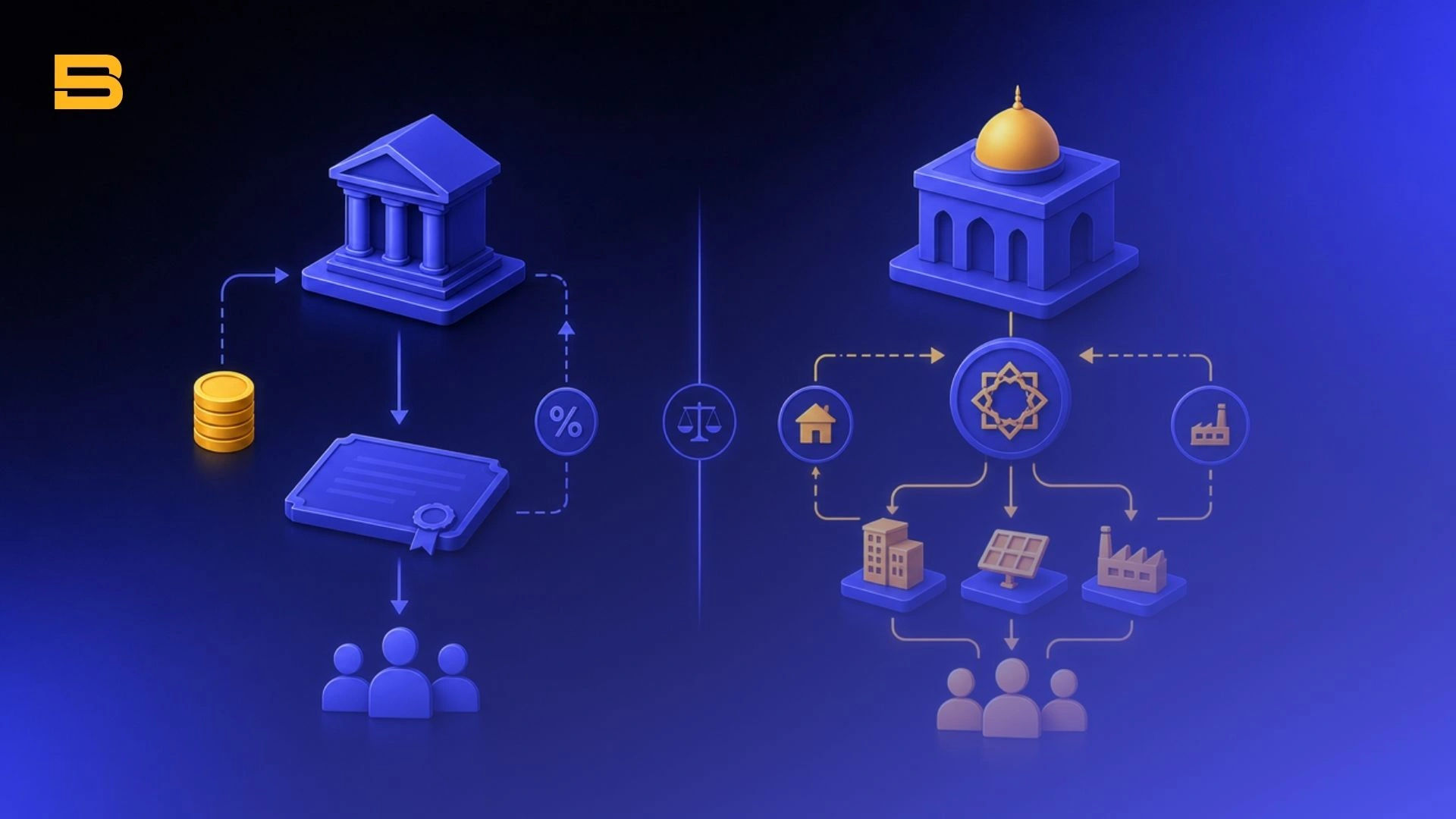
Imagine looking for a stable investment that pays regular income, but conventional fixed-income products do not align with your ethical or financial principles. Traditional bonds pay interest—a practice prohibited under Shariah law. This is where Sukuk steps in. Designed to meet Islamic principles, Sukuk offers a way to participate in capital markets through asset ownership rather than debt creation.
What Is Sukuk and How Does It Work?
Sukuk (the plural of the Arabic word Sakk, meaning legal instrument or certificate) is frequently described as an "Islamic bond." However, unlike conventional bonds, which represent debt obligations, Sukuk represents fractional ownership in an underlying asset, business project, or service.
When an organization or government needs to raise funds, it issues Sukuk certificates. Investors who purchase these certificates acquire an undivided interest in the tangible assets or projects linked to the deal. Instead of collecting interest, you receive a share of the revenues generated by those assets or rental income derived from leasing them.
How Sukuk Works: Asset Ownership vs. Debt
The foundational rule of Islamic finance is the prohibition of riba (interest). Money itself cannot generate money without an underlying commercial activity.
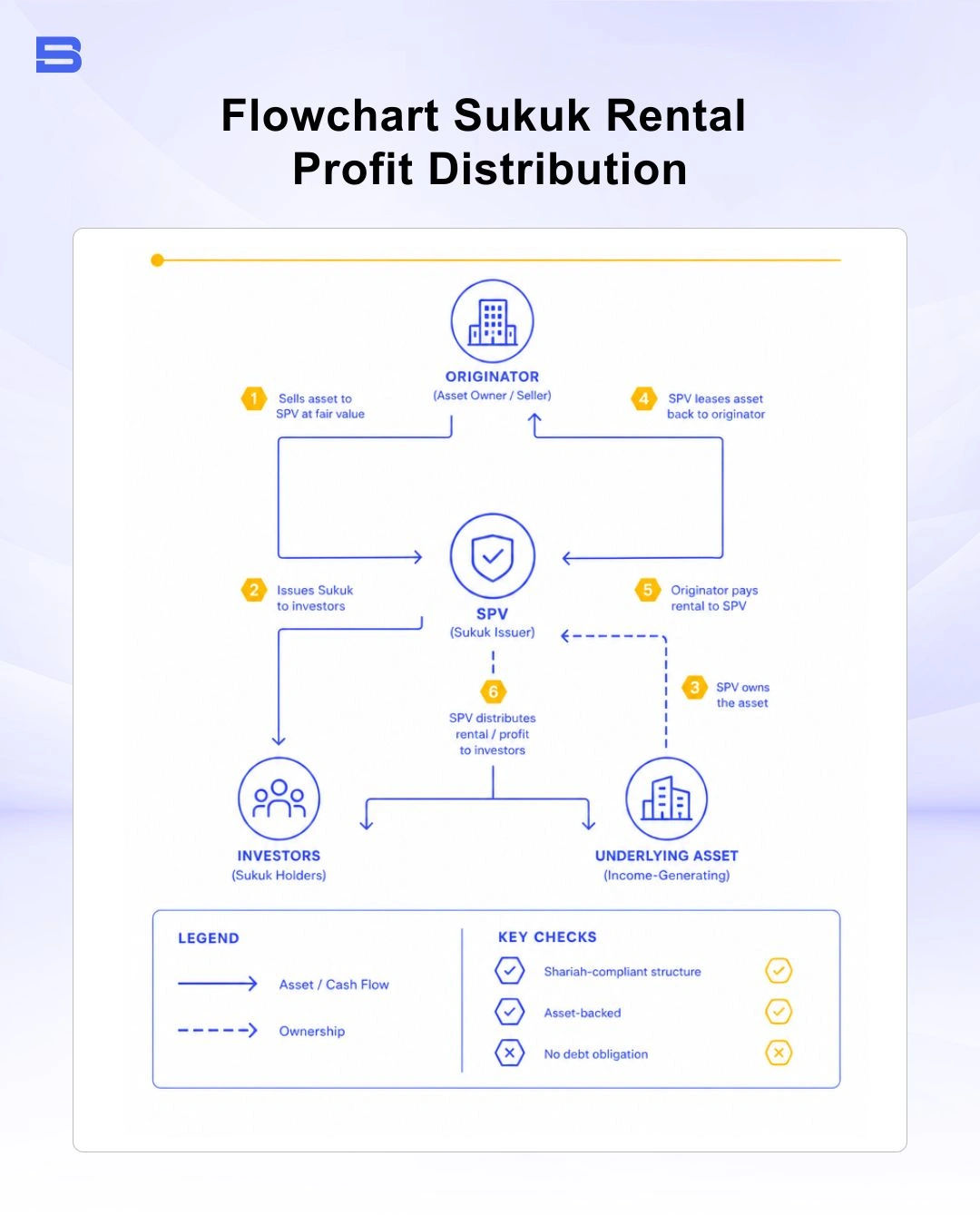
In a Sukuk transaction, the issuer sells certificates to investors. The issuer then uses the proceeds to acquire tangible assets, fund a Shariah-compliant project, or finance a business activity. Over the tenure of the Sukuk, the proceeds or rental income produced by these assets are distributed to certificate holders as periodic profit distributions. Upon maturity, the issuer buys back the assets or repays the nominal principal to the investors.
Common Sukuk Structures (Ijarah, Murabahah, Mudarabah)
To structure these asset-backed or asset-based investments legally and ethically, financial engineers rely on several established Shariah contracts:
- Sukuk Ijarah (Lease-Based): The issuer buys an asset and leases it back to a tenant or lessee. The rental payments collected from the tenant are distributed to Sukuk holders as regular profit payments.
- Sukuk Murabahah (Cost-Plus Sale): The issuer uses investor funds to buy goods or commodities and sells them to a buyer at a profit margin, paid in installments over time.
- Sukuk Mudarabah (Partnership): A trust financing arrangement where investors supply capital and a managing partner provides expertise. Profits are shared according to a pre-agreed ratio, while losses are borne by capital providers.
What Is the Difference Between Sukuk and Conventional Bonds?
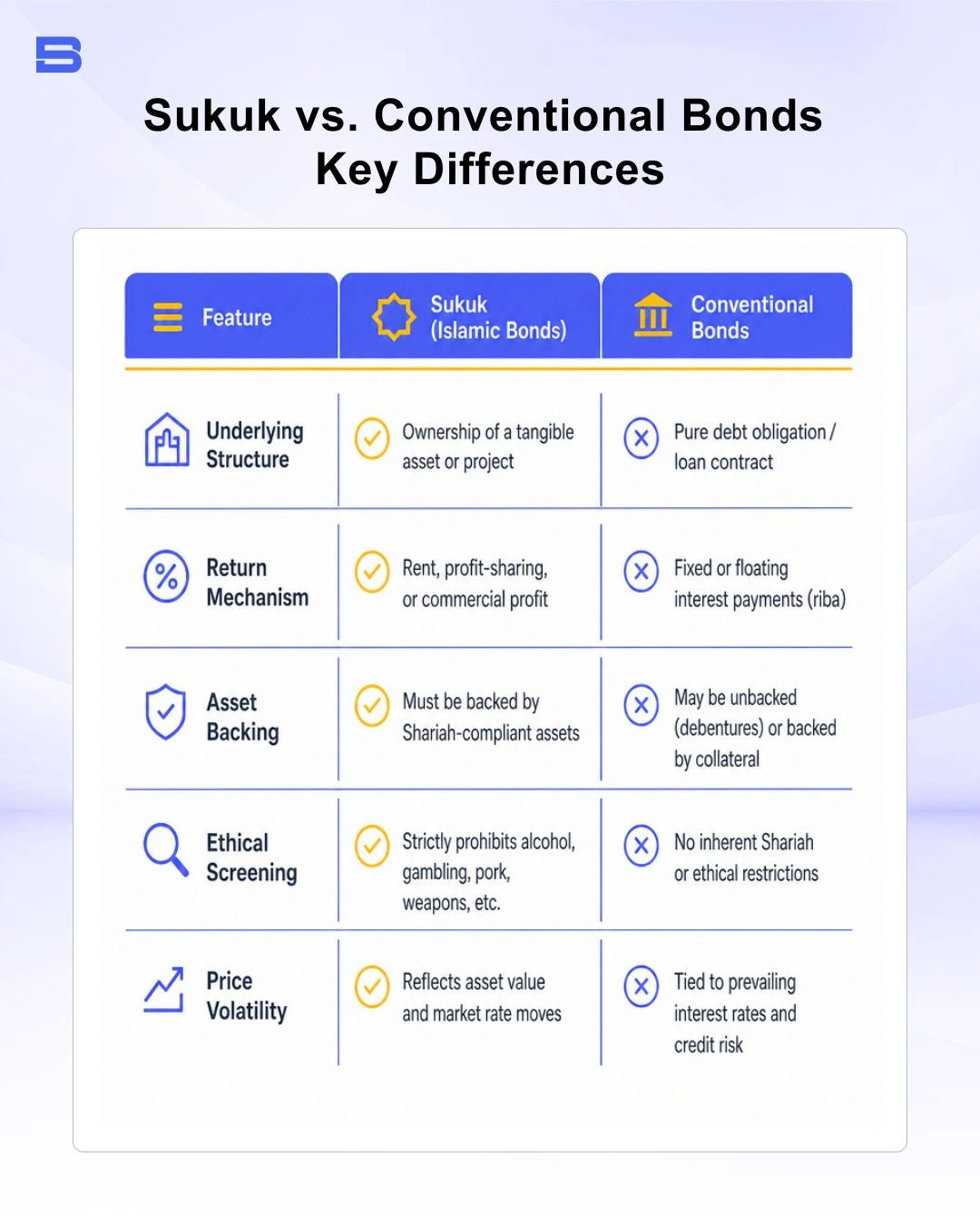
While both instruments serve as income-generating components in a portfolio, their economic and legal structures differ significantly. Conventional corporate bonds in Malaysia and abroad are simple debt contracts: you lend capital to an issuer, and they promise to pay back the principal plus fixed interest, regardless of asset performance. Sukuk, by contrast, gives you beneficial ownership in real assets.
Key Risks of Investing in Sukuk
A common misconception among beginner investors is assuming it carries no capital risk due to its ethical or asset-backed structure. Like any fixed-income instrument, Sukuk carries clear financial risks that require careful evaluation:
- Credit and Default Risk: The underlying asset or project manager can underperform or default. If the issuer runs into financial distress, profit distributions may be missed or delayed.
- Profit Rate / Interest Rate Sensitivity: Although it pays Shariah-compliant profits rather than interest, market profit rates still fluctuate alongside benchmark interest rates. If market interest rates rise, existing fixed-rate Sukuk secondary market prices generally drop.
- Liquidity Risk: Secondary market trading volumes for retail Sukuk can be thin depending on the exchange and jurisdiction. Selling your certificates prior to maturity might require discounting your price.
- Asset Risk: Because Sukuk holders own a stake in the underlying asset, physical damage or operational failure of that asset can impact capital recovery, unless indemnified by insurance (Takaful).
Shariah-Compliant Stocks vs. Sukuk: What Is the Difference?
When building a Shariah-compliant portfolio, you will encounter both equity investments (Islamic stocks) and Sukuk certificates.
Shariah-compliant stocks represent equity ownership in a corporation. Returns come through share price appreciation and variable dividends, leading to higher volatility and potential capital loss.
Sukuk acts as a fixed-income stabilizer. While returns are bounded by contract agreements and asset rentals, capital preservation is generally higher compared to equity markets. Combining both assets allows ethical investors to balance long-term capital growth with steady income streams.
Sukuk vs. Government Bonds (MGS)
Investors seeking lower credit risk often compare government-issued Sukuk against conventional sovereign debt like Malaysian Government Securities (MGS).
In Malaysia, the central authority issues Government Investment Issues (GII), which are sovereign Sukuk structured to mirror the safety and liquidity of standard MGS. Both carry sovereign-backed safety, but GII structures ensure profit distributions remain 100% Shariah-compliant.
The Rise of Green Sukuk for Sustainable Investing
In recent years, the intersection of Islamic finance and ESG (Environmental, Social, and Governance) principles has created a rapidly growing market for Green Sukuk. These certificates raise capital exclusively for environmentally friendly projects, such as solar parks, renewable energy grids, and sustainable water management. They offer investors an opportunity to satisfy both religious ethics and global sustainability goals in a single instrument.
How Retail Investors Can Buy Sukuk in Malaysia
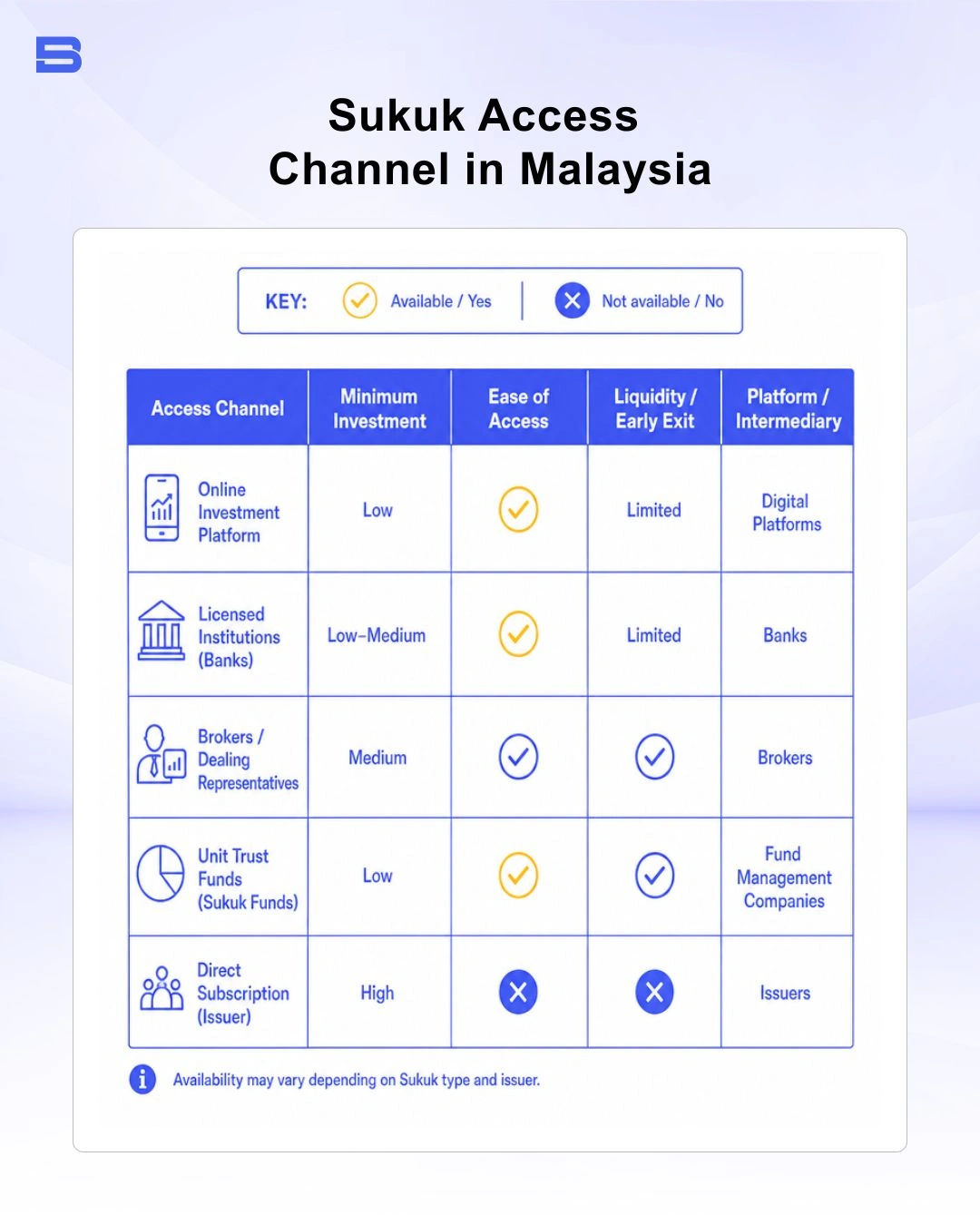
Historically, Sukuk was primarily an institutional market requiring substantial minimum investments. Today, regulatory oversight by the Securities Commission Malaysia (SC) and Bank Negara Malaysia (BNM) has expanded retail access across several channels:
- Exchange-Traded Bonds and Sukuk (ETBS): Retail Sukuk listed directly on Bursa Malaysia, bought and sold through standard Central Depository System (CDS) brokerage accounts.
- Islamic Unit Trust Funds: Mutual funds that pool capital to purchase a diversified portfolio of corporate and sovereign Sukuk. This lowers the entry threshold to as little as RM100.
- Digital Wealth Managers & Robo-Advisors: Platforms like Wahed Invest offer automated portfolio allocation into global and regional Sukuk Exchange-Traded Funds (ETFs) or underlying funds.
- Bank Distribution Platforms: Commercial banks offer direct retail Sukuk applications during primary public issuance windows.
Conclusion
Sukuk provides a bridge between traditional asset ownership and modern financial markets, offering a Shariah-compliant method to generate recurring income and diversify your investment portfolio. By understanding the underlying asset structures and weighing potential default or rate risks, you can make informed decisions on incorporating Sukuk into your financial strategy.
- What Can You Trade? A Guide to Forex, Stocks, and More
- CFD Trading for Beginners
- What is CFD Trading and How Does It Work?
- Forex vs. Stocks: Which Market Suits You Best?
- How to Diversify a Portfolio Across Asset Classes
- How Dividend Stocks Work: Yields, Risks, and Strategies
- Silver Trading Explained: A Guide for Retail Investors
- Precious Metals Trading: A Complete Guide for Beginners
- Natural Gas Trading: A Guide to the Market
- Structured Warrants Malaysia: How They Work and Risks
- What Is the KLCI Index and How to Trade It
- Gold Investment in Malaysia: A Complete Guide for Beginners
- What Is Kijang Emas and How to Invest in It
- Value Investing Explained: How to Find Undervalued Stocks
- How to Trade Bitcoin Safely: A Complete Market Guide
- Growth Investing Explained: Strategies, Metrics, and Risks
- What Is Digital Gold Malaysia and How to Invest
- Crypto Trading Strategies for Beginners
- Gold vs Bitcoin: Key Differences, Risks, and Strategies
- Sukuk: A Guide for Beginners to Islamic Bonds
- What Is FCPO (Crude Palm Oil Futures) and How to Trade It
- How to Identify and Invest in Shariah-Compliant Stocks
- Timber Investment: Is It Worth It?
- Gold ETF Malaysia: A Guide for Beginners
- What Are Malaysian Government Securities (MGS)?
- Corporate Bonds Malaysia: A Guide for Beginners
- China A-Shares Trading Guide for Malaysian Investors
- What Is a Silver ETF and How to Invest in It?
- How to Trade XRP: A Practical Guide for Retail Investors
- How to Trade Solana (SOL): A Guide for Beginners
- What Are Gold Futures and How Do They Work?
- Money Market Fund in Malaysia: A Guide for Beginners
- Property Investment Malaysia: Direct Real Estate or M-REITs?
- What Is Binance Coin and How Does It Work?
- Green Sukuk: A Guide for Beginners to Islamic ESG Investing
- What Is Shiba Inu (SHIB) and How to Trade It
- What Is USDT? A Complete Guide to Tether for Beginners
- What Is Dogecoin and How to Trade It Safely for Beginners
- Cardano: A Guide for Beginners to Trade This Cryptocurrency
- Polkadot: A Guide to Trading This Cryptocurrency
- Tron: A Guide for Beginners to Trading This Cryptocurrency
- What Is Litecoin (LTC)? A Guide to Trading Digital Silver
- What Is Chainlink (LINK) and How to Trade It
- How to Trade Pepe Coin: Spot, Leverage, and Risk Management
- Near Protocol: A Guide to Trading This Cryptocurrency
- Trading Polygon Crypto: A Practical Guide for Beginners
- Trade Toncoin: Understanding the TON Ecosystem and Risks
- Cosmos Crypto: Ecosystem Architecture, Tokenomics, and Risks
- Stellar Crypto: A Guide to Trading This Cryptocurrency
- Avalanche Crypto Explained: A Practical Guide for Traders
- What Is Worldcoin? How to Trade WLD and Manage Risk
- Aptos: A Guide for Beginners to Trading This Cryptocurrency
- Sui Crypto Explained: Tokenomics and Trading Guide
- Celestia: A Guide to Trading This Cryptocurrency
- Decentraland: A Guide to Trading This Cryptocurrency
- What Is Arbitrum? How to Trade the Leading Layer 2 Network
- Sei Crypto: A Guide to Trading This Cryptocurrency
- What Is Injective Protocol and How to Trade INJ Safely
Disclaimer: The content on this page is intended for educational and informational purposes only. It does not constitute financial, investment, tax, or legal advice, and should not be interpreted as a recommendation to buy, sell, or hold any financial instrument or asset. Trading and investing involve significant risk, including the possible loss of your entire capital. Products such as forex, CFDs, and cryptocurrencies carry additional risks due to leverage, high volatility, and limited regulatory protection in some jurisdictions. Past performance of any financial instrument does not guarantee future results. Any market views, forecasts, or opinions expressed are those of the author at the time of writing and may not reflect current market conditions. Platform features, fees, and regulatory status are subject to change — always verify information directly with the relevant provider or regulator before making any financial decision. BrokerSpecs may receive compensation from third parties featured on this site. Always conduct your own due diligence and consider seeking advice from a licensed financial professional before investing.