


Related Tags
Before you start trading CFDs, you need to understand how it works, the risks involved, and costs such as spreads and commissions that are typically charged by brokers.
CFD trading differs from other financial instruments because they allow traders to speculate on price movement without owning the underlying asset. Similar to forex, CFDs are leveraged derivative products traded on margin that enable you to open large positions with small deposits.
CFDs are classified as a complex market, so they’re not suitable for every investor—especially retail investors—as they carry extremely high risk due to leverage.
In this article, we will focus on how CFD trading works, its pros and cons, and a simple scenario for you to have a grasp of understanding before you start trading.
What is CFD Trading?
CFD, or contract for difference, is an agreement between two parties—broker and trader—to exchange the difference in the value of an underlying asset from the time a position is opened until it is closed. It’s a financial derivative that allows traders to speculate on an asset’s price movement without holding the actual asset, such as commodities, indices, and currencies.
CFDs are traded directly over-the-counter (OTC) rather than on an exchange, so there is a counterparty risk that traders need to be wary of.
Other than speculating on price movements, CFDs can also be used to diversify or hedge existing equity or commodity portfolios without committing large amounts of capital. CFD trading offers higher flexibility compared to futures trading.
To understand it better, let’s take a closer look at it.
How Does CFD Trading Work?
When you buy a CFD, you don’t buy the actual shares. You need to enter an agreement with the broker to speculate on the asset’s price movement, betting on whether it will rise or fall. If you believe the price of the asset will rise, you can open a long (buy) position, and if you think the price will fall, you can open a short position (sell) instead.
The price of the underlying asset determines the value of the CFD. A trade is closed by taking the opposite position (e.g., selling to close a buy position). In other words, the trader’s prediction will determine whether they gain a profit or incur a loss.
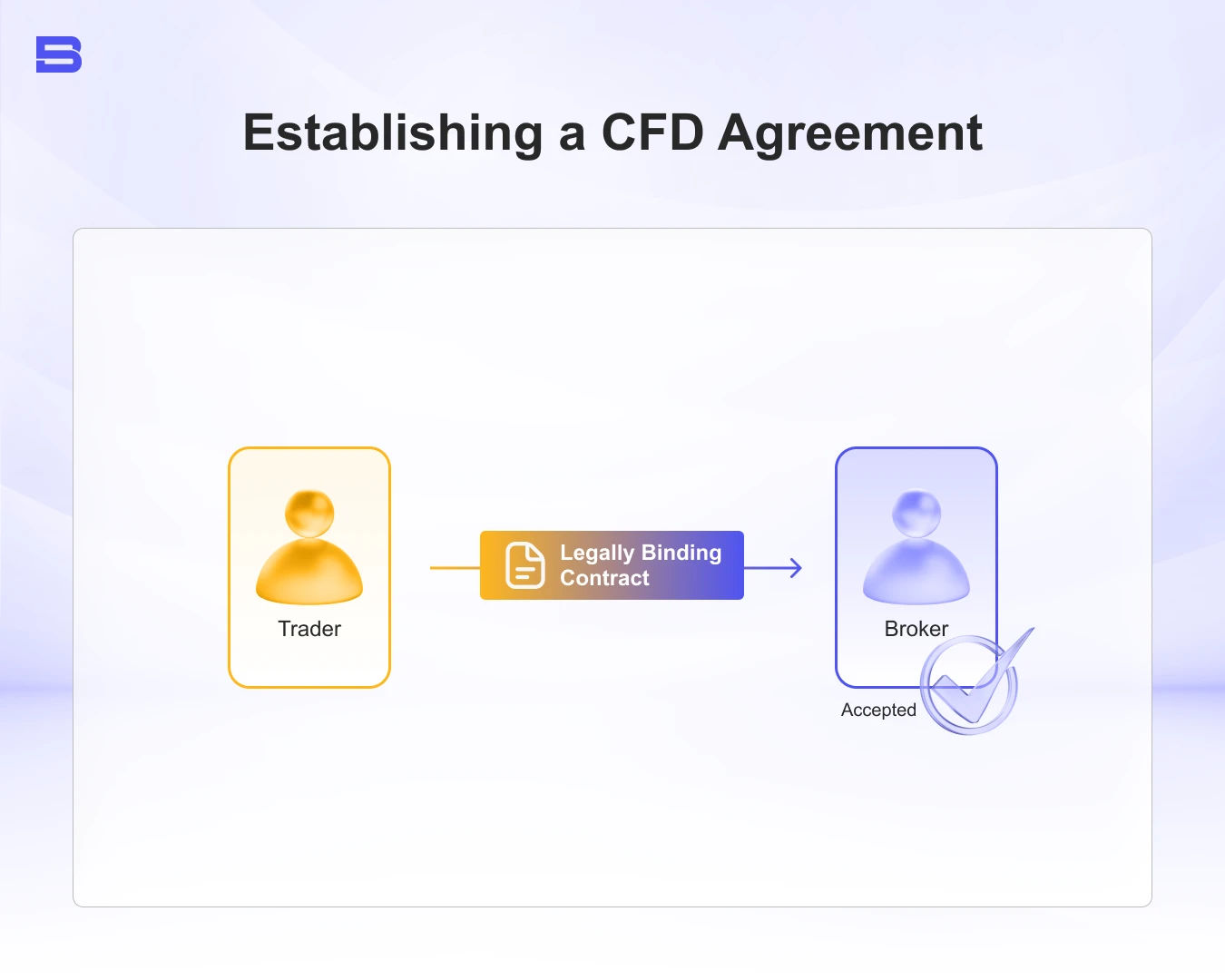
Traders Enter Into an Agreement with Brokers
When traders buy a CFD, they enter into a legally binding contract with brokers to exchange the difference in an asset’s price from the time the contract is opened until it’s closed.
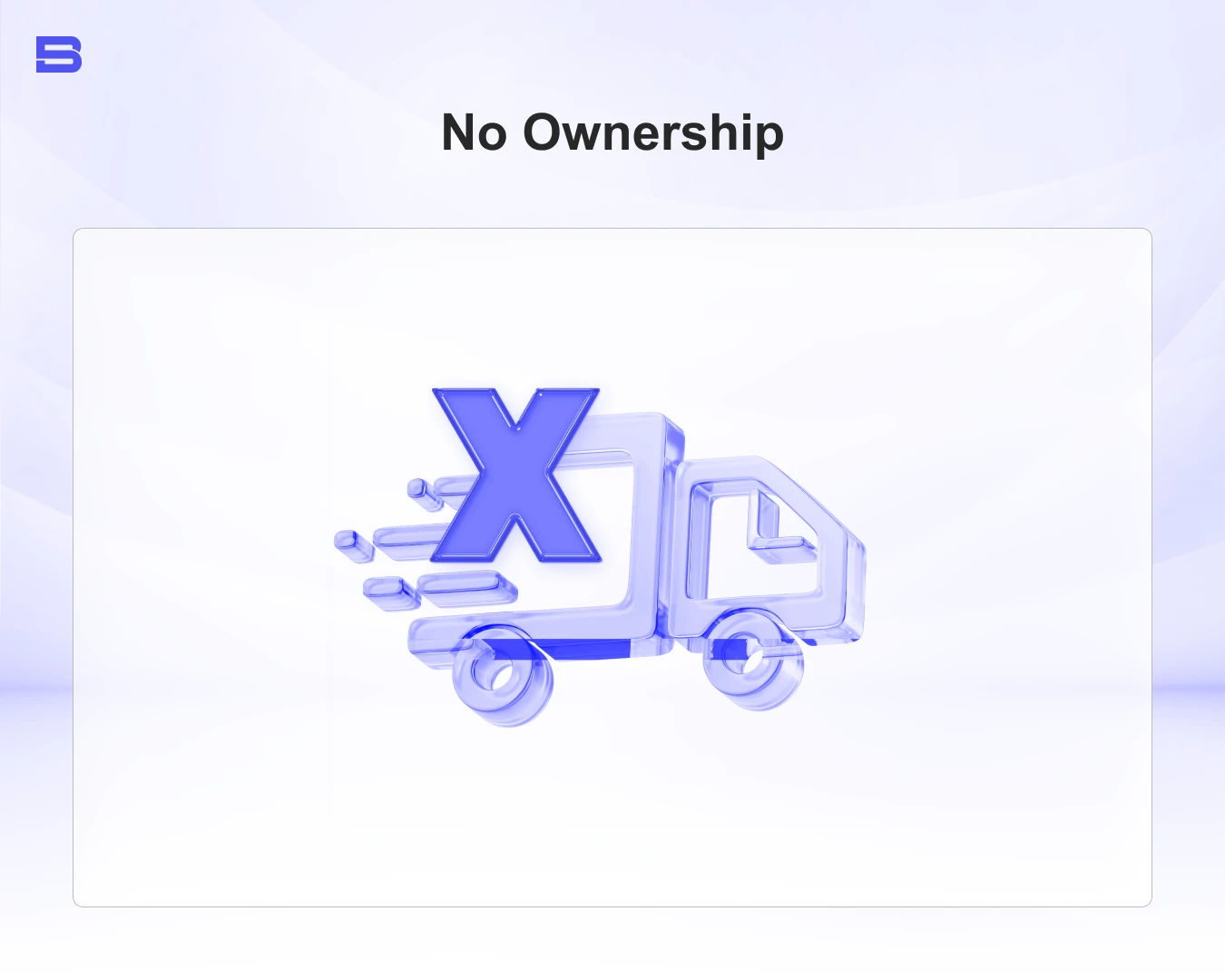
No Ownership
Traders do not hold the actual asset. So the trade will be made without a physical delivery of the asset.
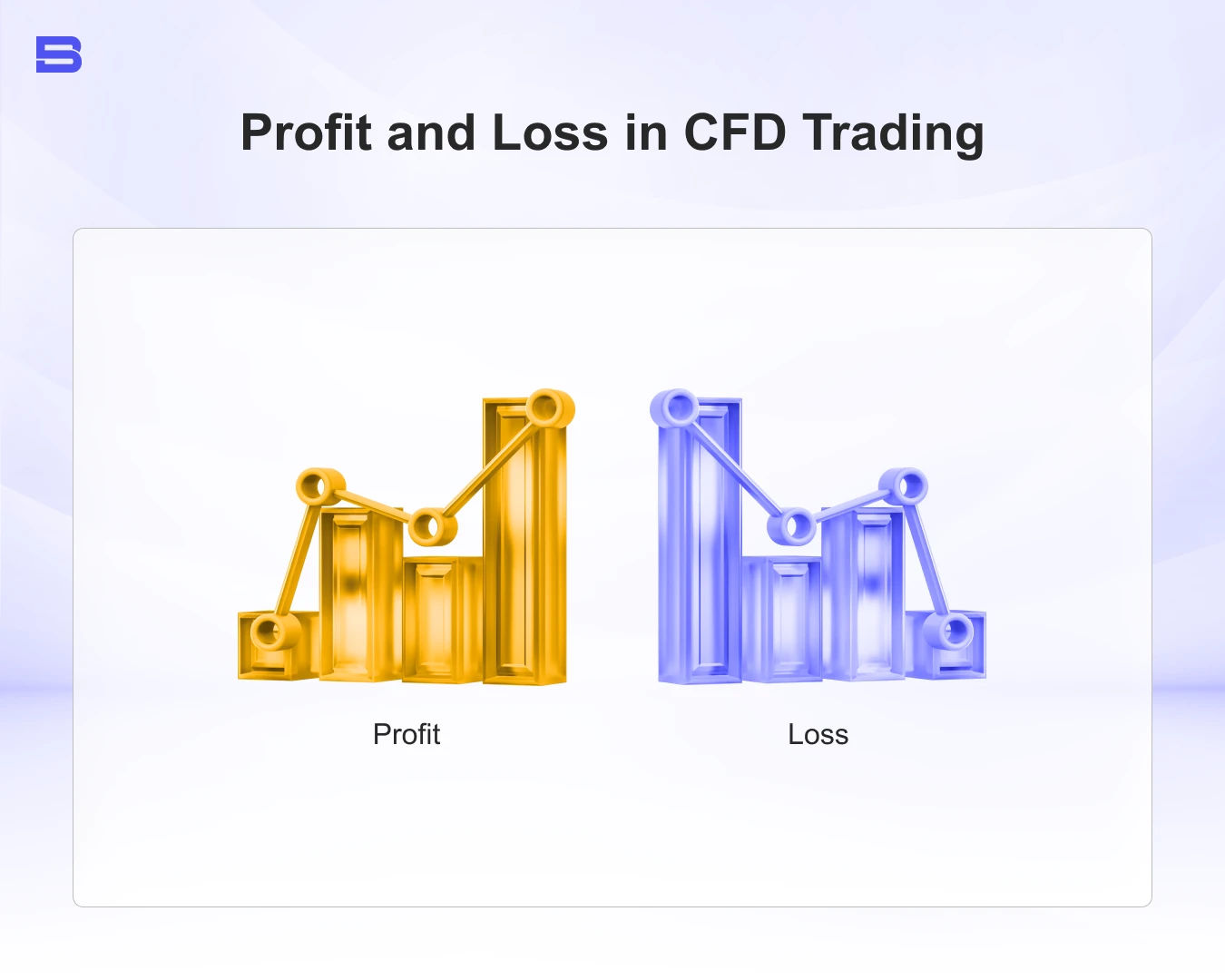
Profit and Loss in CFD Trading
The P&L in CFD is calculated based on the difference between the opening price and closing price of the contract, multiplied by the position size or number of contracts traded. Traders make profits when the market moves in their direction, whether they are taking a long or short position, and incur losses when the market moves against their chosen direction.
The following are the formulas to calculate profit and loss (not accounting for any brokerage fees):
- Long Position (buy):
P&L = (Closing Price - Opening Price) x Number of Contracts x Contract Size - Short Position (short):
P&L = (Opening Price - Closing Price) x Number of Contracts x Contract Size
Note that brokers will charge a commission before you enter and exit a CFD position. Most retail investors will lose money when trading CFDs due to their high leverage and poor risk management that amplifies losses significantly—especially in volatile markets. Carefully consider your risk capacity before you start trading.
What are The Advantages of Trading CFDs?
Trading in CFDs comes with many benefits and risks, so it’s important for you to learn as much as you can to understand and educate yourself on how CFDs work and what the risks are associated with when you trade them.
These are the advantages that CFD trading offers over traditional stocks:
A Diverse Range of Markets
- CFDs enable you to speculate on the price movements of a variety of assets.
This includes stocks, forex (currency pairs), commodities (such as oil or gold), and cryptocurrencies. It also gives you the flexibility and ability to adjust your strategies depending on the market.
Lower Entry Barrier
- Allows you to control the position while holding a small amount of initial investment. Can be a perfect strategy for a beginner who wants to learn or test the market without risking large amounts of capital.
Enhanced Profitability
- It gives you market exposure that would typically be your actual investment, allowing for greater capital efficiency. For instance, if you deposit $1,000, it could control a $50,000 CFD position. So if your prediction is correct, this leverage can magnify your profits.
Flexibility to Profit from Declines (Short Positions)
- Different from traditional stock ownership, you can borrow and repurchase assets to profit from short positions. CFDs provide flexibility to open a short position directly into your trading account without borrowing, or in other words, you can avoid specialized lending fees and interest charges while capitalizing on declines.
Risks in Trading CFDs
CFD trading involves significant risk because leverage can amplify both potential gains and potential losses, which may result in losses that exceed initial deposits.
High Risk of Amplified Losses
CFDs can magnify both profits and losses. If the asset’s price moves against you, it can result in significant losses that can potentially exceed your initial deposit.
Leverage Overhead
Leveraged exposure carries a premium. CFD brokers usually charge an overnight fee for holding leveraged positions after trading for several days. The fees can pile up over time, especially for a long-term run, which may impact the potential returns. These are some of the factors that you need to consider before developing your trading strategy.
Market Volatility and The Spread
CFD markets are volatile and exposed to fluctuations. Sudden price movements can destroy profits or increase losses, especially for short-term trades. Not only that, but the difference in price between buying and selling CFDs typically adds additional costs for every trade you do.
Complexity and Potential for Misjudgement
CFD is a complex financial instrument, despite providing you with the flexibility to trade.
Having a clear understanding of leverage, margin, and requirements is important before you start trading, as it often leads to miscalculations and mistakes that can result in a huge loss.
Example of a CFD Trade
To have a better understanding of how CFD works, let’s take a closer look at both profitable and losing trade examples.
Profitable Trade
You think that the price of EUR/USD will rise, so you decide to open a long (buy) position for this currency pair. The current price of EUR/USD is 1.2000, and you decide to use a leverage of 1:200. Right now, you have $1000 in your account and want to use $200 as a margin. Here’s a breakdown:
The position is open:
Leverage: 1:200
Margin: $200
Opening price: 1.2000
Trade size: $200 x 200 = $40,000
EUR/USD trade amount is converted to EUR, equal to 40,000 USD / 1.2000 = 33,333 EUR
One thing you need to always keep in mind is that when you trade a CFD currency pair, the trade amount should be converted to the base currency (the first currency in the pair).
Market movement:
EUR/USD rises to 1.2050
Price movement: 1.2050 - 1.2000 = 0.0050
Profit per unit: 0.0050
Profit calculation:
Gross Profit = (0.0050 x 33,333) = $166.67
From the breakdown above, you have made a profit worth $166.67, which doubles the amount of your initial margin investment. The example above shows how leverage can increase profits in CFD trading.
Losing Trade
The next scenario is when you believe that the price of GBP/USD will fall, so you decide to go short (sell) this currency pair. The currency price of GBP/USD is 1.4000, and you use the same leverage as 1:200. You trade a deposit of $200 margin from your $1000 account.
The position is open:
Leverage: 1:200
Margin: $200
Opening price: 1.4000
Trade size: $200 x 200 = $40,000
GBP/USD trade amount should be converted to GBP, which is 40,000 USD / 1.4000 = 28,571 GBP
Market Movement:
The price of GBP/USD rises to 1.4100
You closed the position at 1.4100
Price movement: 1.4100 - 1.4000 = 0.0100
Loss incurred per unit: 0.0100
Calculate the loss:
Loss (0.0100 x 28,571) = $285.71
You lose an amount of $285.71 GBP, which illustrates the risk of leverage in CFD Trading. If the price continues to fall and moves against your position, you could lose a much greater amount.
Where Can You Trade CFDs?
While CFDs are tradable in many countries, there are a few that restrict them. For example, the US has banned the trading of CFDs due to the extreme leverage and over-the-counter method that violates the Securities and Exchange Commission (SEC) regulations. Some countries allow CFD trading but have strict regulatory frameworks to protect retail investors.
The Financial Conduct Authority (FCA) of the UK imposes strict regulations on CFD trading. These include low leverage limits—up to 30:1—for major currency pairs and even lower for more volatile assets, mandatory negative balance protection, and a prohibition on offering incentives designed to boost trading volume.
Because regulations can vary significantly between jurisdictions, it’s important for you to check with your domestic financial regulator to understand the rules governing CFD trading in your region. This ensures that the broker you choose operates legally and is aware of any investor protections, leverage restrictions, and compliance requirements that may apply.
The Bottom Line
Beginner traders should approach CFD trading with extra caution. Even though the benefits and flexibility that the leverage provides may seem tempting, it comes with significant risks, such as spread cost, overnight charges, and magnified losses that you should take into account before you start trading CFDs. In terms of accessibility, CFD may appear beginner-friendly, but it is highly risky and complex. It can be unsuitable for beginners who do not first take the time to learn the fundamentals and practice using demo accounts before experiencing real-life trading.
Therefore, it is crucial to conduct thorough research and prepare a strong risk management strategy. This will ensure you fully grasp the mechanics of CFD and are prepared to handle the risks that come with trading it.
- What Can You Trade? A Guide to Forex, Stocks, and More
- CFD Trading for Beginners
- What is CFD Trading and How Does It Work?
- Forex vs. Stocks: Which Market Suits You Best?
- How to Diversify a Portfolio Across Asset Classes
- How Dividend Stocks Work: Yields, Risks, and Strategies
- Silver Trading Explained: A Guide for Retail Investors
- Precious Metals Trading: A Complete Guide for Beginners
- Natural Gas Trading: A Guide to the Market
- Structured Warrants Malaysia: How They Work and Risks
- What Is the KLCI Index and How to Trade It
- Gold Investment in Malaysia: A Complete Guide for Beginners
- What Is Kijang Emas and How to Invest in It
- Value Investing Explained: How to Find Undervalued Stocks
- How to Trade Bitcoin Safely: A Complete Market Guide
- Growth Investing Explained: Strategies, Metrics, and Risks
- What Is Digital Gold Malaysia and How to Invest
- Crypto Trading Strategies for Beginners
- Gold vs Bitcoin: Key Differences, Risks, and Strategies
- Sukuk: A Guide for Beginners to Islamic Bonds
- What Is FCPO (Crude Palm Oil Futures) and How to Trade It
- How to Identify and Invest in Shariah-Compliant Stocks
- Timber Investment: Is It Worth It?
- Gold ETF Malaysia: A Guide for Beginners
- What Are Malaysian Government Securities (MGS)?
- Corporate Bonds Malaysia: A Guide for Beginners
- China A-Shares Trading Guide for Malaysian Investors
- What Is a Silver ETF and How to Invest in It?
- How to Trade XRP: A Practical Guide for Retail Investors
- How to Trade Solana (SOL): A Guide for Beginners
- What Are Gold Futures and How Do They Work?
- Money Market Fund in Malaysia: A Guide for Beginners
- Property Investment Malaysia: Direct Real Estate or M-REITs?
- What Is Binance Coin and How Does It Work?
- Green Sukuk: A Guide for Beginners to Islamic ESG Investing
- What Is Shiba Inu (SHIB) and How to Trade It
- What Is USDT? A Complete Guide to Tether for Beginners
- What Is Dogecoin and How to Trade It Safely for Beginners
- Cardano: A Guide for Beginners to Trade This Cryptocurrency
- Polkadot: A Guide to Trading This Cryptocurrency
- Tron: A Guide for Beginners to Trading This Cryptocurrency
- What Is Litecoin (LTC)? A Guide to Trading Digital Silver
- What Is Chainlink (LINK) and How to Trade It
- How to Trade Pepe Coin: Spot, Leverage, and Risk Management
- Near Protocol: A Guide to Trading This Cryptocurrency
- Trading Polygon Crypto: A Practical Guide for Beginners
- Trade Toncoin: Understanding the TON Ecosystem and Risks
- Cosmos Crypto: Ecosystem Architecture, Tokenomics, and Risks
- Stellar Crypto: A Guide to Trading This Cryptocurrency
- Avalanche Crypto Explained: A Practical Guide for Traders
- What Is Worldcoin? How to Trade WLD and Manage Risk
- Aptos: A Guide for Beginners to Trading This Cryptocurrency
- Sui Crypto Explained: Tokenomics and Trading Guide
- Celestia: A Guide to Trading This Cryptocurrency
- Decentraland: A Guide to Trading This Cryptocurrency
- What Is Arbitrum? How to Trade the Leading Layer 2 Network
- Sei Crypto: A Guide to Trading This Cryptocurrency
- What Is Injective Protocol and How to Trade INJ Safely
Disclaimer: The content on this page is intended for educational and informational purposes only. It does not constitute financial, investment, tax, or legal advice, and should not be interpreted as a recommendation to buy, sell, or hold any financial instrument or asset. Trading and investing involve significant risk, including the possible loss of your entire capital. Products such as forex, CFDs, and cryptocurrencies carry additional risks due to leverage, high volatility, and limited regulatory protection in some jurisdictions. Past performance of any financial instrument does not guarantee future results. Any market views, forecasts, or opinions expressed are those of the author at the time of writing and may not reflect current market conditions. Platform features, fees, and regulatory status are subject to change — always verify information directly with the relevant provider or regulator before making any financial decision. BrokerSpecs may receive compensation from third parties featured on this site. Always conduct your own due diligence and consider seeking advice from a licensed financial professional before investing.