


Related Tags
Entering the financial markets for the first time can feel overwhelming, especially when navigating global volatility, currency devaluation, and shifting interest rate regimes. For generations, physical gold served as the primary refuge for capital preservation. Modern financial markets, however, offer direct market access to a broader suite of rare metals through liquid derivative contracts and exchange-traded products.
Whether you are looking to hedge against inflation, capture short-term cyclical swings, or balance an equity-heavy portfolio, precious metals trading provides structured vehicles to execute your market view without taking physical delivery of bullion.
What Is Precious Metals Trading and How Does It Work?
Precious metals trading involves speculating on or hedging against the price movements of rare metallic chemical elements—primarily gold, silver, platinum, and palladium. Unlike holding physical bars or coins in a private safe, active market trading typically utilizes financial derivatives, spot contracts, and exchange-traded funds (ETFs). This approach enables you to gain price exposure, utilize leverage, and execute trades in both rising and falling markets.
Within the broader landscape of commodity trading, precious metals occupy a unique position. While energy markets like oil trading or natural gas trading are driven primarily by immediate industrial consumption and seasonal inventory shifts, agricultural futures such as Crude Palm Oil futures (FCPO) depend heavily on weather cycles and crop yields instead. Precious metals, by contrast, function under a dual dynamic: monetary value and industrial utility.
When you trade precious metals electronically, you interact with standardized pricing derived from global benchmark exchanges, such as the London Bullion Market Association (LBMA) for spot pricing and the Chicago Mercantile Exchange (CME) for futures. Prices are quoted globally in US Dollars (USD) per troy ounce (oz), meaning currency fluctuations directly impact your local position value.
Comparing the Big Four Metals: Gold, Silver, Platinum, and Palladium
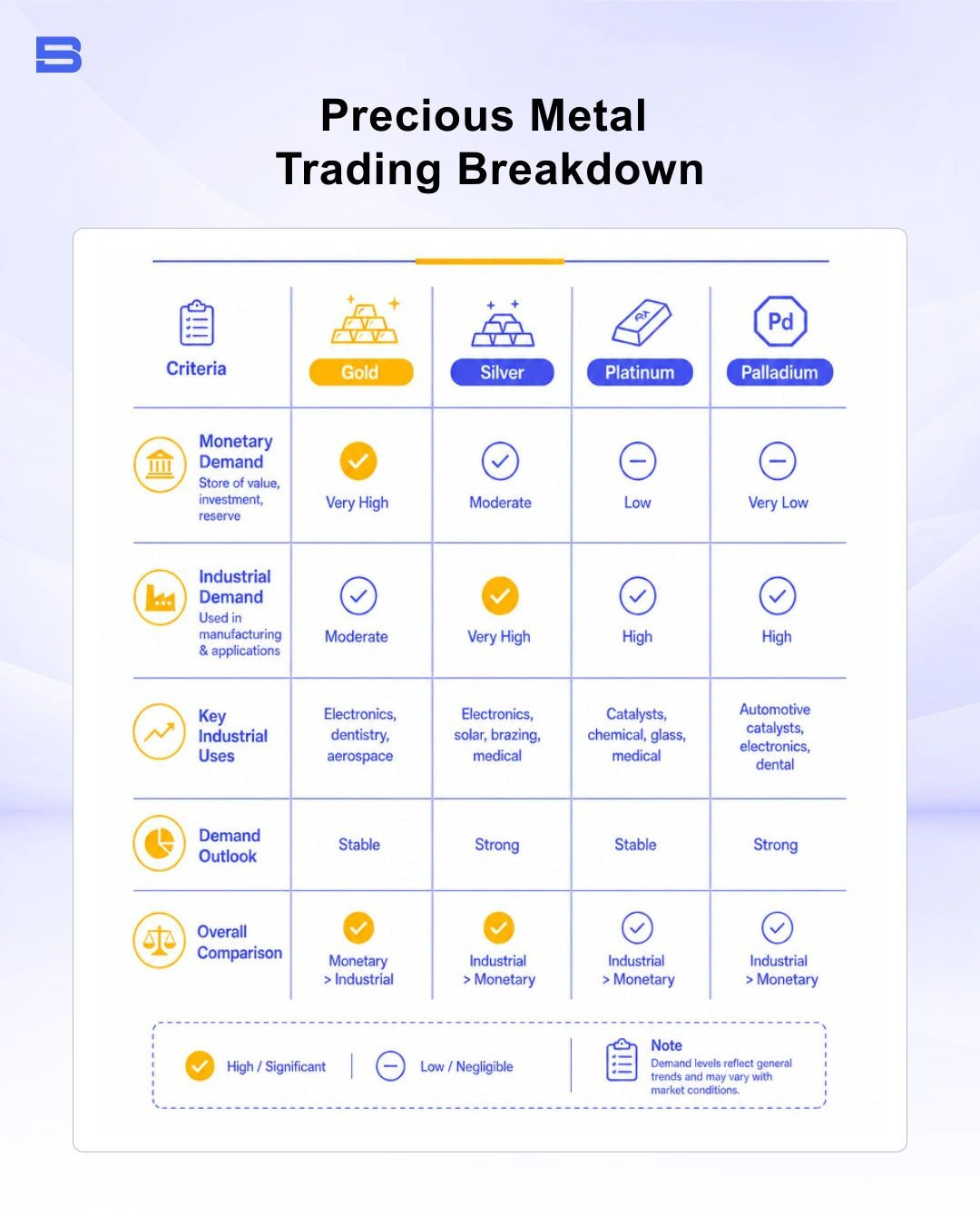
Before opening a position, you need to understand which precious metals you can trade and how their core supply-and-demand fundamentals differ. The market categorizes the four primary metals into monetary safe havens and industrial raw materials.
Gold and Silver: Dual-Purpose Assets
Gold (XAU/USD) is the institutional benchmark for monetary preservation. Central banks hold thousands of metric tons of gold in official reserves to back national balance sheets. Because gold has limited industrial application relative to its total supply, its price is governed almost entirely by macroeconomic factors: real interest rates, US Dollar strength, geopolitical tension, and global central bank demand.
Silver (XAG/USD) functions as a dual-purpose hybrid asset. According to figures from the Silver Institute, industrial applications accounted for approximately 58% of global silver in demand in 2025, including uses in solar photovoltaics, electronics, and other industrial technologies. During a silver trading campaign, you will notice higher price volatility compared to gold. Silver often tracks gold's broader direction, but its smaller overall market capitalization and heavy exposure to global manufacturing output amplify its price swings.
Platinum and Palladium: Industrial Demand Dynamics
Platinum (XPT/USD) and palladium (XPD/USD) are white metals heavily reliant on industrial supply chains. Their primary price driver is the automotive sector, where they serve as critical components in catalytic converters to reduce vehicle emissions.
- Platinum: Used extensively in diesel-powered catalytic converters, luxury jewelry, and emerging green hydrogen fuel cell technology. Geographic mining production is heavily concentrated in South Africa and Russia, leaving supply chains vulnerable to local mining strikes and geopolitical sanctions.
- Palladium: Primarily utilized in gasoline-powered internal combustion engines. Because automotive manufacturers can substitute platinum for palladium when price disconnects widen, platinum and palladium trading cycles are deeply intertwined with global auto sales figures, environmental regulatory changes, and manufacturing substitution trends.
Primary Vehicles for Trading Precious Metals
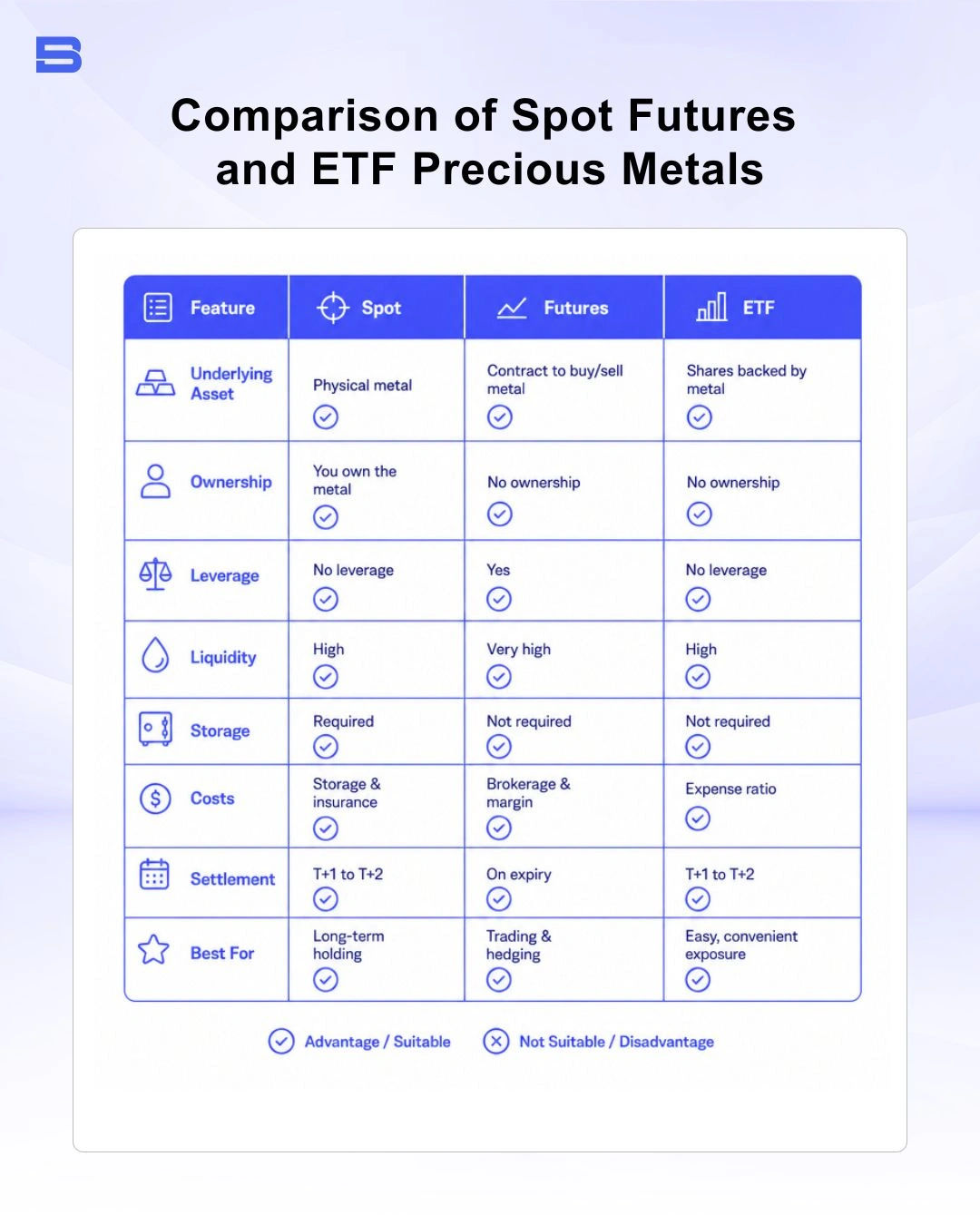
Selecting the right vehicle depends on your investment horizon, risk tolerance, and access to capital. Below is a structured comparison of the main execution methods available to retail and institutional market participants.
Futures and Options: Standardized Derivative Contracts
Exchange-traded derivatives offer direct, transparent exposure to benchmark prices. When trading gold futures on exchanges like the CME, you enter into a standardized contract to buy or sell a specified quantity of metal at an agreed price on a future date.
Futures operate on initial and maintenance margin requirements, providing capital efficiency through leverage. However, leverage acts as a double-edged sword: while it scales your exposure, a price movement against your position requires immediate capital injection to meet margin calls or risk forced liquidation.
Regional Access Points for Asian and Malaysian Traders
For market participants operating out of Southeast Asia, execution routes extend beyond global Contract for Difference (CFD) brokers:
- Bursa Malaysia Derivatives: Offers localized commodity execution, allowing regional traders to manage exposure within domestic trading hours under Securities Commission Malaysia (SC) regulatory oversight.
- Localized Bank Gold Accounts: Malaysian retail investors frequently utilize digital gold passbook accounts offered by major banking institutions, allowing allocation without physical storage friction—a common pathway for gold investment Malaysia strategies.
- Exchange-Traded Funds: Exchange-listed products, such as a local gold ETF Malaysia structure, allow investors to buy shares backed by physical gold allocated in secured vaults directly through standard Central Depository System (CDS) brokerage accounts.
Key Drivers Behind Precious Metal Price Movements
To build an effective market outlook, you must monitor the macro environment alongside microeconomic supply disruptions.
- US Dollar Volatility: Because global metals are denominated in USD, a strengthening dollar makes precious metals trading more expensive for international buyers holding foreign currencies, exerting downward price pressure.
- Real Interest Rates: Real yields (nominal interest rates minus inflation) represent the opportunity cost of holding non-yielding assets like gold and silver. When real yields fall or turn negative, capital historically flows into precious metals.
- Industrial Metal Demand Cycles: Economic recessions reduce consumer demand for automobiles and electronics, directly dampening industrial metal demand and putting pressure on platinum and palladium prices, even if gold rallies on safe-haven flows.
- Supply Bottlenecks: Mining strikes, power grid failures in major producing nations (such as South Africa), and export curbs can create sudden physical deficits, sparking sharp upside price spikes.
Scenario: Interest Rates vs. Automotive Output
Consider a scenario where global central banks initiate monetary easing, cutting interest rates while inflation remains sticky. Nominal bond yields fall rapidly, causing real yields to drop toward zero. Consequently, institutional capital flows into gold as a zero-yield asset holding monetary value, pushing spot prices upward.
Simultaneously, global automotive manufacturing slows due to supply chain disruptions, causing vehicle production figures to decline. Despite gold rallying on safe-haven interest, palladium experiences a sharp sell-off due to falling orders for auto-catalytic converters. This contrast highlights why a blanket market strategy cannot be applied uniformly across all four precious metals trading.
Risk Management and Structural Pitfalls
Precious metals trading offers significant liquidity, but market participants face real structural risks that require strict execution rules.
- Overnight Swap Costs: When trading spot CFDs, holding leveraged positions past market close incurs overnight financing charges (swaps). For swing traders, cumulative financing fees can quickly erode trading profits.
- Off-Hours Liquidity and Spreads: Precious metals trade around the clock, but liquidity thins significantly between the New York close and the Asian market open. Bid-ask spreads broaden during these hours, increasing execution costs and slippage risk on stop-loss orders.
- Geopolitical Supply Shocks: Industrial metals like platinum and palladium are susceptible to sudden supply disruptions. Political instability or sanctions on key exporting regions can cause sudden price gaps through technical levels, bypassing stop-loss limits.
- Leverage Amplification: Operating with high leverage without a predefined stop-loss strategy can deplete your account balance during volatile news events, such as US Non-Farm Payrolls (NFP) or Federal Reserve rate announcements.
The Bottom Line
Precious metals trading offers a flexible pathway to diversify away from paper equities and hedge against macroeconomic uncertainty. Successful trading requires aligning the appropriate asset—whether monetary gold or industrial palladium—with a clear understanding of market drivers, strict control over leverage, and constant awareness of holding costs.
- What Can You Trade? A Guide to Forex, Stocks, and More
- CFD Trading for Beginners
- What is CFD Trading and How Does It Work?
- Forex vs. Stocks: Which Market Suits You Best?
- How to Diversify a Portfolio Across Asset Classes
- How Dividend Stocks Work: Yields, Risks, and Strategies
- Silver Trading Explained: A Guide for Retail Investors
- Precious Metals Trading: A Complete Guide for Beginners
- Natural Gas Trading: A Guide to the Market
- Structured Warrants Malaysia: How They Work and Risks
- What Is the KLCI Index and How to Trade It
- Gold Investment in Malaysia: A Complete Guide for Beginners
- What Is Kijang Emas and How to Invest in It
- Value Investing Explained: How to Find Undervalued Stocks
- How to Trade Bitcoin Safely: A Complete Market Guide
- Growth Investing Explained: Strategies, Metrics, and Risks
- What Is Digital Gold Malaysia and How to Invest
- Crypto Trading Strategies for Beginners
- Gold vs Bitcoin: Key Differences, Risks, and Strategies
- Sukuk: A Guide for Beginners to Islamic Bonds
- What Is FCPO (Crude Palm Oil Futures) and How to Trade It
- How to Identify and Invest in Shariah-Compliant Stocks
- Timber Investment: Is It Worth It?
- Gold ETF Malaysia: A Guide for Beginners
- What Are Malaysian Government Securities (MGS)?
- Corporate Bonds Malaysia: A Guide for Beginners
- China A-Shares Trading Guide for Malaysian Investors
- What Is a Silver ETF and How to Invest in It?
- How to Trade XRP: A Practical Guide for Retail Investors
- How to Trade Solana (SOL): A Guide for Beginners
- What Are Gold Futures and How Do They Work?
- Money Market Fund in Malaysia: A Guide for Beginners
- Property Investment Malaysia: Direct Real Estate or M-REITs?
- What Is Binance Coin and How Does It Work?
- Green Sukuk: A Guide for Beginners to Islamic ESG Investing
- What Is Shiba Inu (SHIB) and How to Trade It
- What Is USDT? A Complete Guide to Tether for Beginners
- What Is Dogecoin and How to Trade It Safely for Beginners
- Cardano: A Guide for Beginners to Trade This Cryptocurrency
- Polkadot: A Guide to Trading This Cryptocurrency
- Tron: A Guide for Beginners to Trading This Cryptocurrency
- What Is Litecoin (LTC)? A Guide to Trading Digital Silver
- What Is Chainlink (LINK) and How to Trade It
- How to Trade Pepe Coin: Spot, Leverage, and Risk Management
- Near Protocol: A Guide to Trading This Cryptocurrency
- Trading Polygon Crypto: A Practical Guide for Beginners
- Trade Toncoin: Understanding the TON Ecosystem and Risks
- Cosmos Crypto: Ecosystem Architecture, Tokenomics, and Risks
- Stellar Crypto: A Guide to Trading This Cryptocurrency
- Avalanche Crypto Explained: A Practical Guide for Traders
- What Is Worldcoin? How to Trade WLD and Manage Risk
- Aptos: A Guide for Beginners to Trading This Cryptocurrency
- Sui Crypto Explained: Tokenomics and Trading Guide
- Celestia: A Guide to Trading This Cryptocurrency
- Decentraland: A Guide to Trading This Cryptocurrency
- What Is Arbitrum? How to Trade the Leading Layer 2 Network
- Sei Crypto: A Guide to Trading This Cryptocurrency
- What Is Injective Protocol and How to Trade INJ Safely
Disclaimer: The content on this page is intended for educational and informational purposes only. It does not constitute financial, investment, tax, or legal advice, and should not be interpreted as a recommendation to buy, sell, or hold any financial instrument or asset. Trading and investing involve significant risk, including the possible loss of your entire capital. Products such as forex, CFDs, and cryptocurrencies carry additional risks due to leverage, high volatility, and limited regulatory protection in some jurisdictions. Past performance of any financial instrument does not guarantee future results. Any market views, forecasts, or opinions expressed are those of the author at the time of writing and may not reflect current market conditions. Platform features, fees, and regulatory status are subject to change — always verify information directly with the relevant provider or regulator before making any financial decision. BrokerSpecs may receive compensation from third parties featured on this site. Always conduct your own due diligence and consider seeking advice from a licensed financial professional before investing.