


Related Tags
Imagine rushing to complete a high-frequency cryptocurrency transfer during peak market volatility, only to find the network jammed with astronomical gas fees. On networks like Ethereum, gas costs can surge sharply when network traffic spikes, turning a quick transaction into an expensive ordeal.
TRON was created to address this exact bottleneck. By building an infrastructure optimized for speed and low cost, TRON has grown into one of the most heavily utilized blockchains globally—serving as the operational backbone for billions of dollars in daily stablecoin settlements and decentralized applications.
What Is TRON and How Does the Network Work?
TRON is a decentralized, open-source blockchain network designed to facilitate high-throughput smart contracts and decentralized applications (dApps). At its core, the ecosystem relies on its native utility token, TRX, which serves as the primary medium of exchange, governance mechanism, and gas asset across the entire network.
Delegated Proof-of-Stake (DPoS) and Super Representatives
Unlike Bitcoin's energy-intensive Proof-of-Work system, TRON utilizes a Delegated Proof-of-Stake (DPoS) consensus mechanism. Under this architecture, the network does not rely on thousands of individual miners to validate blocks. Instead, TRON holders lock up their tokens to vote for 27 elected block producers, known as Super Representatives (SRs).
These 27 SRs rotate block production every three seconds, enabling transaction finality in seconds rather than minutes. This streamlined approach allows the network to process thousands of transactions per second (TPS) while maintaining low computational overhead.
Staking TRX for Yields, Energy, and Bandwidth
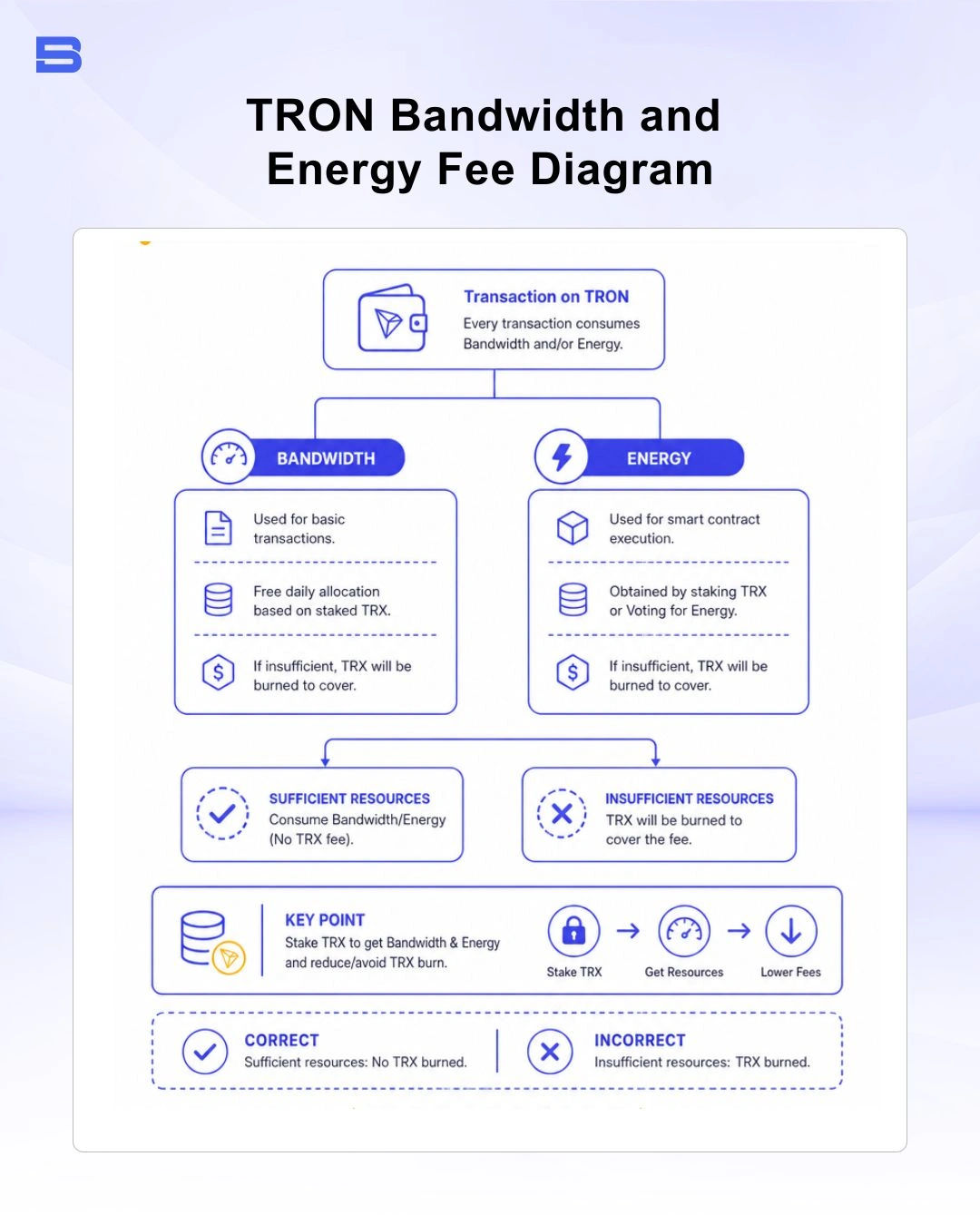
To handle network fees without charging traditional gas fees for every simple action, TRON uses a two-tier resource system comprising Bandwidth and Energy.
- Bandwidth: Consumed by standard TRX transfers and basic transaction processing. Every account receives a daily allocation of free Bandwidth points.
- Energy: Required to execute smart contracts and interact with TRON-based tokens, such as TRC-20 USDT (the token standard used for USDT on the TRON network).
By staking (locking up) TRX on the network, users gain "TRON Power" to vote for Super Representatives while simultaneously earning daily Bandwidth or Energy allocations. This staking mechanism enables high-volume users to subsidize their transaction costs while earning annual staking yields on their locked TRX.
What Is TRON Used For? Token Utility and Ecosystem
While TRON supports a broad ecosystem of decentralized finance (DeFi) protocols, non-fungible tokens (NFTs), and gaming applications, its most dominant real-world use case is global stablecoin settlement.
According to data from the International Monetary Fund (IMF), cross-border digital payments and stablecoin adoption have expanded rapidly in emerging markets, driven by the demand for low-cost remittance channels. According to Tether's official Transparency page, TRON hosts the majority of circulating USDT supply—amounting to tens of billions of dollars in market capitalization—making it the primary settlement layer for international traders and cross-border payment processors.
To put this cost advantage into perspective, according to gas-fee data from Etherscan's gas tracker, sending a $100 USDT transfer on the Ethereum network during busy periods might incur fees ranging between $2.00 and $15.00 or more, while TronScan network data shows the same TRC-20 USDT transfer typically costs between $0.20 and $1.00 in resource fees—or $0 if the sender has staked sufficient TRON to cover the required Energy.
TRON vs Other Cryptocurrencies (Ethereum, Solana, and Litecoin)
When building a digital asset portfolio, traders often weigh TRON against established Layer-1 networks like Ethereum and Solana, or traditional payment tokens like Litecoin.
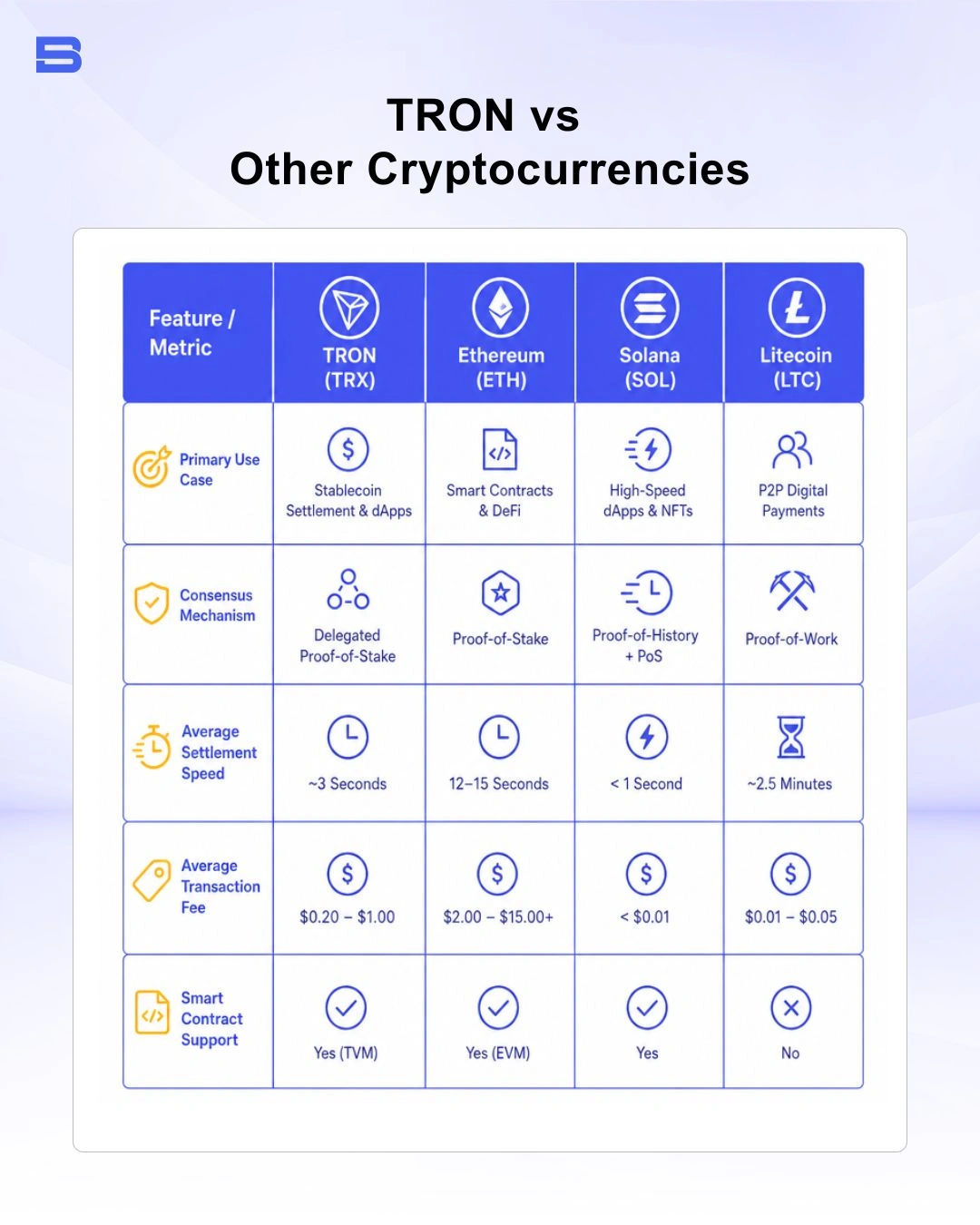
Traders evaluating market structures often draw comparisons to broader crypto liquidity strategies, such as how institutions learn how to trade Bitcoin or navigate local exchange gateways in markets like Ethereum Malaysia. While Ethereum remains the market leader in institutional DeFi total value locked (TVL) and assets like Chainlink power cross-chain data feeds, TRON maintains an edge in everyday transactional volume due to its predictable fee market.
How to Trade TRON: A Step-by-Step Guide
Trading TRX requires a structured approach that prioritizes regulatory safety, analysis, and capital protection.
Step 1: Select a Regulated Platform
Choose a digital asset platform or brokerage regulated by a recognized financial authority. According to regulatory frameworks established by bodies like the Monetary Authority of Singapore (MAS), operating through compliant digital payment token providers ensures that platforms maintain segregation of client assets and adhere to strict anti-money laundering (AML) controls.
Step 2: Analyze the Market
Evaluate market conditions using technical and fundamental analysis. Check historical price support levels, recent updates to TRON's resource consumption rates, and overall broader crypto market trends before entering a position.
Step 3: Execute Your Order
Select your trade parameters based on your risk tolerance:
- Spot Market: Directly purchase and hold physical TRX tokens for long-term strategic placement or staking.
- Derivatives / CFDs: Trade TRX price movements using leverage. Leverage amplifies your returns when you are right, but it accelerates capital destruction just as quickly when the market moves against you—a 10% market swing against a 10:1 leveraged position can wipe out your initial margin balance entirely, and even a 5% adverse move would erase half of it.
Step 4: Secure Wallet Storage for TRX
If buying spot TRX, transfer your tokens from exchange custodial accounts into a dedicated private wallet (hardware or software) that grants you full ownership of your private keys.
Is Tron a Good Investment? Key Risks and Potential Rewards
Like any digital asset, evaluating whether TRX fits your financial plan requires balancing its strong operational adoption against structural market risks.
Potential Rewards (Upside)
- Dominant Market Share in Stablecoins: TRON hosts the largest network supply of USDT, generating consistent fee revenue and high network utilization.
- Staking Mechanics: Staking TRX offers predictable resource generation (Energy/Bandwidth) and staking rewards, allowing long-term holders to earn passive yield.
- High Throughput: Proven network uptime and multi-year track record of handling high transactional loads without network crashes.
Key Risks (Downside)
- Centralization Concerns: The network’s security relies on only 27 Super Representatives. Critics argue this creates higher governance centralization compared to networks with thousands of independent nodes.
- Regulatory Scrutiny: Increased global regulatory focus on stablecoins and cross-border settlement channels could impact network usage patterns over time.
- Altcoin Volatility: Cryptocurrency markets experience severe price swings. Unlike traditional inflation hedges like gold vs Bitcoin, altcoins like TRX carry higher drawdowns during broader market corrections.
The Bottom Line
TRON has established itself as a vital piece of international crypto infrastructure by solving the dual challenges of high transaction fees and slow processing speeds. Its dominance in stablecoin settlements provides a solid foundation of network activity.
However, traders must weigh these operational strengths against governance centralization risks and general altcoin volatility before entering positions. TRON was created to address this exact bottleneck facing crypto traders — and understanding how TRON works is the first step to trading TRX safely.
- What Can You Trade? A Guide to Forex, Stocks, and More
- CFD Trading for Beginners
- What is CFD Trading and How Does It Work?
- Forex vs. Stocks: Which Market Suits You Best?
- How to Diversify a Portfolio Across Asset Classes
- How Dividend Stocks Work: Yields, Risks, and Strategies
- Silver Trading Explained: A Guide for Retail Investors
- Precious Metals Trading: A Complete Guide for Beginners
- Natural Gas Trading: A Guide to the Market
- Structured Warrants Malaysia: How They Work and Risks
- What Is the KLCI Index and How to Trade It
- Gold Investment in Malaysia: A Complete Guide for Beginners
- What Is Kijang Emas and How to Invest in It
- Value Investing Explained: How to Find Undervalued Stocks
- How to Trade Bitcoin Safely: A Complete Market Guide
- Growth Investing Explained: Strategies, Metrics, and Risks
- What Is Digital Gold Malaysia and How to Invest
- Crypto Trading Strategies for Beginners
- Gold vs Bitcoin: Key Differences, Risks, and Strategies
- Sukuk: A Guide for Beginners to Islamic Bonds
- What Is FCPO (Crude Palm Oil Futures) and How to Trade It
- How to Identify and Invest in Shariah-Compliant Stocks
- Timber Investment: Is It Worth It?
- Gold ETF Malaysia: A Guide for Beginners
- What Are Malaysian Government Securities (MGS)?
- Corporate Bonds Malaysia: A Guide for Beginners
- China A-Shares Trading Guide for Malaysian Investors
- What Is a Silver ETF and How to Invest in It?
- How to Trade XRP: A Practical Guide for Retail Investors
- How to Trade Solana (SOL): A Guide for Beginners
- What Are Gold Futures and How Do They Work?
- Money Market Fund in Malaysia: A Guide for Beginners
- Property Investment Malaysia: Direct Real Estate or M-REITs?
- What Is Binance Coin and How Does It Work?
- Green Sukuk: A Guide for Beginners to Islamic ESG Investing
- What Is Shiba Inu (SHIB) and How to Trade It
- What Is USDT? A Complete Guide to Tether for Beginners
- What Is Dogecoin and How to Trade It Safely for Beginners
- Cardano: A Guide for Beginners to Trade This Cryptocurrency
- Polkadot: A Guide to Trading This Cryptocurrency
- Tron: A Guide for Beginners to Trading This Cryptocurrency
- What Is Litecoin (LTC)? A Guide to Trading Digital Silver
- What Is Chainlink (LINK) and How to Trade It
- How to Trade Pepe Coin: Spot, Leverage, and Risk Management
- Near Protocol: A Guide to Trading This Cryptocurrency
- Trading Polygon Crypto: A Practical Guide for Beginners
- Trade Toncoin: Understanding the TON Ecosystem and Risks
- Cosmos Crypto: Ecosystem Architecture, Tokenomics, and Risks
- Stellar Crypto: A Guide to Trading This Cryptocurrency
- Avalanche Crypto Explained: A Practical Guide for Traders
- What Is Worldcoin? How to Trade WLD and Manage Risk
- Aptos: A Guide for Beginners to Trading This Cryptocurrency
- Sui Crypto Explained: Tokenomics and Trading Guide
- Celestia: A Guide to Trading This Cryptocurrency
- Decentraland: A Guide to Trading This Cryptocurrency
- What Is Arbitrum? How to Trade the Leading Layer 2 Network
- Sei Crypto: A Guide to Trading This Cryptocurrency
- What Is Injective Protocol and How to Trade INJ Safely
Disclaimer: The content on this page is intended for educational and informational purposes only. It does not constitute financial, investment, tax, or legal advice, and should not be interpreted as a recommendation to buy, sell, or hold any financial instrument or asset. Trading and investing involve significant risk, including the possible loss of your entire capital. Products such as forex, CFDs, and cryptocurrencies carry additional risks due to leverage, high volatility, and limited regulatory protection in some jurisdictions. Past performance of any financial instrument does not guarantee future results. Any market views, forecasts, or opinions expressed are those of the author at the time of writing and may not reflect current market conditions. Platform features, fees, and regulatory status are subject to change — always verify information directly with the relevant provider or regulator before making any financial decision. BrokerSpecs may receive compensation from third parties featured on this site. Always conduct your own due diligence and consider seeking advice from a licensed financial professional before investing.