


Related Tags
Entering a live financial market for the first time can feel overwhelming when you are staring at blank technical charts and trying to decode economic reports. Many beginner traders look for a shortcut by following experienced market participants, hoping to match their performance without spending years testing trading models.
A social trading platform bridges this gap by turning trading into an open community network. While these tools offer valuable educational insights and automated convenience, relying on other people's decisions introduces distinct operational risks—such as execution delays, spread markups, and sudden strategy drawdowns—that require careful risk management.
What Is a Social Trading Platform and How Does It Work?
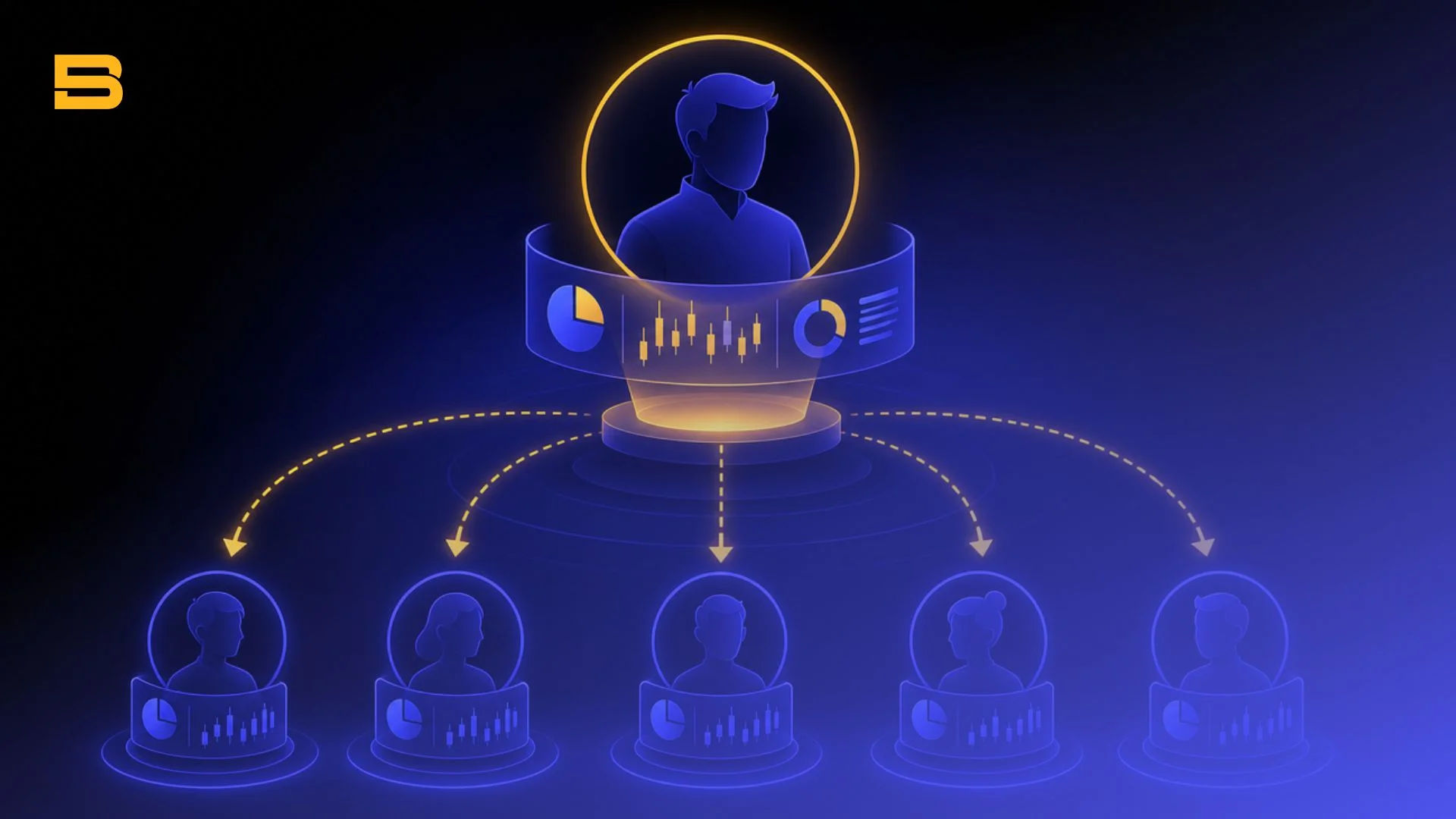
A social trading platform is a specialized brokerage or software environment that enables retail investors to interact, exchange market analysis, and automatically replicate the trade orders of verified lead traders in real time.
Unlike traditional trading setups where every order is analyzed and placed individually, a social trading platform operates through centralized signal distribution networks. Lead traders (also known as strategy providers) link their live trading accounts to the platform's hub.
When a lead trader opens or closes a position in forex, stocks, or commodities, the platform's execution server calculates the proportion of equity allocated by each follower account and broadcasts identical buy or sell orders instantly.
Copy Trading vs. Social Trading: Key Differences Explained
While traders often use these terms interchangeably, automated portfolio execution distinguishes copy trading from broader social interactions.
- Social Trading: Refers to the overarching ecosystem, including interactive feeds, public sentiment metrics, community forums, and manual signal sharing. You retain complete manual control over whether you execute a trade idea based on forum discussions.
- Copy Trading: Represents a specific, automated feature within the broader social network. Once you link your balance to a chosen trader and set your risk limits, your account mirrors every trade order automatically without requiring manual confirmation.
If you want to explore automated order execution further, see our detailed guide on the best Copy Trading platforms.
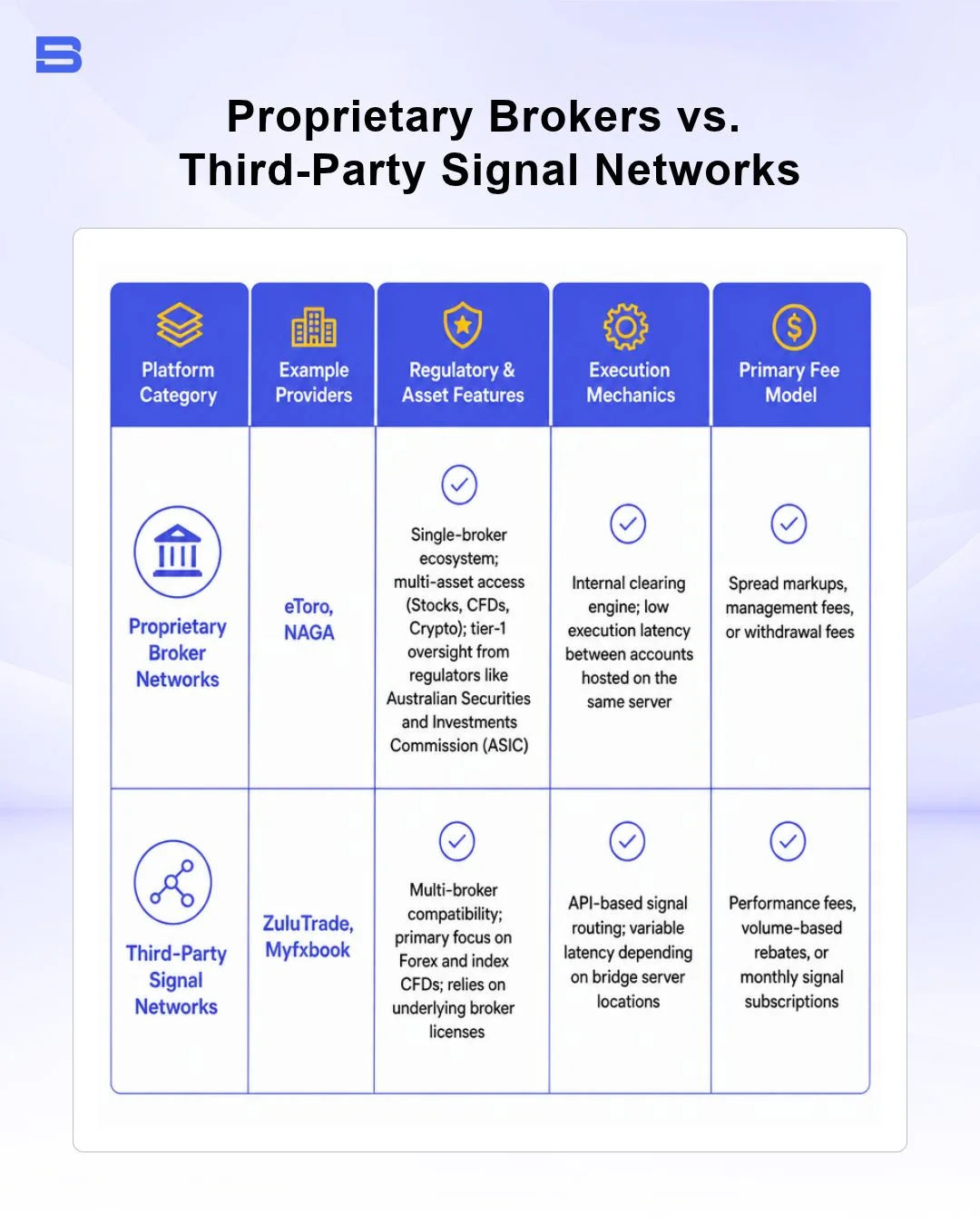
Key Platform Features: Comparing Proprietary Brokers vs. Third-Party Signal Networks
When choosing a social trading platform, traders generally select between proprietary broker ecosystems and third-party signal networks.
Proprietary platforms integrate the social feed, order execution, and account management into a single brokerage service. In contrast, third-party signal networks act as multi-broker bridges, allowing you to retain your preferred broker while subscribing to signal feeds generated on external servers.
Lead Traders and Signal Providers: How Strategy Selection Works
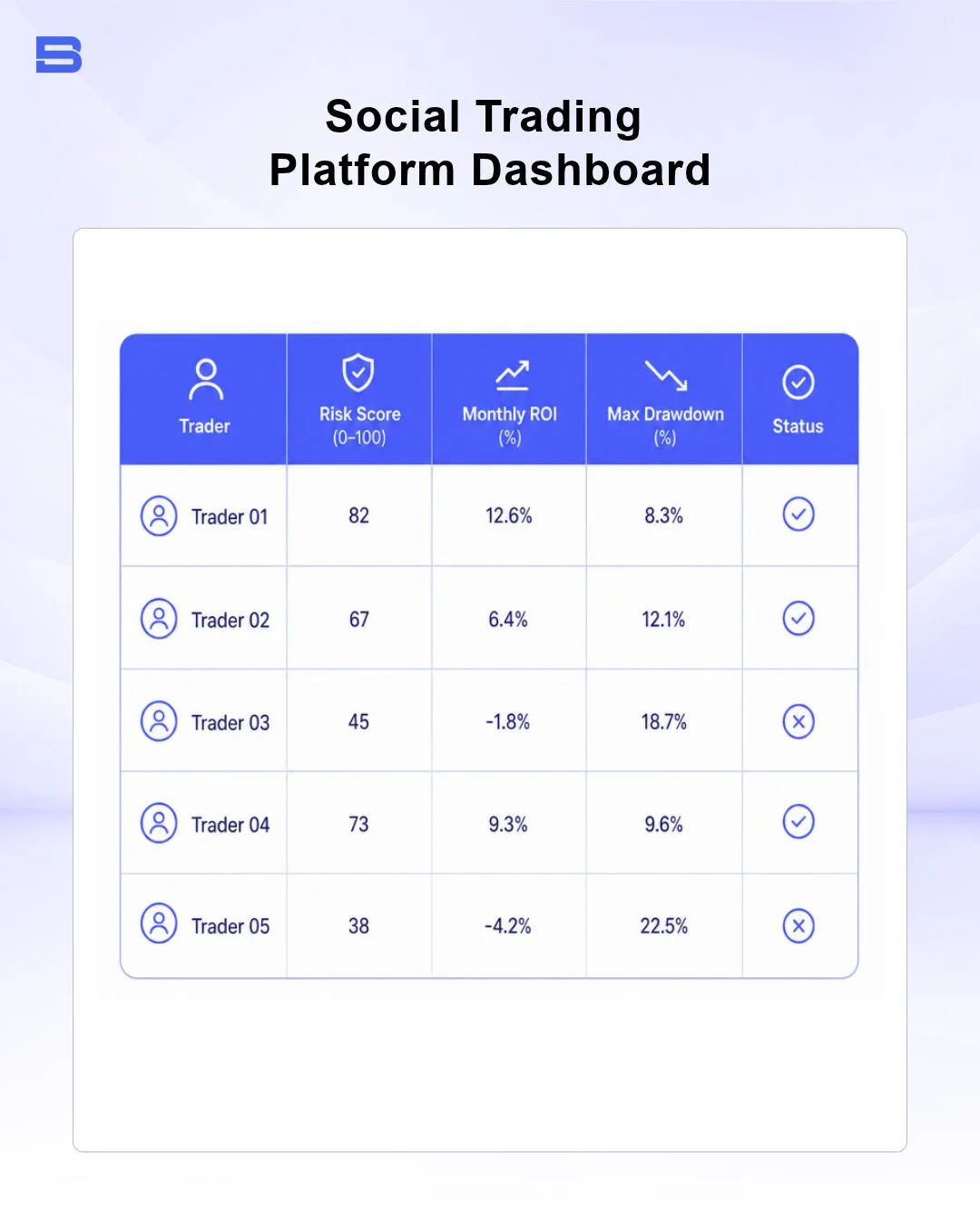
Social trading platform networks publish leaderboards detailing lead trader performance metrics. Signal providers are typically compensated through performance fees (a percentage of follower net profits) or volume rebates paid by the platform based on copied trading volume.
To evaluate a signal provider effectively, look past short-term total returns and focus on these critical performance metrics:
- Maximum Drawdown: The peak-to-trough decline in account equity during a trading period. A provider with a 100% return but a 60% maximum drawdown carries a severe risk of capital destruction.
- Account Age and Historical Depth: Prioritize strategy providers with at least 12 to 18 months of continuous live trading history. Short-term performance spikes often reflect temporary market luck or unmanaged risk.
- Win Rate vs. Risk-Reward Ratio: A high win rate (80%) can be misleading if the trader uses wide stop-losses and tight profit targets, meaning one large loss can wipe out weeks of gains.
Is Social Trading Platform Safe? Understanding Risks and Drawdown
Social trading platforms are legal across major global markets, provided the underlying platform operates under recognized financial oversight, such as guidelines enforced by the Financial Conduct Authority (FCA). However, legal compliance does not protect your portfolio from financial risk.
Copying a profitable trader does not guarantee identical financial results. Followers frequently encounter performance tracking errors due to underlying infrastructure realities.
Hidden Costs: Slippage, Execution Delays, and Spread Markups
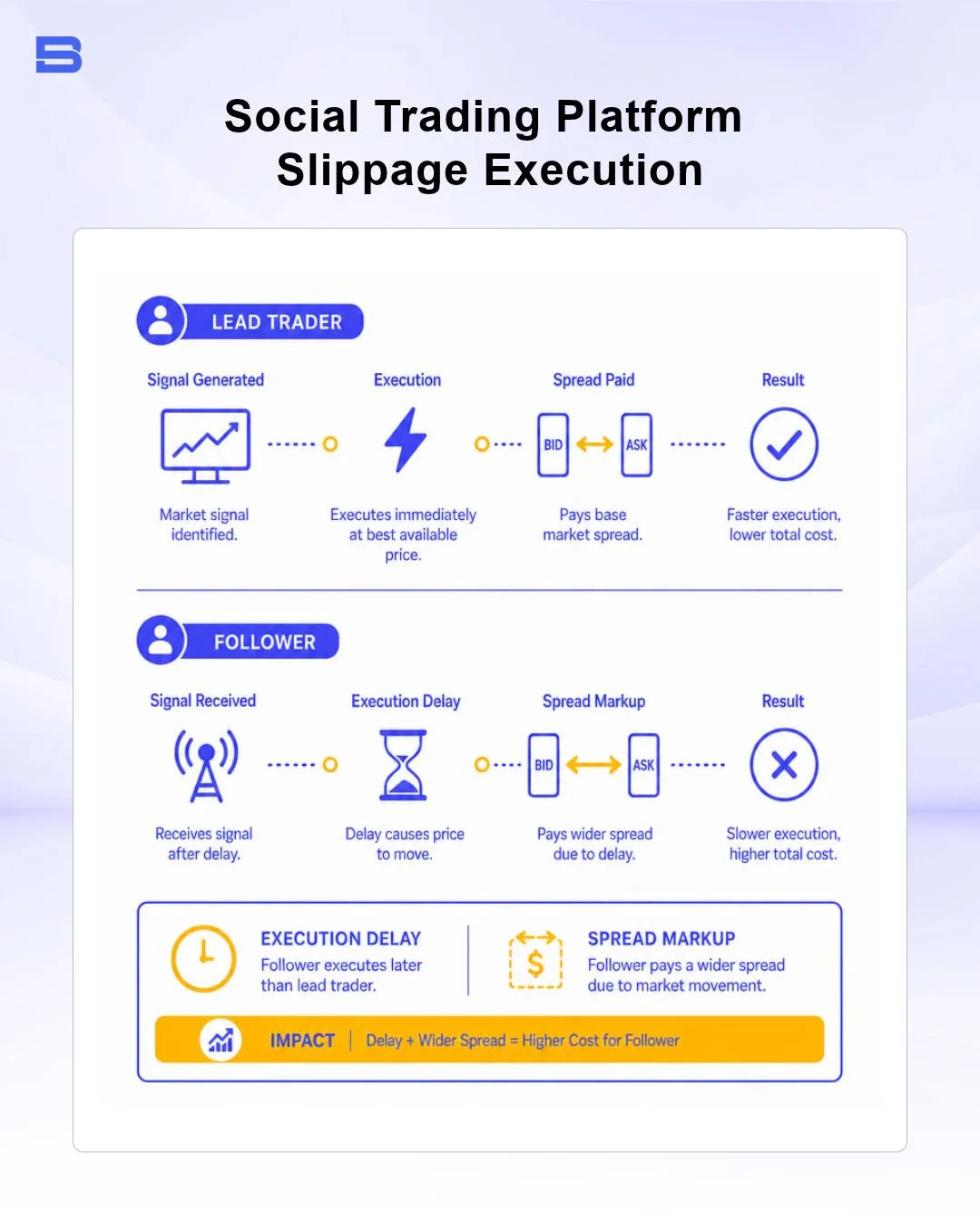
When a lead trader enters a position, order execution is not instantaneous across follower accounts.
- Execution Delays (Latency): A delay of even a few milliseconds between the lead trader's order placement and the follower's account execution can cause significant price differences during volatile economic news releases.
- Spread Markups and Variable Pricing: If your follower account operates under a different account tier or broker server than the lead trader, wider bid-ask spreads can erode profit margins on small intraday price moves.
- Slippage: In fast-moving markets, your order may fill at a less favorable price than the lead trader obtained, leading to a performance disconnect over time.
Critical Safeguards: Drawdown Limits and Stop-Copy Rules
To protect your capital against sudden lead trader failures or aggressive market shifts, you should implement mandatory risk controls before activating any automated copy relationship.
Most regulated platforms offer automated stop-copy rules (also known as flexible drawdown safeguards). This feature monitors your allocated equity in real time and automatically closes all open mirrored positions if your account value drops past your chosen risk threshold.
Worked Example — Stop-Copy Risk Control:
Assume you allocate 1,000 USD to mirror a high-volatility forex trader, and you set a strict 20% drawdown limit (200 USD maximum loss threshold).
- Starting Equity: 1,000 USD
- Stop-Copy Trigger Level: 1,000 - (1,000 x 0.20) = 800 USD
If the strategy provider enters a series of losing positions and your account balance drops to 800 USD, the automated risk engine instantly unlinks your account, closes all active copy positions, and preserves your remaining 800 USD capital—preventing total account failure if the lead trader continues to draw down.
Related Automation Tools: Trading Signals, Trading Bots, and EAs
A social trading platform represents just one approach to systematic and automated trading. Depending on your preferred level of control, other technical tools offer alternative ways to automate analysis and trade execution:
- Trading Signals: Actionable trade ideas (entry, stop-loss, and take-profit targets) sent manually or via automated alerts, allowing you to review and execute each trade yourself.
- Trading Bot Systems: Automated trading algorithms programmed to scan markets and execute orders based on defined technical criteria without human intervention.
- Expert Advisor (EA): Custom algorithmic scripts designed specifically for MetaTrader platforms to execute automated trading strategies directly on your charts.
Understanding how these mechanisms differ helps you build a balanced approach to Automated Trading.
Conclusion
A social trading platform offers a practical environment for beginner and intermediate traders looking to learn strategy execution while participating in active markets. By providing transparent leaderboards, real-time social feeds, and automated order replication, these networks lower the technical barrier to systematic trading.
However, automated copy trading does not remove market risk. Slippage, execution delays, and sudden strategy drawdowns mean that follower returns rarely mirror lead trader metrics perfectly. Achieving sustainable long-term results requires treating a social trading platform as a disciplined risk management framework—vetting strategy providers carefully, keeping position sizes conservative, and enforcing strict stop-copy safeguards from day one.
- Proprietary Trading Explained: What It Is and Its Key Benefits
- TradingView: Features, Broker Integration, and Strategies
- cTrader: How It Works and How It Compares
- What Is a VPS for Trading and Do You Need One?
- Thinkorswim Trading: Features, Tools, and Availability
- Trading Platform Malaysia: What to Look For
- Bursa Anywhere: A Guide to Managing Shares in Malaysia
- What Is Forex Factory and How Do Traders Use It?
- Delta App: Multi-Asset Portfolio Tracker for Crypto & Stocks
- What Is Trading Central and How to Use It?
- What Is Simply Wall St and How to Use It
- What Is Seeking Alpha and How to Use It
- What Is MarketWatch and How to Use It
- What Is Barchart and How to Use It
- Google Finance Explained: How to Track Stocks and Markets
- What Is Finviz and How to Use It for Stock Screening
- What Is Yahoo Finance and How to Use It
- What Is TradingEconomics and How to Use It
- StockCharts Review 2026: Features, Pricing, and Performance
- What Is ZuluTrade and How Does Copy Trading Work on It?
- What Is Investing.com and How to Use It?
- What Is Myfxbook and How Do Traders Use It?
- What Is CoinGecko? A Complete Guide to Crypto Data Tracking
- What Is CoinMarketCap and How to Use It
- What Is CoinStats and How to Use It for Portfolio Tracking
- What Is Sharesight and How to Use It for Portfolio Tracking
- What Is Personal Capital and How to Use It
- What Is a Low Spread Broker? How It Affects Your Trading
- What Is an Introducing Broker (IB) in Forex?
- What Is Social Trading? How Copy Trading Platforms Work
- What Is a PAMM Account? How Managed Forex Accounts Work
- What Is a Margin Account and How Does Margin Trading Work?
- What Are Trading Signals and How Do They Work?
- What Is an Expert Advisor (EA) in Forex Trading?
Disclaimer: The content on this page is intended for educational and informational purposes only. It does not constitute financial, investment, tax, or legal advice, and should not be interpreted as a recommendation to buy, sell, or hold any financial instrument or asset. Trading and investing involve significant risk, including the possible loss of your entire capital. Products such as forex, CFDs, and cryptocurrencies carry additional risks due to leverage, high volatility, and limited regulatory protection in some jurisdictions. Past performance of any financial instrument does not guarantee future results. Any market views, forecasts, or opinions expressed are those of the author at the time of writing and may not reflect current market conditions. Platform features, fees, and regulatory status are subject to change — always verify information directly with the relevant provider or regulator before making any financial decision. BrokerSpecs may receive compensation from third parties featured on this site. Always conduct your own due diligence and consider seeking advice from a licensed financial professional before investing. Portions of this article were prepared with the assistance of AI tools and reviewed by our editorial team before publication.