


Related Tags
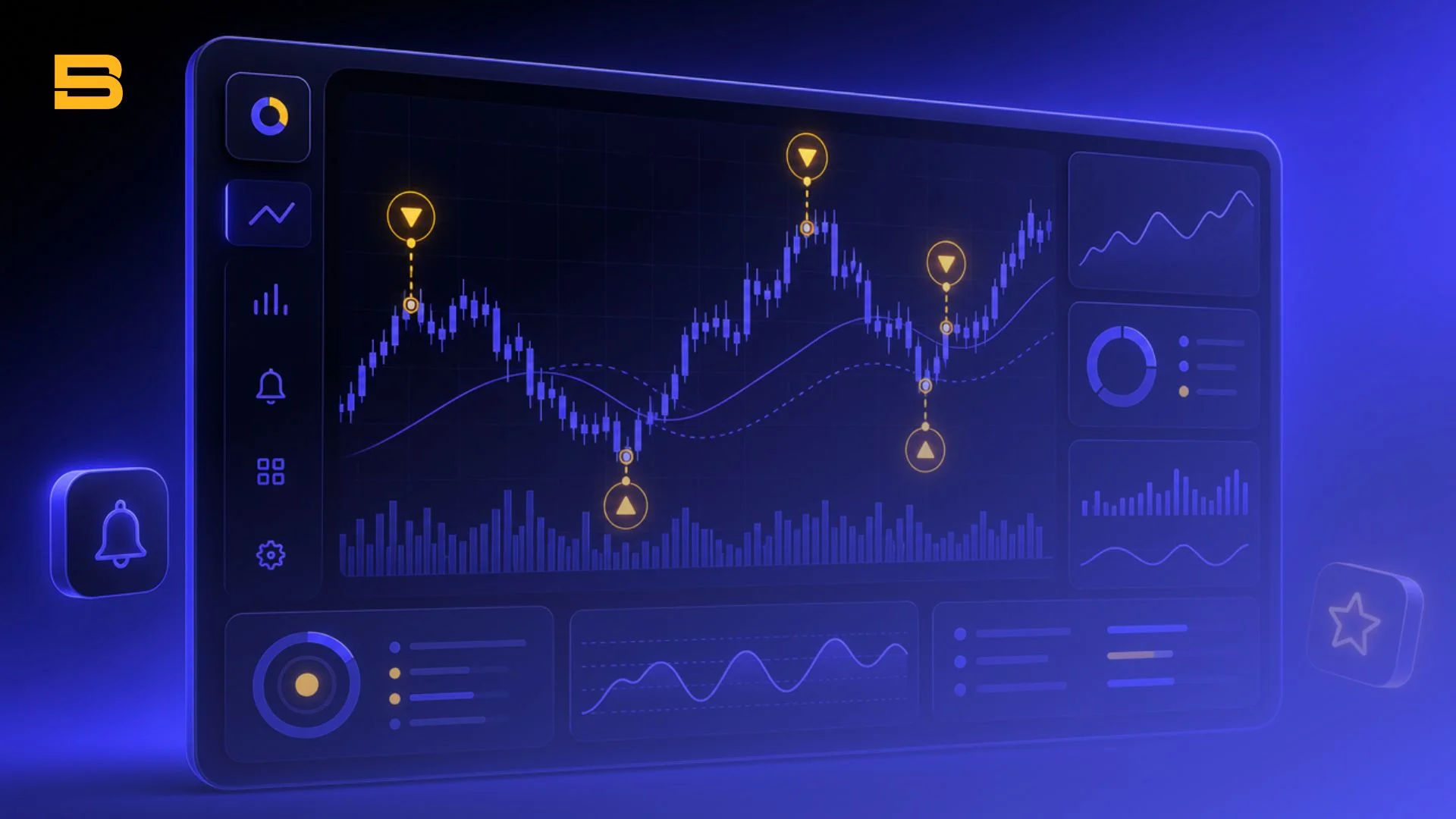
Imagine sitting at your desk, staring at a cluster of technical indicators across three separate monitors. The charts are chaotic, news feeds are flashing updates, and you are unsure whether to buy, sell, or wait. Suddenly, a clear notification pops up on your phone: a specific instrument, an exact entry price, a precise stop-loss level, and a target profit mark.
That notification is a trading signal. In modern markets, trading signals act as actionable market triggers designed to streamline decision-making. However, relying on external alerts requires understanding how these signals are generated, how execution speed affects their outcomes, and how to protect your capital from misleading performance claims.
What a Trading Signal Includes and How It Is Generated
A trading signal is a real-time actionable recommendation or alert to buy or sell a financial asset at a specific price and time. Rather than requiring you to analyze raw price data for hours, a signal distills complex market analysis into a clear order setup.
Every complete trading signal contains four core components:
- Direction: The trade action, specifically designated as a Buy (Long) or Sell (Short) order.
- Entry Price: The exact price level, or price range, where the position should be opened.
- Stop-Loss (SL): A predefined price trigger that automatically closes the position to cap potential losses if the market moves against you.
- Take-Profit (TP): A target price level where the position is closed to lock in gains once the market reaches your objective.
For illustration only: a signal might read Buy EUR/USD at 1.1000, Stop-Loss at 1.0950, Take-Profit at 1.1100. That setup risks 50 pips to potentially gain 100 pips, a 1:2 risk-to-reward ratio. Real results will vary with slippage, spreads, and market conditions.
Signal generation generally relies on two types of market analysis. Technical signals are driven by mathematical indicators—such as Relative Strength Index (RSI) divergence, moving average crossovers, or breakout patterns.
Fundamental signals are triggered by economic developments, such as central bank interest rate decisions, corporate earnings reports, or geopolitical shifts.
When an underlying technical or fundamental condition is met, the signal provider issues the alert. However, receiving an alert is only half the process; execution mechanics play a major role in your actual results. Signal latency—the time delay between when a signal is generated and when you place the order—can lead to slippage.
Slippage occurs when your order fills at a different price than the alert recommended. In fast-moving markets, even a few seconds of execution delay can shrink your profit margin or expand your risk exposure, making prompt order placement critical.
Key Markets for Signals: Forex, Crypto, and Stocks
While the basic structure of an alert remains consistent across financial markets, execution dynamics vary depending on the asset class you trade.
Forex Trading Signals
The foreign exchange market operates 24 hours a day, five days a week, making forex trading signals a common choice among traders who cannot monitor global trading sessions continuously. Signals in this market focus on major, minor, and exotic currency pairs. Alerts are typically measured in pips (the standard unit for measuring price movement in a currency pair), aiming for short-to-medium-term price swings around major macroeconomic releases or key technical support levels.
Because currency pairs can move rapidly during overlapping liquidity sessions, timing and low-spread execution are vital when using trading signals forex alerts.
Crypto Trading Signals
Unlike traditional assets, cryptocurrency markets trade 24 hours a day, 365 days a year. Crypto trading signals cater to an environment driven by high volatility and rapid sentiment shifts. Signals in crypto frequently target aggressive momentum breakouts or leverage opportunities on perpetual futures platforms.
Because crypto assets can experience sudden price swings due to sudden liquidity changes or market news, applying strict stop-loss orders is mandatory when following crypto triggers.
Stock Trading Signals
Stock trading signals operate within localized exchange session hours. These signals heavily emphasize fundamental catalysts, such as quarterly earnings beats, analyst upgrades, dividend announcements, or corporate restructurings. Technical stock alerts often focus on daily chart swing setups or momentum breakouts.
A unique factor in stock signal execution is overnight market gaps; news occurring after exchange hours can cause a stock to open significantly higher or lower than the previous day's close, potentially bypassing your intended entry or stop-loss target.
Automated vs. Manual Trading Signals: How They Deliver Alerts
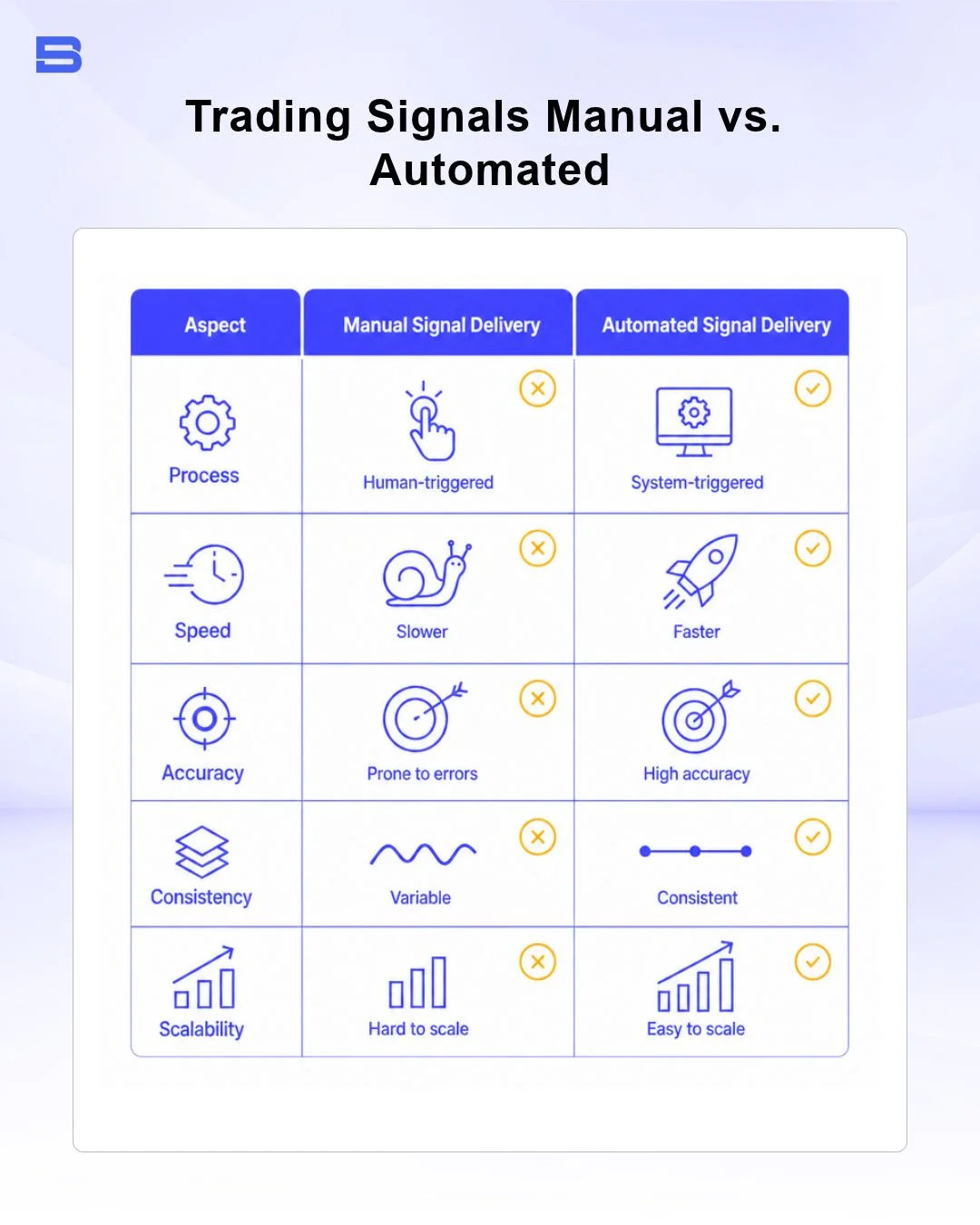
Trading signals are generally created through two primary methods: manual discretionary analysis or automated algorithmic calculations.
Manual trading signals are generated by experienced human analysts who review charts, evaluate macroeconomic conditions, and apply discretionary judgment before sending an alert. The benefit of manual analysis is adaptability—a human analyst can recognize unprecedented news developments or market context that an algorithm might misinterpret. The trade-off is execution speed, as human analysis takes longer to process and transmit.
Automated trading signals are generated by computer algorithms, quantitative models, or technical trading systems. When pre-set technical parameters align, the software issues an immediate notification or routes the order straight to a broker platform.
Delivery mechanisms for both types include dedicated mobile apps, email alerts, webhooks (automated messages that pass an alert from one platform to another), or direct execution via an expert advisor (EA) or a trading bot integrated into platforms like MetaTrader or TradingView. Utilizing a virtual private server (VPS) can further minimize latency, helping to ensure that automated signal execution occurs without unnecessary delays.
Social Trading Platforms vs. Dedicated Signal Alerts
An alternative to receiving standalone alerts is using a social trading platform or copy-trading network. Rather than receiving a text notification and placing the order manually, copy trading automatically mirrors every trade opened by a selected strategy provider directly into your brokerage account.
While standalone signal feeds give you complete manual control over whether to accept or reject an individual trade, copy trading offers a hands-off experience. However, both methods expose your capital to the underlying performance and risk choices of the signal source.
How to Evaluate and Verify a Signal Provider Safely
The signal provider industry contains both legitimate, disciplined analysts and unregulated services making unrealistic claims. Before committing real trading capital to any forex signal provider, conducting thorough due diligence is essential.
Follow this step-by-step verification checklist to evaluate a provider safely:
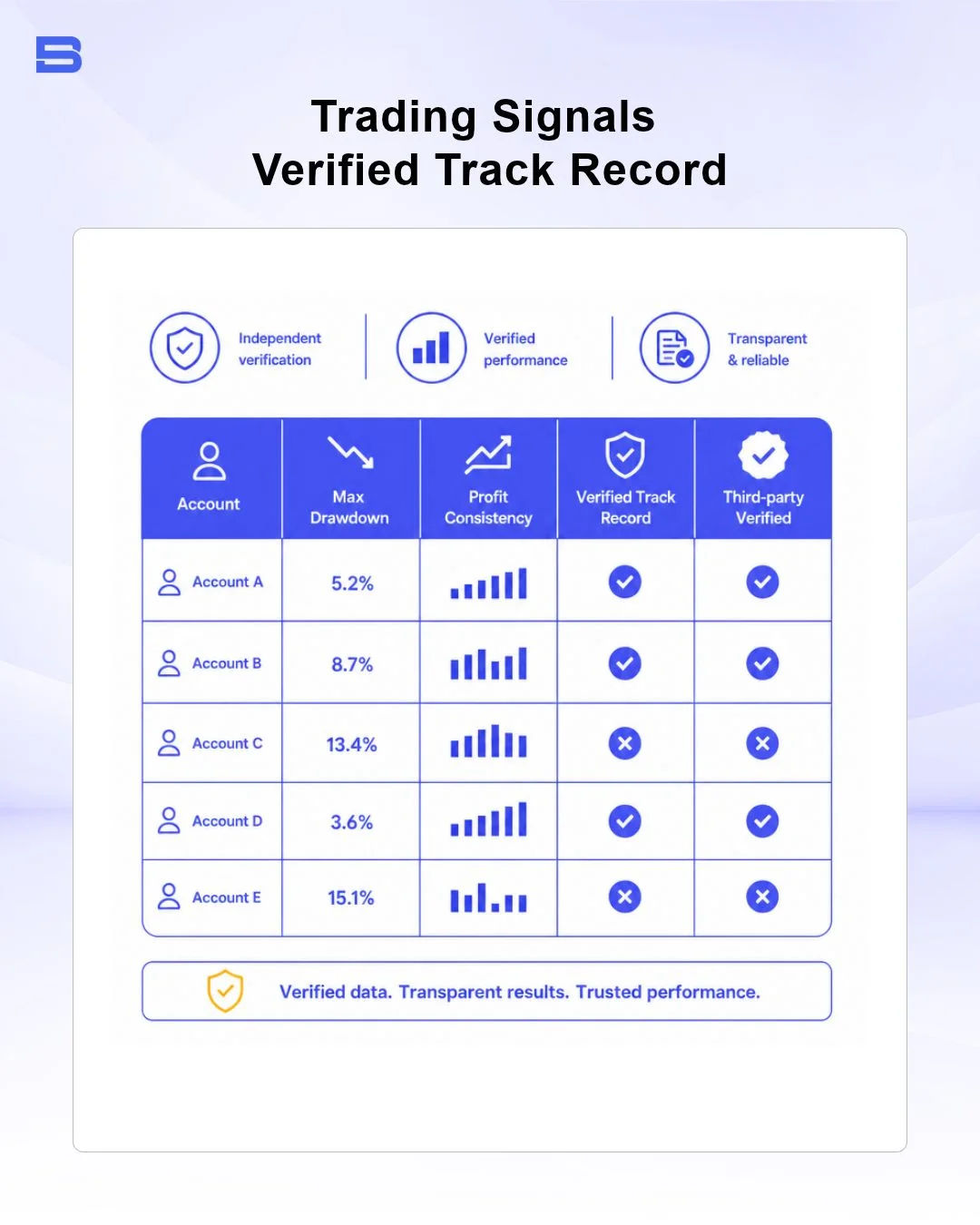
- Demand Third-Party Verified Track Records: Never rely on simple screenshots, text testimonials, or unverified spreadsheets. Require independent, third-party audited account statements via platforms like Myfxbook or MetaStats. These platforms confirm that the trades actually occurred on real accounts.
- Analyze Maximum Drawdown: Win rate alone is a misleading metric. A provider claiming a 90% win rate can still wipe out an account if their average loss is ten times larger than their average win. Look closely at maximum drawdown—the peak-to-trough decline in account equity—to evaluate the provider's true exposure to risk.
- Examine Historical Sample Size: Evaluate performance over a significant time horizon and trade volume. A verified track record should span at least 6 to 12 months and cover hundreds of trades across various market conditions (trending, ranging, and high-volatility environments).
- Evaluate Risk-to-Reward Ratios: Ensure the provider uses realistic stop-loss and take-profit targets. Providers who risk 100 pips to make 10 pips may maintain a high short-term win rate, but a small series of consecutive losses can significantly erode the portfolio.
Evaluating signal services requires maintaining a balanced perspective between risk and return. Trading with high leverage amplifies gains when a signal is accurate, but it accelerates losses just as rapidly when the market moves against the trade.
Even high-win-rate signals can lead to substantial capital loss if position sizing is managed poorly or if unexpected volatility triggers severe drawdown. Signal providers do not eliminate market risk; they merely outsource the timing and analysis phase of your trading strategy.
Financial authorities, including the Financial Conduct Authority (FCA), regularly publish guidance warning retail investors against sending funds to unapproved investment or signal scheme operators that promise fixed financial returns.
Common Red Flags and Scam Signals on Telegram
Unregulated signal channels on communication platforms like Telegram or WhatsApp frequently target developing market retail investors with deceptive tactics. Using forex signals Telegram groups requires careful due diligence.
Watch out for these common red flags:
- Guaranteed Win Rates or "Zero-Risk" Claims: No legitimate trader or algorithm can guarantee market outcomes or offer risk-free profits.
- Pressure Tactics and Promotional Urgency: Fraudulent operators create fake urgency, urging you to join immediately or deposit funds with specific offshore brokers to receive "exclusive" trade calls.
- Deleted Loss Records: Scam channels routinely delete negative trade alerts from their chat history after a stop-loss is hit, creating a false impression of continuous winning trades.
- Unregistered Broker Steering: Be wary of providers who force you to register with a specific, unregulated offshore broker to access their signal group. Regulatory bodies like the Securities Commission Malaysia (SC) maintain alert lists identifying unauthorized entities offering financial services or signal schemes without an appropriate license.
Trading Signals: The Bottom Line Before You Follow One
Trading signals apps can be efficient tools for identifying and timing potential opportunities, helping traders process market data across forex, crypto, and stocks, although results depend on the quality of the provider and how quickly you execute. Whether generated manually by analysts or automatically through quantitative software, signals can streamline your routine.
However, signals are not a shortcut to guaranteed profits. Your trading success ultimately depends on independently verifying track records, strictly controlling position sizing, and thoroughly understanding execution risk. Always test any signal service in a demo environment before committing real capital.
- Proprietary Trading Explained: What It Is and Its Key Benefits
- TradingView: Features, Broker Integration, and Strategies
- cTrader: How It Works and How It Compares
- What Is a VPS for Trading and Do You Need One?
- Thinkorswim Trading: Features, Tools, and Availability
- Trading Platform Malaysia: What to Look For
- Bursa Anywhere: A Guide to Managing Shares in Malaysia
- What Is Forex Factory and How Do Traders Use It?
- Delta App: Multi-Asset Portfolio Tracker for Crypto & Stocks
- What Is Trading Central and How to Use It?
- What Is Simply Wall St and How to Use It
- What Is Seeking Alpha and How to Use It
- What Is MarketWatch and How to Use It
- What Is Barchart and How to Use It
- Google Finance Explained: How to Track Stocks and Markets
- What Is Finviz and How to Use It for Stock Screening
- What Is Yahoo Finance and How to Use It
- What Is TradingEconomics and How to Use It
- StockCharts Review 2026: Features, Pricing, and Performance
- What Is ZuluTrade and How Does Copy Trading Work on It?
- What Is Investing.com and How to Use It?
- What Is Myfxbook and How Do Traders Use It?
- What Is CoinGecko? A Complete Guide to Crypto Data Tracking
- What Is CoinMarketCap and How to Use It
- What Is CoinStats and How to Use It for Portfolio Tracking
- What Is Sharesight and How to Use It for Portfolio Tracking
- What Is Personal Capital and How to Use It
- What Is a Low Spread Broker? How It Affects Your Trading
- What Is an Introducing Broker (IB) in Forex?
- What Is Social Trading? How Copy Trading Platforms Work
- What Is a PAMM Account? How Managed Forex Accounts Work
- What Is a Margin Account and How Does Margin Trading Work?
- What Are Trading Signals and How Do They Work?
- What Is an Expert Advisor (EA) in Forex Trading?
Disclaimer: The content on this page is intended for educational and informational purposes only. It does not constitute financial, investment, tax, or legal advice, and should not be interpreted as a recommendation to buy, sell, or hold any financial instrument or asset. Trading and investing involve significant risk, including the possible loss of your entire capital. Products such as forex, CFDs, and cryptocurrencies carry additional risks due to leverage, high volatility, and limited regulatory protection in some jurisdictions. Past performance of any financial instrument does not guarantee future results. Any market views, forecasts, or opinions expressed are those of the author at the time of writing and may not reflect current market conditions. Platform features, fees, and regulatory status are subject to change — always verify information directly with the relevant provider or regulator before making any financial decision. BrokerSpecs may receive compensation from third parties featured on this site. Always conduct your own due diligence and consider seeking advice from a licensed financial professional before investing. Portions of this article were prepared with the assistance of AI tools and reviewed by our editorial team before publication.