



Related Tags
At first glance, the world of markets and trading can be daunting. Novices can quickly get discouraged with the complex terminology and intimidated by the sensory overload of convoluted charts.
At the same time, those who act without adequate knowledge can slip into a dangerous game of emotions. If you’ve stumbled into winning trades, it’s easy to blind yourself with the profits and get addicted to a poor strategy, or worse, an emotional roller-coaster.
In this article, we’ll introduce the concept of trading and expand on the essentials everyone should know before executing their first trade.
What is Trading?
If you’re new to markets, trading is the act of buying and selling financial instruments such as stocks, forex, futures, or options to profit from price moves over shorter timeframes compared to traditional long-term investing. It is important to understand the differences between trading and investing.
Trading can be executed across different time frames, ranging from mere minutes with scalping to swing trading over a period of weeks.
Traders must evaluate the economic conditions and market sentiment, combining their knowledge of fundamental and technical analysis to speculate on a position. In the end, it’s about anticipating price movements and then making trading decisions.
To understand what’s going on, you need to be familiar with bid-ask quotes and order types.
How Does Trading Work?
To begin trading, you will need a brokerage account and funds for your initial capital. From here, you have access to order instruments that your broker provides.
- Start by opening and funding a brokerage account.
- Choose an instrument such as a stock or a currency pair.
- Execute your trade with an order such as a market order, limit order, or stop order.
- Your order is routed to an exchange/market maker and executed.
If your selling price is higher than your buying price, you’ve made a profit. Alternatively, this is known as capital gains. But if your selling price is lower than your buying price, you’ve lost money— also known as a capital loss.
At the surface level, it seems simple. Buy low, and sell high. But the market is always shifting, and the path to becoming a consistently profitable trader may take time.
What Instruments Can You Trade?
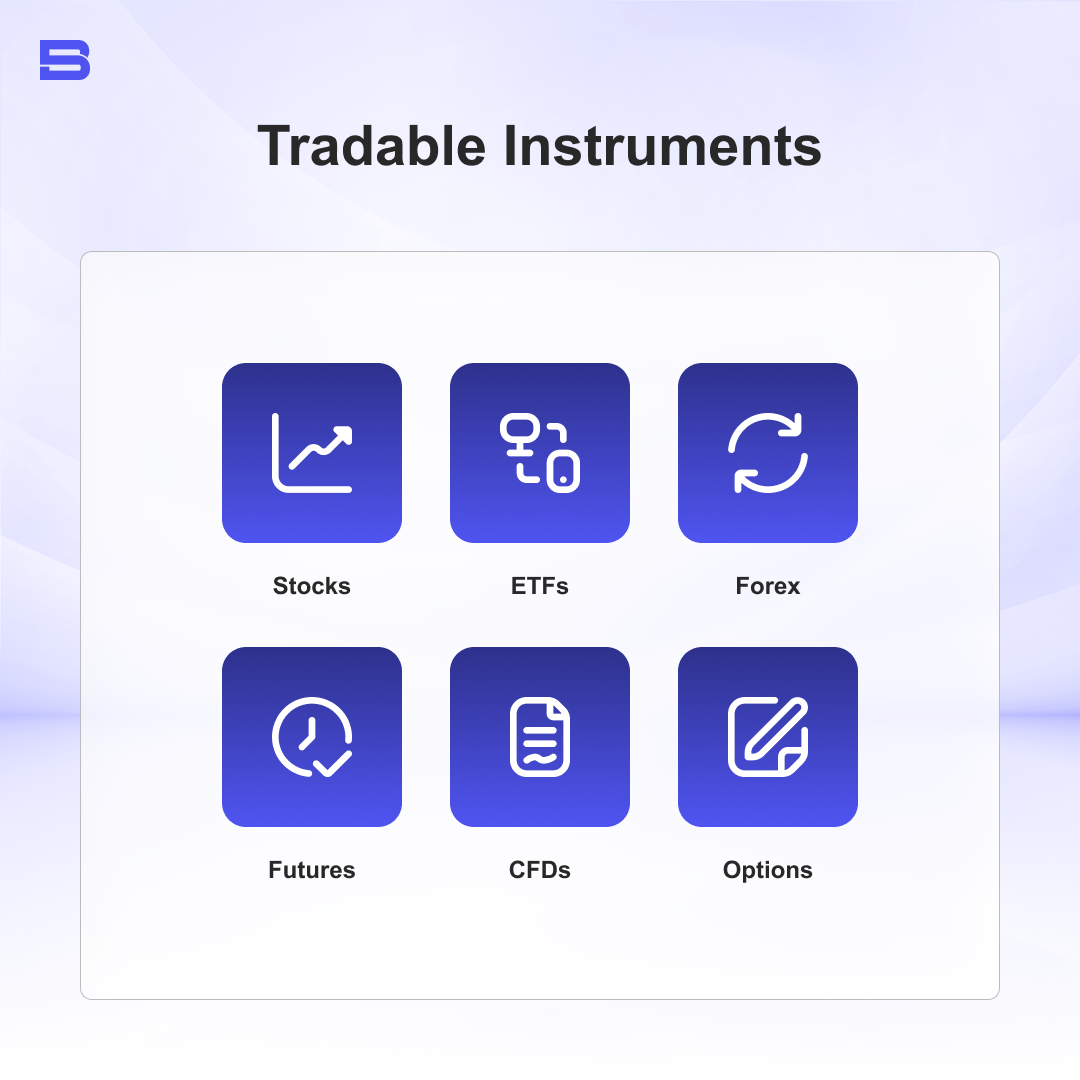
There is a wide variety of tradable instruments, including:
- Stocks
- ETFs
- Forex
- Futures
- CFDs
- Options
These instruments have different pros and cons associated with them. The markets open at varying times across different exchanges and instruments. For example, the forex market is open 24 hours a day on weekdays, while US stocks halt regular trading hours at 4 pm EST. Though many brokers now offer overnight stock trading.
You can even gain exposure to the same underlying asset through different instruments. Whichever instrument you choose, the objective is the same, which is to make a profitable trade.
Trading Essentials
1. Quotes, Spreads, and Slippage
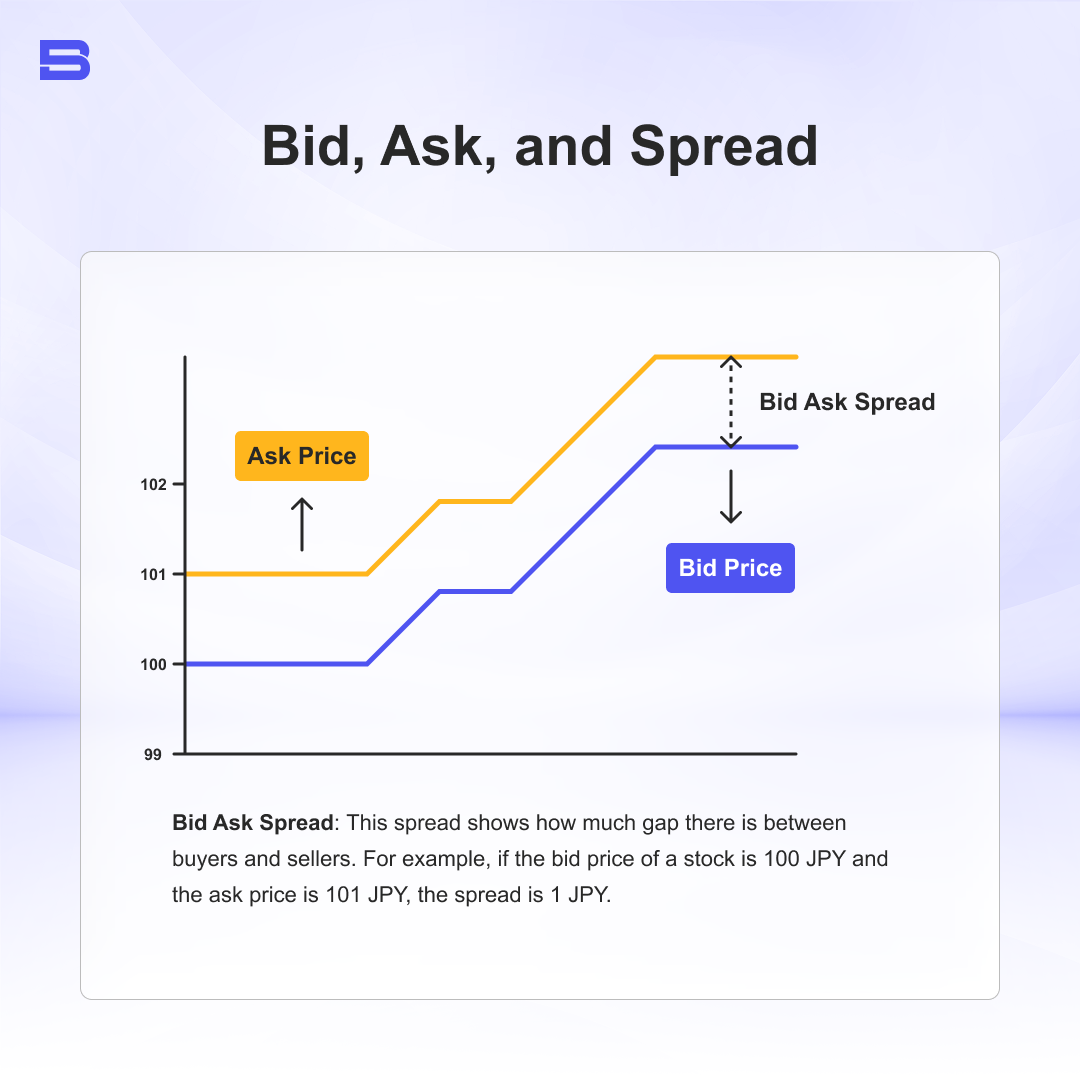
The difference between the bid and ask is known as the spread. The bid-ask spread is a cost for traders because buyers typically pay the ask and sellers hit the bid.
Here’s an example that illustrates the bid-ask spread:
2. Order Types
- Market Order: Your order is executed immediately at the best available price; prone to slippage during high volatility or low liquidity.
- Limit Order: You set the maximum buy or minimum sell price, then your order is executed at your set price or better.
- Stop/Stop-Loss: Triggers a market order when the market price hits your set price; useful to cap your losses.
Risk Management
Managing risk is essential for a trader. Without proper risk management, you won’t be able to stay in the game and capitalize on emerging opportunities in the market. You need a safety net to avoid overtrading and potentially allocating too much of your income into funding your trades.
- Manage Your Position Size: Size your trade from the stop distance and a small, fixed percent of account risk, such as 0.5–2%.
- Diversification: Traders may benefit from a diversified portfolio of assets, so one bet doesn’t sink the ship. Wise asset allocation and diversification are critical to managing risk.
- Prioritize Limit Orders: Learn to control order prices and reduce slippage costs by using the right order types.
- Use Stop-Loss Orders: Always define the maximum loss you are willing to take. This prevents emotional decision-making and protects your account from catastrophic losses.
- Keep Cash Reserves: Avoid committing 100% of your capital. Holding some cash provides flexibility to seize opportunities and cushions against drawdowns.
- Regularly Review Your Strategy: Markets change over time. Periodically reviewing and adjusting your approach ensures your strategy remains effective.
Understanding risk and reward is essential for any trader to develop a strategy. Because traders differ in goals, risk appetite, time horizon, and the amount of capital they can commit, there is no one-size-fits-all approach; your strategy should match your personal profile.
Leverage and Margin
A margin account allows you to borrow money from your broker to buy securities. This means your gains and losses are amplified through the use of leverage.
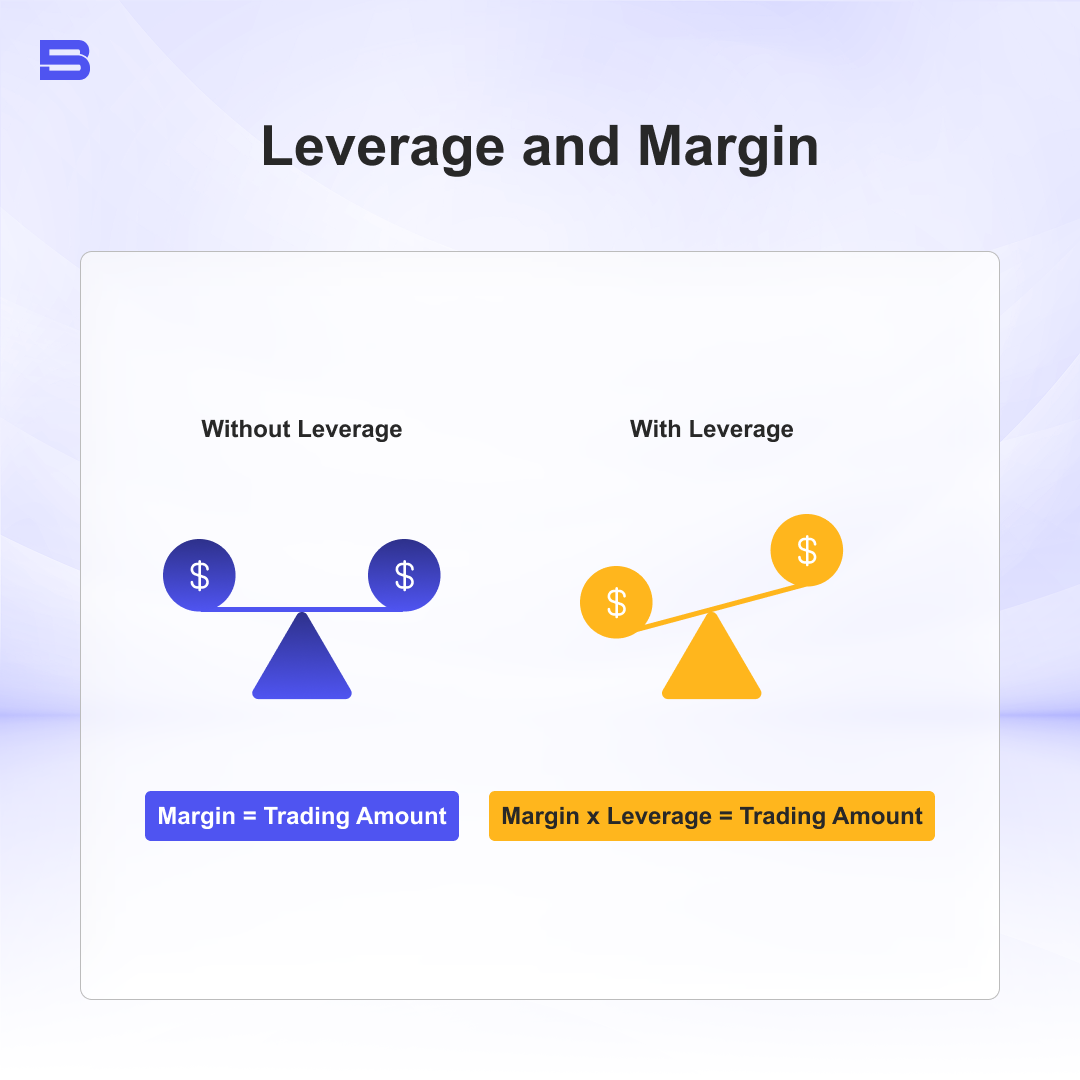
That’s the essence of leverage: even small price moves in an asset can create much larger percentage changes in your account—both upward and downward. If losses push your account close to the margin requirement, your broker may issue a margin call.
If you fail to deposit additional funds to meet the margin requirements, your broker can liquidate your assets to cover the shortfall.
Trading Costs
Trading involves several types of costs that can affect your profitability. The most common are:
- Spread: The gap between bid and ask—the smaller the spread, the cheaper the cost.
- Commissions/Platform Fees: These are the costs associated with executing orders, and they are specific to each broker.
- Financing Fees: Margin interest or overnight financing for leveraged products.
- Slippage: More prone in illiquid instruments or during high volatility.
How to Avoid Rookie Mistakes in Trading
Mistakes are a natural part of learning any new skill. However, mistakes in markets can be rather costly. It’s recommended to begin testing your trades with a demo account before committing any real funds.
Note any errors in your process, and you should be able to avoid repeating them if the problem is clear. Here are some mistakes beginners tend to make, and how to circumvent them:
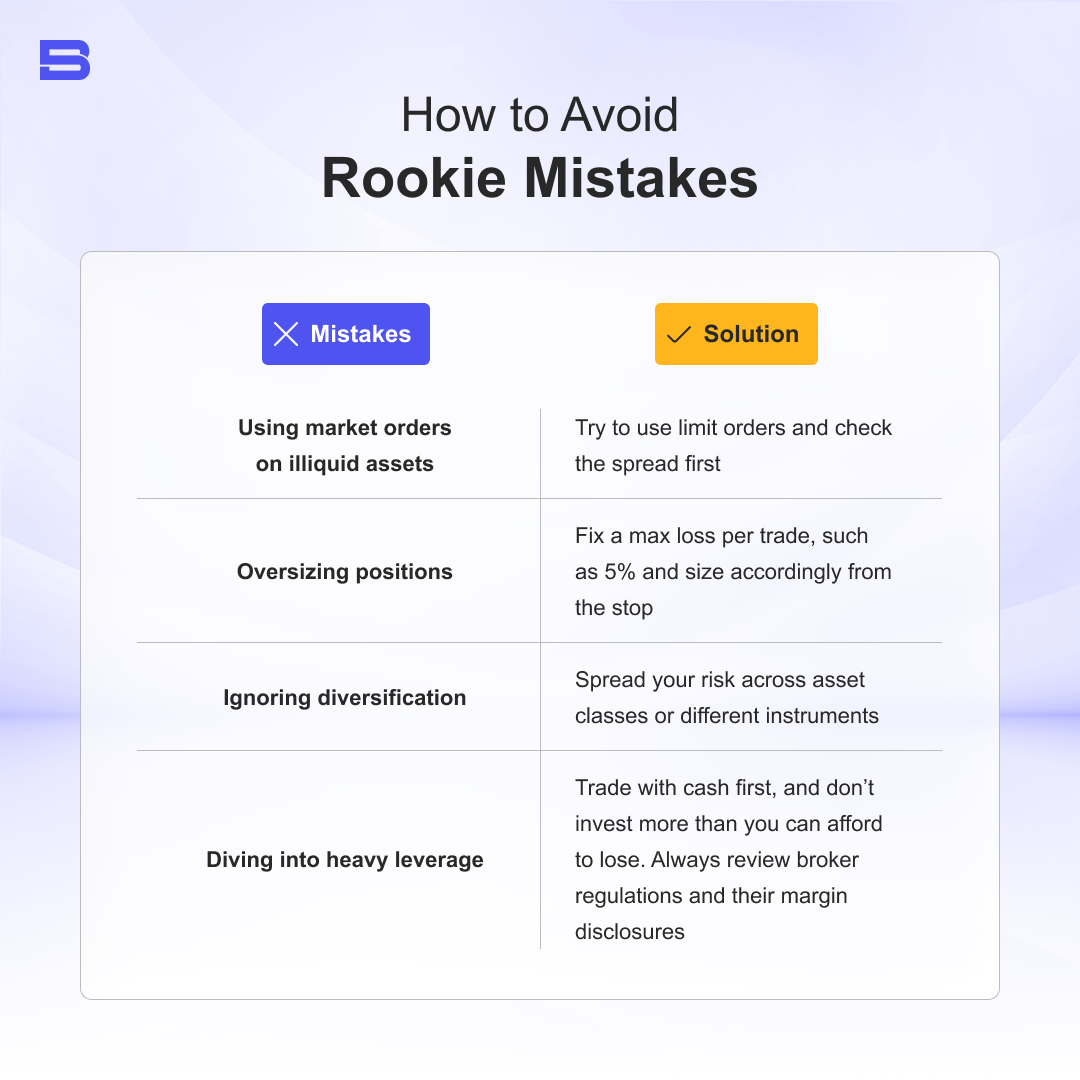
Before your first order is executed, you may have already made the mistake of choosing the wrong broker. Not all brokers are made equal. Some have a steep learning curve, and some should not be trusted with real funds. Novice traders can easily get overwhelmed with the vast array of options available, all claiming to be the best-in-class.
Final Word
Trading is a skill that needs refining and adjusting as market conditions change. There is no cookie-cutter strategy that will instantly give you a market edge. It’s all about finding a strategy that suits your style and risk tolerance.
Learn, practice, and document your journey constantly. Over time, you’ll develop an understanding deep enough to spot opportunities in the market and anticipate price movements with confidence.
- What Is Trading and How Does Trading Work?
- Trading Fundamentals: A Guide for Beginners
- Trading vs. Investing: What Are the Key Differences?
- Trading Terms and Terminologies Every Beginner Should Know
- Common Trading Mistakes Beginners Make and How to Avoid
- Understanding Risk and Reward in Trading: A Complete Guide
- Guide to the Different Types of Financial Markets
- Investment Basics: Definition, Strategies, and How to Invest
- Benefits of Investing: Financial Growth and Security
- What Is Swing Trading? A Practical Guide For Beginners
- What Is Spot Trading? A Guide for Beginners
- What Are Futures in Trading? A Guide for Beginners
- Understanding Bull Markets: Growth & Strategy
- How to Read a Candlestick Chart: A Guide for Beginners
- Is Trading Gambling? The Truth About Risk
- Pip in Forex: How It Works & How to Calculate It
- What Is the Bid-Ask Spread in Trading? A Guide for Beginners
- What Is a Margin Call? A Guide for Beginners
- Market Volatility Explained: What It Is and How to Trade It
- Drawdown in Trading: Meaning, Math, and Risk
- Understanding Slippage in Trading: Causes and Control
- Forex Lot Size Explained: Standard, Mini & Micro
- Trailing Stop vs Stop Loss: Essential Risk Strategy
- How Asset Allocation Works: Strategies Explained
- Understanding Market Trading Hours & Sessions
- Market Makers Explained: A Trader's Guide
- Portfolio Diversification: A Strategy Guide
- Capital Gains Explained: How Investment Taxes Work
- Stock Market Circuit Breakers: How Trading Halts Work
- What Is an IPO? How Initial Public Offerings Work
- What Is a Secondary Market? A Complete Guide
- What Is a Stock Exchange? Functions and Overview Explained
- Understanding Ticker Symbols: A Market Guide
- How Clearing Houses Work in Financial Markets
- Stock Market After Labor Day: Trends and What To Expect
Disclaimer: The content on this page is intended for educational and informational purposes only. It does not constitute financial, investment, tax, or legal advice, and should not be interpreted as a recommendation to buy, sell, or hold any financial instrument or asset. Trading and investing involve significant risk, including the possible loss of your entire capital. Products such as forex, CFDs, and cryptocurrencies carry additional risks due to leverage, high volatility, and limited regulatory protection in some jurisdictions. Past performance of any financial instrument does not guarantee future results. Any market views, forecasts, or opinions expressed are those of the author at the time of writing and may not reflect current market conditions. Platform features, fees, and regulatory status are subject to change — always verify information directly with the relevant provider or regulator before making any financial decision. BrokerSpecs may receive compensation from third parties featured on this site. Always conduct your own due diligence and consider seeking advice from a licensed financial professional before investing.