


Related Tags
Entering a trade for the first time can be exciting, but managing automated positions requires reliable technical infrastructure. Using a VPS for trading can help keep an Expert Advisor (EA) running continuously without depending on your home computer.
A sudden Windows update, power outage, or internet disruption could disconnect your trading terminal during an overnight forex position or volatile news event. If the EA goes offline, positions may remain unmanaged, increasing exposure when stop-losses or other automated controls are needed.
This operational vulnerability is why institutional traders and serious retail algorithmic traders move their execution environments off home hardware and onto a Virtual Private Server (VPS).
How Forex VPS Trading Works
A Virtual Private Server (VPS) is a dedicated virtual environment hosted on a cloud provider's physical server. It operates 24 hours a day, 7 days a week, completely independent of your local personal computer, home internet connection, or local power grid.
When you use a VPS for trading, you install your trading terminal—such as MetaTrader 4, MetaTrader 5, or cTrader—directly onto the remote server using Remote Desktop Protocol (RDP). Once configured, the VPS executes your strategies, runs your scripts, and maintains continuous communication with your broker's execution engine.
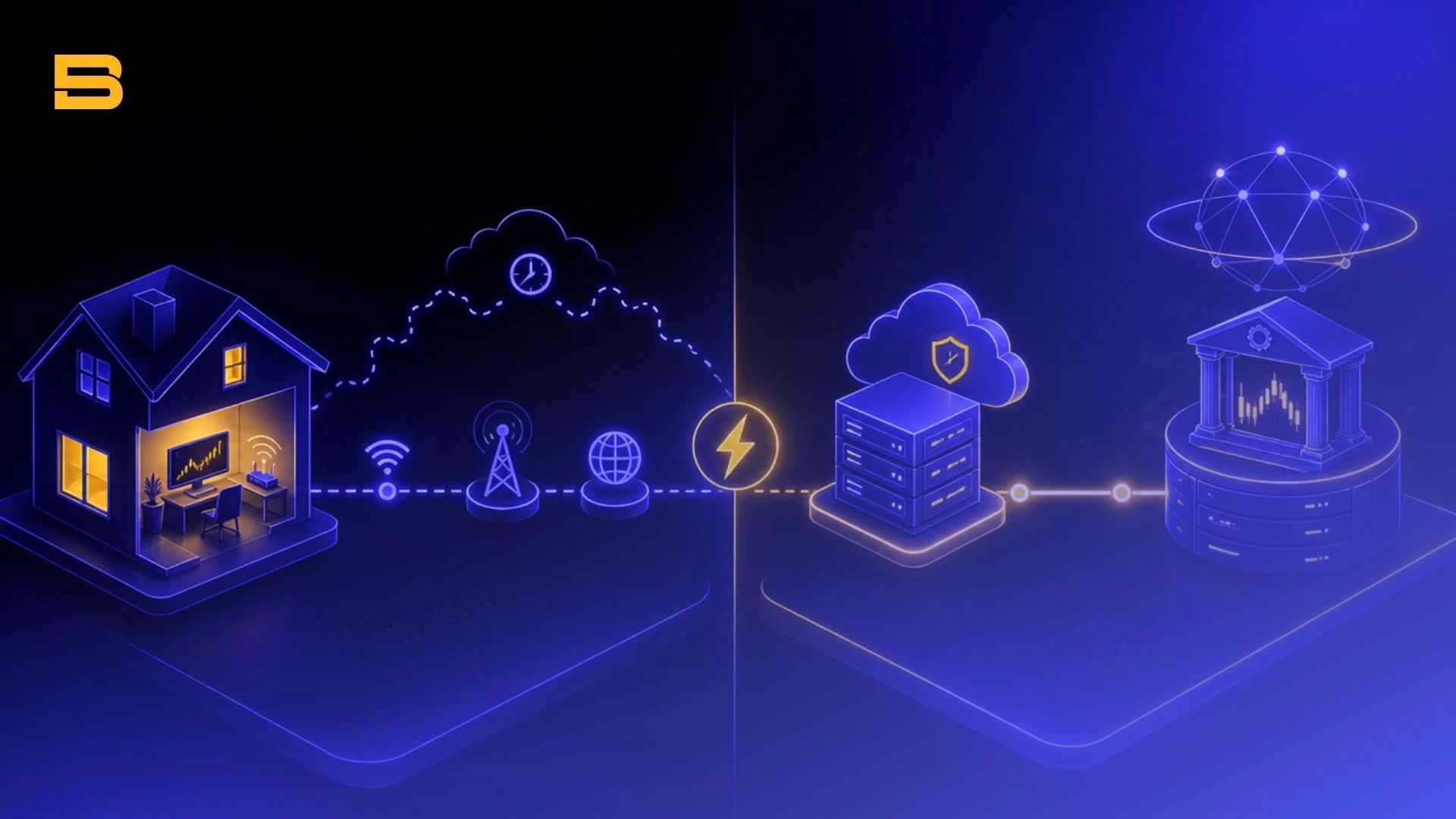
As shown in the infrastructure bridge above, your local PC acts merely as a monitor. You can shut down your laptop, disconnect from the internet, or travel without disrupting the trading terminal running on the VPS. Evaluating your technical infrastructure is just as vital as choosing the right platform; for a broader look at platform features, read our guide on Trading Platform Malaysia: What to Look For.
Why Automated Trading Systems Require a Dedicated VPS
Algorithmic trading systems depend on unbroken execution cycles. Running automated strategies on a standard home PC introduces several physical and operational points of failure:
- Operating System Updates: Consumer operating systems like Windows 11 frequently trigger mandatory restarts, closing all open trading terminals without saving EA states.
- Hardware Wear and Thermal Throttling: Running a home laptop or desktop 24/7 degrades hardware components, increases energy consumption, and causes thermal throttling that slows terminal performance.
- Internet Instability: Consumer ISP connections routinely experience micro-disconnections, IP rotations, and bandwidth throttling that disrupt live order execution.
A dedicated trading VPS solves these issues by operating inside enterprise-grade data centers equipped with redundant power supplies, backup generators, and fiber-optic internet feeds.
Running MetaTrader 4 and MetaTrader 5 on a VPS
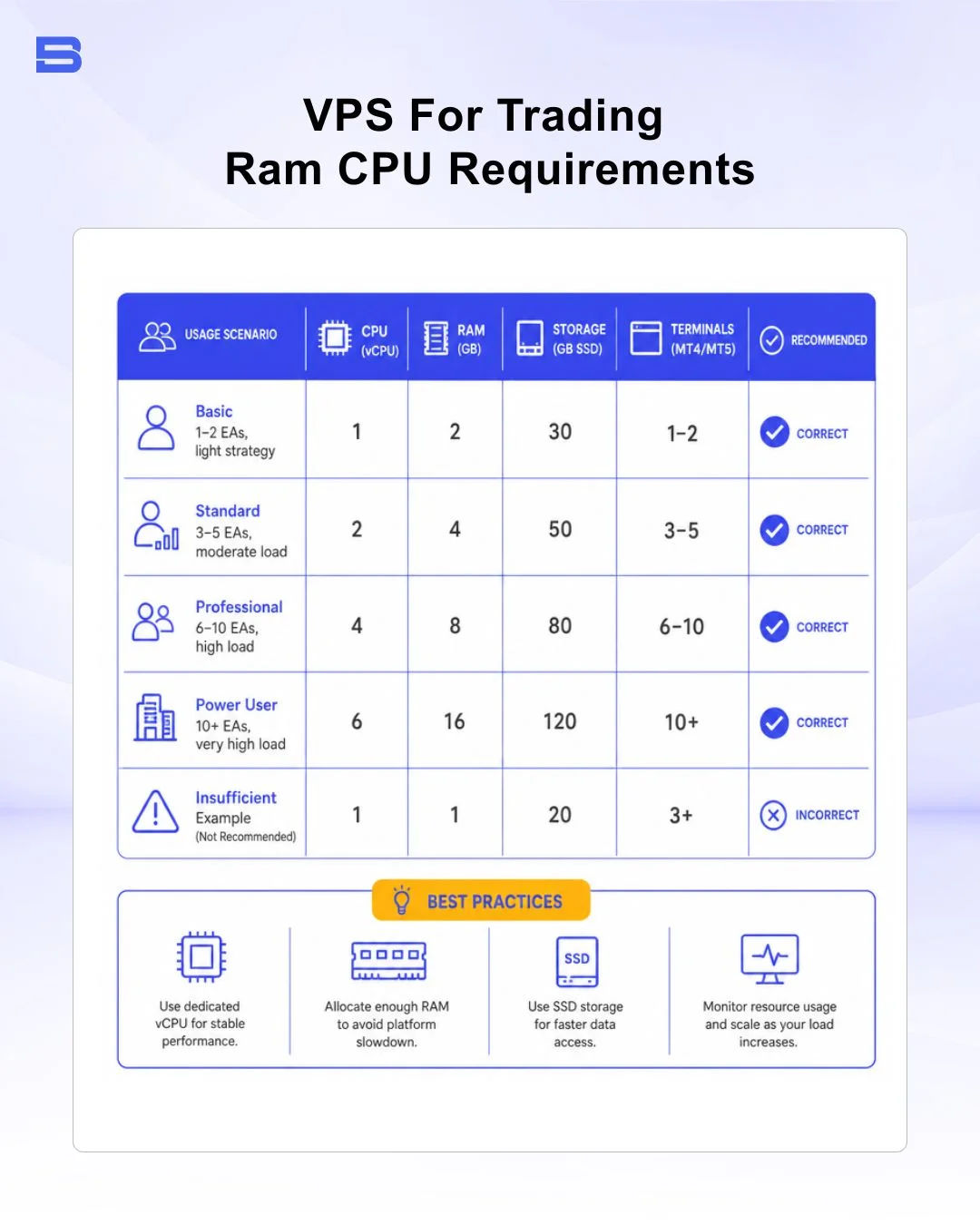
MetaTrader 4 (MT4) and MetaTrader 5 (MT5) are lightweight applications, but running multiple instances with custom indicators or complex EAs demands specific hardware resources.
When setting up your trading environment, understanding platform differences is critical. Take a look at MetaTrader, cTrader, and TradingView to determine which terminal best matches your execution style.
How VPS Infrastructure Supports Algorithmic Trading
Beyond basic 24/7 uptime, a trading VPS provides quantitative advantages in execution mechanics, order transmission speed, and market connectivity.
Minimizing Latency and Execution Speed
In financial trading, latency refers to the time delay (measured in milliseconds) it takes for a trade signal to travel from your terminal to the broker's matching engine. Standard home internet connections from Southeast Asia to financial servers in Europe or North America typically experience 150ms to 300ms of ping latency.
Trading VPS servers are physically co-located in major institutional data hubs, such as the Equinix LD4 facility in London, NY4 in New York, or TY3 in Tokyo. By placing your VPS in the same data center as your broker's matching engine, cross-connect latency drops to under 1 millisecond.
Reducing execution delay from 200ms to 1ms significantly decreases order slippage—the difference between your expected entry price and the actual fill price—especially during high-volatility news events.
Free Broker-Sponsored VPS vs. Paid Dedicated VPS
Traders generally have two choices when deploying a VPS: accepting a free VPS sponsored by their broker or subscribing to an independent paid VPS provider.
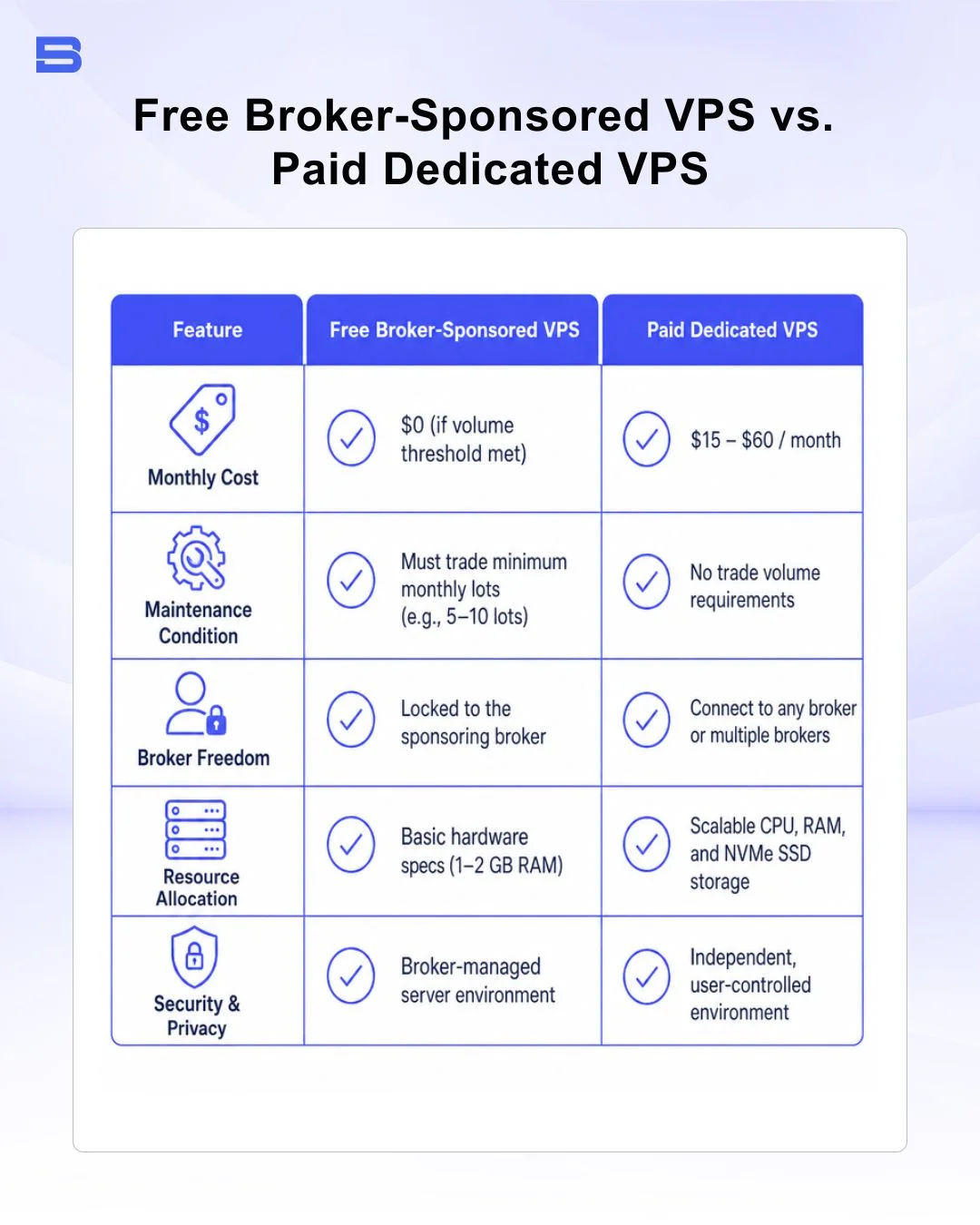
Free broker-sponsored VPS offers are attractive, but failing to meet monthly volume minimums can result in unexpected monthly fees or sudden service suspension. Paid dedicated VPS hosting gives you complete control without trading volume pressure.
Key Factors When Choosing a Trading VPS
To select the right VPS for your automated or manual trading setup, evaluate these key infrastructure specifications:
- Server Proximity: Check your broker's server location (e.g., London LD4, New York NY4) and select a VPS located in the same data center.
- Hardware Specifications: Ensure sufficient RAM and CPU cores for your planned terminal load.
- Storage Type: Choose SSD or NVMe storage for fast terminal boot times and quick chart backtesting.
- Operating System: Windows Server OS (2019/2022) offers native compatibility with MT4, MT5, and platforms like cTrader.
- DDoS Protection: Enterprise-grade security prevents cyber threats from taking your trading terminal offline.
The Bottom Line
A VPS for trading provides reliable infrastructure for operational stability, lower latency, and continuous Expert Advisor (EA) execution. It helps protect automated trading systems from power outages, internet disruptions, and unexpected computer reboots.
However, a VPS for trading is strictly an infrastructure solution: it can improve order transmission and platform reliability, but it cannot make an ineffective strategy profitable or remove the inherent risks of financial markets.
- Proprietary Trading Explained: What It Is and Its Key Benefits
- TradingView: Features, Broker Integration, and Strategies
- cTrader: How It Works and How It Compares
- What Is a VPS for Trading and Do You Need One?
- Thinkorswim Trading: Features, Tools, and Availability
- Trading Platform Malaysia: What to Look For
- Bursa Anywhere: A Guide to Managing Shares in Malaysia
- What Is Forex Factory and How Do Traders Use It?
- Delta App: Multi-Asset Portfolio Tracker for Crypto & Stocks
- What Is Trading Central and How to Use It?
- What Is Simply Wall St and How to Use It
- What Is Seeking Alpha and How to Use It
- What Is MarketWatch and How to Use It
- What Is Barchart and How to Use It
- Google Finance Explained: How to Track Stocks and Markets
- What Is Finviz and How to Use It for Stock Screening
- What Is Yahoo Finance and How to Use It
- What Is TradingEconomics and How to Use It
- StockCharts Review 2026: Features, Pricing, and Performance
- What Is ZuluTrade and How Does Copy Trading Work on It?
- What Is Investing.com and How to Use It?
- What Is Myfxbook and How Do Traders Use It?
- What Is CoinGecko? A Complete Guide to Crypto Data Tracking
- What Is CoinMarketCap and How to Use It
- What Is CoinStats and How to Use It for Portfolio Tracking
- What Is Sharesight and How to Use It for Portfolio Tracking
- What Is Personal Capital and How to Use It
- What Is a Low Spread Broker? How It Affects Your Trading
- What Is an Introducing Broker (IB) in Forex?
- What Is Social Trading? How Copy Trading Platforms Work
- What Is a PAMM Account? How Managed Forex Accounts Work
- What Is a Margin Account and How Does Margin Trading Work?
- What Are Trading Signals and How Do They Work?
- What Is an Expert Advisor (EA) in Forex Trading?
Disclaimer: The content on this page is intended for educational and informational purposes only. It does not constitute financial, investment, tax, or legal advice, and should not be interpreted as a recommendation to buy, sell, or hold any financial instrument or asset. Trading and investing involve significant risk, including the possible loss of your entire capital. Products such as forex, CFDs, and cryptocurrencies carry additional risks due to leverage, high volatility, and limited regulatory protection in some jurisdictions. Past performance of any financial instrument does not guarantee future results. Any market views, forecasts, or opinions expressed are those of the author at the time of writing and may not reflect current market conditions. Platform features, fees, and regulatory status are subject to change — always verify information directly with the relevant provider or regulator before making any financial decision. BrokerSpecs may receive compensation from third parties featured on this site. Always conduct your own due diligence and consider seeking advice from a licensed financial professional before investing. Portions of this article were prepared with the assistance of AI tools and reviewed by our editorial team before publication.