


- How to Start Trading: A Step-by-Step Guide for Beginners
- Demo Trading Accounts: Safe Practice for Beginners
- Understanding How Much Capital You Need to Start Trading
- How to Set Realistic Trading Goals as a New Trader
- How to Open a Trading Account in Malaysia (Step-by-Step)
- How to Start Trading in Malaysia: A Guide for Beginners
- How to Create a Trading Plan Before You Start Trading
- What Is a Trading Account? Everything You Need to Know
- How to Learn Trading: Step-by-Step Beginner Roadmap
- What Is Stop Loss in Trading and How Does It Work?
- Why Every Trader Needs a Trading Journal
- Islamic Forex Account Explained: How Swap-Free Trading Works
- Funded Trading Account: Rules, Splits & Risks
- Master Money Management: Practical Capital Protection Rules
- Overtrading Explained: Common Causes, Signs, and How to Stop
- How Risk-Reward Ratio Works: A Guide to Trading Risk
- How to Open a Brokerage Account as a Beginner
- What Is a Cent Account Forex and How Does It Work?
- What Is an ECN Account and How Does It Work?
- What Is Cashback Forex and How Does It Work?
- Fixed Deposit vs Unit Trust: Key Differences for Investors
- Welcome Bonus Forex: What It Is and What to Watch For
- Forex Deposit Bonus: How It Works
- What Is Forex Rebate and How Does It Work?
- What Is Forex Free Credit and How Does It Work?
- Trading Webinars: Are They Worth Attending?
- Trading for Beginners PDF: What to Look For in a Good Guide
- Trading 101: How to Start Trading Safely and Effectively

You’ve learned the basics and studied the markets to get a foundational understanding of the investment landscape. Now, how do you start applying the principles and ideas that you’ve learned to become a consistently profitable trader?
If you’re serious about trading and approach it systematically, you can build a strong foundation and fast-track your progress towards profitability. Here’s a clear roadmap from zero to placing your first trade.
Step 1: Define Your Trading Objective and Style
Before funding an account, clarify what you want to achieve with trading. Ask yourself:
- Am I trading to build capital long-term or generate short-term income?
- How much time can I dedicate each day or week?
- What level of risk am I willing to take?
Your answers determine your trading style:
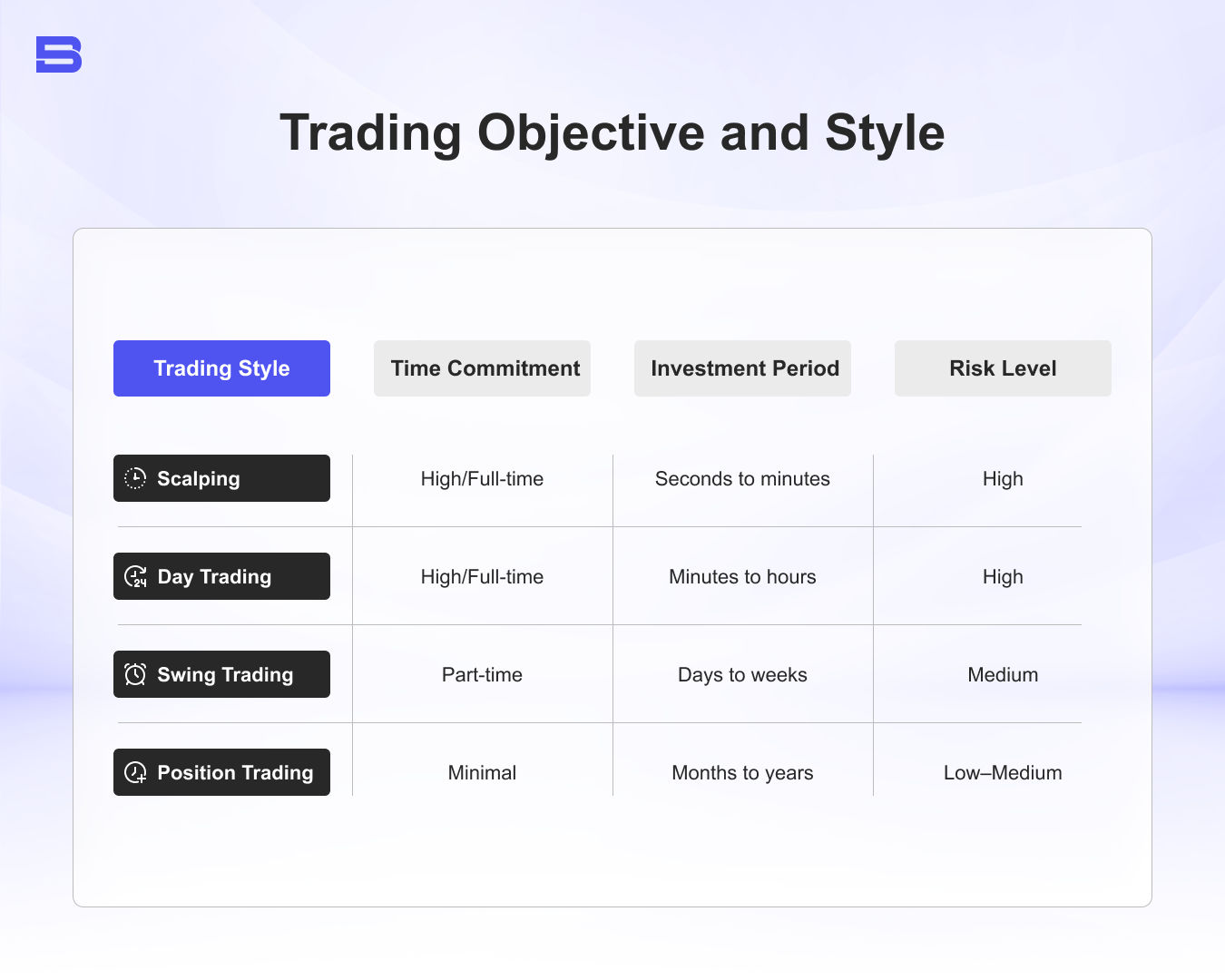
As stated above, short-term trading strategies usually demand more time and carry higher risk compared to long-term approaches. Once you identify your style, you can structure your time, strategy, and capital allocation around it.
Step 2: Build and Test Your Strategy
You don’t need a complex algorithm to start—but you do need a repeatable plan.
At a minimum, your strategy should define:
- Setup: The conditions that signal a trade opportunity. (e.g., moving average crossovers, RSI overbought zones).
- Entry Trigger: The exact moment you act. (e.g., candle closes above the resistance level).
- Exit Plan: Both your target profit and your stop-loss level.
Backtest your idea using historical charts and demo account environments to evaluate consistency. You should also track your simulated trades in a spreadsheet to measure average win/loss, accuracy, and risk-reward ratio.
Step 3: Choose the Right Broker and Platform
At this stage, the broker you select directly affects your execution and costs. Evaluate brokers based on:
- Regulation: Always confirm the broker is licensed under reputable authorities, such as the UK’s Financial Conduct Authority (FCA) or the Australian Securities and Investments Commission (ASIC), to ensure your funds are protected.
- Spreads and Commissions: These are the first costs traders must overcome to achieve profitability.
- Platform Performance: Ensure your platform has low latency and stable execution.
- Market Access: Check that your preferred assets, such as forex, indices, or commodities, are available.
- Funding and Withdrawals: Fast, transparent, and fee-free processing is ideal.
Check out our broker reviews that provide clear insights into fees, safety, and features—helping you make an informed choice before signing up with any one broker.
Step 4: Establish Risk and Money Management Rules
Trading without a plan is essentially gambling. If you’re not aware of the potential risk and reward, you’re going in blindly into a trade. You need to have realistic goals and expectations for the outcome of a trade. Here’s a simple framework you can adopt:
- Risk per Trade: Set a limit for each trade. For example, you could limit your maximum risk to 1–5% of your total capital.
- Risk-Reward Ratio: A better ratio means you can afford to have a lower win-rate without sacrificing profitability. Aim for at least 2:1, which will net you $2 for every $1 risked.
- Stop-Loss Placement: Set stops where your trade thesis is invalid, not just where losses feel acceptable.
- Diversification: Avoid overexposure to correlated markets, such as multiple tech stocks or forex pairs linked to USD.
Integrate these rules into your trading plan and optimize based on your observations.
Step 5: Fund Your Account Strategically
Your initial deposit should reflect both your strategy and risk tolerance. You don’t necessarily need a large amount of capital to start trading. Don’t rush to go all-in, but start small and scale up as you grow more confident in your trades.
When funding, you should consider the minimum deposit requirements and currency conversion costs of your broker. If you need quick access to your funds, take note of the standard withdrawal processing times of your preferred method.
Step 6: Transition from Demo to Live Trading
Once your results are consistent on demo, start small with real money. Here’s how to make that transition smoother:
- Begin with micro lots or fractional positions.
- Trade with intent and focus on execution discipline, not profits.
- Keep journaling trades to track patterns and mistakes in your assumptions.
Even experienced traders refine their systems continuously—trading as a lifetime skill is playing the long game and maintaining your market edge.
Step 7: Measure, Reflect, and Adjust
A trading plan only works if you track and refine it. Maintain a trading journal that records your setup, entry, stop-loss, take-profit, and the final result. Additionally, you can add notes that provide context for the trade.
This is particularly useful in hindsight when reviewing how you reacted to the circumstances surrounding the trade. Here’s an example of a log in a trading journal.
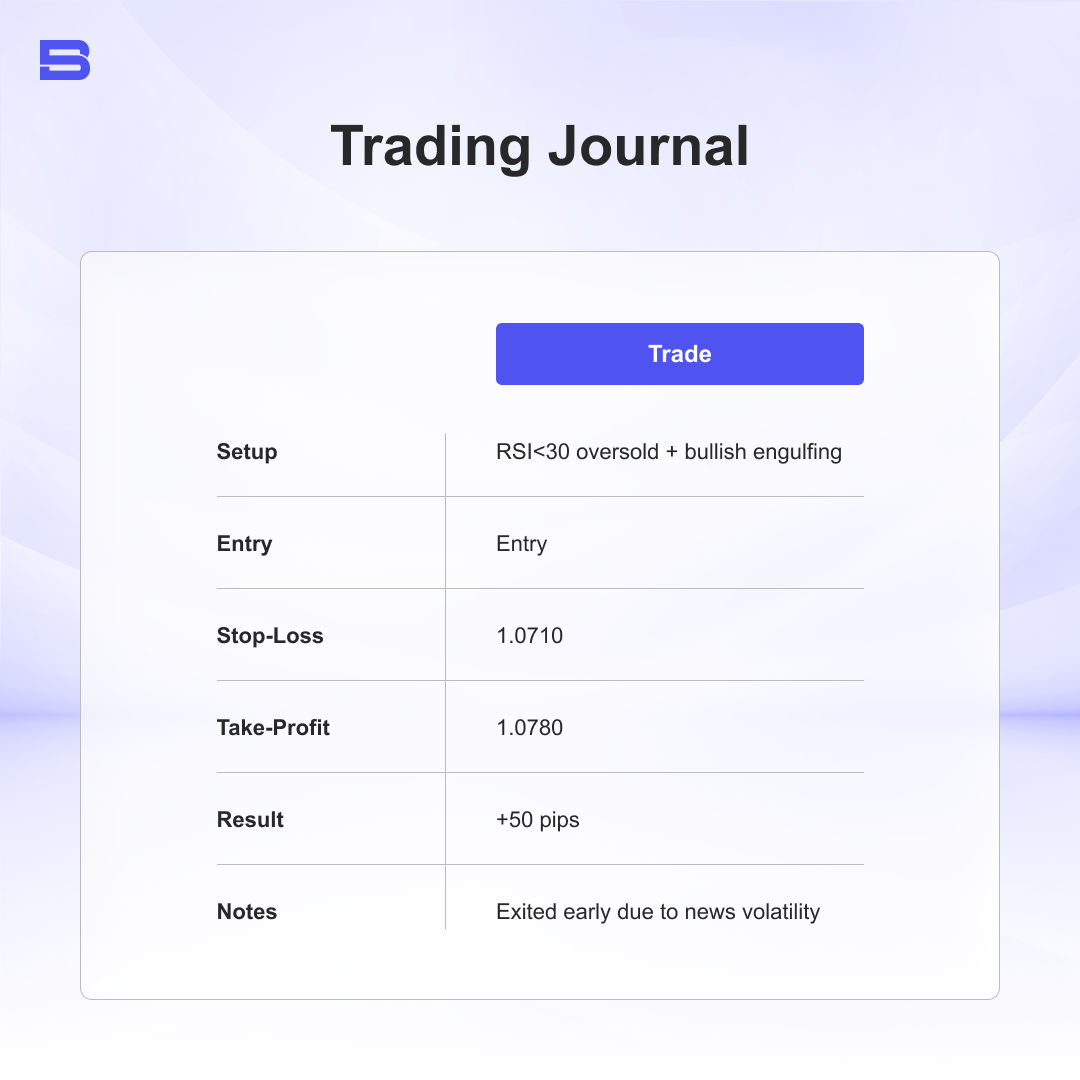
After every few weeks, review performance metrics such as win rate, average gain/loss, and refine your strategy.
Step 8: Keep Learning and Stay Adaptive
Markets are constantly evolving. New technologies will emerge, geopolitical events will occur, and new economic trends will continuously reshape the price action of financial markets.
Stay updated by following economic calendars, market news, and institutional reports.
Take the First Step
At this stage, you’re ready to move beyond theory. You understand risk, have a trading plan, and can test your strategy in real conditions.
The next move? Find a broker that matches your trading style with all the features you need. You can also start with our best broker reviews to compare top-rated platforms, fees, and features to trade with confidence.
Disclaimer: The content on this page is intended for educational and informational purposes only. It does not constitute financial, investment, tax, or legal advice, and should not be interpreted as a recommendation to buy, sell, or hold any financial instrument or asset. Trading and investing involve significant risk, including the possible loss of your entire capital. Products such as forex, CFDs, and cryptocurrencies carry additional risks due to leverage, high volatility, and limited regulatory protection in some jurisdictions. Past performance of any financial instrument does not guarantee future results. Any market views, forecasts, or opinions expressed are those of the author at the time of writing and may not reflect current market conditions. Platform features, fees, and regulatory status are subject to change — always verify information directly with the relevant provider or regulator before making any financial decision. BrokerSpecs may receive compensation from third parties featured on this site. Always conduct your own due diligence and consider seeking advice from a licensed financial professional before investing.