



Related Tags
Entering a trade with a clean technical setup only to watch a sudden 80-pip spike wipe out your stop-loss in seconds is a rite of passage for many traders. Often, the culprit is not a bad chart pattern, but an unscheduled or overlooked macroeconomic announcement. Trading without tracking scheduled economic data is equivalent to navigating blind through market-moving events.
A forex economic calendar provides a real-time schedule of critical central bank decisions, employment figures, and inflation reports. Understanding how to read this tool allows you to anticipate volatility, manage trade exposure safely, and align technical strategies with fundamental market drivers.
What Is a Forex Economic Calendar?
A forex economic calendar is a specialized tracking tool that lists upcoming macroeconomic data releases, central bank policy announcements, and government financial reports. These scheduled events can shift market sentiment and often influence whether institutional capital flows into or out of a currency.
Central banks and government agencies publish reports—such as interest rate decisions, Gross Domestic Product (GDP), and Consumer Price Index (CPI) metrics—at regular intervals. Because foreign exchange rates reflect the relative strength of one country's economy against another, deviations in these data points spark rapid adjustments in exchange rates.
By consulting an economic calendar forex tool regularly, you gain a structured timeline of when liquidity is likely to dry up, spreads are prone to widening, or new trends may launch. Integrating this tracking into your daily routine is a foundational habit.
How to Read an Economic Calendar Forex Setup
At first glance, a forex economic calendar interface displays a dense list of numbers, timestamps, and country flags. Breaking down the core columns makes parsing the data straightforward:
- Time & Currency: Indicates the precise release time (adjusted to your local time zone) and the primary currency affected (e.g., USD, EUR, MYR).
- Impact Rating: Categorized by color or symbol (usually Low, Medium, or High Impact) to signal expected market volatility. High-impact events demand immediate risk attention.
- Previous & Forecast: "Previous" shows the prior period's actual result, while "Forecast" represents the consensus baseline expected by institutional economists.
- Actual: The official metric published live at the scheduled release time.
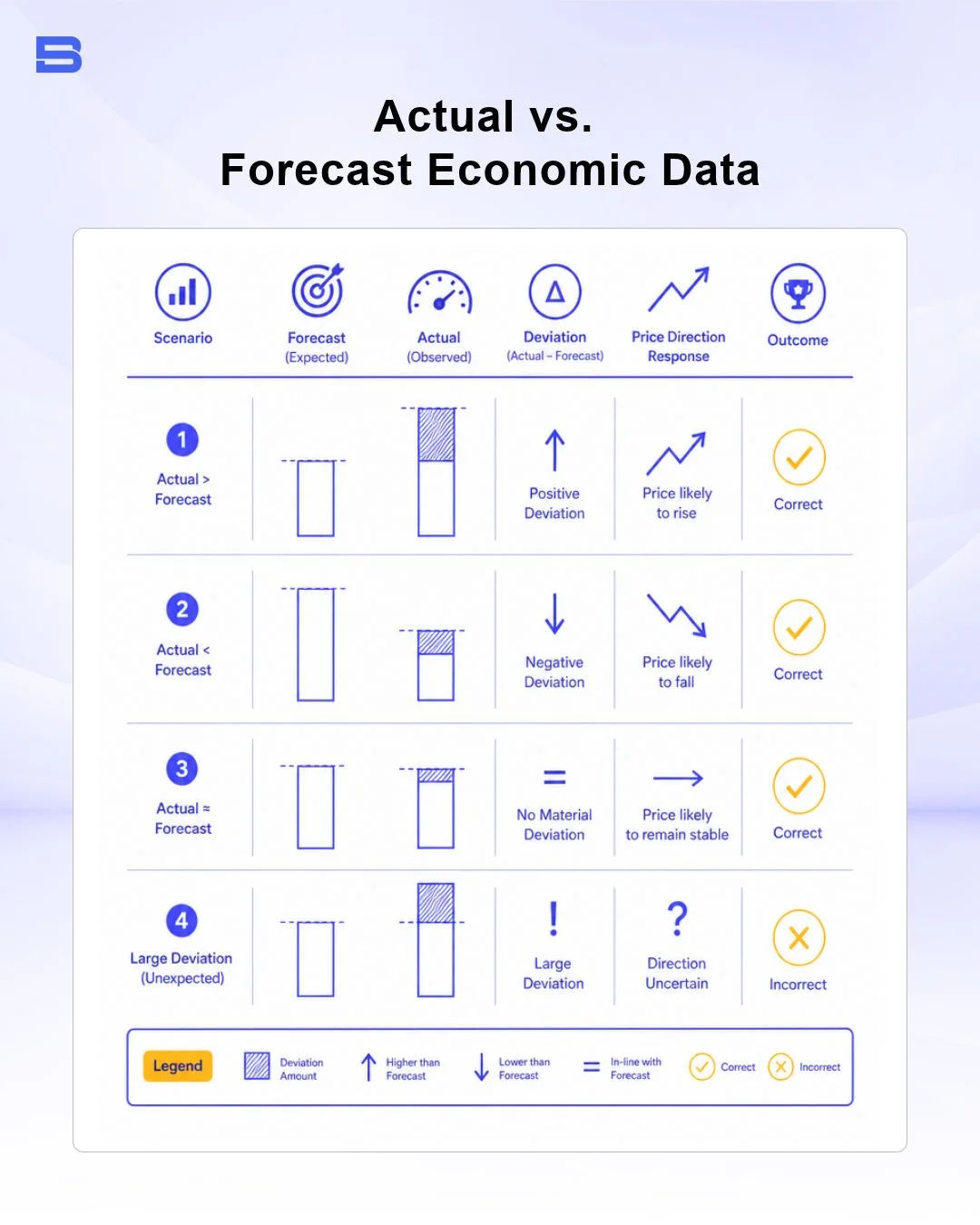
Understanding Actual vs Forecast Data
Financial markets price in expectations long before the actual figures are published. Consequently, price action immediately following a news release is driven primarily by the variance between the Actual figure and the market Forecast, rather than the raw number alone.
When actual data beats the consensus forecast, the national currency typically appreciates in the short term as investors adjust growth expectations upward. Conversely, if data falls short of expectations, sell-offs often follow.
Scenario: Consider a US Non-Farm Payrolls (NFP) release where economists forecast an addition of +180,000 jobs. If the actual figure arrives at +250,000, the significant positive deviation suggests economic strength, which has historically strengthened the US dollar, typically pushing USD/JPY higher and EUR/USD lower.
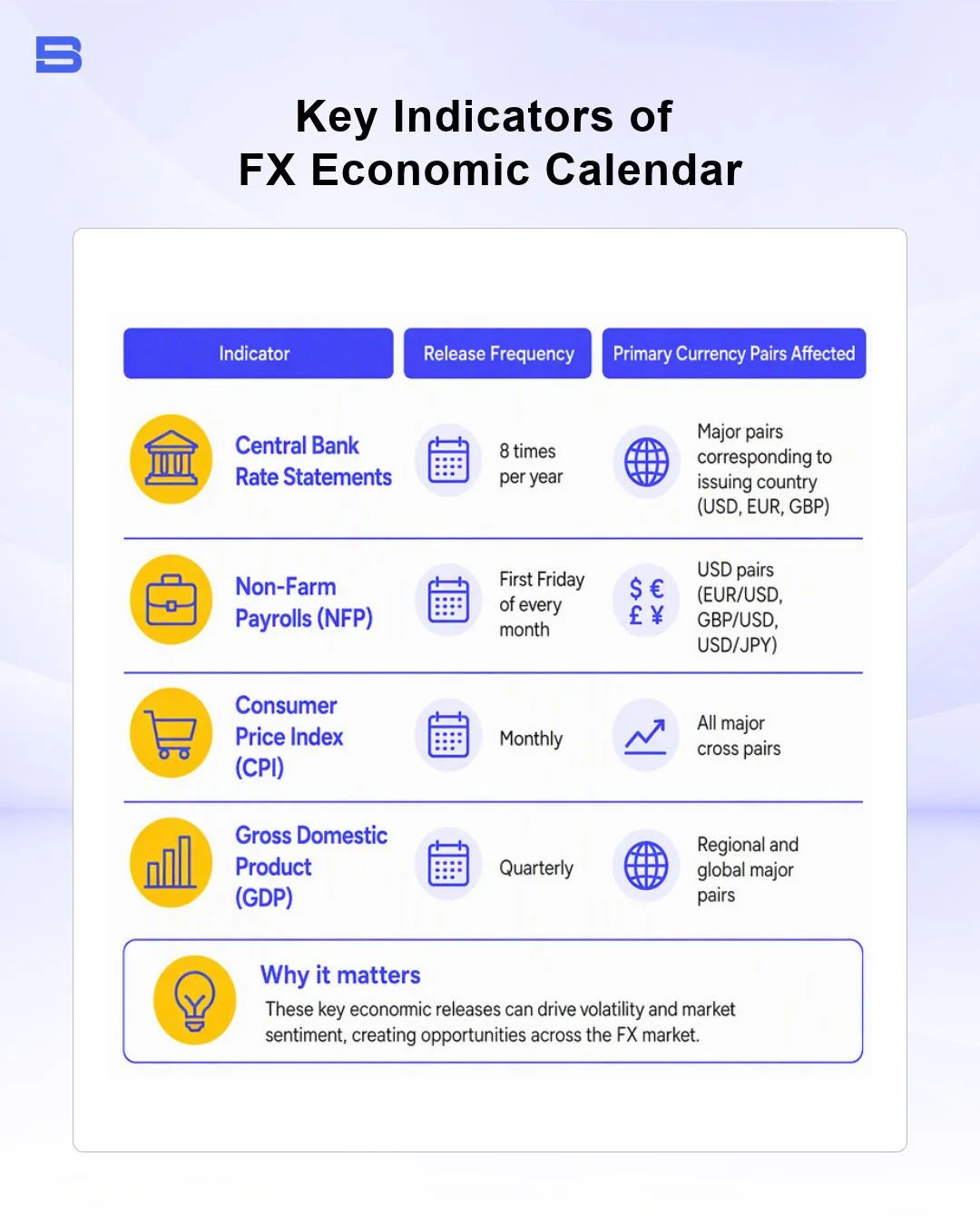
Key Indicators to Watch on a Forex Economic Calendar
Not all calendar entries carry equal weight. Focusing on high-impact announcements helps streamline your daily preparation:
- Central Bank Rate Decisions: Statements from monetary authorities like the Federal Reserve (Fed) or the European Central Bank (ECB) dictate short-term borrowing costs. Interest rate changes and monetary policy statements are widely considered among the most influential drivers of long-term currency trends.
- Inflation Reports (CPI & Producer Price Index): Inflation metrics influence monetary policy. Rising CPI figures often press central banks to raise interest rates to cool the economy, which can attract capital inflows.
- Employment Data: Measures such as US Non-Farm Payrolls (NFP) and unemployment rates reflect overall economic health, directly shaping consumer spending expectations.
- Gross Domestic Product (GDP): The broadest snapshot of national economic output, published quarterly. Major revisions to GDP growth figures trigger widespread reallocations across currency and equity markets.
Integrating a Trading Economic Calendar into Your Strategy
Successfully using a trading forex economic calendar requires executing distinct steps before, during, and after major data releases:
- Pre-Release (Preparation): Review the upcoming week's calendar every Monday. Note major high-impact events and avoid initiating new technical entries right before a critical announcement.
- During Release (Execution Caution): Market liquidity often decreases seconds before a major release as institutional market makers withdraw orders. Many experienced traders pause active trading during the initial spike to prevent execution errors.
- Post-Release (Confirmation): Wait for the initial knee-jerk reaction to settle (typically 15 to 30 minutes). Once market directional bias establishes, look for technical pullbacks or structural breakouts aligned with the fundamental outcome.
Whichever stage you trade, position size matters. Leverage amplifies your returns when you're right, but it accelerates capital destruction just as quickly when the market moves against you—a 2.5% adverse price spike during high-impact news on a 30:1 position can wipe out a large share of your account margin. Evaluating fundamental updates alongside chart analysis helps balance entry timing.
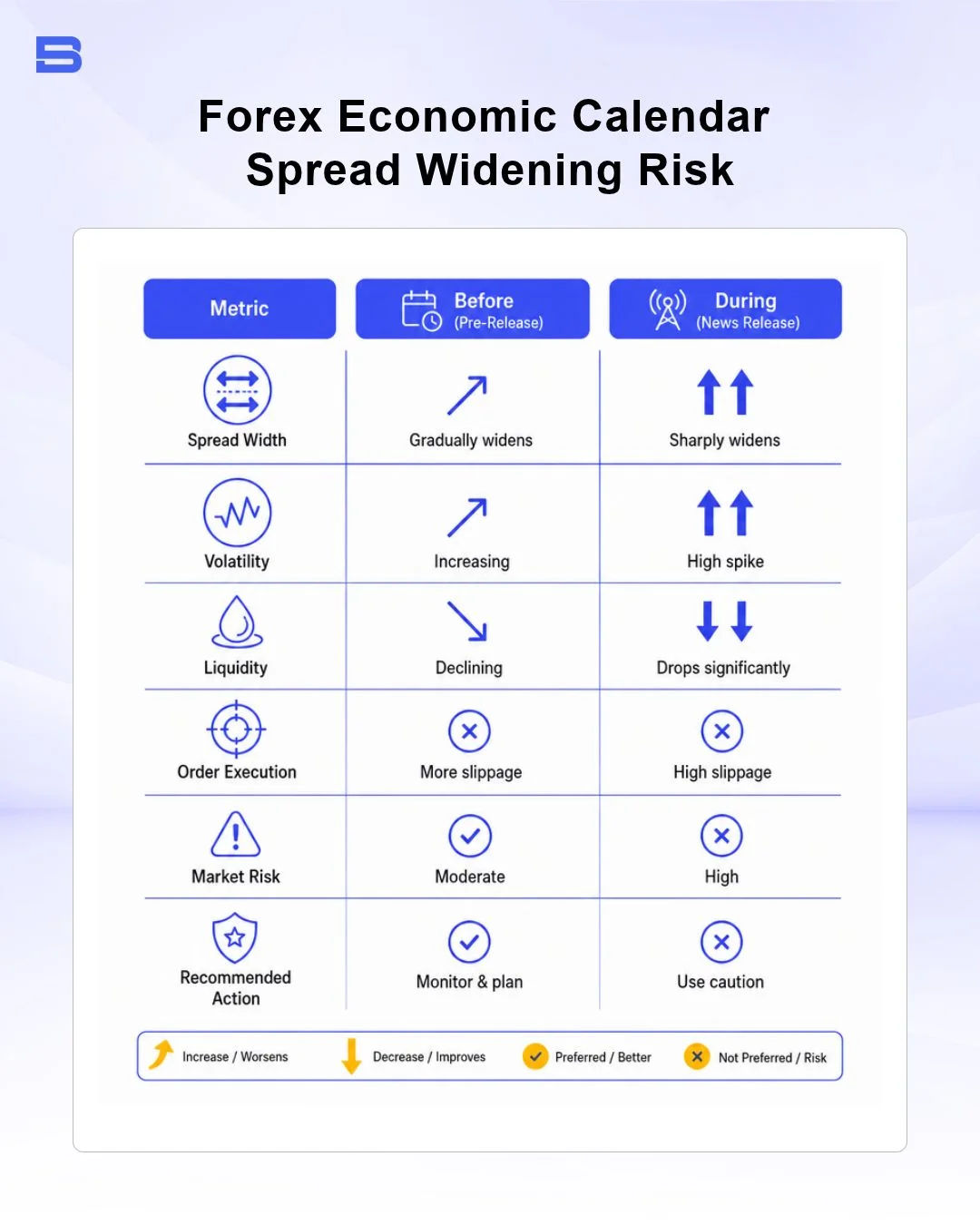
Risk Factor: Managing Spread Widening and Slippage
High-impact announcements carry execution risks that standard technical charts do not display. As data is published, brokers experience significant order imbalances while liquidity providers pull bid and ask quotes to protect against sharp moves.
This temporary illiquidity leads to spread widening, where the difference between the buying and selling price stretches significantly higher than normal levels. Furthermore, rapid price movement causes slippage, meaning order fills may occur several pips away from your intended stop-loss or take-profit price. To mitigate these risks, avoid tight stop-loss placement during major economic releases and consider reducing your lot sizes.
Tracking Local Events with a Malaysia Economic Calendar
For traders operating in Southeast Asia, monitoring local economic indicators provides crucial context for regional pairs like USD/MYR. A dedicated Malaysia economic calendar helps track specific regional triggers:
- BNM Overnight Policy Rate (OPR): Monetary policy decisions announced by Bank Negara Malaysia (BNM) directly impact domestic yield differentials and Ringgit strength.
- Malaysia CPI & Export Data: As a major exporter of electrical products and commodities like petroleum and palm oil, local inflation and trade balance reports dictate regional capital flows.
Keeping local release schedules alongside global events ensures complete coverage when trading regional assets or cross-border portfolios.
Why a Forex Economic Calendar Belongs in Your Daily Routine
A forex economic calendar is a practical tool for building consistent market discipline. By understanding how actual figures compare to baseline forecasts, tracking major central bank indicators, and managing the operational risks of slippage and spread widening, you transform unpredictable volatility into a structured roadmap for your trading strategy.
- Proprietary Trading Explained: What It Is and Its Key Benefits
- TradingView: Features, Broker Integration, and Strategies
- cTrader: How It Works and How It Compares
- What Is a VPS for Trading and Do You Need One?
- Thinkorswim Trading: Features, Tools, and Availability
- Trading Platform Malaysia: What to Look For
- Bursa Anywhere: A Guide to Managing Shares in Malaysia
- What Is Forex Factory and How Do Traders Use It?
- Delta App: Multi-Asset Portfolio Tracker for Crypto & Stocks
- What Is Trading Central and How to Use It?
- What Is Simply Wall St and How to Use It
- What Is Seeking Alpha and How to Use It
- What Is MarketWatch and How to Use It
- What Is Barchart and How to Use It
- Google Finance Explained: How to Track Stocks and Markets
- What Is Finviz and How to Use It for Stock Screening
- What Is Yahoo Finance and How to Use It
- What Is TradingEconomics and How to Use It
- StockCharts Review 2026: Features, Pricing, and Performance
- What Is ZuluTrade and How Does Copy Trading Work on It?
- What Is Investing.com and How to Use It?
- What Is Myfxbook and How Do Traders Use It?
- What Is CoinGecko? A Complete Guide to Crypto Data Tracking
- What Is CoinMarketCap and How to Use It
- What Is CoinStats and How to Use It for Portfolio Tracking
- What Is Sharesight and How to Use It for Portfolio Tracking
- What Is Personal Capital and How to Use It
- What Is a Low Spread Broker? How It Affects Your Trading
- What Is an Introducing Broker (IB) in Forex?
- What Is Social Trading? How Copy Trading Platforms Work
- What Is a PAMM Account? How Managed Forex Accounts Work
- What Is a Margin Account and How Does Margin Trading Work?
- What Are Trading Signals and How Do They Work?
- What Is an Expert Advisor (EA) in Forex Trading?
Disclaimer: The content on this page is intended for educational and informational purposes only. It does not constitute financial, investment, tax, or legal advice, and should not be interpreted as a recommendation to buy, sell, or hold any financial instrument or asset. Trading and investing involve significant risk, including the possible loss of your entire capital. Products such as forex, CFDs, and cryptocurrencies carry additional risks due to leverage, high volatility, and limited regulatory protection in some jurisdictions. Past performance of any financial instrument does not guarantee future results. Any market views, forecasts, or opinions expressed are those of the author at the time of writing and may not reflect current market conditions. Platform features, fees, and regulatory status are subject to change — always verify information directly with the relevant provider or regulator before making any financial decision. BrokerSpecs may receive compensation from third parties featured on this site. Always conduct your own due diligence and consider seeking advice from a licensed financial professional before investing. Portions of this article were prepared with the assistance of AI tools and reviewed by our editorial team before publication.