


Related Tags
Picture setting up a quantitative trading rule on Friday afternoon, closing your laptop, and returning on Monday morning to find every trade executed with precision while you slept. Now picture opening your account to find that a brief server disconnection triggered a series of unhedged orders, wiping out half your account balance.
This contrast defines the reality of trading with automation. While removing emotional hesitation and increasing execution speed offer significant advantages, converting strategy logic into machine code trades human error for systemic, technical, and operational risks.
What Is An Automated Trading System And How Does It Work?
An automated trading system executes buy and sell orders based on pre-programmed quantitative rules, technical indicators, and execution parameters without requiring manual human intervention.
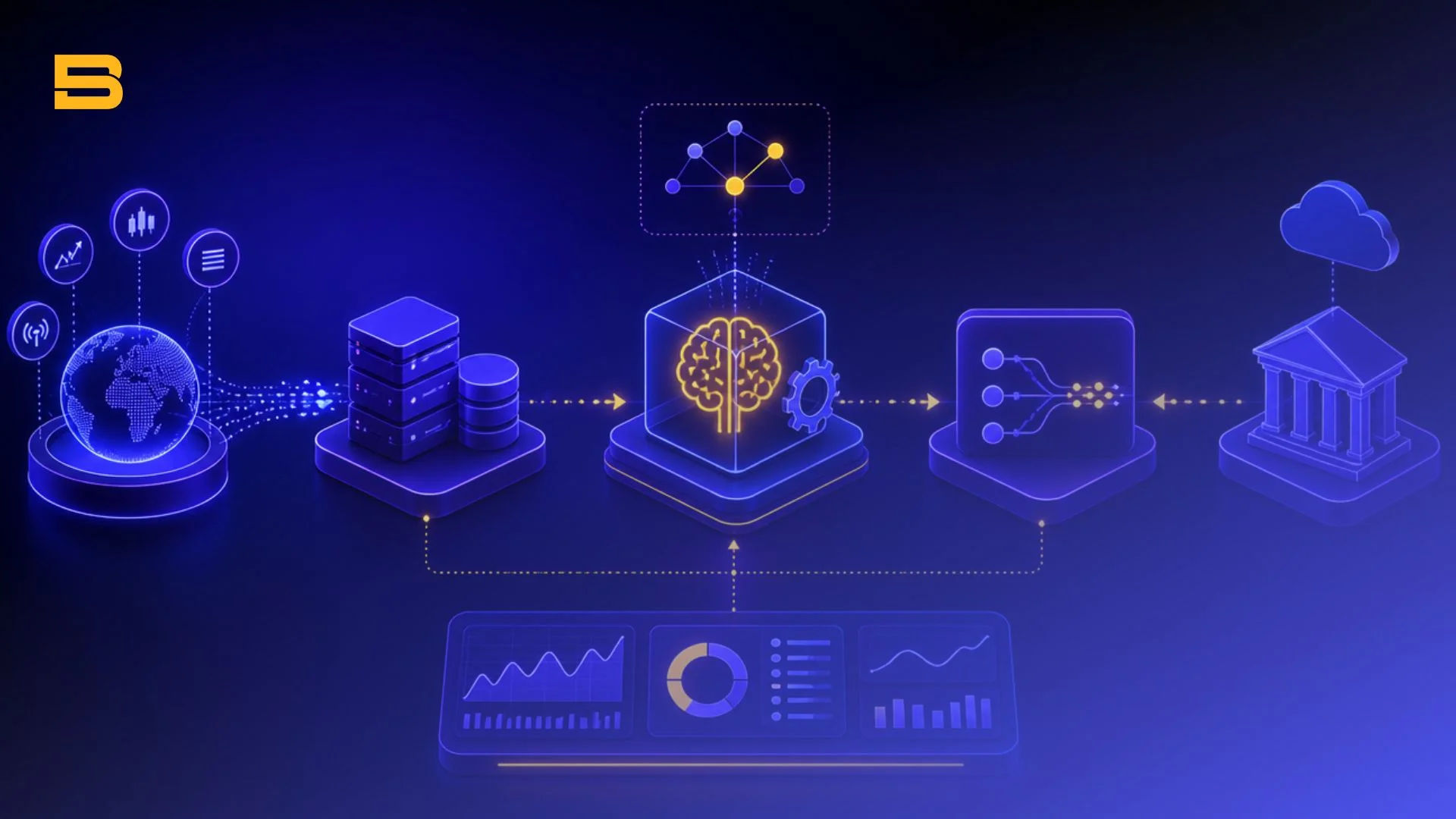
To understand how these systems operate in practice, consider the structural pipeline through which every trade flows:
- Market Data Ingestion: The system streams real-time tick-by-tick or candlestick price feeds directly from the broker's liquidity network.
- Signal Generation: The system evaluates incoming data against programmed technical logic—such as a moving average crossover or a breakout condition—to generate a buy or sell signal.
- Risk & Margin Validation: Before order transmission, automated risk parameters check current account equity, open margin, maximum allowable lot size, and total portfolio drawdown limits.
- Order Routing via API: Once validated, the system sends structured instructions through an Application Programming Interface (API) to the broker's server for order execution.
- Position Management: The system continuously monitors open trades, adjusting trailing stops or closing positions when exit rules or stop-loss limits are reached.
By removing manual trade entry, automated systems eliminate psychological pitfalls such as hesitation, revenge trading, and emotional over-leveraging. However, complete automation demands strict operational oversight and reliable technical infrastructure.
Automated Forex Trading vs. Other Asset Classes
Automated forex trading operates within a continuous 24-hour market structure, benefiting from deep liquidity across major currency pairs like EUR/USD or GBP/USD. This uninterrupted market structure minimizes price gaps between daily trading sessions, providing a favorable environment for technical strategies like trend-following and grid trading.
In contrast, automated stock trading must account for daily market opens and closes, overnight gap risks, and exchange-mandated price limits. Cryptocurrency automation operates 24/7 across fragmented, decentralized exchanges, but trading bots must contend with extreme volatility, wider bid-ask spreads during market shifts, and exchange API rate limits that can restrict order throughput during heavy trading volumes.
Key Components Of Automated Trading Software
Building or deploying an automated trading software setup requires three primary operational modules working together seamlessly:
- The Strategy Engine: The core mathematical program that holds your trading logic, entry conditions, and target parameters.
- The Execution Bridge: The software gateway connecting your analytical platform (such as MetaTrader, cTrader, or custom Python environments) directly to your broker's order router.
- The Risk & Margin Guard: Hard-coded capital safety rules that sit above your strategy rules, automatically halting trade execution if account drawdowns cross pre-set safety thresholds.
Infrastructure Requirements: APIs, Webhooks, and VPS Hosting
Running automated software from a home computer introduces operational vulnerabilities. Local internet outages, power interruptions, software updates, or operating system crashes can leave open positions unmanaged during volatile market moves.
To establish high execution reliability, institutional and serious retail traders rely on three infrastructure components:
- Trading APIs: Application Programming Interfaces allow trading software to communicate directly with broker infrastructure, minimizing execution latency.
- Webhooks: Automated event triggers that allow third-party charting platforms (such as TradingView) to push instant execution signals straight to an execution bridge or broker account.
- Virtual Private Servers (VPS): A dedicated VPS hosts your automated trading platform inside a secure data center near your broker's execution servers. Operating 24/7 with redundant power supplies and backup internet connections, a Virtual Private Server (VPS) reduces execution latency to low single-digit milliseconds while insulating your system from local desktop outages.
Types Of Automated Trading Tools: Bots, Signals, and EAs
The landscape of automated trading tools ranges from off-the-shelf software to custom quantitative algorithms:
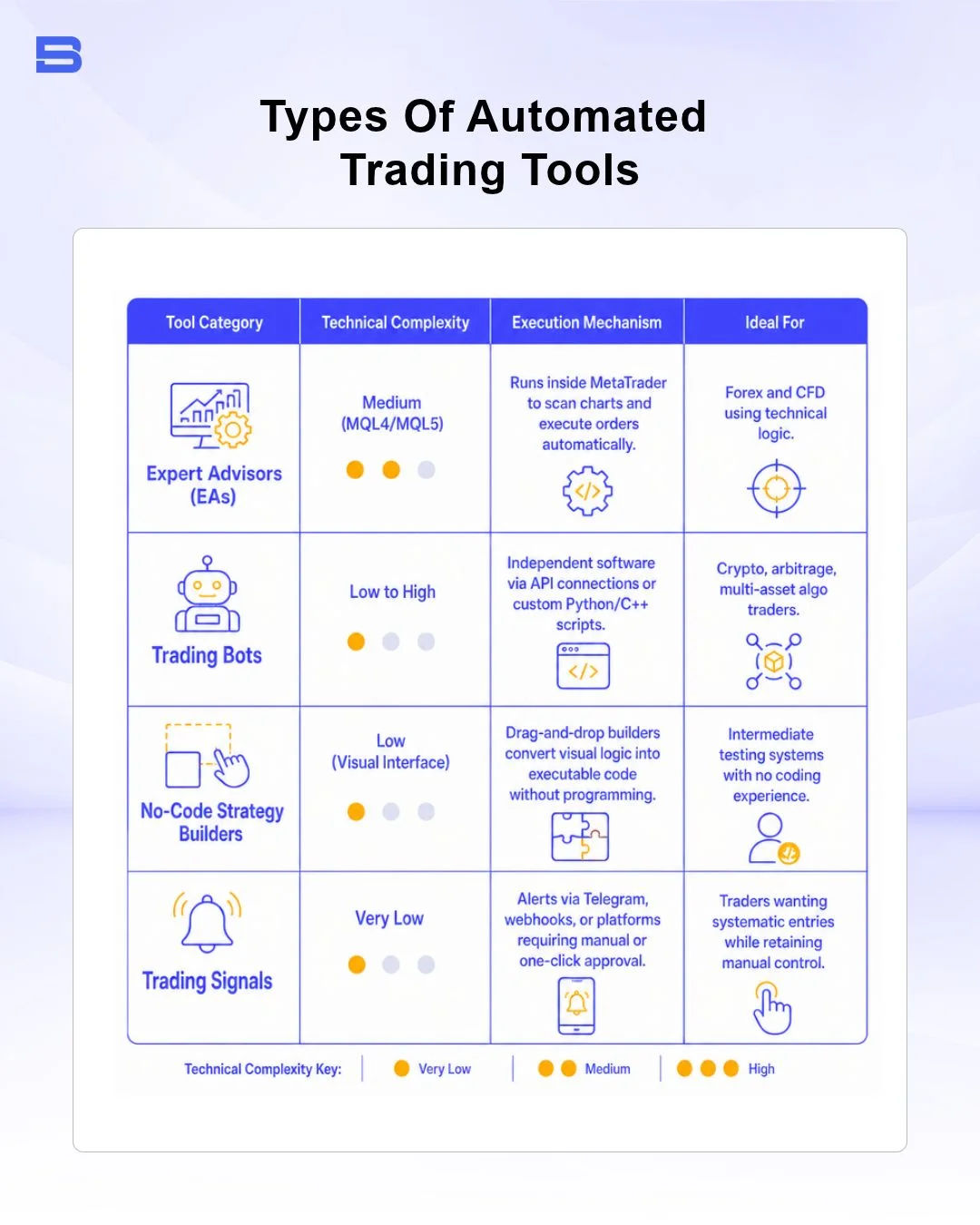
A pre-built expert advisor or third-party trading bot can execute rules quickly, but using third-party code without understanding its underlying risk logic can expose accounts to hidden drawdown risks.
Automated Trading vs. Copy Trading: Key Differences
While both approaches automate trade placement, their underlying execution models, operational dependencies, and control structures differ significantly.
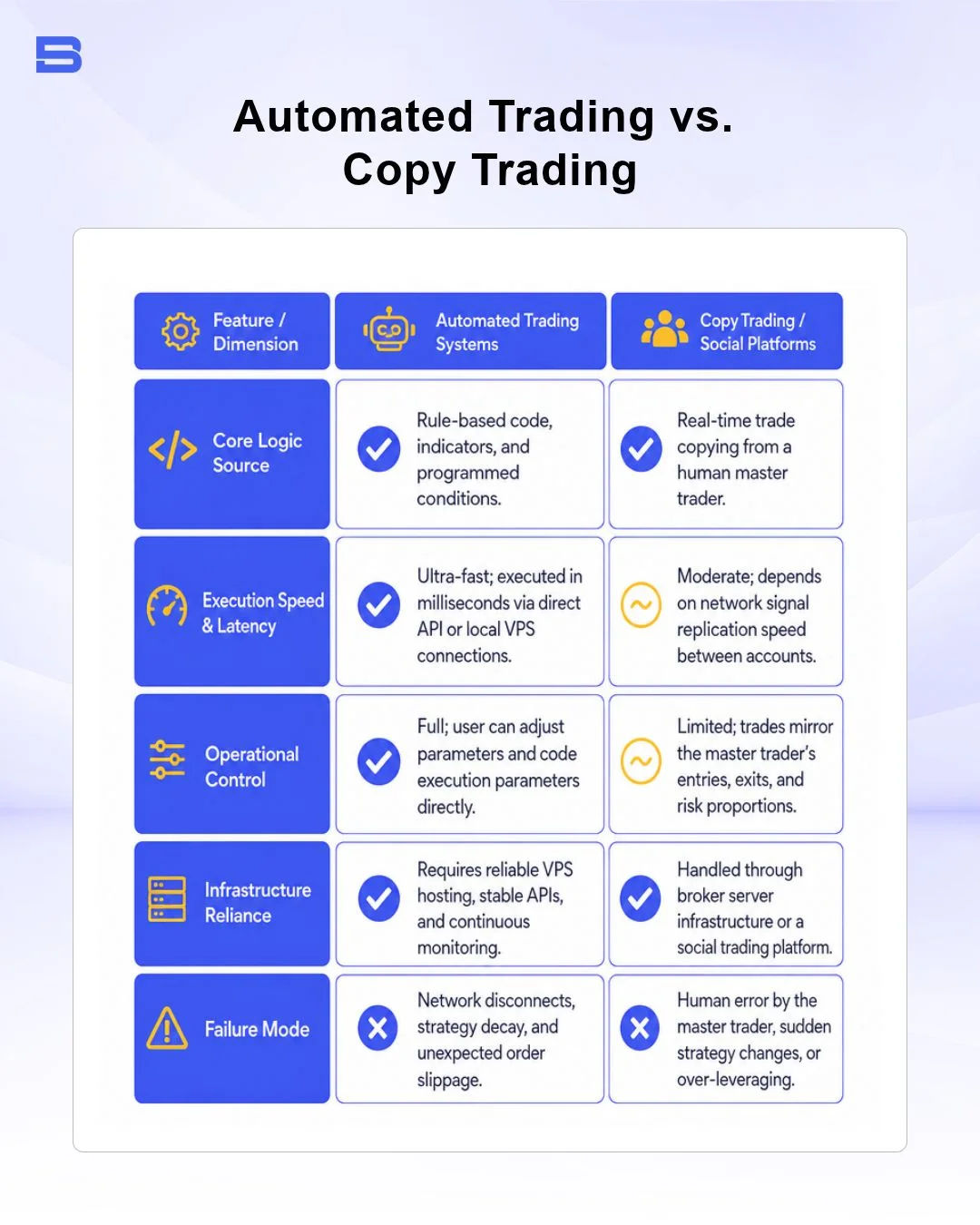
Understanding these differences helps traders choose the execution model that best matches their technical expertise, time availability, and risk tolerance. Readers looking for a social approach can review our guide on what copy trading is.
Systemic Risks, Slippage, and Technical Failures In Automated Trading
Automated execution removes human emotion, but it introduces technical vulnerabilities that require active risk management. Relying entirely on automated systems without human oversight can lead to unexpected capital losses.
- Slippage and Latency Arbitrage: During high-impact macroeconomic announcements (such as US Nonfarm Payrolls or Central Bank interest rate decisions), order books experience sudden liquidity drops. An automated market order sent during these events may fill many pips away from the intended price, significantly worsening execution costs.
- API and Network Disconnects: If a local server or API session drops while an unmanaged position is open, protective stop orders hosted client-side may fail to execute, leaving the position exposed to market moves.
- Strategy Decay: Quantitative rules designed for a trending market environment often underperform when the market transitions into a choppy range. Without ongoing performance monitoring, an unadjusted algorithm can experience compounding losses as market conditions change.
Consider a practical scenario: A trader runs an automated algorithm with a 1-lot position on EUR/USD, using 30:1 leverage. During a major economic release, the spread widens from 1 pip to 12 pips, and order execution experiences 10 pips of negative slippage. Instead of taking the intended 15-pip ($150) stop loss, the trade fills at a 25-pip ($250) loss—a 66% unexpected increase in trade risk caused entirely by liquidity gaps and execution latency.
Backtesting, Optimization, and Curve-Fitting Risks
Before launching an algorithm with real capital, backtesting historical market data helps evaluate its risk parameters. However, backtesting carries a significant trap known as over-optimization or curve fitting.
Curve fitting occurs when a trader tweaks strategy variables—such as moving average periods or stop distances—to produce an impressive backtest on historical data. Because the strategy has been tailored to past market noise, it frequently fails when encountering live price action.
To reduce curve-fitting risks, traders should use out-of-sample forward testing and paper trading. By running the strategy on unseen data or in a simulated live environment over several months, you can confirm whether its performance holds up in real-time market conditions before committing live capital.
Conclusion
Automated trading is a discipline-enforcing execution tool rather than a set-and-forget solution for passive returns. While code-based rules eliminate emotional hesitation and accelerate execution speed, they substitute psychological discipline with technical oversight requirements.
Long-term success with quantitative automation requires robust infrastructure, realistic backtesting methods, and continuous performance tracking to manage operational and systemic risks effectively.
- Proprietary Trading Explained: What It Is and Its Key Benefits
- TradingView: Features, Broker Integration, and Strategies
- cTrader: How It Works and How It Compares
- What Is a VPS for Trading and Do You Need One?
- Thinkorswim Trading: Features, Tools, and Availability
- Trading Platform Malaysia: What to Look For
- Bursa Anywhere: A Guide to Managing Shares in Malaysia
- What Is Forex Factory and How Do Traders Use It?
- Delta App: Multi-Asset Portfolio Tracker for Crypto & Stocks
- What Is Trading Central and How to Use It?
- What Is Simply Wall St and How to Use It
- What Is Seeking Alpha and How to Use It
- What Is MarketWatch and How to Use It
- What Is Barchart and How to Use It
- Google Finance Explained: How to Track Stocks and Markets
- What Is Finviz and How to Use It for Stock Screening
- What Is Yahoo Finance and How to Use It
- What Is TradingEconomics and How to Use It
- StockCharts Review 2026: Features, Pricing, and Performance
- What Is ZuluTrade and How Does Copy Trading Work on It?
- What Is Investing.com and How to Use It?
- What Is Myfxbook and How Do Traders Use It?
- What Is CoinGecko? A Complete Guide to Crypto Data Tracking
- What Is CoinMarketCap and How to Use It
- What Is CoinStats and How to Use It for Portfolio Tracking
- What Is Sharesight and How to Use It for Portfolio Tracking
- What Is Personal Capital and How to Use It
- What Is a Low Spread Broker? How It Affects Your Trading
- What Is an Introducing Broker (IB) in Forex?
- What Is Social Trading? How Copy Trading Platforms Work
- What Is a PAMM Account? How Managed Forex Accounts Work
- What Is a Margin Account and How Does Margin Trading Work?
- What Are Trading Signals and How Do They Work?
- What Is an Expert Advisor (EA) in Forex Trading?
Disclaimer: The content on this page is intended for educational and informational purposes only. It does not constitute financial, investment, tax, or legal advice, and should not be interpreted as a recommendation to buy, sell, or hold any financial instrument or asset. Trading and investing involve significant risk, including the possible loss of your entire capital. Products such as forex, CFDs, and cryptocurrencies carry additional risks due to leverage, high volatility, and limited regulatory protection in some jurisdictions. Past performance of any financial instrument does not guarantee future results. Any market views, forecasts, or opinions expressed are those of the author at the time of writing and may not reflect current market conditions. Platform features, fees, and regulatory status are subject to change — always verify information directly with the relevant provider or regulator before making any financial decision. BrokerSpecs may receive compensation from third parties featured on this site. Always conduct your own due diligence and consider seeking advice from a licensed financial professional before investing. Portions of this article were prepared with the assistance of AI tools and reviewed by our editorial team before publication.