


Related Tags
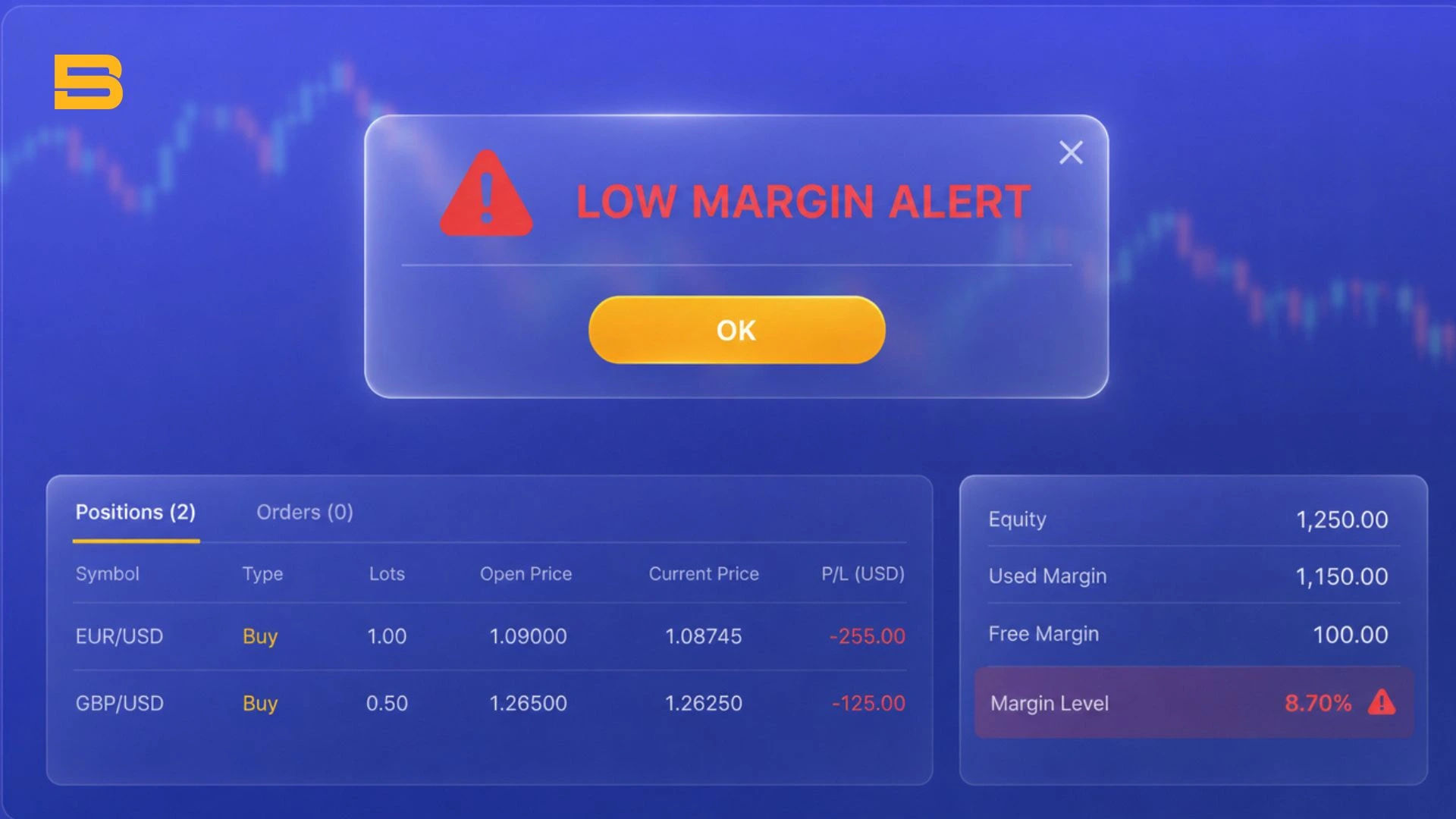
You open your trading platform, expecting to monitor an active position, only to find a bold, urgent notification flashing across your screen. Your account equity has dropped below the required threshold, and your broker demands immediate action: deposit more capital or close your open positions at a severe loss.
A margin call happens when your account equity drops below your broker's required maintenance margin level, and it typically triggers a demand to deposit more funds or risk having your open positions forcibly closed.
This scenario is every leveraged trader's nightmare—a margin call. Understanding how margin calls work, why they occur, and how to protect your portfolio from them is fundamental to surviving in leveraged financial markets.
How Margin Trading Works
Before understanding a margin call, you must first grasp the concept of what is margin trading. When you trade on margin, you are effectively using borrowed capital from your broker to open larger positions than your cash balance would normally allow.
Margin acts as a good-faith deposit or collateral required to open and maintain a position. It is not a fee, but rather a portion of your account balance set aside by the broker to cover potential losses.
Key terms every leveraged trader should know include:
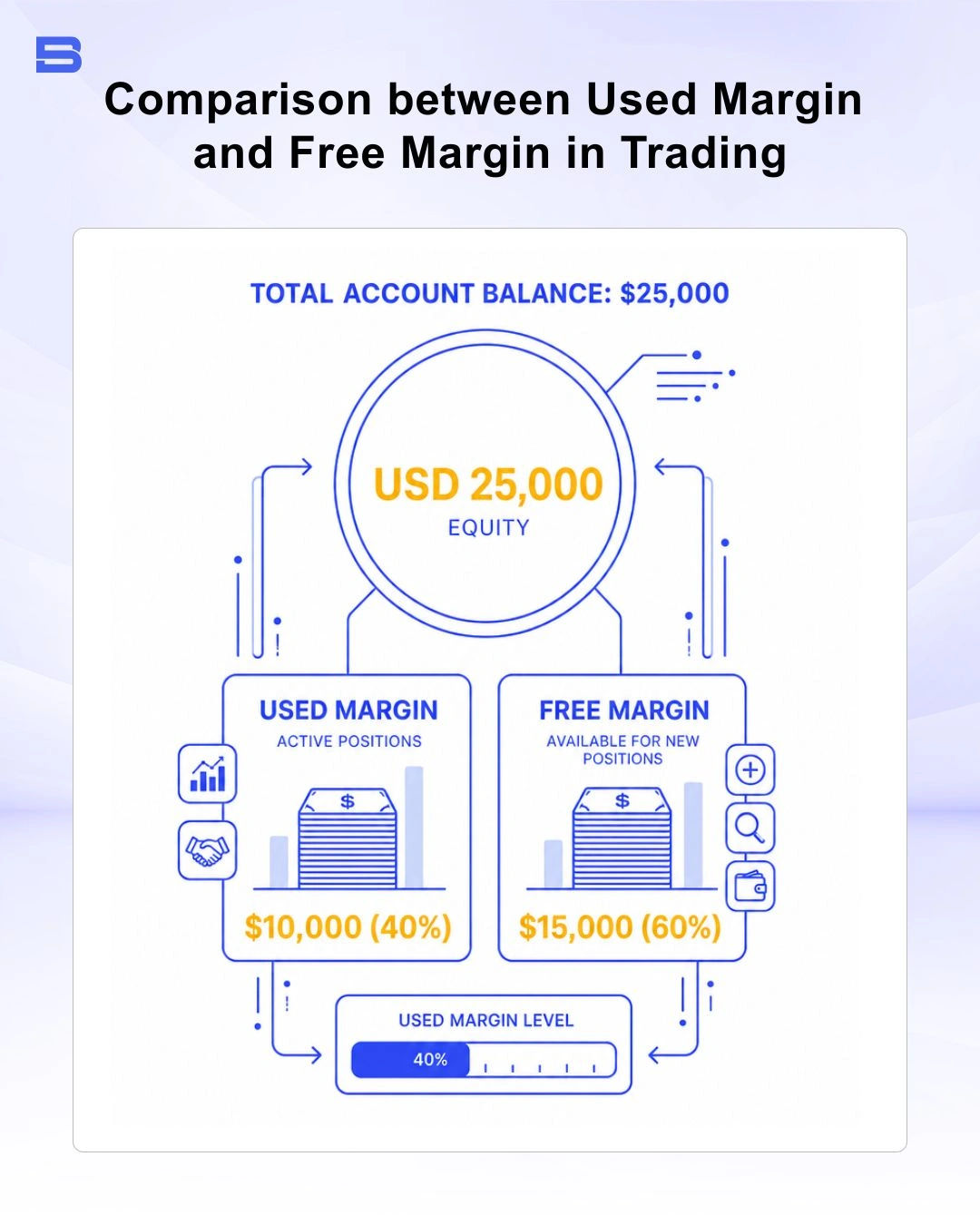
- Initial Margin: The minimum amount of capital required to open a new leveraged position.
- Maintenance Margin: The minimum amount of equity you must maintain in your account to keep open positions active.
- Equity: The real-time value of your account, calculated as your balance plus or minus open floating profit or loss.
- Free Margin: The remaining capital available to open new positions or absorb market movements.
If your market positions move in your favor, leverage magnifies your profits. However, if the market moves against you, your floating losses directly reduce your account equity.
What Triggers a Margin Call?
A margin call occurs when your account equity falls below the broker’s margin maintenance level. This typically happens when high leverage is combined with sharp, adverse market moves.
Margin Level (%) = (Account Equity / Used Margin) * 100
Brokers set specific threshold percentages for margin calls. When your Margin Level drops to or below this designated threshold (for instance, 100% or 50% depending on the asset class and regional regulation), a trigger is set off.
For retail CFD (contract for differences) traders, the FCA (UK) Financial Conduct Authority and ESMA (EU/EEA) (European Securities and Markets Authority) require a broadly similar minimum margin close-out threshold under their retail CFD product intervention rules, though neither regulator mandates a separate 'margin call' notification level. See the FCA's COBS (Conduct of Business Sourcebook) 22.5 and ESMA's CFD measures for full requirements.
Common triggers include:
- Over-leveraging: Taking on positions that are too large relative to your total account size, leaving little room for price fluctuations.
- Ignoring Market Volatility: Economic news releases, geopolitical events, or sudden market gaps can rapidly drive prices against your position.
- Failing to Cut Losses: Holding onto losing trades in the hope that the market will reverse often leads to compounding floating losses that drain account equity. Repeated losses that aren't cut early can quickly turn into a significant drawdown, eroding your account equity well before a margin call is ever triggered.
A Real-World Example: Anatomy of a Margin Call
To see how the numbers play out in practice, consider a practical scenario involving forex or stock trading.
The Setup
- Account Balance: $5,000
- Asset Price: Asset X trading at $100 per share/unit
- Position Size: 1,000 units (Total Position Value = $100,000)
- Leverage Used: 20:1
- Initial Margin Required: $5,000 (100% of your initial account balance)
- Maintenance Margin Threshold: $3,000 (or 60% of initial margin requirement)
The Calculation & Result
Imagine the market price drops by just 3% to $97 per share.
- Unrealized Loss: 1,000 units × $3 loss = -$3,000
- New Account Equity: $5,000 (Initial Balance) - $3,000 (Floating Loss) = $2,000
- Threshold Check: Your current equity ($2,000) has now dropped below the $3,000 maintenance margin requirement.
What It Means for You
Because your remaining account equity is less than the broker's maintenance requirement, your account triggers a margin call. If you do not deposit $1,000 in additional funds immediately to bring equity back to $3,000, your broker will begin liquidating your positions—often starting with the largest losing trade—to prevent your account balance from going negative.
What Happens During a Margin Call?
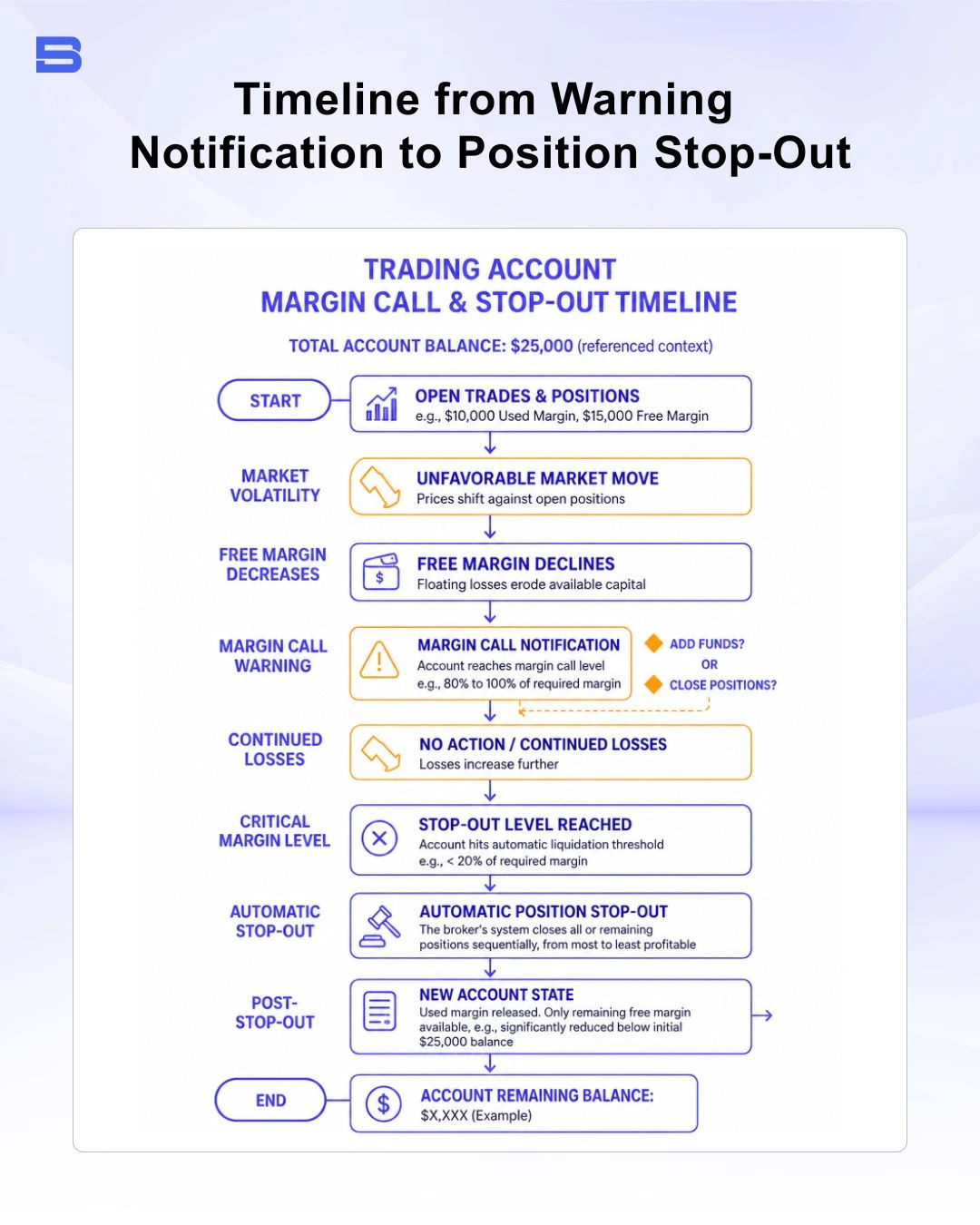
When a margin call is issued, your broker expects immediate action to resolve the margin deficit. In modern electronic trading, this process follows a strict hierarchy:
- Broker Notification: You receive an automated warning via email, SMS (Short Message Service) text, or platform pop-up indicating that your account margin level is critical.
- Deposit Window: You are given a short window (which can be seconds during extreme volatility, or up to a day in traditional stock markets) to deposit extra funds or close positions manually.
- Automatic Liquidation (Stop-Out): If you fail to add capital or if the market continues to fall rapidly, the system triggers a stop-out. The broker forcibly closes your open positions at current prevailing market rates to restore your account margin.
How to Avoid a Margin Call
Protecting your portfolio from forced liquidations requires rigorous discipline and consistent risk management strategies.
- Use Stop-Loss Orders: Many traders choose to set a stop-loss order on each position, since it can help close a trade at a pre-determined risk limit before an account approaches maintenance margin levels — the right level will depend on your own strategy and risk tolerance.
- Manage Leverage Wisely: Many traders find that lowering their leverage ratio helps. While higher leverage increases maximum exposure, lower leverage can give an account a larger safety buffer against market swings — the right ratio depends on your own risk tolerance and strategy.
- Keep Free Margin Adequate: Some traders choose not to utilize 100% of their balance as margin, since maintaining a healthy ratio of free margin can help absorb unexpected market spikes — how much to keep in reserve depends on individual circumstances.
- Monitor Trades actively: Keeping track of open positions, especially around major macroeconomic announcements or central bank interest rate decisions, can help traders react before volatility affects their margin level.
Key Takeaways: Mastering Margin Trading
A margin call is not an unpredictable act of bad luck—it is a direct financial warning that your position size and leverage exceed your account's capacity to handle risk. By mastering margin mechanics, keeping risk parameters disciplined, and consistently protecting trades with stop-loss orders, you can ensure that a margin call remains a theoretical concept rather than a costly practical lesson.
- What Is Trading and How Does Trading Work?
- Trading Fundamentals: A Guide for Beginners
- Trading vs. Investing: What Are the Key Differences?
- Trading Terms and Terminologies Every Beginner Should Know
- Common Trading Mistakes Beginners Make and How to Avoid
- Understanding Risk and Reward in Trading: A Complete Guide
- Guide to the Different Types of Financial Markets
- Investment Basics: Definition, Strategies, and How to Invest
- Benefits of Investing: Financial Growth and Security
- What Is Swing Trading? A Practical Guide For Beginners
- What Is Spot Trading? A Guide for Beginners
- What Are Futures in Trading? A Guide for Beginners
- Understanding Bull Markets: Growth & Strategy
- How to Read a Candlestick Chart: A Guide for Beginners
- Is Trading Gambling? The Truth About Risk
- Pip in Forex: How It Works & How to Calculate It
- What Is the Bid-Ask Spread in Trading? A Guide for Beginners
- What Is a Margin Call? A Guide for Beginners
- Market Volatility Explained: What It Is and How to Trade It
- Drawdown in Trading: Meaning, Math, and Risk
- Understanding Slippage in Trading: Causes and Control
- Forex Lot Size Explained: Standard, Mini & Micro
- Trailing Stop vs Stop Loss: Essential Risk Strategy
- How Asset Allocation Works: Strategies Explained
- Understanding Market Trading Hours & Sessions
- Market Makers Explained: A Trader's Guide
- Portfolio Diversification: A Strategy Guide
- Capital Gains Explained: How Investment Taxes Work
- Stock Market Circuit Breakers: How Trading Halts Work
- What Is an IPO? How Initial Public Offerings Work
- What Is a Secondary Market? A Complete Guide
- What Is a Stock Exchange? Functions and Overview Explained
- Understanding Ticker Symbols: A Market Guide
- How Clearing Houses Work in Financial Markets
- Stock Market After Labor Day: Trends and What To Expect
Disclaimer: The content on this page is intended for educational and informational purposes only. It does not constitute financial, investment, tax, or legal advice, and should not be interpreted as a recommendation to buy, sell, or hold any financial instrument or asset. Trading and investing involve significant risk, including the possible loss of your entire capital. Products such as forex, CFDs, and cryptocurrencies carry additional risks due to leverage, high volatility, and limited regulatory protection in some jurisdictions. Past performance of any financial instrument does not guarantee future results. Any market views, forecasts, or opinions expressed are those of the author at the time of writing and may not reflect current market conditions. Platform features, fees, and regulatory status are subject to change — always verify information directly with the relevant provider or regulator before making any financial decision. BrokerSpecs may receive compensation from third parties featured on this site. Always conduct your own due diligence and consider seeking advice from a licensed financial professional before investing. Portions of this article were prepared with the assistance of AI tools and reviewed by our editorial team before publication.