


Related Tags
As summer draws to a close, Wall Street experiences a distinct shift in environment. Trading desks fill back up as institutional participants return from the holiday, instantly altering market dynamics. If you're navigating autumn financial conditions, understanding what happens to the stock market after Labor Day is vital for adjusting your portfolio exposure and managing risk.
Historically, post-holiday trading brings a sudden expansion in trading volume, shifting liquidity patterns, and an increase in seasonal market volatility. Below is an in-depth breakdown of institutional mechanics, historical index performance data, and key macroeconomic triggers that shape the financial markets following Labor Day.
What Happens to the Market After Labor Day?
The post-Labor Day transition marks the official end of the summer trading lull. During July and August, overall trading volume routinely contracts as institutional fund managers and institutional desks take vacation. This lower liquidity environment often leads to range-bound price action or exaggerated price swings on low volume.
Once Labor Day passes, institutional participation returns to baseline levels. Wall Street institutions rebalance portfolios, allocate accumulated capital, and position themselves for the final quarter of the year. This transition changes the structural mechanics of order execution and volatility.
How Institutional Volume Returns After the Holiday
- Trading Volume Expansion: Overall market volume rebounds sharply, increasing price liquidity across equities, fixed income, and derivatives.
- Spread Tightening: Higher order book depth generally reduces bid-ask spreads for major stock indices and mega-cap shares during normal trading hours.
- Price Discovery Acceleration: Institutional block trades and portfolio rebalancing drive clearer directional price trends, moving markets out of summer consolidation phases.
Understanding Volatility Spikes in September
As market after Labor Day activity increases, returning institutional investors can contribute to greater liquidity and sharper price movements. This period may also bring higher volatility as fund managers reassess earnings expectations, respond to economic data, and adjust hedging strategies amid changing macroeconomic risks.
Historical Stock Market Performance After Labor Day
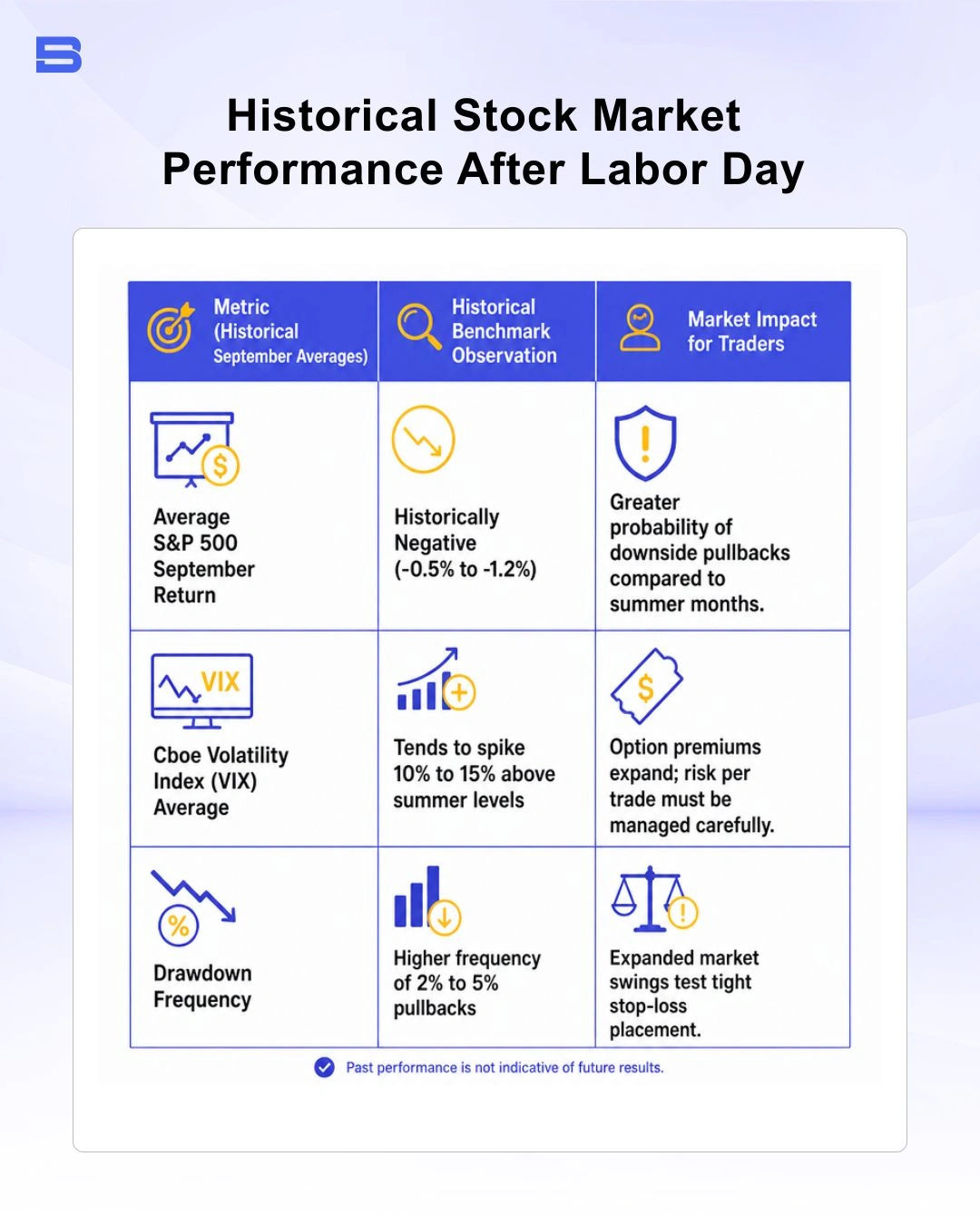
When examining historical stock market performance after Labor Day, September has historically been the weakest month of the year for the S&P 500, with the index averaging a -1.16% monthly return since 1926. However, this is a historical seasonal pattern and does not guarantee negative performance in any particular September.
While past market movements never guarantee future price outcomes, historical averages offer valuable perspective on seasonal distribution risks. Guidance published by regulatory authorities like the US Securities and Exchange Commission (SEC) emphasizes that past performance data must always be interpreted as statistical context rather than a predictive certainty.
Seasonal Risk Note: Historical statistics represent multi-decade averages, not deterministic rules. Seasonal trends can be completely overridden by unexpected geopolitical events, central bank shifts, or corporate earnings developments.
Seasonal Market Insights and Post-Labor Day Volatility
Navigating post-Labor Day trading requires careful monitoring of the macroeconomic calendar. Autumn brings major economic data releases and monetary policy decisions that serve as primary catalysts for market direction.
Key Economic Indicators to Monitor After Labor Day
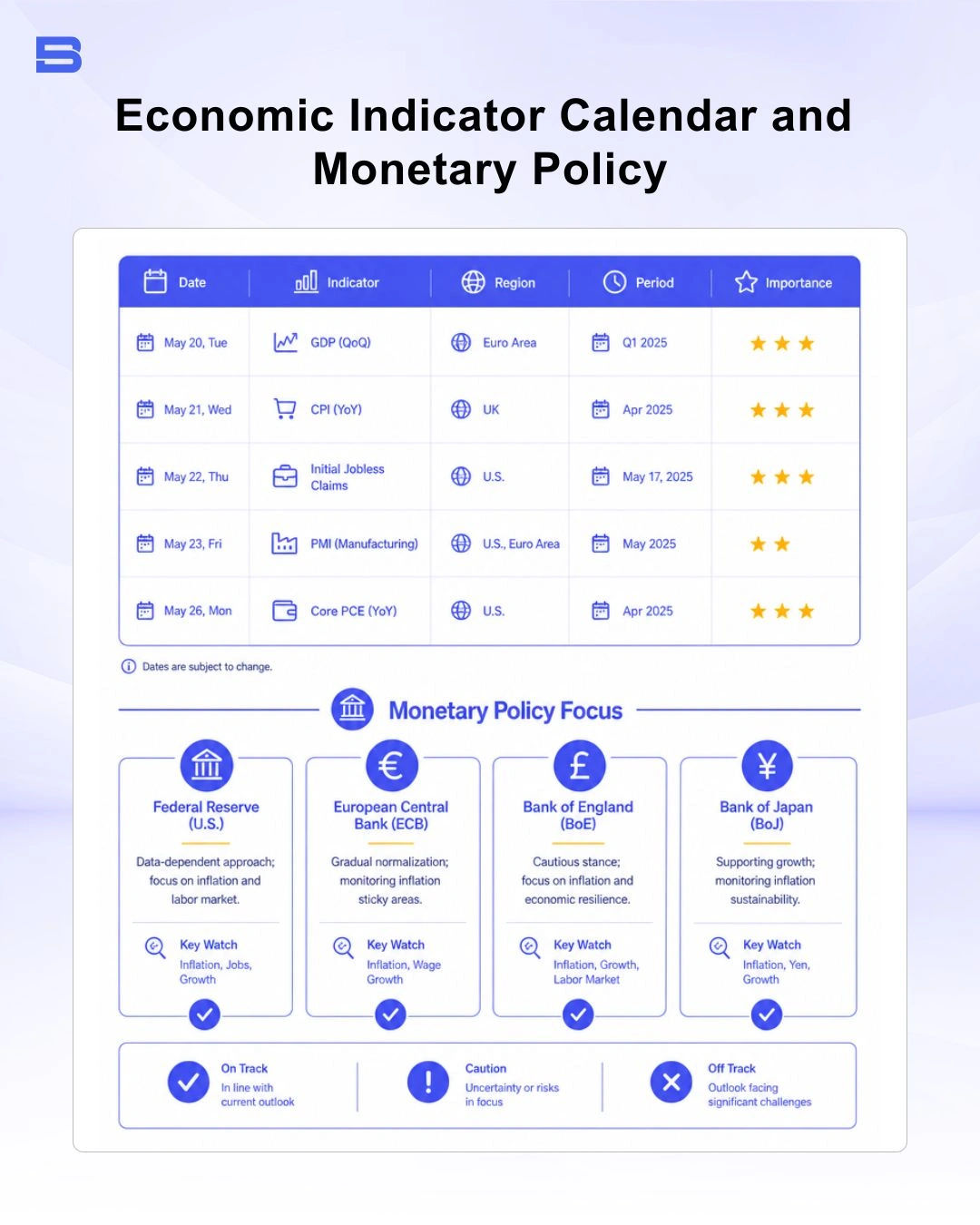
Traders tracking economic indicators after Labor Day should pay close attention to high-impact economic releases. Key metrics include:
- Employment Data: US Nonfarm Payrolls (NFP) and unemployment metrics, which outline labor market resilience.
- Manufacturing & Services Data: Purchasing Managers' Index (PMI) figures indicating broader economic growth or contraction.
Inflation Data and Post-Holiday Catalysts
Inflation metrics take center stage in September. Regulatory oversight frameworks, such as those established by the Financial Conduct Authority (FCA), frequently remind retail participants that economic news events spark abrupt volatility spikes and market slippage.
Releases such as the US CPI (Consumer Price Index) report provide crucial insights into pricing pressures. Higher-than-expected CPI readings can trigger immediate rate hike expectations, while lower readings may fuel equity rallies.
Impact of Central Bank Rate Decisions
Immediately after Labor Day, central bank meetings can become a key focus for traders. The market after Labor Day may react strongly to the Federal Open Market Committee (FOMC) meeting schedule and other major policy decisions. Forward guidance on interest rates, balance-sheet policies, and economic growth can influence bond yields, currency valuations, and global asset prices.
Practical Risk Management Strategies for Autumn Trading
Given the potential for increased volatility in the market after Labor Day, you'll want proactive risk management to protect your trading capital. As markets transition from quieter summer conditions to potentially more active autumn sessions, you may need to adjust your position sizes, order placement, and stop-loss levels to manage greater price fluctuations.
Practical Position Sizing Adjustments
Adjusting risk parameters ahead of volatile autumn catalysts prevents catastrophic portfolio drawdowns.
- Worked Scenario: A trader managing a $10,000 equity portfolio normally risks 2% ($200) per trade during low-volatility summer conditions. Facing expanded average true range (ATR) and major September CPI releases, the trader reduces position risk to 1% ($100) per trade. By widening the physical stop-loss distance to accommodate higher price fluctuations while reducing total share count, the trader keeps total monetary risk capped at $100 without getting prematurely stopped out by short-term market noise.
Post-Holiday Risk Checklist
- Reduce Leverage: Lower position leverage to withstand wider daily trading ranges.
- Widen Stop-Loss Distance: Place stop-loss orders outside obvious short-term noise boundaries to prevent premature stop-outs.
- Avoid Front-Running Data: Refrain from placing maximum-size directional bets immediately before CPI or FOMC announcements.
- Maintain Cash Reserves: Keep sufficient unallocated margin to handle unexpected gap risk or volatility spikes.
Conclusion
The market after Labor Day presents a dynamic shift characterized by expanding institutional volume, heightened price liquidity, and historical volatility increases. While September has historically presented seasonal headwinds for equity markets, it also provides structured trading opportunities for those prepared to navigate macroeconomic catalysts.
By monitoring key economic indicators and adhering to disciplined risk management, you can successfully navigate the autumn trading landscape.
- What Is Trading and How Does Trading Work?
- Trading Fundamentals: A Guide for Beginners
- Trading vs. Investing: What Are the Key Differences?
- Trading Terms and Terminologies Every Beginner Should Know
- Common Trading Mistakes Beginners Make and How to Avoid
- Understanding Risk and Reward in Trading: A Complete Guide
- Guide to the Different Types of Financial Markets
- Investment Basics: Definition, Strategies, and How to Invest
- Benefits of Investing: Financial Growth and Security
- What Is Swing Trading? A Practical Guide For Beginners
- What Is Spot Trading? A Guide for Beginners
- What Are Futures in Trading? A Guide for Beginners
- Understanding Bull Markets: Growth & Strategy
- How to Read a Candlestick Chart: A Guide for Beginners
- Is Trading Gambling? The Truth About Risk
- Pip in Forex: How It Works & How to Calculate It
- What Is the Bid-Ask Spread in Trading? A Guide for Beginners
- What Is a Margin Call? A Guide for Beginners
- Market Volatility Explained: What It Is and How to Trade It
- Drawdown in Trading: Meaning, Math, and Risk
- Understanding Slippage in Trading: Causes and Control
- Forex Lot Size Explained: Standard, Mini & Micro
- Trailing Stop vs Stop Loss: Essential Risk Strategy
- How Asset Allocation Works: Strategies Explained
- Understanding Market Trading Hours & Sessions
- Market Makers Explained: A Trader's Guide
- Portfolio Diversification: A Strategy Guide
- Capital Gains Explained: How Investment Taxes Work
- Stock Market Circuit Breakers: How Trading Halts Work
- What Is an IPO? How Initial Public Offerings Work
- What Is a Secondary Market? A Complete Guide
- What Is a Stock Exchange? Functions and Overview Explained
- Understanding Ticker Symbols: A Market Guide
- How Clearing Houses Work in Financial Markets
- Stock Market After Labor Day: Trends and What To Expect
Disclaimer: The content on this page is intended for educational and informational purposes only. It does not constitute financial, investment, tax, or legal advice, and should not be interpreted as a recommendation to buy, sell, or hold any financial instrument or asset. Trading and investing involve significant risk, including the possible loss of your entire capital. Products such as forex, CFDs, and cryptocurrencies carry additional risks due to leverage, high volatility, and limited regulatory protection in some jurisdictions. Past performance of any financial instrument does not guarantee future results. Any market views, forecasts, or opinions expressed are those of the author at the time of writing and may not reflect current market conditions. Platform features, fees, and regulatory status are subject to change — always verify information directly with the relevant provider or regulator before making any financial decision. BrokerSpecs may receive compensation from third parties featured on this site. Always conduct your own due diligence and consider seeking advice from a licensed financial professional before investing. Portions of this article were prepared with the assistance of AI tools and reviewed by our editorial team before publication.