


- What Is Trading and How Does Trading Work?
- Trading Fundamentals: A Guide for Beginners
- Trading vs. Investing: What Are the Key Differences?
- Trading Terms and Terminologies Every Beginner Should Know
- Common Trading Mistakes Beginners Make and How to Avoid
- Understanding Risk and Reward in Trading: A Complete Guide
- Guide to the Different Types of Financial Markets
- Investment Basics: Definition, Strategies, and How to Invest
- Benefits of Investing: Financial Growth and Security
- What Is Swing Trading? A Practical Guide For Beginners
- What Is Spot Trading? A Guide for Beginners
- What Are Futures in Trading? A Guide for Beginners
- Understanding Bull Markets: Growth & Strategy
- How to Read a Candlestick Chart: A Guide for Beginners
- Is Trading Gambling? The Truth About Risk
- Pip in Forex: How It Works & How to Calculate It
- What Is the Bid-Ask Spread in Trading? A Guide for Beginners
- What Is a Margin Call? A Guide for Beginners
- Market Volatility Explained: What It Is and How to Trade It
- Drawdown in Trading: Meaning, Math, and Risk
- Understanding Slippage in Trading: Causes and Control
- Forex Lot Size Explained: Standard, Mini & Micro
- Trailing Stop vs Stop Loss: Essential Risk Strategy
- How Asset Allocation Works: Strategies Explained
- Understanding Market Trading Hours & Sessions
- Market Makers Explained: A Trader's Guide
- Portfolio Diversification: A Strategy Guide
- Capital Gains Explained: How Investment Taxes Work
- Stock Market Circuit Breakers: How Trading Halts Work
- What Is an IPO? How Initial Public Offerings Work
- What Is a Secondary Market? A Complete Guide
- What Is a Stock Exchange? Functions and Overview Explained
- Understanding Ticker Symbols: A Market Guide
- How Clearing Houses Work in Financial Markets
- Stock Market After Labor Day: Trends and What To Expect
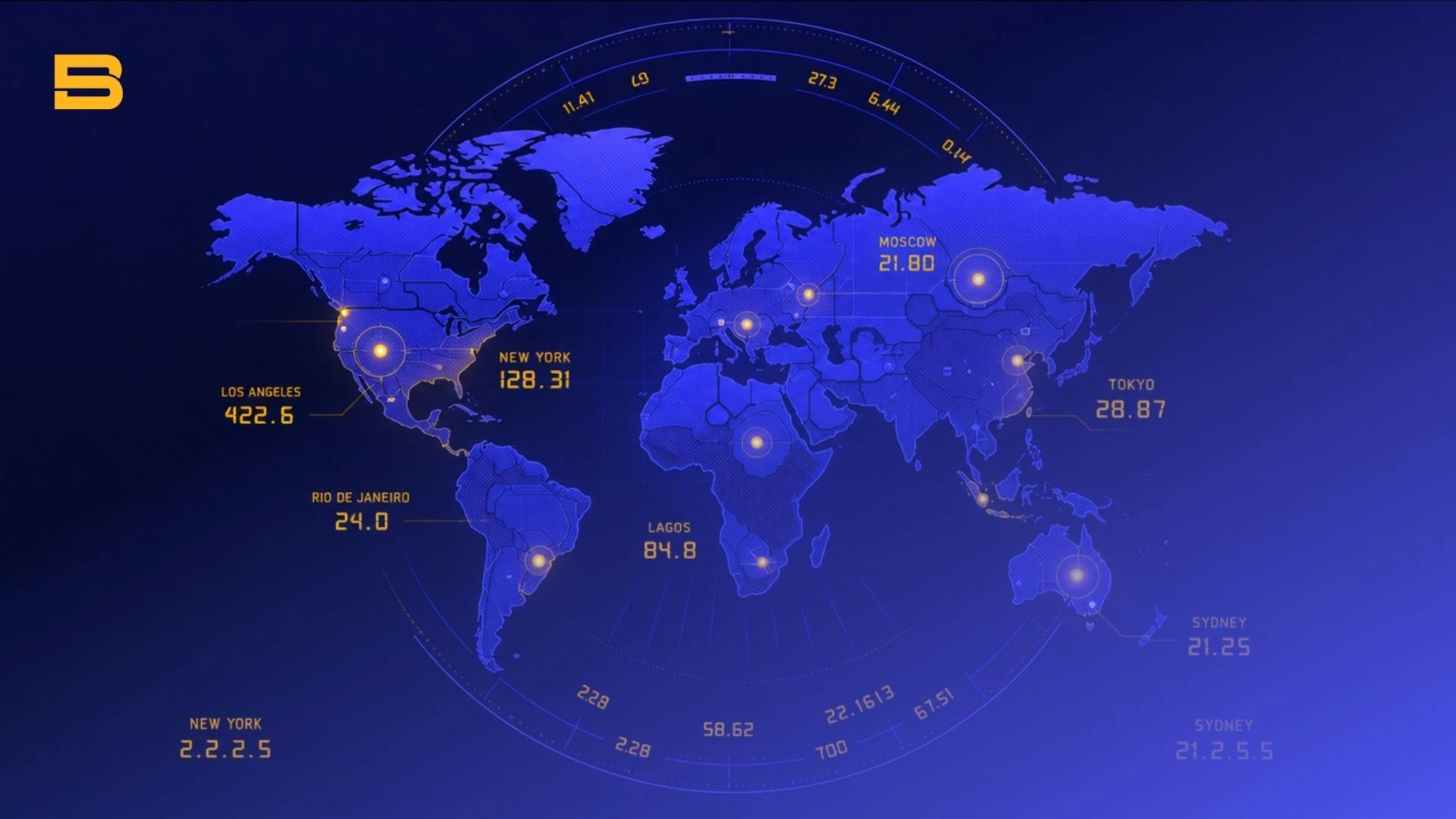
You log into your trading platform on a Tuesday morning, execute a trade based on a clean technical setup, and watch as the market barely moves for hours. Frustrated, you walk away, only to return later to find your trade was suddenly stopped out during a massive spike in market activity. The setup wasn't necessarily wrong—your timing was.
Trading hours refer to the specific time windows — such as the Sydney, Tokyo, London, and New York sessions — during which a given market is actively open, and they directly determine how much liquidity, volatility, and spread cost you'll encounter on any given trade.
In financial markets, volume and price action do not flow evenly throughout the day. Understanding global trading hours and how distinct regional sessions operate is essential for entering trades when liquidity is at its peak and transaction costs are at their lowest.
Understanding Global Market Sessions
Unlike stock exchanges that operate on strict floor schedules, the global foreign exchange market operates 24 hours a day, five days a week. This continuous market is made possible by a decentralized interbank network passing through four major regional financial hubs across different time zones.
The trading week begins on Sunday evening Greenwich Mean Time (GMT) in Australasia and cycles around the globe until closing on Friday evening in New York.
- Sydney Session: Marks the start of the global trading day. While trading volume here is relatively light compared to later sessions, it establishes the initial price baseline for Asian currencies.
- Tokyo Session (Asian Session): Accountable for a significant portion of early daily liquidity. Price action during this period is often dominated by Japanese Yen pairs and news originating from Japan, Australia, and China.
- London Session (European Session): Represents the primary financial engine of the trading day. London accounts for the largest share of global foreign exchange turnover, driving substantial volume across all major currency pairs.
- New York Session (American Session): The final major region to open, with heavy participation from institutional investors and hedge funds, and US economic data releases.
Recognizing which session is active allows you to anticipate whether price movement will be range-bound or dynamic.
The Power of Trading Session Overlaps
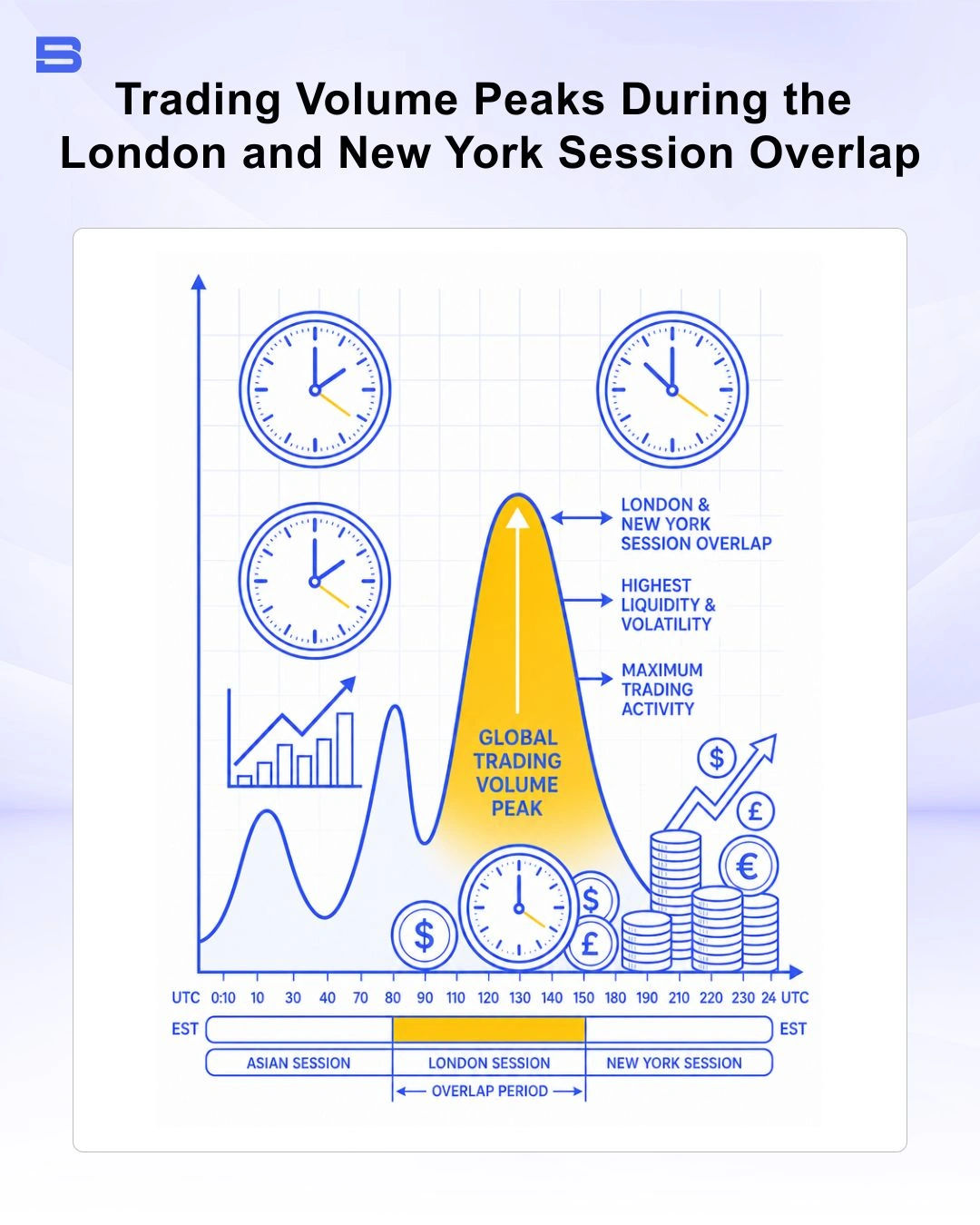
The most dynamic trading opportunities typically occur when two major financial centers operate simultaneously. During these overlapping windows, market participation spikes, bringing higher liquidity, increased price volatility, and narrower bid-ask spreads.
The London-New York Overlap
The overlap between the London and New York sessions represents the most liquid four-hour window of the entire trading day. Because the world’s two largest financial hubs are active simultaneously, this period frequently sees major price expansions, breakouts, and trend continuations.
The Tokyo-London Overlap
Occurring earlier in the day, the overlap between Asia and Europe tends to see a transition in market dynamics. Trends established during Asian trading hours are often tested or broken as European institutional participants enter the market.
Worked Example: Off-Peak vs. Overlap Trading Costs
Consider a trader executing a position on EUR/USD (Euro and US Dollar):
- Setup A (Off-Peak / Late Sydney Session): Low participation results in a widened spread of 2.5 pips (the difference between the buy and sell price, measured in the smallest standard price increment for a currency pair).
- Setup B (London-New York Overlap): Peak participation tightens the spread to 0.2 pips. On the same standard lot, trading costs drop to $2, while average pip volatility increases significantly, offering clearer directional moves.
Takeaway: Trading during peak liquidity overlaps can reduce transaction friction and provide the volatility needed for strategies to reach their targets, but that same volatility also raises the risk of rapid price swings, slippage, and wider stop-outs — so position sizing and risk controls should be adjusted accordingly during these windows.
Stock Market vs. Forex Trading Hours
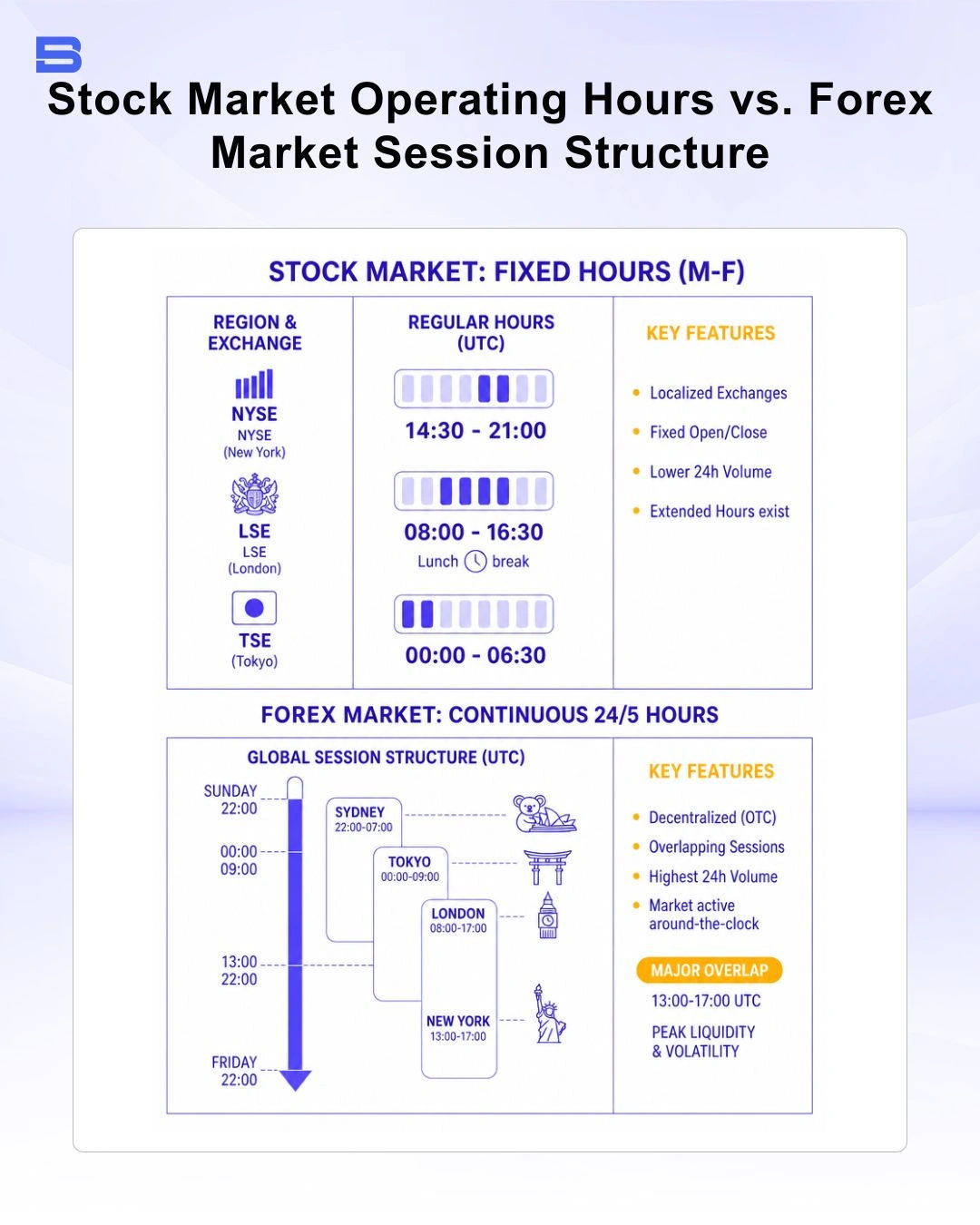
While the forex market flows continuously across borders 24/5, equity markets function on strict centralized schedules. Stock exchanges like the New York Stock Exchange (NYSE) or London Stock Exchange (LSE) open and close at fixed localized times, as shown below:
Exchange Regular Hours UTC (Coordinated Universal Time):
- NYSE (New York): 14:30 – 21:00
- LSE (London): 08:00 – 16:30
- TSE (Tokyo): 00:00 – 06:30
Compare this to the forex market's continuous 24/5 structure, where the London–New York overlap (13:00–17:00 UTC) marks the single highest-liquidity window of the trading day.
Because trading hours differ so significantly between equities and forex, traders switching between the two markets need to rebuild their timing habits from scratch.
Because forex positions can be held overnight, understanding the rollover (or swap) charge applied when a position stays open past the daily cutoff is essential — this cost is separate from the spread and varies by broker and currency pair. Similarly, checking the order book depth during off-peak hours can reveal why spreads widen when fewer buy and sell orders are resting at nearby price levels.
Stock traders must also contend with pre-market and after-hours sessions. While electronic trading occurs during these extended windows, liquidity drops precipitously compared to regular exchange hours. This low volume can cause wide spreads and erratic price gaps when regular trading resumes.
If you are trading stock index CFDs (Contract for Differences) like the S&P 500 or FTSE 100 (Financial Times Stock Exchange), price action will typically align closely with the underlying physical exchange's regular trading hours, even if your broker provides quotes around the clock.
Managing Time Zone Changes and Daylight Saving Time
One of the most frequent errors made by growing traders is failing to account for Daylight Saving Time (DST) transitions. Because countries do not shift their clocks on the same dates, trading session hours temporarily shift relative to your local time zone twice a year.
For example, the United States typically switches to Eastern Daylight Time (EDT) weeks before Europe transitions to British Summer Time (BST) or Central European Summer Time (CEST). During these transition periods:
- Key economic data releases (such as US Non-Farm Payrolls) may occur an hour earlier or later relative to your local clock.
- Session openings shift, altering the exact timing of liquidity surges.
To avoid executing trades prematurely or missing economic announcements, you should regularly sync your calendar with a market clock configured to UTC/GMT.
The Bottom Line
Market timing is just as critical as trade setup selection. By aligning your strategy with regional trading sessions and high-liquidity overlaps, you can minimize execution costs, avoid unpredictable low-volume noise, and trade when institutional activity is at its peak.
Disclaimer: The content on this page is intended for educational and informational purposes only. It does not constitute financial, investment, tax, or legal advice, and should not be interpreted as a recommendation to buy, sell, or hold any financial instrument or asset. Trading and investing involve significant risk, including the possible loss of your entire capital. Products such as forex, CFDs, and cryptocurrencies carry additional risks due to leverage, high volatility, and limited regulatory protection in some jurisdictions. Past performance of any financial instrument does not guarantee future results. Any market views, forecasts, or opinions expressed are those of the author at the time of writing and may not reflect current market conditions. Platform features, fees, and regulatory status are subject to change — always verify information directly with the relevant provider or regulator before making any financial decision. BrokerSpecs may receive compensation from third parties featured on this site. Always conduct your own due diligence and consider seeking advice from a licensed financial professional before investing.