


- How to Start Trading: A Step-by-Step Guide for Beginners
- Demo Trading Accounts: Safe Practice for Beginners
- Understanding How Much Capital You Need to Start Trading
- How to Set Realistic Trading Goals as a New Trader
- How to Open a Trading Account in Malaysia (Step-by-Step)
- How to Start Trading in Malaysia: A Guide for Beginners
- How to Create a Trading Plan Before You Start Trading
- What Is a Trading Account? Everything You Need to Know
- How to Learn Trading: Step-by-Step Beginner Roadmap
- What Is Stop Loss in Trading and How Does It Work?
- Why Every Trader Needs a Trading Journal
- Islamic Forex Account Explained: How Swap-Free Trading Works
- Funded Trading Account: Rules, Splits & Risks
- Master Money Management: Practical Capital Protection Rules
- Overtrading Explained: Common Causes, Signs, and How to Stop
- How Risk-Reward Ratio Works: A Guide to Trading Risk
- How to Open a Brokerage Account as a Beginner
- What Is a Cent Account Forex and How Does It Work?
- What Is an ECN Account and How Does It Work?
- What Is Cashback Forex and How Does It Work?
- Fixed Deposit vs Unit Trust: Key Differences for Investors
- Welcome Bonus Forex: What It Is and What to Watch For
- Forex Deposit Bonus: How It Works
- What Is Forex Rebate and How Does It Work?
- What Is Forex Free Credit and How Does It Work?
- Trading Webinars: Are They Worth Attending?
- Trading for Beginners PDF: What to Look For in a Good Guide
- Trading 101: How to Start Trading Safely and Effectively
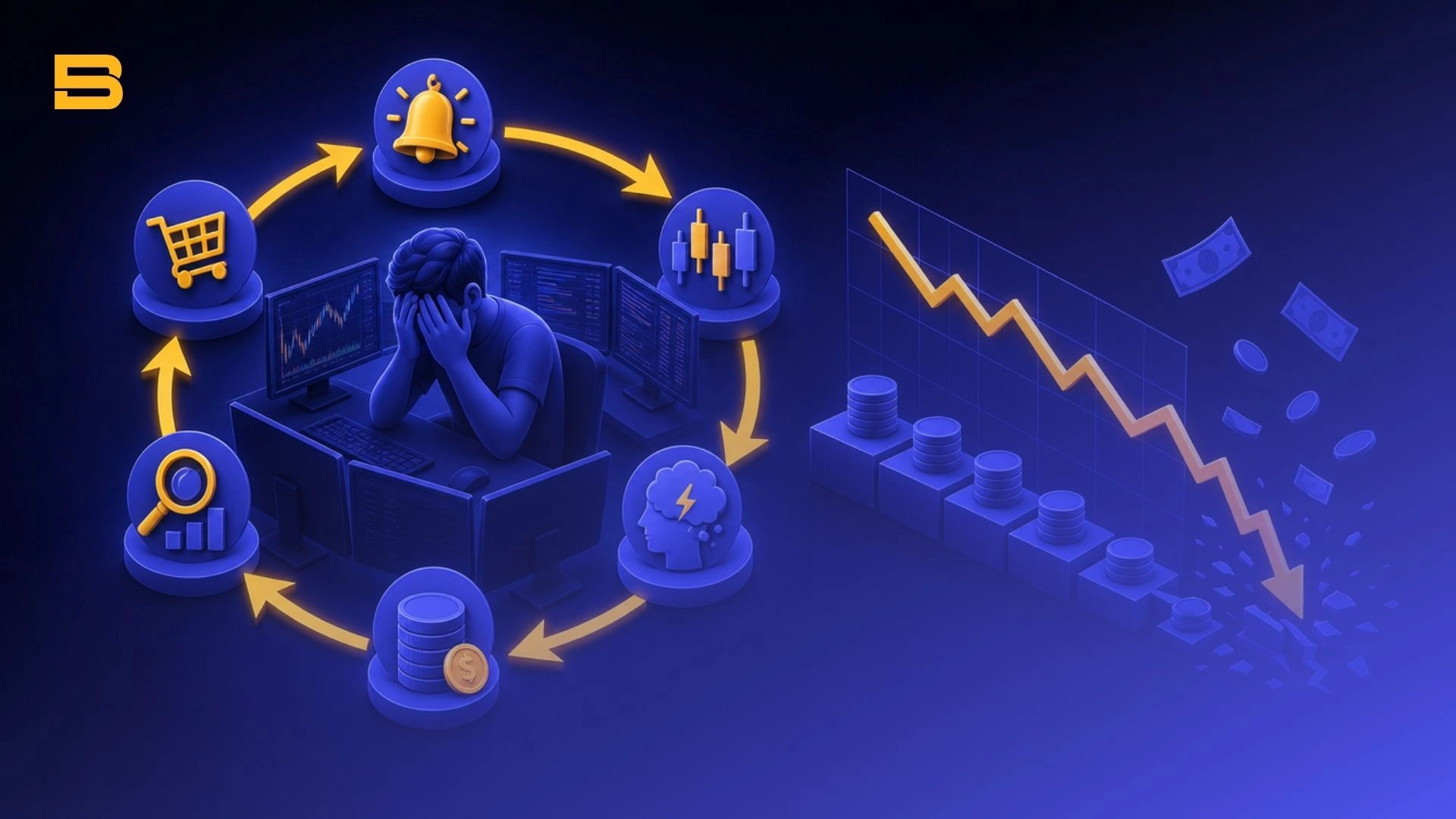
Entering a trade for the first time can be thrilling, but watching a small loss turn into a series of hasty, consecutive orders is a scenario many traders know too well. What feels like an active effort to reclaim lost capital often transforms into a silent drain on your trading balance. This behavior—executing excessive or unplanned trades driven by emotion rather than strategy—is known as overtrading, and it remains one of the most common hurdles for emerging retail traders.
What Is Overtrading and How Does It Work?
Overtrading occurs when a trader executes excessive trades beyond their plan, often driven by emotion, greed, or a desire to recover losses quickly. It represents a shift from a methodical, rules-based approach to impulsive market participation.
When you overtrade, you break established risk parameters, take trades without clear setup signals, or hold positions far too large for your account size. The primary danger lies in how hidden friction costs compound. Every transaction incurs direct costs: bid-ask spreads, broker commissions, and potential slippage during volatile executions.
Consider a trader with a $5,000 account taking 15 micro-trades in a single afternoon after losing an initial setup. Even if the win rate breaks even on price movement, paying an average spread and commission fee of $3 per trade drains $45 instantly. Combined with micro-slippage of $2 per execution, the account loses nearly 1.5% in capital purely to transaction overhead—before factoring in any actual market drawdowns. Over time, these friction costs erode equity far faster than single losing trades.
The Financial Conduct Authority (FCA) regularly highlights that high transaction frequency and excessive leverage significantly increase the likelihood of retail trader losses.
Emotional Triggers: FOMO and Revenge Trading
Overtrading is rarely a technical error; it is almost always a psychological reaction to market exposure. Two primary emotional drivers fuel this behavior:
- Fear of Missing Out (FOMO): Seeing a sudden market movement can trigger anxiety that an opportunity is escaping. This prompts you to enter positions late, without confirmation, and far outside your entry criteria.
- Revenge Trading: Following a painful loss or a string of negative setups, the urge to "get even" with the market takes over. You immediately re-enter the market with higher volume or tighter timeframes to recoup the loss.
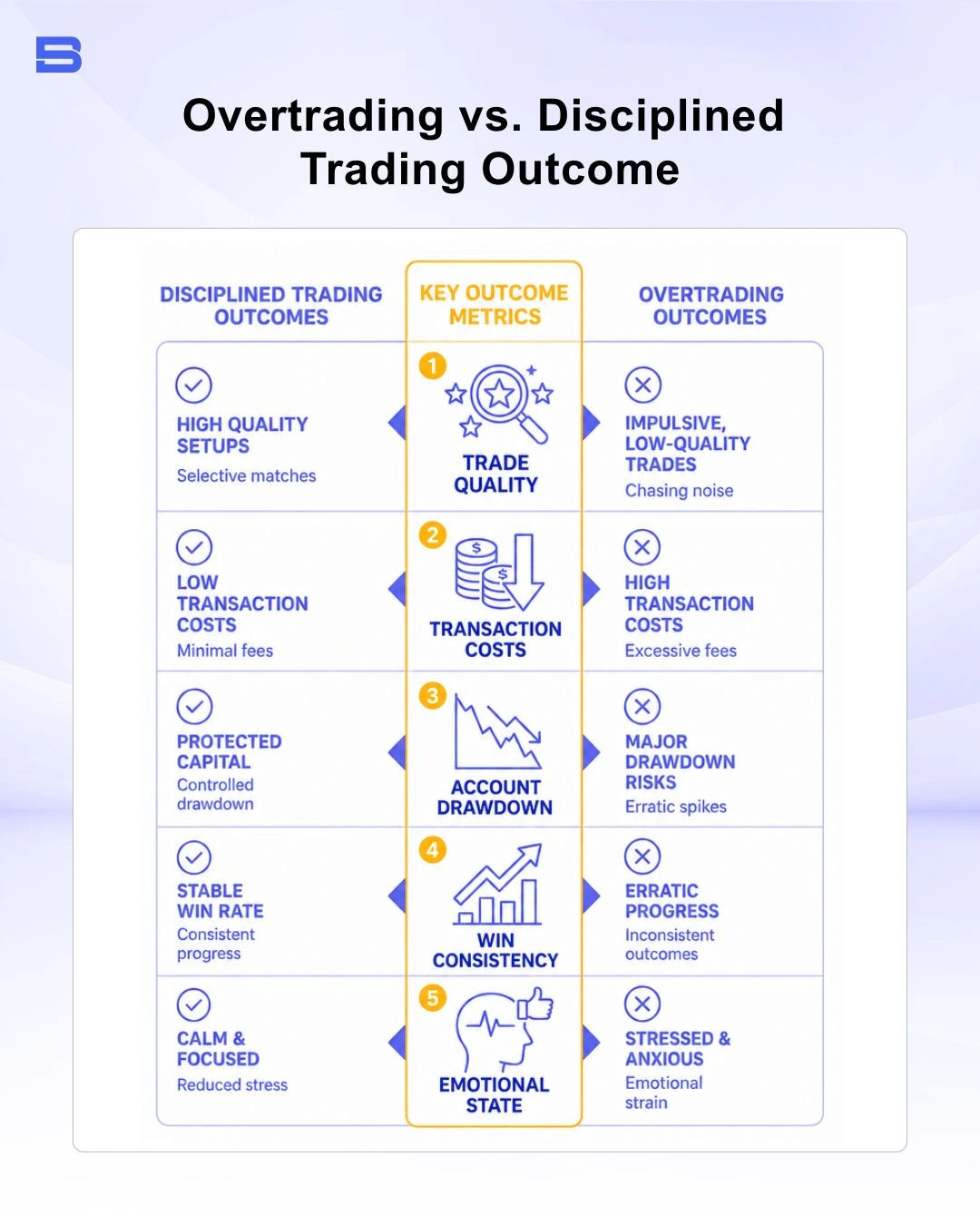
When revenge trading takes hold, emotional over-leveraging often follows. Increasing position sizes while in an unstable emotional state accelerates drawdowns, turning manageable losses into severe equity drops.
Key Signs You Are Overtrading
Identifying excessive trading early is critical to protecting your balance. Key warning signs include:
- Trading Out of Boredom: Opening positions simply to feel active in the market when no clear plan signals exist.
- Abandoning Stop-Loss Orders: Widening or removing stop-loss orders on active trades to avoid realizing a loss.
- Ignoring Pre-Defined Entry Rules: Entering positions on a whim rather than waiting for your established technical or fundamental triggers.
- Persistent Stress and Exhaustion: Feeling anxious, agitated, or hyper-focused on minute-by-minute price charts.
The Role of Trading Discipline in Preventing Overtrading
Maintaining strict trading discipline serves as a vital circuit breaker against emotional decision-making. Trading discipline means adhering to your pre-established operational rules regardless of recent wins or losses.
To build discipline, establish clear boundaries before the trading session starts. Define exactly what setups qualify for execution, set maximum trade counts, and commit to stepping away from the platform once those limits are reached. Treating market participation like an operational business reduces the influence of impulse.
Money Management Rules to Curb Overtrading
Enforcing structured money management rules creates systemic guardrails that prevent emotional trading from destroying your capital.
- Fixed Risk Per Trade: Never risk more than 1% to 2% of your total account equity on a single position. Consistent position sizing prevents single trade losses from causing emotional panic.
- Mandatory Stop-Loss Orders: Always define your exit point before entering a position. Learning what a stop loss is and how to set one ensures that losses remain contained automatically.
- Daily Drawdown Limits: Set a hard daily loss limit (e.g., 3% of account balance). If hit, close the platform for the rest of the session.
- Risk-Reward Evaluation: Maintain a minimum structural ratio (such as 1:2). Understanding what the risk-reward ratio is in trading ensures that you do not need excessive trade frequency to achieve overall profitability.
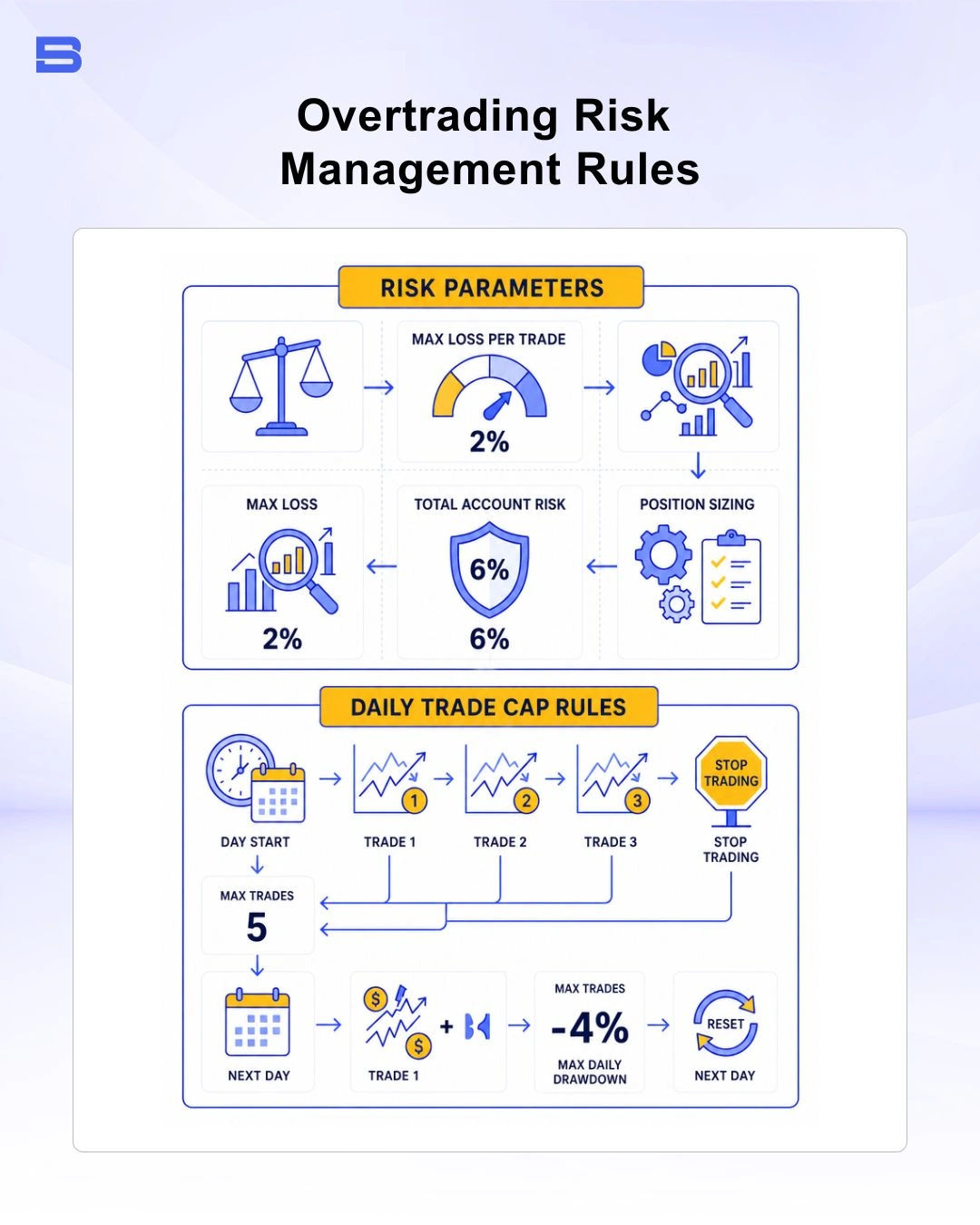
Implementing a broader framework, as covered in Money Management in trading: a beginner's guide, establishes the discipline required for long-term consistency. Regulators such as the Securities Commission Malaysia (SC) emphasize robust risk management frameworks as essential tools for protecting retail investors.
Step-by-Step Strategies to Stop Overtrading
If you notice signs of overtrading in your routine, implement these actionable steps to regain control:
Draft a Structured Trading Plan: Before placing another trade, outline your exact entry triggers, exit targets, and risk limits. Reviewing [[how to create a trading plan before you start trading]][planned] gives you a concrete reference point to guide every execution.
Enforce a Daily Trade Cap: Limit yourself to a realistic number of trades per day (e.g., 2 to 3 quality setups). Once those slots are used, trading concludes for the day.
Take Mandatory Cool-Off Breaks: Establish a rule to step away from your screens for at least 30 minutes following any loss. Physical distance helps break the psychological cycle of revenge trading.
Maintain a Detailed Record: Learning how to keep a trading journal to track your progress allows you to document the emotional state behind every entry, making impulsive patterns visible and easier to correct.
Summary
Preserving capital requires prioritizing quality over quantity. Overtrading drains account equity through accumulated spreads, commissions, and emotional errors. By establishing a clear plan, adhering to strict risk management, and stepping away when rules are breached, you protect your trading capital and build a sustainable path forward.
Disclaimer: The content on this page is intended for educational and informational purposes only. It does not constitute financial, investment, tax, or legal advice, and should not be interpreted as a recommendation to buy, sell, or hold any financial instrument or asset. Trading and investing involve significant risk, including the possible loss of your entire capital. Products such as forex, CFDs, and cryptocurrencies carry additional risks due to leverage, high volatility, and limited regulatory protection in some jurisdictions. Past performance of any financial instrument does not guarantee future results. Any market views, forecasts, or opinions expressed are those of the author at the time of writing and may not reflect current market conditions. Platform features, fees, and regulatory status are subject to change — always verify information directly with the relevant provider or regulator before making any financial decision. BrokerSpecs may receive compensation from third parties featured on this site. Always conduct your own due diligence and consider seeking advice from a licensed financial professional before investing.