


- How to Start Trading: A Step-by-Step Guide for Beginners
- Demo Trading Accounts: Safe Practice for Beginners
- Understanding How Much Capital You Need to Start Trading
- How to Set Realistic Trading Goals as a New Trader
- How to Open a Trading Account in Malaysia (Step-by-Step)
- How to Start Trading in Malaysia: A Guide for Beginners
- How to Create a Trading Plan Before You Start Trading
- What Is a Trading Account? Everything You Need to Know
- How to Learn Trading: Step-by-Step Beginner Roadmap
- What Is Stop Loss in Trading and How Does It Work?
- Why Every Trader Needs a Trading Journal
- Islamic Forex Account Explained: How Swap-Free Trading Works
- Funded Trading Account: Rules, Splits & Risks
- Master Money Management: Practical Capital Protection Rules
- Overtrading Explained: Common Causes, Signs, and How to Stop
- How Risk-Reward Ratio Works: A Guide to Trading Risk
- How to Open a Brokerage Account as a Beginner
- What Is a Cent Account Forex and How Does It Work?
- What Is an ECN Account and How Does It Work?
- What Is Cashback Forex and How Does It Work?
- Fixed Deposit vs Unit Trust: Key Differences for Investors
- Welcome Bonus Forex: What It Is and What to Watch For
- Forex Deposit Bonus: How It Works
- What Is Forex Rebate and How Does It Work?
- What Is Forex Free Credit and How Does It Work?
- Trading Webinars: Are They Worth Attending?
- Trading for Beginners PDF: What to Look For in a Good Guide
- Trading 101: How to Start Trading Safely and Effectively
Entering the foreign exchange market for the first time often comes with an unexpected discovery: transaction fees accrue on every single position you open, regardless of whether that trade ends in a profit or a loss. While exploring trading conditions, you may encounter programs promising to return a portion of those costs directly to your balance.
This mechanism is known as cashback forex—a system designed to rebate a fraction of your trading expenses back into your account. Understanding how these rebates function, how they are calculated, and where hidden traps lie will help you evaluate whether they genuinely lower your overall trading costs.
What Is Cashback Forex and How Does It Work?
Cashback forex — also called a forex rebate — is a reward mechanism offered by a broker or a third-party affiliate. It refunds a portion of the trading commission or spread back to the trader, based on their total trading volume.
When you execute a trade, your broker charges a fee through two primary methods:
- The Spread: The difference between the buy (bid) and sell (ask) price.
- Commissions: A fixed fee charged per lot traded (common on Raw or ECN — Electronic Communication Network — accounts).
In a typical rebate structure, the broker shares a portion of these transaction fees with an affiliate or directly with the trader as an incentive for maintaining active trading volume. The rebate provider then passes a majority of that commission back to your trading account, usually on a daily, weekly, or monthly schedule.
How Are Forex Cashback Rebates Calculated?
Forex cashback calculations generally depend on your trading volume—measured in standard lots—and the account type you operate.
Rebate models typically fall into two categories:
- Fixed Cash Per Lot: You earn a set dollar amount for every standard lot (100,000 units of base currency) traded.
- Percentage Share of Spread/Commission: You receive a percentage refund of the total spread or commission paid on every transaction.
Calculation Scenario
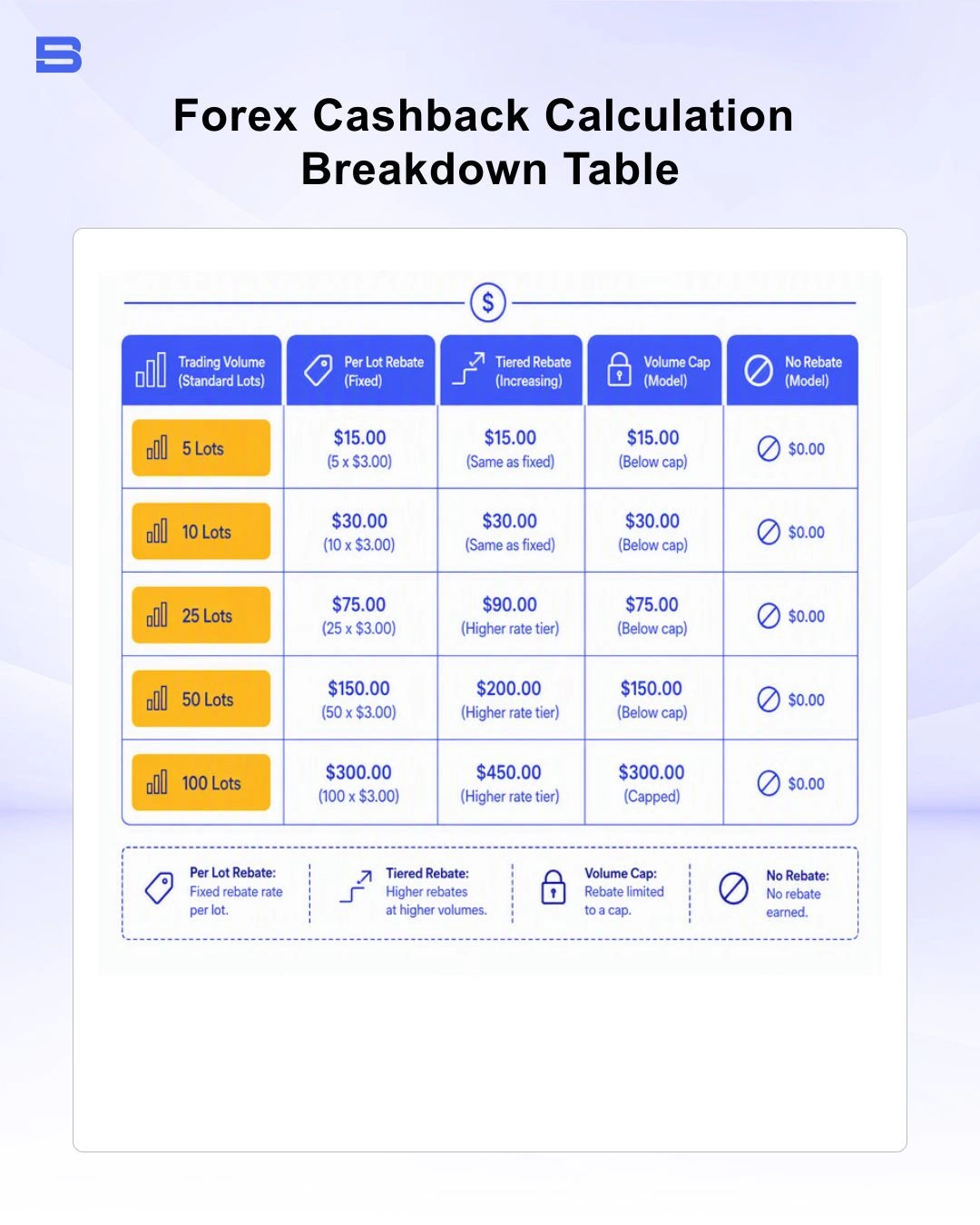
Suppose you trade 10 standard lots of Euro and US Dollar (EUR/USD) over the course of a week using an account with a $3 per lot rebate agreement:
Total Rebate = Volume (Lots) x Rebate Rate per Lot
Total Rebate = 10 x $3.00 = $30.00
Rebate Models Compared by Trading Volume:
How Forex Cashback Differs from Forex Bonuses
It is common for beginners to confuse cashback programs with promotional trading bonuses, such as a forex deposit bonus, a welcome bonus forex, or a no deposit bonus forex offer. However, their underlying mechanics and terms differ significantly.
- Withdrawability: Cashback is real money accumulated from your actual trading activity and can generally be withdrawn immediately or used as free margin. Promotional credits, such as forex free credit offers, are typically non-withdrawable funds meant solely to bolster account leverage until strict trading conditions are satisfied.
- Execution Requirements: Bonuses require you to deposit new capital or reach massive turnover thresholds before unlocking locked credit. Cashback accrues automatically with every completed trade, acting as a direct operational cost discount.
Hidden Risks: Spread Markups and Hidden Costs
While earning a cash rebate on trading fees sounds entirely beneficial, you must stay vigilant regarding the spread markup forex rebate trap that can quietly erase the benefit of your cashback forex program.
Unregulated or unethical entities may inflate the trading spread or increase raw commission charges behind the scenes to fund the cashback program. For example, if a broker artificially widens your EUR/USD spread by 1.0 pip ($10 per lot) to offer you a $3 per lot rebate, your net cost of trading actually increases by $7 per lot.
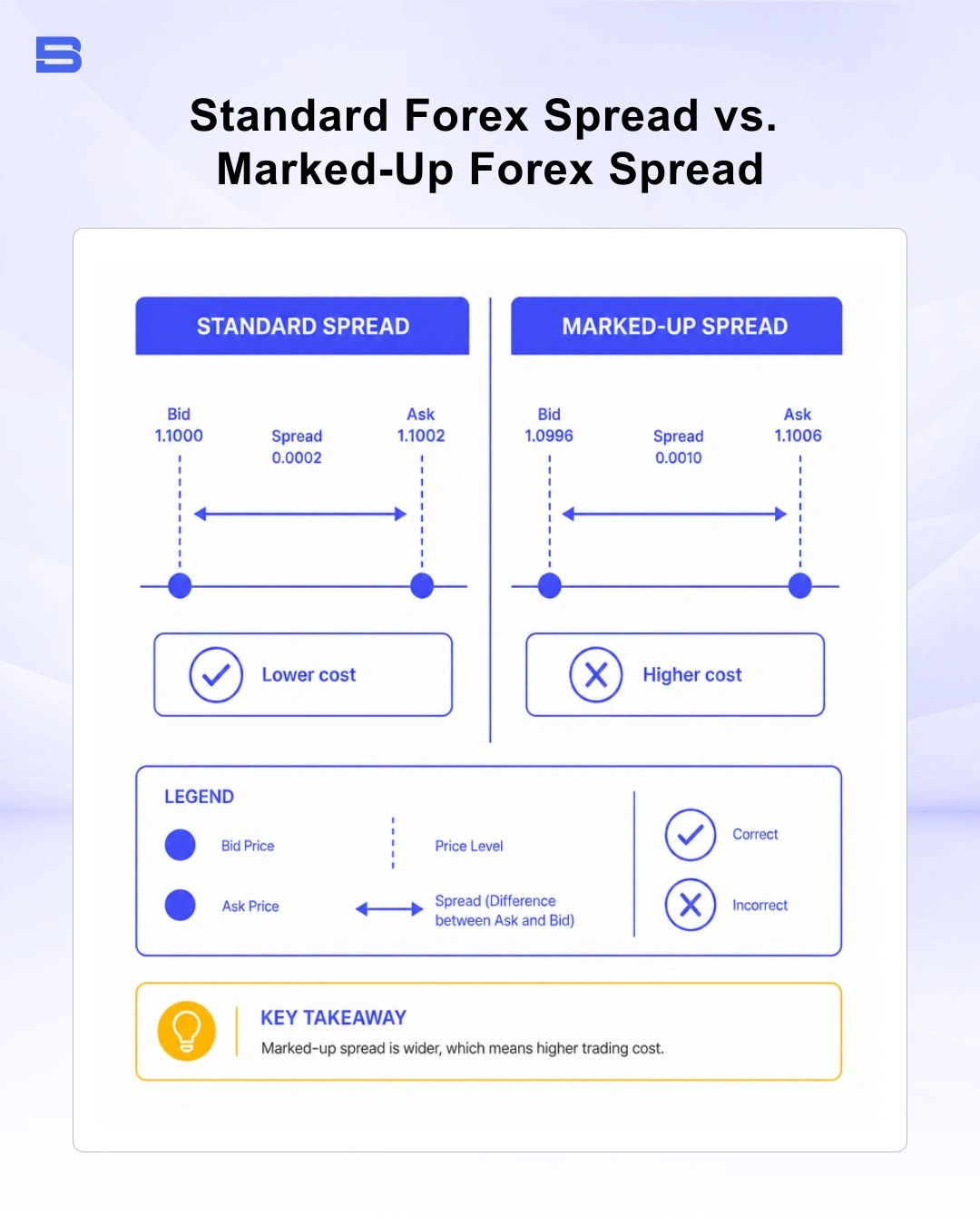
Before enrolling in any rebate scheme, compare the broker's standard spread list against the spreads offered on rebate-enabled accounts to ensure no artificial markup has been applied.
The Overtrading Trap: Managing Risk When Earning Rebates
The most significant psychological danger associated with forex rebates is the overtrading risk that cashback forex incentives can introduce.
When traders focus on accumulating volume to generate cashback dollars, they frequently compromise their risk management standards:
- Opening Low-Quality Trades: Entering positions without a valid technical or fundamental setup simply to generate trade volume.
- Over-Leveraging Positions: Sizing trades larger than recommended by your capital management plan to maximize volume metrics.
Trading purely for rebates often leads to severe capital drawdown, far exceeding the small dollar amounts earned in cashback forex. When setting up your account (for instance, following a guide on how to open a trading account in Malaysia), prioritize low spreads, competitive execution speed, and clear risk parameters over secondary promotional rewards. Regulators like the Securities Commission Malaysia (SC) frequently emphasize risk awareness and cost transparency over aggressive trading volume promotion.
The Bottom Line
Forex cashback can serve as an effective tool for lowering your net transaction fees over time, provided your account operates on clean, competitive spreads without hidden markups. Always evaluate your net trading costs rather than chasing gross rebate figures, and never allow volume-based incentives to override disciplined risk management.
Disclaimer: The content on this page is intended for educational and informational purposes only. It does not constitute financial, investment, tax, or legal advice, and should not be interpreted as a recommendation to buy, sell, or hold any financial instrument or asset. Trading and investing involve significant risk, including the possible loss of your entire capital. Products such as forex, CFDs, and cryptocurrencies carry additional risks due to leverage, high volatility, and limited regulatory protection in some jurisdictions. Past performance of any financial instrument does not guarantee future results. Any market views, forecasts, or opinions expressed are those of the author at the time of writing and may not reflect current market conditions. Platform features, fees, and regulatory status are subject to change — always verify information directly with the relevant provider or regulator before making any financial decision. BrokerSpecs may receive compensation from third parties featured on this site. Always conduct your own due diligence and consider seeking advice from a licensed financial professional before investing.