



Related Tags
Entering a trade for the first time can be thrilling, but watching spread fees and commissions chip away at your account balance before a trade even moves in your direction is frustrating. Every pip — the smallest standard price movement in a currency pair, typically the fourth decimal place — paid to enter and exit a position adds up, especially if you trade frequently.
For traders looking to manage their overall transaction costs as part of a long-term plan on how to start trading, forex rebates offer a mechanism to earn back a portion of those transaction fees. Here is a clear breakdown of how forex rebates work, how cashback is calculated, and the key risks to keep in mind.
What Is Cashback Forex and How Does It Work?
A forex rebate—often referred to as cashback forex—is an arrangement where a trader receives a partial refund of the transaction fees (spreads or commissions) paid to a broker on executed trades.
The rebate mechanism relies on a three-way relationship between the trader, an affiliate (or rebate provider), and the broker:
- The Broker: Pays a commission or referral fee to the affiliate for bringing in active trading volume.
- The Affiliate: Passes a significant percentage of that commission back to the trader as cashback.
- The Trader: Executes trades normally and receives cashback on every completed order, regardless of whether the trade won or lost.
Spread Rebates vs. Commission Rebates
Brokers structure transaction costs differently depending on the account type, which dictates how the rebate is calculated and paid:
- Spread Rebates (Standard Accounts): On standard accounts, the broker's fee is embedded in the bid-ask spread. The rebate provider pays back a fixed dollar amount or fraction of a pip per standard lot traded.
- Commission Rebates (ECN Accounts): On raw spread or ECN accounts, spreads are tight, but the broker charges a fixed commission per lot. The rebate provider returns a direct percentage of that paid commission.
Step-by-Step Forex Rebate Calculation Example
To evaluate your net trading costs, it is best practice to look at transaction costs holistically. Consider a trader who trades 10 standard lots of Euro and US Dollar (EUR/USD) per month on a standard account:
- Broker Spread: 1.2 pips per lot ($12 per lot)
- Rebate Rate: 0.4 pips per lot ($4 per lot)
- Total Volume: 10 standard lots
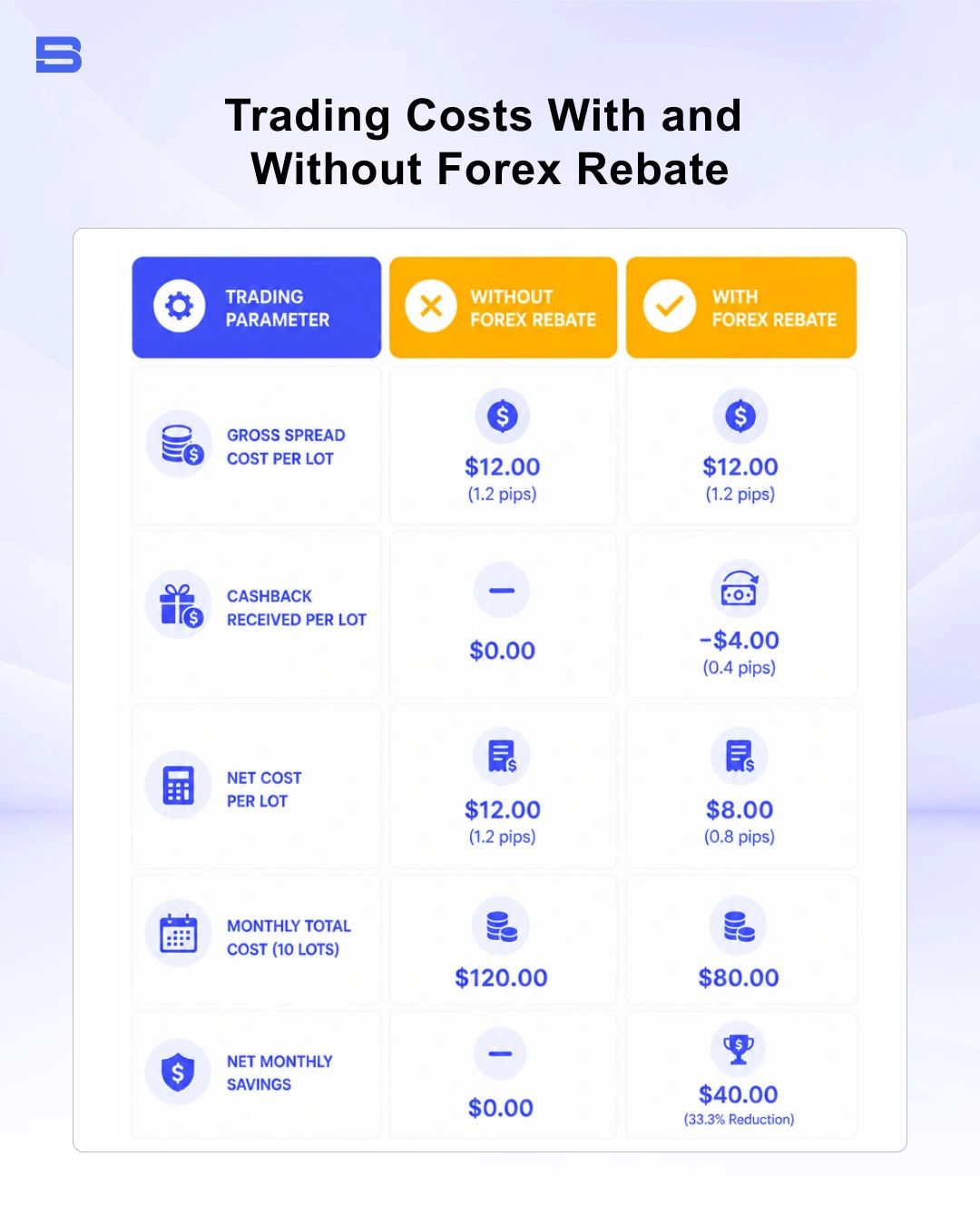
In this scenario, receiving a $4 rebate per lot effectively reduces the net spread from 1.2 pips to 0.8 pips, lowering total trading costs by over 33% without changing the underlying trading strategy.
Forex Rebates vs. No Deposit Bonus Forex: What's the Difference?
Beginner traders often confuse rebate programs with broker promotions like a no deposit bonus forex, a welcome bonus forex, a forex deposit bonus, or forex free credit. While both offer monetary incentives, their mechanisms are fundamentally different.
A promotional credit or deposit bonus is typically a one-time incentive tied to strict turnover requirements before any funds can be withdrawn. A forex rebate, by contrast, is fully withdrawable cash earned continuously as you execute trades.
The Risks of Chasing Forex Rebates
While rebates reduce trading costs, treating cashback as a primary income stream introduces serious trading risks.
The Overtrading Risk
The most significant danger of rebate programs is overtrading—opening trades solely to generate cashback volume.
If you open a trade just to earn a $4 rebate, you are still risking spread costs and market volatility. A single bad trade resulting in a 20-pip loss ($200 on a standard lot) easily wipes out dozens of lots worth of earned rebates. Cashback should remain a secondary cost-reduction tool, not the goal of a trading plan.
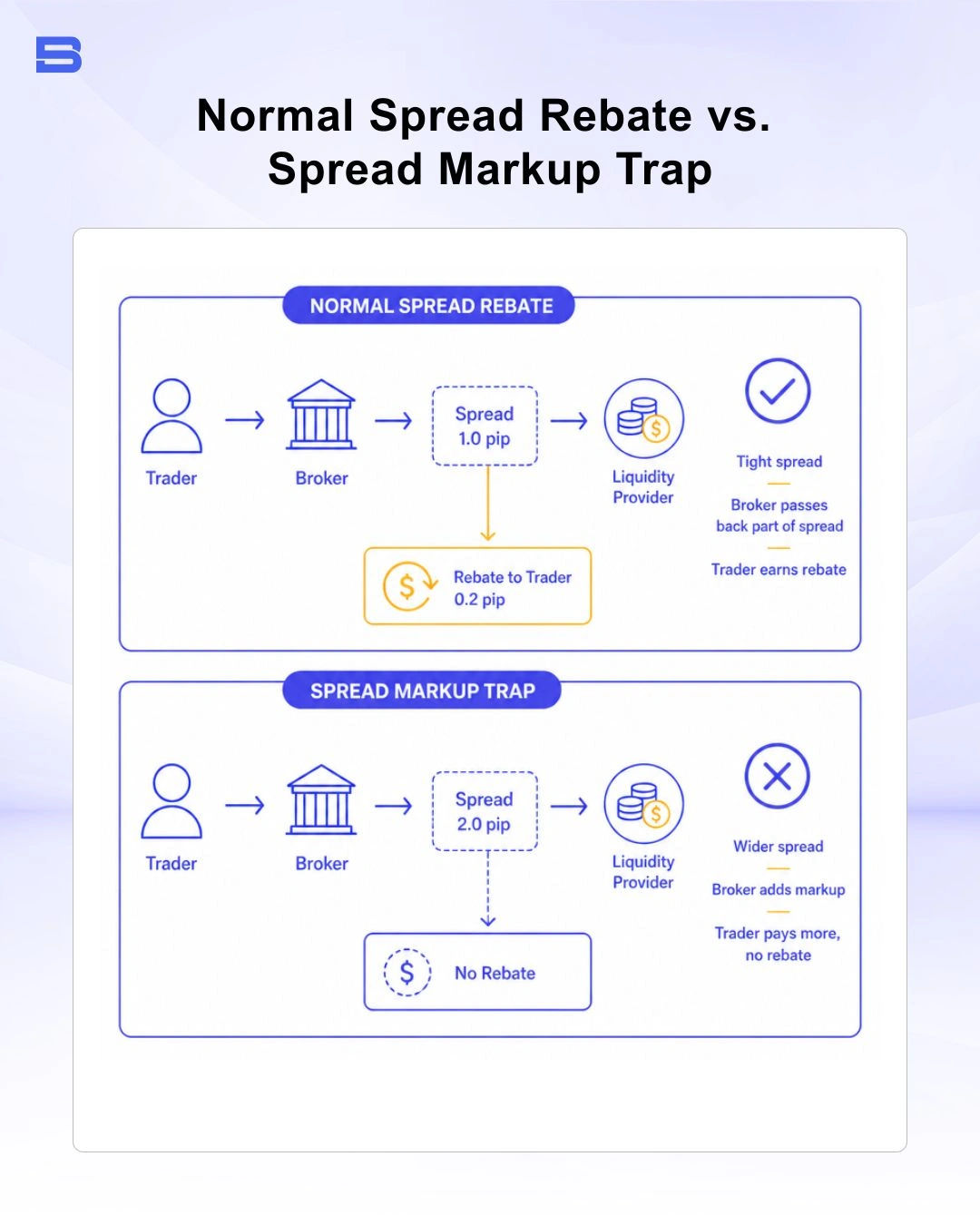
The Spread Markup Trap
Unverified rebate providers or unregulated brokers sometimes offer unusually high rebate rates (e.g., $10+ per lot) by marking up the underlying spread.
If a broker increases your standard spread from 1.2 pips to 2.2 pips and then offers a $6 rebate, your net cost is actually 1.6 pips—higher than trading without a rebate on a standard account! Always verify that the underlying spreads and execution speeds remain unchanged when linking your account to a rebate provider.
How to Get Started with Forex Rebates
If you decide to use a rebate program, follow these practical steps to protect your account and execution quality:
- Select a Tier-1 Regulated Broker: Ensure your broker is authorized by respected authorities such as the Securities Commission Malaysia (SC), the Financial Conduct Authority (FCA), or the Australian Securities and Investments Commission (ASIC). Never compromise on regulatory safety just to capture higher cashback rates.
- Choose a Reputable Rebate Provider: Research independent rebate portals with a proven track record of timely payouts and clear reporting.
- Register or Link Your Account: If you are learning how to open a trading account in Malaysia, you can usually enter an affiliate ID during registration or request the broker to transfer an existing account under the rebate group.
- Monitor Execution & Spreads: Compare your spreads and execution speeds before and after linking to ensure no spread markups were applied.
Conclusion
Forex rebates serve as an effective way to lower transaction fees and increase net bottom-line performance over time. By understanding the difference between spread and commission refunds, avoiding spread markup traps, and maintaining strict trading discipline, you can make cashback forex work for your portfolio rather than falling into the trap of overtrading.
- How to Start Trading: A Step-by-Step Guide for Beginners
- Demo Trading Accounts: Safe Practice for Beginners
- Understanding How Much Capital You Need to Start Trading
- How to Set Realistic Trading Goals as a New Trader
- How to Open a Trading Account in Malaysia (Step-by-Step)
- How to Start Trading in Malaysia: A Guide for Beginners
- How to Create a Trading Plan Before You Start Trading
- What Is a Trading Account? Everything You Need to Know
- How to Learn Trading: Step-by-Step Beginner Roadmap
- What Is Stop Loss in Trading and How Does It Work?
- Why Every Trader Needs a Trading Journal
- Islamic Forex Account Explained: How Swap-Free Trading Works
- Funded Trading Account: Rules, Splits & Risks
- Master Money Management: Practical Capital Protection Rules
- Overtrading Explained: Common Causes, Signs, and How to Stop
- How Risk-Reward Ratio Works: A Guide to Trading Risk
- How to Open a Brokerage Account as a Beginner
- What Is a Cent Account Forex and How Does It Work?
- What Is an ECN Account and How Does It Work?
- What Is Cashback Forex and How Does It Work?
- Fixed Deposit vs Unit Trust: Key Differences for Investors
- Welcome Bonus Forex: What It Is and What to Watch For
- Forex Deposit Bonus: How It Works
- What Is Forex Rebate and How Does It Work?
- What Is Forex Free Credit and How Does It Work?
- Trading Webinars: Are They Worth Attending?
- Trading for Beginners PDF: What to Look For in a Good Guide
- Trading 101: How to Start Trading Safely and Effectively
Disclaimer: The content on this page is intended for educational and informational purposes only. It does not constitute financial, investment, tax, or legal advice, and should not be interpreted as a recommendation to buy, sell, or hold any financial instrument or asset. Trading and investing involve significant risk, including the possible loss of your entire capital. Products such as forex, CFDs, and cryptocurrencies carry additional risks due to leverage, high volatility, and limited regulatory protection in some jurisdictions. Past performance of any financial instrument does not guarantee future results. Any market views, forecasts, or opinions expressed are those of the author at the time of writing and may not reflect current market conditions. Platform features, fees, and regulatory status are subject to change — always verify information directly with the relevant provider or regulator before making any financial decision. BrokerSpecs may receive compensation from third parties featured on this site. Always conduct your own due diligence and consider seeking advice from a licensed financial professional before investing.