


Related Tags
Entering the financial markets for the first time can feel overwhelming. With endless jargon, complex charts, and contradictory advice, many new traders look for a downloadable trading for beginners PDF as a clean, structured starting point. A well-crafted PDF guide offers offline convenience, logical step-by-step progressions, and a reference manual you can revisit as you build your trading foundation.
However, not all downloadable guides are created equal. The internet is flooded with low-quality pitch decks and hidden promotional brochures disguised as free educational books. Learning how to evaluate a beginner trading PDF before downloading it will save you time, protect you from predatory brokers, and ensure you build a safe trading foundation.
What to Look For in a Beginner Trading PDF
When searching for a safe trading for beginners PDF, your primary focus should be finding clear, educational content rather than promotional material. High-quality educational guides prioritize foundational market mechanics, proper capital protection, and realistic expectations.
If you are wondering where I can find a free trading PDF guide, reputable sources include established financial education portals, accredited academic institutions, and strictly regulated regulatory bodies such as the Securities Commission Malaysia (SC) or the U.S. Securities and Exchange Commission (SEC).
A reliable guide must contain several core elements:
- Prominent Risk Disclosures: Regulated financial education material always acknowledges market risk upfront.
- Clear, Unbiased Terminology: Explanations of core concepts—such as order types, spreads, and market structure—should be neutral and easy to follow without pitching a specific platform.
- Step-by-Step Educational Progression: Content should start with primary mechanics before moving to advanced analytical techniques.
- Practical Example: On a $1,000 account risking 1% per trade ($10), with a 20-pip stop-loss on a standard lot, your position size would be roughly 0.05 lots.
Core Topics Every Beginner Trading PDF Must Cover
A comprehensive beginner guide shouldn't just explain how to execute a trade; it must cover the broader landscape of market mechanics and risk controls. If you want to understand how to become a trader, mastering these foundational building blocks in written form is your essential first step.
When reviewing the best trading books for beginners in PDF, ensure the document covers three core pillars:
- Market Mechanics & Assets: Explanations of order books, bid-ask spreads, liquidity, and basic asset classes (equities, forex, commodities, and indices).
- Risk Management Rules: Detailed frameworks covering stop-loss mechanics, position sizing, and managing leverage safely.
- Analytical Foundations: Basic introductions to fundamental factors (economic news) and technical chart patterns.
Trading Styles Explained in Educational Guides
Most comprehensive guides outline distinct trading styles so you can choose an approach that fits your personal schedule, financial goals, and risk tolerance.
When evaluating day trading vs swing trading for beginners, swing trading is typically recommended for those balancing trading with a daily employment routine. Swing trading relies on daily or 4-hour charts, requiring less intense screen time while offering clearer risk-to-reward positioning compared to rapid intraday trading.
Red Flags: Spotting Dangerous PDF Guides and Scams
The financial publishing space contains numerous bad actors who use downloadable PDF guides as sales funnels. Identifying and avoiding trading PDF scams is a critical skill for protecting your capital and personal information.
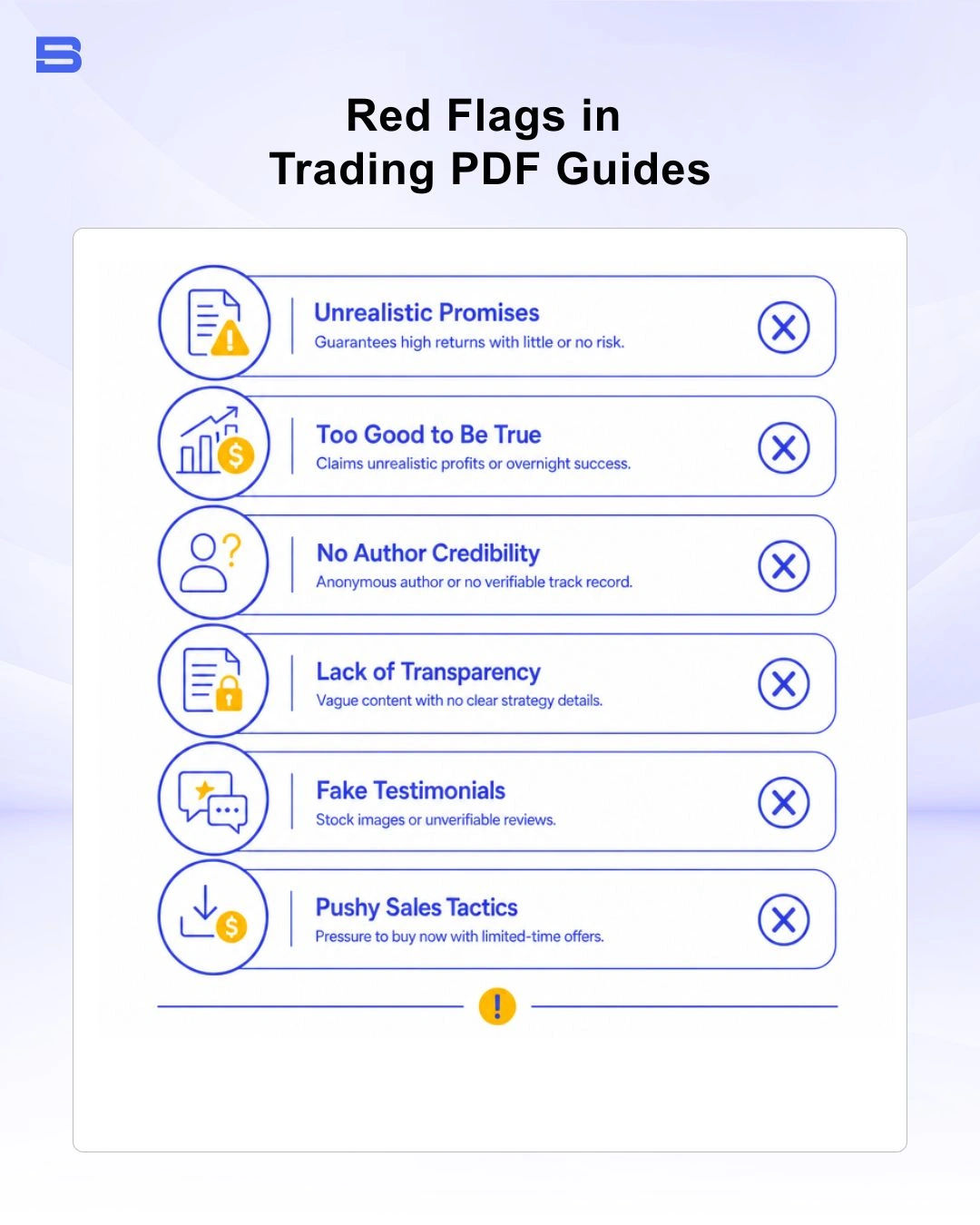
Securities Commission Malaysia (SC) and the U.S. Securities and Exchange Commission (SEC) consistently warn retail investors against educational materials that promise unrealistic returns. Watch out for these specific warning signs before downloading or relying on any financial PDF guide:
- Guaranteed Return Claims: Any guide claiming "guaranteed 30% monthly profit" or "risk-free strategies" violates basic regulatory standards and is misleading.
- Single-Broker Bias: Be cautious if a PDF guide forces you to sign up with one specific offshore or unregulated broker before accessing the material or implementing the techniques.
- Overconfident Language: Statements like "100% accurate strategy" or "never fails" ignore market volatility and slippage.
- Pressure Tactics: PDF landing pages that urge you to "act immediately" or claim "limited access spots" are using emotional sales pressure rather than providing genuine education.
Step-by-Step Roadmap: From PDF Theory to Execution
Reading a guide is only the beginning. Knowing how to learn trading effectively requires transitioning theory into practical market exposure safely. Follow this clear roadmap to bridge the gap between reading a guide and executing real trades:
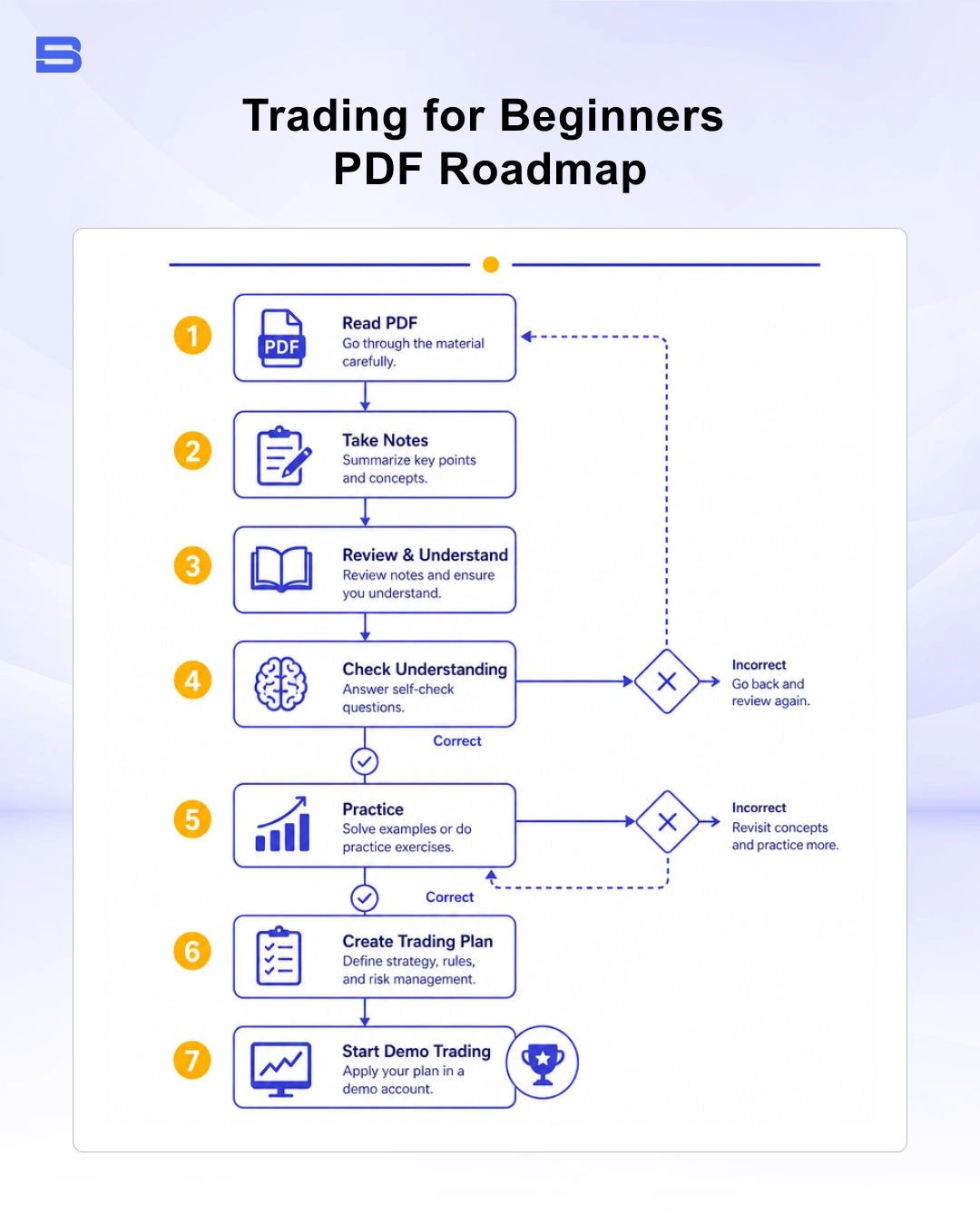
Step 1: Complete the Core Reading & Assessment
Read through your chosen guide fully, focusing heavily on position sizing and risk management before looking at chart patterns. Calculate example position sizes on paper to ensure you understand margin mechanics.
Step 2: Open a Risk-Free Demo Account
Before depositing real funds, apply the guide's concepts inside a simulated market environment. Test setting market orders, limit orders, and stop-loss levels on a platform to build operational familiarity.
Step 3: Establish a Written Plan
Use the concepts from your PDF guide to create a personalized trade strategy. Clearly define your entry rules, maximum risk per trade, and capital allocation strategy before moving to live funds. You can read our detailed guide on trading plans to build a robust framework.
Step 4: Verify Local Regulations & Select a Broker
If you are learning how to start learning trading from scratch, selecting a properly licensed broker is essential. For regional investors exploring how to start trading in Malaysia, ensure your platform adheres to recognized consumer protection standards and regulatory licensing. For complete setup steps, review our guide on how to open a trading account in Malaysia.
Conclusion
A well-structured trading for beginners PDF can serve as an excellent road map when starting your financial education journey. By selecting guides that prioritize risk management, clear definitions, and objective frameworks, you can avoid common marketing scams and build a sustainable learning process.
Remember that reading is only step one. Combine written education with demo account practice, verify your broker's regulatory compliance, and prioritize capital protection every step of the way. For a broader entry point into market fundamentals, explore our foundation guide on Trading 101.
- How to Start Trading: A Step-by-Step Guide for Beginners
- Demo Trading Accounts: Safe Practice for Beginners
- Understanding How Much Capital You Need to Start Trading
- How to Set Realistic Trading Goals as a New Trader
- How to Open a Trading Account in Malaysia (Step-by-Step)
- How to Start Trading in Malaysia: A Guide for Beginners
- How to Create a Trading Plan Before You Start Trading
- What Is a Trading Account? Everything You Need to Know
- How to Learn Trading: Step-by-Step Beginner Roadmap
- What Is Stop Loss in Trading and How Does It Work?
- Why Every Trader Needs a Trading Journal
- Islamic Forex Account Explained: How Swap-Free Trading Works
- Funded Trading Account: Rules, Splits & Risks
- Master Money Management: Practical Capital Protection Rules
- Overtrading Explained: Common Causes, Signs, and How to Stop
- How Risk-Reward Ratio Works: A Guide to Trading Risk
- How to Open a Brokerage Account as a Beginner
- What Is a Cent Account Forex and How Does It Work?
- What Is an ECN Account and How Does It Work?
- What Is Cashback Forex and How Does It Work?
- Fixed Deposit vs Unit Trust: Key Differences for Investors
- Welcome Bonus Forex: What It Is and What to Watch For
- Forex Deposit Bonus: How It Works
- What Is Forex Rebate and How Does It Work?
- What Is Forex Free Credit and How Does It Work?
- Trading Webinars: Are They Worth Attending?
- Trading for Beginners PDF: What to Look For in a Good Guide
- Trading 101: How to Start Trading Safely and Effectively
Disclaimer: The content on this page is intended for educational and informational purposes only. It does not constitute financial, investment, tax, or legal advice, and should not be interpreted as a recommendation to buy, sell, or hold any financial instrument or asset. Trading and investing involve significant risk, including the possible loss of your entire capital. Products such as forex, CFDs, and cryptocurrencies carry additional risks due to leverage, high volatility, and limited regulatory protection in some jurisdictions. Past performance of any financial instrument does not guarantee future results. Any market views, forecasts, or opinions expressed are those of the author at the time of writing and may not reflect current market conditions. Platform features, fees, and regulatory status are subject to change — always verify information directly with the relevant provider or regulator before making any financial decision. BrokerSpecs may receive compensation from third parties featured on this site. Always conduct your own due diligence and consider seeking advice from a licensed financial professional before investing.