


- How to Start Trading: A Step-by-Step Guide for Beginners
- Demo Trading Accounts: Safe Practice for Beginners
- Understanding How Much Capital You Need to Start Trading
- How to Set Realistic Trading Goals as a New Trader
- How to Open a Trading Account in Malaysia (Step-by-Step)
- How to Start Trading in Malaysia: A Guide for Beginners
- How to Create a Trading Plan Before You Start Trading
- What Is a Trading Account? Everything You Need to Know
- How to Learn Trading: Step-by-Step Beginner Roadmap
- What Is Stop Loss in Trading and How Does It Work?
- Why Every Trader Needs a Trading Journal
- Islamic Forex Account Explained: How Swap-Free Trading Works
- Funded Trading Account: Rules, Splits & Risks
- Master Money Management: Practical Capital Protection Rules
- Overtrading Explained: Common Causes, Signs, and How to Stop
- How Risk-Reward Ratio Works: A Guide to Trading Risk
- How to Open a Brokerage Account as a Beginner
- What Is a Cent Account Forex and How Does It Work?
- What Is an ECN Account and How Does It Work?
- What Is Cashback Forex and How Does It Work?
- Fixed Deposit vs Unit Trust: Key Differences for Investors
- Welcome Bonus Forex: What It Is and What to Watch For
- Forex Deposit Bonus: How It Works
- What Is Forex Rebate and How Does It Work?
- What Is Forex Free Credit and How Does It Work?
- Trading Webinars: Are They Worth Attending?
- Trading for Beginners PDF: What to Look For in a Good Guide
- Trading 101: How to Start Trading Safely and Effectively

Entering the world of financial markets often brings to mind images of complete location independence and effortless income. This guide walks you through exactly how to become a trader, from mastering the basics to placing your first controlled live trade.
However, the reality of building a sustainable career or side income in trading requires a methodical approach grounded in realistic expectations and consistent risk management.
If you want to know how to start, the first step is shifting your focus away from rapid wealth generation and toward mastering capital preservation.
Step 1: Master Financial Market Basics
Before placing your first live position, you need a firm grasp of core market concepts. Every transaction involves understanding market mechanics—such as base and quote currencies, bid-ask spreads, margin requirements, and market order types.
Learning to navigate these mechanics takes structured study. While many beginners search for a paid trading course or look for shortcut mentorships, you can build a solid foundational knowledge using reputable, free educational resources.
Regulators like the Securities Commission Malaysia (SC) provide official guidance on investor safety and licensed entities, helping you avoid fraudulent schemes promising easy returns.
If you are wondering whether you can learn how to become a trader with no experience, the answer is yes—provided you invest time in structured education first. Start by exploring comprehensive guides on how to learn trading before risking real funds.
Day Trading vs. Swing, Position, and Scalping
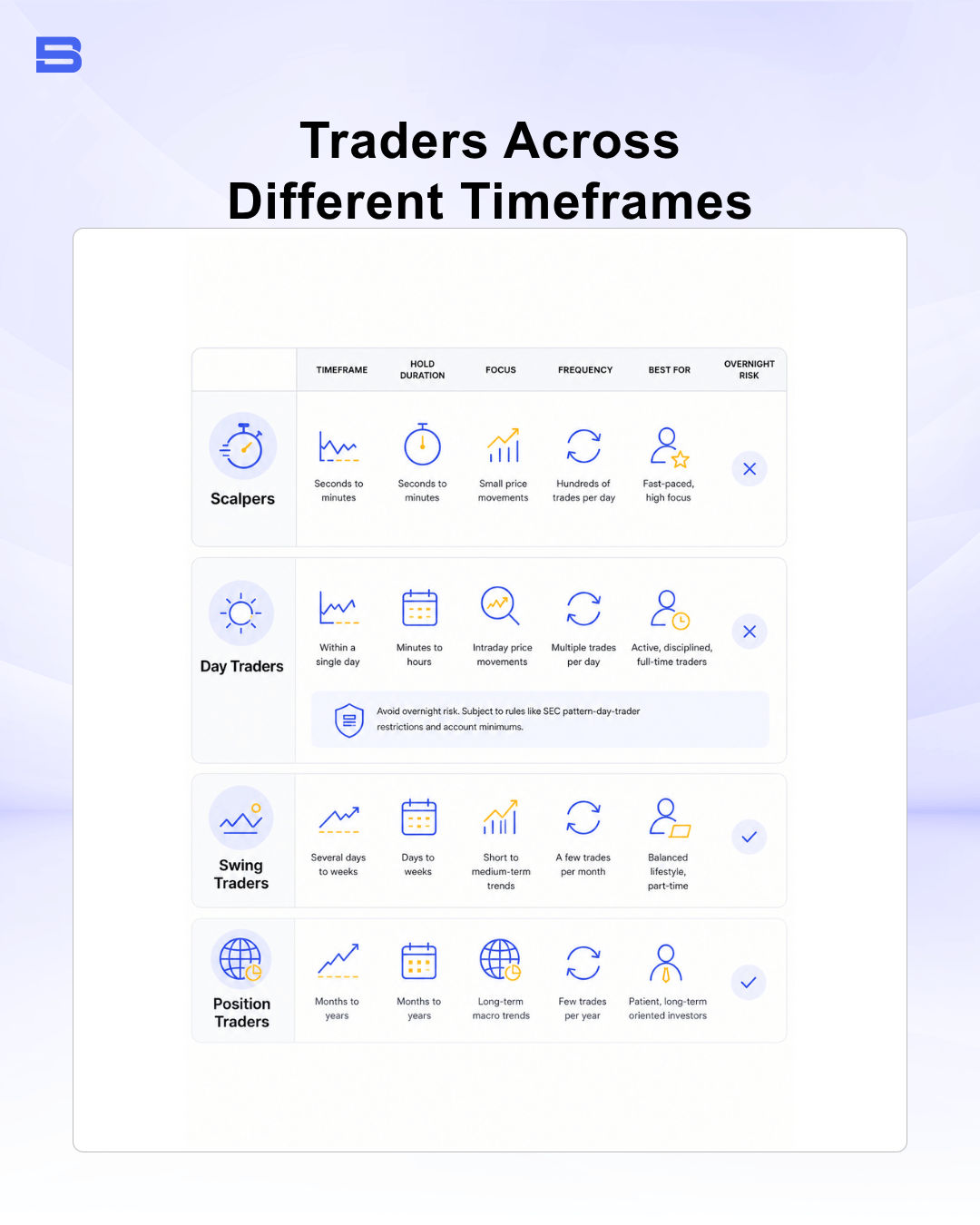
Understanding your operational timeframe is essential for choosing a path that matches your personality and schedule. Market participants generally fall into four distinct categories:
- Scalpers: Hold positions for seconds to minutes, aiming to capture fractional price movements across hundreds of trades per day.
- Day Traders: Open and close positions within a single trading day, avoiding overnight market gap risks. Under regulatory frameworks like the US Securities and Exchange Commission (SEC), day trading often carries specific account minimums and pattern-day-trader restrictions.
- Swing Traders: Hold trades for several days to weeks, capturing broader market trends without monitoring charts continuously.
- Position Traders: Hold positions for months or years based on fundamental macroeconomic trends.
Step 2: Choose Your Asset Class and Trading Style
Select an asset class that aligns with your available time, financial resources, and volatility tolerance.
- Forex: Operates 24 hours a day during weekdays, offering high liquidity and low entry barriers, but requires strict leverage management.
- Equities (Stocks): Ideal for traders focusing on company earnings reports, fundamental metrics, and sector trends.
- Indices and Futures: Offer broader market exposure (such as the S&P 500 or regional indices), requiring greater capital and specialized market knowledge.
- Commodities: Involve trading physical goods like gold, silver, or crude oil, driven largely by global supply-and-demand dynamics.
Match your choice to your daily schedule. For instance, if you maintain a full-time career during standard business hours, long-term position trading or evening swing trading may fit your routine better than fast-paced intraday trading.
Step 3: Determine Your Capital and Risk Budget
A common query among beginners is determining how much money is required to start trading. While many modern brokers allow account opening with minimal deposits, trading with inadequate capital often leads to aggressive position sizing and rapid account depletion.
It is critical to assess your risk tolerance before committing funds. High leverage amplifies both potential gains and losses; a sharp market move against a heavily leveraged position can wipe out a substantial portion of your capital rapidly.
Always trade exclusively with risk capital—money you can afford to lose without impacting your living expenses, emergency fund, or daily financial stability.
Step 4: Build and Test a Strict Trading Plan
A trading strategy is not complete without precise rules for execution. Learning how to create a trading plan ensures that emotional discipline guides your actions rather than market panic or greed.
Your trading plan must clearly define four core components:
- Entry Trigger: Specific technical patterns or fundamental catalysts that justify taking a position.
- Stop-Loss Placement: Knowing what a stop-loss order is—and setting one on every trade—limits your downside if the market invalidates your setup.
- Take-Profit Level: Clear price targets established before entering, removing guesswork when securing profits.
- Risk-Reward Ratio: Establishing a positive risk-reward ratio—where your potential gain on a trade is larger than your potential loss—ensures your expected gains outweigh your average losses over a large sample of trades.
Before placing real money at risk, backtest your plan on historical data and forward-test it using a simulated demo account for several months to confirm consistent performance.
Step 5: Transition to Live Trading with Controlled Risk
Moving from a demo environment to live markets introduces psychological pressures that practice accounts cannot replicate. To protect your psychological resilience and balance sheet, implement strict capital protection guidelines.
Follow standard money management practices by limiting risk to no more than 1% to 2% of your total account equity on any single trade. Starting small helps manage the psychological impact of losses and helps you avoid emotional pitfalls.
Maintain a consistent trading log to record entry prices, trade rationales, and emotional states. Journaling helps identify behavioral errors early, making it easier to spot overtrading and curb impulsive execution habits.
The Long Road to Becoming a Trader
Becoming a successful trader is a marathon of consistency, risk control, and self-discipline rather than a quick route to wealth. Focus first on protecting your capital, developing a systematic plan, and keeping meticulous records.
Over time, maintaining realistic expectations and respecting market risk will serve as the foundation for your trading journey.
Disclaimer: The content on this page is intended for educational and informational purposes only. It does not constitute financial, investment, tax, or legal advice, and should not be interpreted as a recommendation to buy, sell, or hold any financial instrument or asset. Trading and investing involve significant risk, including the possible loss of your entire capital. Products such as forex, CFDs, and cryptocurrencies carry additional risks due to leverage, high volatility, and limited regulatory protection in some jurisdictions. Past performance of any financial instrument does not guarantee future results. Any market views, forecasts, or opinions expressed are those of the author at the time of writing and may not reflect current market conditions. Platform features, fees, and regulatory status are subject to change — always verify information directly with the relevant provider or regulator before making any financial decision. BrokerSpecs may receive compensation from third parties featured on this site. Always conduct your own due diligence and consider seeking advice from a licensed financial professional before investing.