


Related Tags
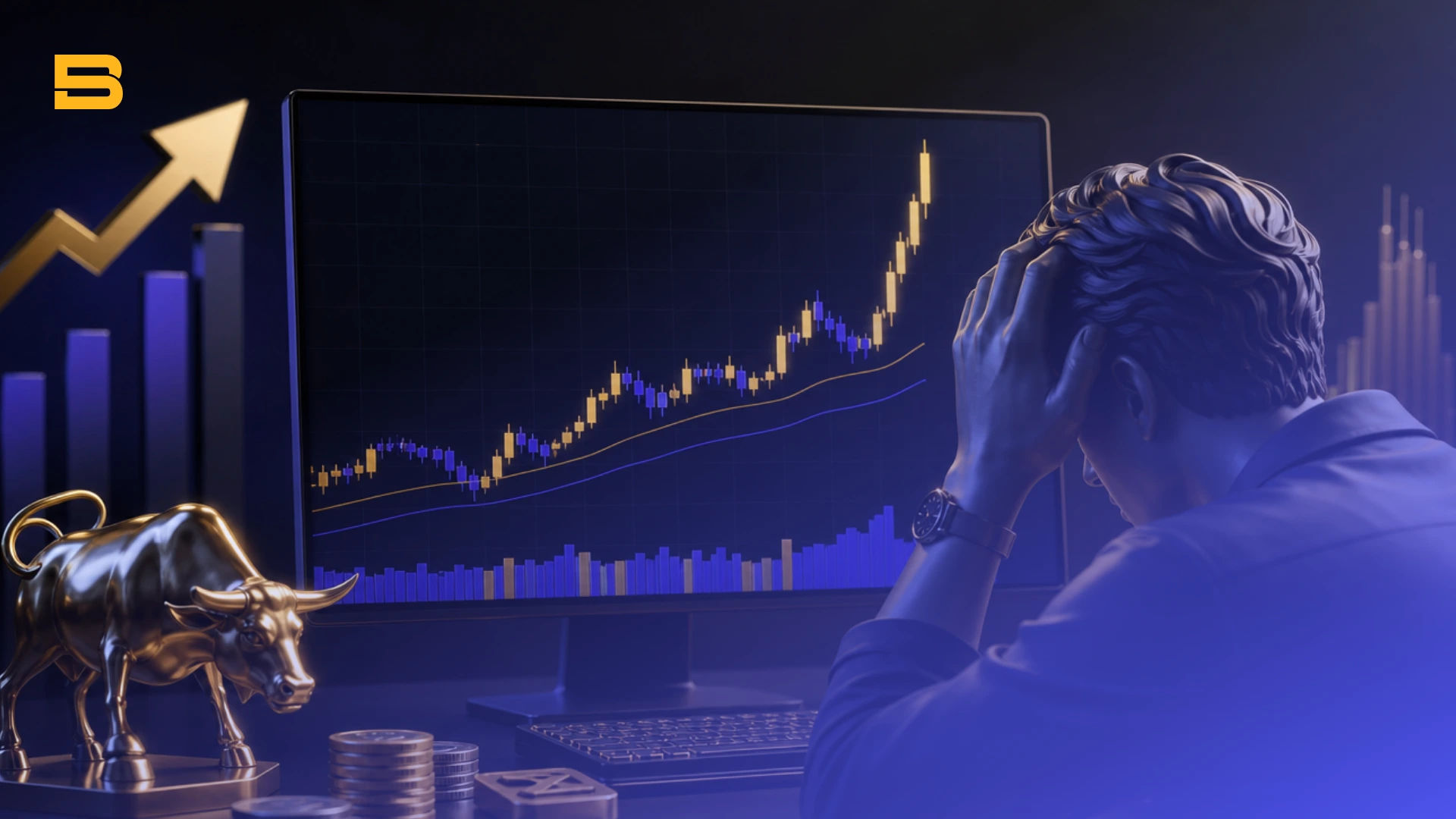
You sit in front of your trading terminal, watching a green candle suddenly shoot upward on a 5-minute chart. Price is surging without you, and with every tick higher, a subtle pulse of anxiety kicks in—you feel an irresistible urge to click "Buy" before the move leaves you behind.
That sudden, uneasy impulse to jump into a fast-moving market is what traders call FOMO (fear of missing out). While reacting to momentum feels natural, entering trades out of emotional panic is one of the fastest ways to damage your account. Learning how to spot and overcome FOMO is an essential foundation for long-term trading discipline.
What Is FOMO in Trading and How Does It Distort Decisions?
FOMO in trading stands for the "Fear of Missing Out," an emotional state where fear of missed profits forces traders into impulsive, unplanned market entries.
When FOMO takes over, your rational framework breaks down. Instead of waiting for a verified setup near a logical support level, you buy directly into extended moves.
Markets rarely move in a single straight line. When you enter mid-surge out of panic, you often end up buying at the exact point where institutional traders are taking profits, leaving you exposed to immediate retracements.
FOMO Meaning in Trading: Definition and Core Triggers
FOMO meaning in trading centers around psychological urgency rather than market fundamentals. It is usually sparked by sudden price spikes, aggressive social media commentary, or the sting of a previous trade you closed too early. Recognizing these emotional triggers before clicking "Order" is the first step toward self-control.
What Is FOMO Trading and Why Does It Happen?
FOMO trading is rooted deep in human psychology. According to behavioral finance research by the CFA Institute, traders are subject to deep-seated mental biases that distort risk perception.
Two primary cognitive mechanisms fuel this behavior:
- Loss aversion: The pain of missing an easy profit feels twice as intense as the potential pain of entering late, leading you to ignore obvious risk factors.
- Overconfidence bias: A recent winning streak can convince you that the market will keep moving in your favor, encouraging you to abandon risk management rules.
When these biases interact, your focus shifts entirely from potential downside risk to prospective profit. This emotional shift causes you to widen stop-loss levels or enter positions without any protective stops at all.
The Cost of Chasing Trades Mid-Move
To understand the actual mathematical impact of FOMO, consider a trader with a RM5,000 account balance. Your trading plan dictates risking 1% per trade (RM50) with a tight 15-pip stop-loss on a planned EUR/USD breakout.
Instead of placing a limit order, you hesitate. EUR/USD surges 30 pips higher within minutes. Driven by FOMO, you click "Buy" at the top of the move. Because your entry is now 30 pips higher, you must widen your stop-loss to 45 pips to keep it below structural support.
When the market experiences a natural 45-pip pullback, your wide stop-loss gets hit. Instead of taking your planned RM50 loss, you suffer a RM200 drawdown—4% of your entire account wiped out on a single emotional entry.
FOMO vs. Revenge Trading vs. Overtrading: Key Differences
FOMO is often confused with other psychological mistakes, but identifying its unique characteristics helps you apply the right solution.
How to Stop FOMO Trading: A Practical 4-Step Checklist
Overcoming emotional price-chasing requires replacing gut reactions with strict operational rules. Guidance from the Securities Commission Malaysia (SC) emphasizes investor risk awareness and disciplined trading habits as critical pillars for navigating financial markets safely.
Follow this 4-step framework to eliminate FOMO entries:
- Define fixed entry triggers in advance: Only enter when price meets specific criteria outlined in your plan, such as a retest of support.
- Calculate position sizing before entering: Determine your maximum risk in currency terms before opening any trade.
- Set non-negotiable stop-losses: Place a protective stop-loss the moment you open a position to guard against sudden retracements.
- Log emotional triggers in a journal: Record how you felt prior to every entry to identify recurring psychological patterns.
A 5-Second Pre-Entry Audit Before You Click Buy
Before clicking the execute button on a fast-moving setup, pause for 5 seconds and ask yourself these four questions:
- Is this setup explicitly written in my trading plan?
- Where is my exact stop-loss level, and what is my total risk in currency?
- Does this trade offer at least a 1:2 risk-to-reward ratio from this entry price?
- Am I executing a strategy or reacting to a green candle?
If you answer "no" to any of these questions, step away from the trade.
Missing a Move Beats Losing Capital
In financial markets, missing a move is far better than losing capital on a bad entry. By recognizing psychological triggers, implementing strict pre-entry audits, and adhering to strict risk management parameters, you can build the discipline needed to trade calmly and consistently.
Disclaimer: The content on this page is intended for educational and informational purposes only. It does not constitute financial, investment, tax, or legal advice, and should not be interpreted as a recommendation to buy, sell, or hold any financial instrument or asset. Trading and investing involve significant risk, including the possible loss of your entire capital. Products such as forex, CFDs, and cryptocurrencies carry additional risks due to leverage, high volatility, and limited regulatory protection in some jurisdictions. Past performance of any financial instrument does not guarantee future results. Any market views, forecasts, or opinions expressed are those of the author at the time of writing and may not reflect current market conditions. Platform features, fees, and regulatory status are subject to change — always verify information directly with the relevant provider or regulator before making any financial decision. BrokerSpecs may receive compensation from third parties featured on this site. Always conduct your own due diligence and consider seeking advice from a licensed financial professional before investing. Portions of this article were prepared with the assistance of AI tools and reviewed by our editorial team before publication.